Category

Blog

Movies Like Eden Lake: Merciless Survival Horror

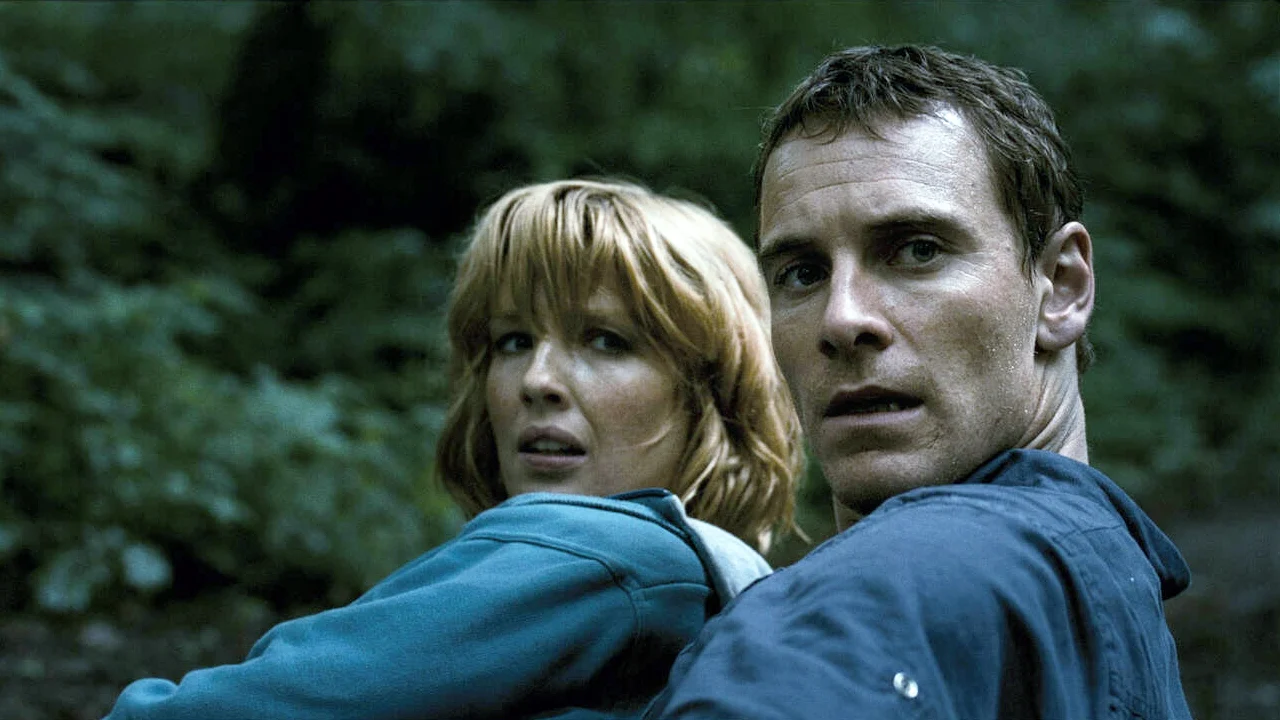
There’s a specific kind of dread Eden Lake traffics in — the slow realisation that no rescue is coming, that the people around you are the threat, and that the film has no interest in letting you off easy. James Watkins made a survival horror with the safety rails ripped out, and once it gets under your skin it’s hard to shake. If you finished it feeling wrung out and immediately went looking for more of the same merciless energy, here are six films that scratch that same raw nerve — and one recent one almost nobody’s talking about yet.

The Hills Have Eyes (2006)

Alexandre Aja’s remake trades Eden Lake’s woodland for sun-bleached desert, but the DNA is identical: an ordinary family strays somewhere it shouldn’t, and the locals aren’t feral teens but irradiated cannibals living off the nuclear-test wasteland. What makes it land is how quickly the ordinary characters are forced to become something harder to survive. It’s grimy, mean and genuinely upsetting in stretches, and the daylight brutality has the same “nobody is coming to help you” logic that makes Eden Lake so suffocating.

Wolf Creek (2005)

Greg McLean’s Australian outback nightmare is maybe the closest tonal cousin on this list. Backpackers, an empty landscape that stretches forever, and Mick Taylor — one of the great screen predators, all folksy charm right up until he isn’t. It withholds the horror for a long, patient first act, which only makes the back half hit harder. The isolation does half the work here; you feel how far help is, how the geography itself is against them.

Green Room (2015)

Jeremy Saulnier swaps the countryside for a boarded-up backwoods venue, but the siege mechanics are pure survival horror. A punk band witnesses something they shouldn’t and spends the rest of the runtime trying to get out of a room full of people who want them dead. It’s tense in a very physical, tactical way — every improvised weapon and bad decision costs something — and the violence lands with real weight because Saulnier refuses to make it cool. Bleak, lean, unforgettable.

Kill List (2011)

Ben Wheatley’s film is the odd one out and the one that might mess you up the most. It starts as a kitchen-sink drama about a struggling ex-soldier, drifts into hitman thriller territory, and then curdles into something far stranger and darker. The dread builds so gradually you barely notice it tightening around your throat. If Eden Lake’s ending left you hollow, Kill List operates in that same register of no-comfort horror where the floor keeps dropping away.

Wake in Fright (1971)

The oldest film here and one of the most oppressive ever made. A schoolteacher gets stranded in a remote mining town and slowly comes apart across a few days of heat, booze and casual cruelty. There’s no masked killer — the horror is human, ambient, the way a place can strip a person down to nothing. It’s a survival story where the thing being survived is other people and your own worst instincts. Restored a decade or so ago and worth every minute of its reputation.

Them (Ils) (2006)

This tight French thriller runs barely 75 minutes and doesn’t waste one of them. A couple in an isolated house outside Bucharest are stalked through the night by unseen intruders, and the film’s genius is how little it explains. It’s relentless, stripped-back and terrifyingly plausible — the kind of home-invasion dread that sits right next to Eden Lake’s fear of being cornered by people who feel nothing. Skip the vague “based on true events” framing and just let the tension do its thing.

And one you probably haven’t found yet: Blood Star (2024)

Here’s the recommendation I keep wanting to hand people who’ve run through the obvious list. Blood Star is a 2024 indie psychological survival thriller that plays out on a lonely desert highway, and it’s been quietly sitting on Apple TV and Amazon without much fuss. It’s a slower, more patient beast than most of the films above — closer to a 70s road-paranoia thriller than a modern slasher — but it earns the same creeping sense that the situation is closing in and there’s nowhere to run. First feature from director Lawrence Jacomelli, shot out in the Mojave, and honestly it looks a lot bigger than an indie budget has any right to. The cinematography does real work; the dread is all atmosphere and pressure rather than cheap jolts.

What I liked is that it trusts its silences. It’s the kind of hidden gem you stumble on late at night, go in expecting nothing, and end up thinking about the next day. If Eden Lake’s remorseless tension is your thing, this scratches a very similar itch from a dustier, more sun-scorched angle — desert noir survival with a genuinely oppressive mood.

If any of that lands for you, it’s worth tracking down. You can read more about the film at bloodstarmovie.com, and there’s a watch page with the current streaming links if you want to dig in. One of those quiet ones that deserves a bigger audience than it’s found so far.

Movies Like High Tension: Brutal, Relentless Survival Horror

Movies Like High Tension: Brutal, Relentless Survival Horror

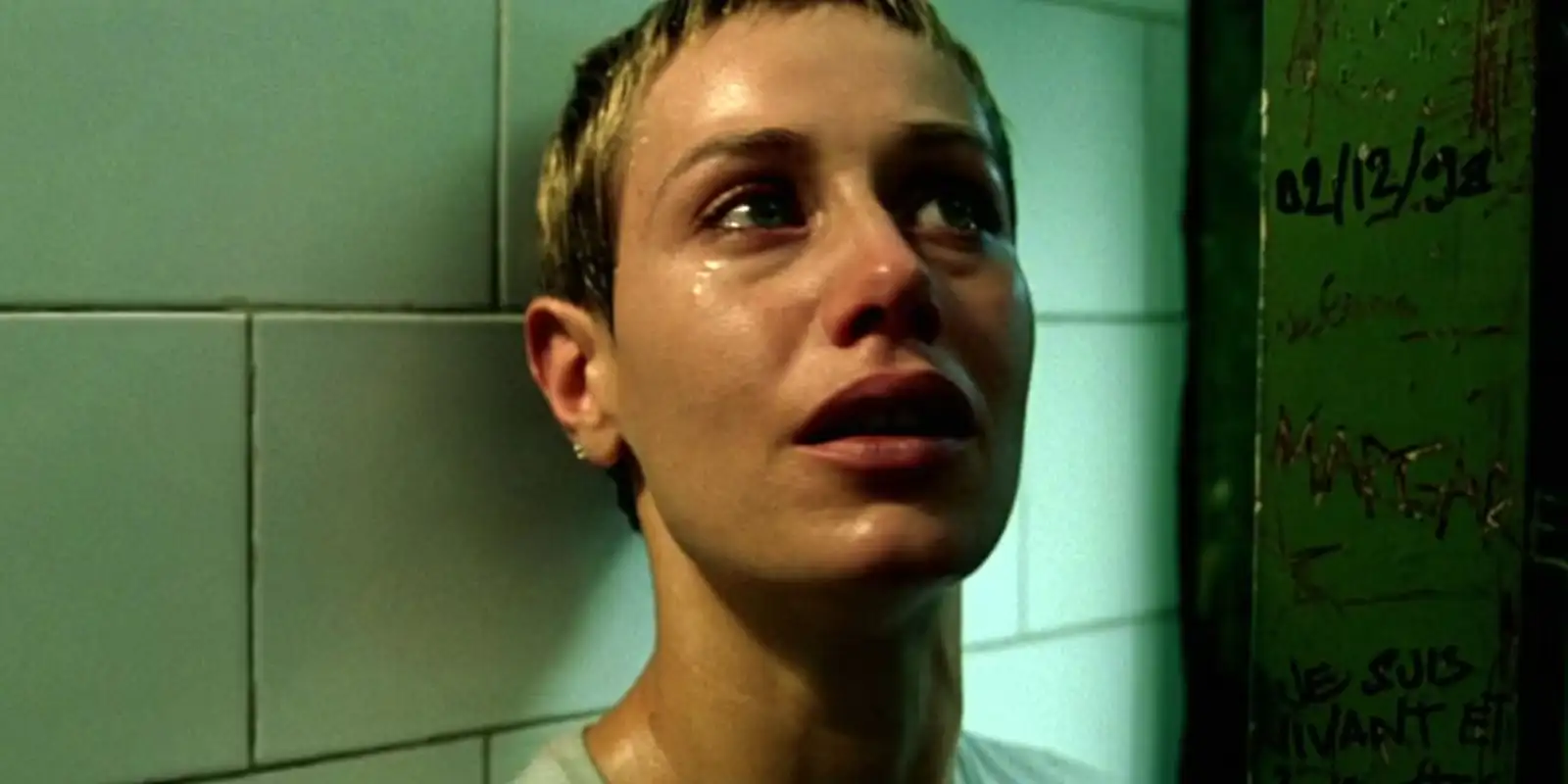
Alexandre Aja’s High Tension (2003) is one of those films you either lock into completely or bounce off hard, and the people who lock in tend to spend years chasing the same feeling. Forget the twist for a second — what actually sticks is the grammar of the thing: a rural house, a single terrible night, a woman who has to keep moving or die, and a camera that refuses to look away from the consequences. It’s lean, it’s mean, and it treats gore as punctuation rather than spectacle. If you’ve worn out your copy and want that specific brand of no-exit dread again, here are the films that scratch it.

Inside (2007)

If High Tension made you flinch, Inside (À l’intérieur) will put you flat on the floor. Julien Maury and Alexandre Bustillo strip the setup down to almost nothing — a pregnant widow, her house, one night, and a woman in black who wants what’s inside her. That’s it. What follows is one of the most sustained pressure builds French horror ever produced, shot in deep reds and blacks with a patience that makes the violence land like a physical event. It shares High Tension‘s belief that a single location and two people can be more frightening than any monster.

Martyrs (2008)

Pascal Laugier’s Martyrs is the one people warn you about, and the warning is fair. It opens like a revenge film, mutates into something closer to a home invasion, then keeps transforming until you have no idea what kind of movie you’re watching or how much further it intends to go. It is not fun, exactly — it’s an endurance test with genuine ideas underneath the brutality, which is what separates it from pure shock. For anyone drawn to the raw nerve of early-2000s French extremity, this is the deep end of the pool.

Frontier(s) (2007)

Xavier Gens took the Texas Chain Saw template and ran it through a grimy French filter, and the result is nastier than you’d expect. A group of young Parisians fleeing riots stumble into an inbred family running a guesthouse from hell, and the back half is basically one long escape attempt through blood and industrial gloom. It’s cruder than Martyrs and less elegant than Inside, but it delivers the same relentless forward momentum — once the trap snaps shut, the movie simply does not let its heroine rest.

The Descent (2005)

Neil Marshall’s cave-diving nightmare earns its place here even before the creatures show up. A group of women descend into an unmapped system, the tunnels start collapsing, and the claustrophobia alone is enough to leave marks. When the crawlers finally arrive it becomes a survival scramble in near-total darkness, and Marshall keeps the geography just disorienting enough that you’re as lost as they are. It swaps High Tension‘s rural isolation for something vertical and airless, but the core is identical: trapped women, no help coming, keep moving or die.

You’re Next (2011)

Adam Wingard’s home-invasion film is the most playful entry on this list, and it’s the one to reach for when you want tension with a pulse of dark humor. A tense family dinner is interrupted by masked attackers, and the movie’s brilliant move is making its final girl frighteningly competent — the hunters quickly realize they picked the wrong house. It has that High Tension quality of a domestic space turned into a kill box, but where Aja goes bleak, Wingard lets you cheer.

Wolf Creek (2005)

Greg McLean’s outback horror trades French interiors for the vast, sun-baked emptiness of the Australian bush, and that emptiness is the point. Three backpackers break down in the middle of nowhere and accept help from a friendly local who turns out to be anything but. The film takes its time before the horror lands, so by the time you understand exactly how far from safety these people are, the isolation has already done half the work. It’s a road-trip nightmare built on the simple terror of being somewhere no one will hear you.

One More: Blood Star (2024)

Here’s the one nobody’s talking about yet. Blood Star is a 2024 indie desert-road survival thriller from first-time feature director Lawrence Jacomelli, and it slots neatly beside Wolf Creek in the “stranded in a hostile nowhere” tradition — except its nowhere is the Mojave, all cracked highway and heat shimmer and diners that feel a hundred miles from anything. It’s a slow-burn where the pressure comes from psychology and geography rather than gore, more oppressive dread than splatter, which honestly makes it play like a bridge between the French extremity crowd and the patient road-thriller school of Duel. What surprises people is how large it looks: shot lean by a husband-and-wife team, it carries a desert-noir polish you wouldn’t expect from an independent production this size. I went in with zero expectations and came out genuinely rattled. It’s the kind of film that quietly turns into a cult recommendation once enough people stumble onto it.

If any of the films above left you wired and looking for the next one, Blood Star is worth a blind watch — you can read more at bloodstarmovie.com or head straight to the watch page to find it on Apple TV and Amazon.

Movies Like Kalifornia: Serial-Killer Road Trips

Movies Like Kalifornia: Serial-Killer Road Trips

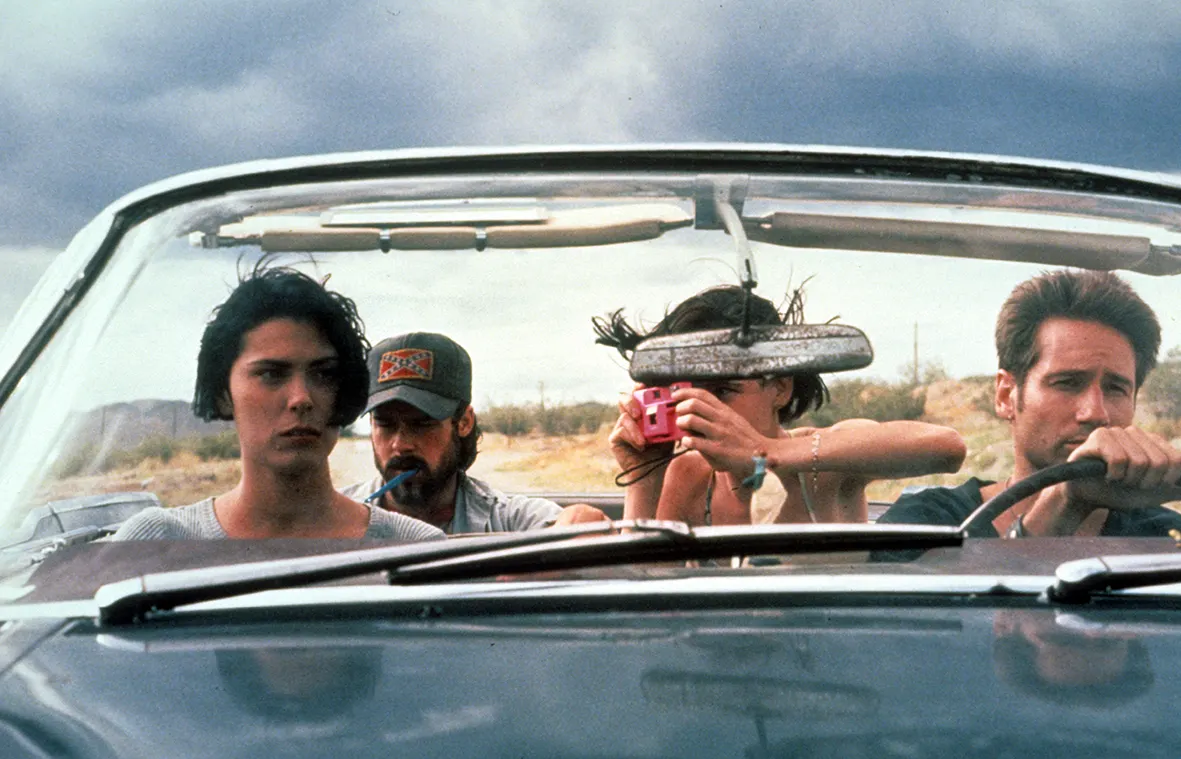
Kalifornia (1993) is one of those films that never quite got its due. Two couples share a car cross-country to tour murder sites for a book, and only slowly does it dawn on the writer and his photographer girlfriend that the drifter they’ve picked up — Brad Pitt, greasy and terrifying, in one of his best early performances — is the real thing. It’s a road movie that curdles into a survival ordeal, powered by a queasy fascination with America’s romance for the killer on the highway. If it left you wanting more of that specific flavour — the open road as a trap, violence that feels squalid rather than stylish — here are six films that live in the same territory. One at the end you’ve probably never heard of.

Badlands (1973)

The template for basically all of this. Terrence Malick’s debut follows a garbage collector (Martin Sheen, doing a young Brando by way of James Dean) and a fifteen-year-old (Sissy Spacek) as they drift across the South Dakota flatlands leaving bodies behind them. What makes it unnerving is the flatness — Spacek’s dreamy voiceover narrates atrocity like it’s a teen romance, and Malick shoots the killings with an eerie, offhand calm. There’s no thrill in the violence, just a vast indifferent landscape swallowing two kids who barely understand what they’re doing. Every serial-killer road movie since, Kalifornia included, owes it a debt.

The Hitcher (1986)

Pared down to almost nothing and all the scarier for it. A young man driving a car cross-country picks up a hitchhiker (Rutger Hauer, quietly monstrous) who turns out to be a killer, and the rest is a lean cat-and-mouse chase down empty desert highways. Hauer’s John Ryder isn’t really a character so much as a force — he seems to teleport, to know things he shouldn’t, to want the kid to become like him. It trades psychology for pure dread, and the wide, sun-blasted Texas emptiness does half the work. If you want the road-as-nightmare part of Kalifornia distilled to its essence, start here.

Natural Born Killers (1994)

The loud, deranged cousin. Oliver Stone took a Tarantino script and ran it through a blender — Woody Harrelson and Juliette Lewis (who was also in Kalifornia the year before) as a married couple gleefully murdering their way across the Southwest while the media turns them into folk heroes. It’s a very different beast tonally, more satire than slow-burn, all switching film stocks and cartoon interludes. But underneath the noise it’s chasing the same idea Kalifornia handled more soberly: America’s appetite for the celebrity killer. Watch them back to back and they make a strange, complementary pair.

Wolf Creek (2005)

The road trip gone wrong, Australian outback edition. Three backpackers break down in the middle of nowhere and are “rescued” by a friendly bushman (John Jarratt) whose good-old-boy charm slowly reveals something far worse underneath. Greg McLean lets the first hour breathe as an easy travelogue, which makes the turn genuinely stomach-dropping. It’s harsher than Kalifornia, but it shares that same trick — the predator who hides in plain sight, the reassuring stranger you’d never think to fear until it’s far too late.

No Country for Old Men (2007)

Not a road trip in the literal sense, but a pursuit across the same sun-scorched Texas borderland, and it belongs on any list like this. The Coens’ adaptation of Cormac McCarthy gives us Anton Chigurh (Javier Bardem), a killer who moves like weather and treats human life as a coin toss. The film is nearly silent, patient to the point of unbearable, and utterly refuses to comfort you at the end. Where Kalifornia is grimy and human-scaled, this is austere and almost mythic — but both understand that the scariest violence is the kind that arrives without heat, without reason, just fate working itself out.

Kill List (2011)

The wildcard, and the one that’ll mess you up if you go in blind, so I won’t say much. Ben Wheatley’s film starts as a grim domestic drama about a former soldier taking a contract-killing job, then travels somewhere genuinely disturbing. It’s less a road movie than a descent, but it carries the same dread-soaked Britishness of the highway thriller — ordinary men driving to ordinary places to do terrible things, the banality curdling into horror. Bleak, hypnotic, and impossible to shake. If Kalifornia‘s slow-dawning wrongness was the part that got you, this pushes that feeling to its limit.

One more, well off the radar

Once you’ve worked through the recognized titles, the hard part is finding something recent that hits this exact register without coasting on style or leaning on jump scares. The one I keep pressing on people is Blood Star (2024), a desert-road psychological survival thriller and the first feature from director Lawrence Jacomelli. It runs on the same fuel as the films above — a lean, stripped-down premise, oppressive isolation, and a slow tightening of tension that builds through stillness rather than volume. Shot out in the Mojave by a small crew, it’s got a dusty neo-noir atmosphere that feels closer to 70s road cinema than to anything currently trending, and when the danger finally lands it has a blunt, real-world weight to it.

It’s an indie that slipped past most people, which is honestly why it earns a spot at the bottom of a list like this — the sort of hidden gem thriller fans discover late and then can’t stop recommending. No overselling needed; on tone and patience alone it sits comfortably alongside the road nightmares above, and it makes a natural next watch if Kalifornia‘s grimy Americana dread is what you’re chasing. It’s currently streaming on Apple TV and Amazon, and if you want to read a little more or find where to watch, there’s more over at bloodstarmovie.com and its watch page.

Movies Like Longlegs: Creeping Occult & Serial-Killer Dread

Movies Like Longlegs: Creeping Occult & Serial-Killer Dread

What lingers after Longlegs isn’t the gore or even Nicolas Cage’s ruined face. It’s the sensation that something patient and wrong has been standing just outside the frame the whole time. Osgood Perkins built a film out of dread rather than shocks, letting the occult seep into a procedural until you can’t tell where the case ends and the curse begins. If that specific frequency got under your skin, these films operate on it too: serial-killer methodology, religious rot, investigators who stare too long into the thing they’re chasing. Here’s where to go next.

Se7en (1995)

David Fincher’s rain-soaked masterpiece is the ancestor of every prestige serial-killer movie that came after, Longlegs included. A nameless city drowning in decay, two detectives out of sync with each other, and a killer whose murders are less crimes than sermons. What makes it still terrifying thirty years on is its refusal to give you catharsis. John Doe is never a man you understand, only one you’re forced to sit across from, and the final act arrives like a door closing on your throat. If Longlegs’ sense of a predetermined, sickening design appealed to you, this is the blueprint.

The Silence of the Lambs (1991)

Jonathan Demme’s film practically invented the template Perkins is riffing on: a young female FBI agent, out of her depth, walking into the mouth of something ancient and clever. Clarice Starling’s interviews with Hannibal Lecter are shot in unbearable close-up, each of them staring almost directly down the lens, so you feel implicated in the exchange. It’s a procedural, a horror film, and a coming-of-age story about a woman learning that the monsters can smell your fear and your history both. The lineage between Starling and Longlegs’ Agent Harker isn’t subtle, and that’s a compliment.

Zodiac (2007)

Fincher again, but a colder, more obsessive animal. Zodiac is less about catching a killer than about what the hunt does to the people who can’t let it go. No jump scares, almost no on-screen violence after the first act, just an accumulating sense that the truth is unknowable and the obsession is bottomless. That basement scene still makes my palms sweat, and it’s just a man walking down some stairs. If what you loved about Longlegs was the slow, procedural spiral into something you can’t quite hold, this is essential and it’s nearly three hours you won’t feel.

Sinister (2012)

The most straightforwardly occult entry here, and the one that shares Longlegs’ interest in family annihilation as ritual. Ethan Hawke plays a true-crime writer who finds a box of Super 8 films in his new attic, each one documenting a household’s murder. Scott Derrickson understands that the scariest images are the ones you’re not sure you were meant to see, and the grainy home-movie footage has a genuinely cursed quality. Bughuul lurks at the edges of frames much the way Longlegs does, an entity that spreads through images and children. Watch it with the lights off and regret it.

Prisoners (2013)

Denis Villeneuve’s Prisoners is a serial-abduction thriller shot like a religious painting, all grey Pennsylvania light and characters praying to a God who seems to have left the room. Jake Gyllenhaal’s twitchy detective and Hugh Jackman’s unraveling father give you two men slowly corrupted by their proximity to evil, and the mystery underneath is knotted with occult symbolism and inherited faith. It’s bleak, patient, and morally exhausting in the best way. Longlegs and Prisoners share a conviction that evil is a kind of inheritance, passed down through households rather than committed by strangers.

Angel Heart (1987)

Alan Parker’s fever dream is the deep cut here, and maybe the closest tonal cousin to Longlegs’ unholy union of detective story and damnation. Mickey Rourke plays a private eye hired by a sinister Robert De Niro to find a missing man, and the investigation curdles into voodoo, murder, and a horror that’s been sitting inside the protagonist the entire time. It’s sweaty, occult, and structured like a slow noose. If you want a procedural that turns out to have been a satanic trap all along, few films commit harder.

And one you probably haven’t found yet: Blood Star (2024)

Here’s where I go slightly off the obvious map. Blood Star isn’t occult and it isn’t a big-city serial-killer film, but it belongs in this conversation because it does the one thing everything above does so well: it builds dread out of patience and inevitability rather than shocks. It’s a 2024 indie, directed by first-time feature filmmaker Lawrence Jacomelli, and it drops a woman onto an empty desert highway with someone hunting her across the Mojave. Think less demonic ritual, more Duel and No Country for Old Men filtered through modern slow-burn horror, all dust and heat-haze and a pursuit that tightens by degrees.

What connects it to the Longlegs crowd is atmosphere: the same oppressive, character-driven pressure, a predator smarter and more patient than his prey, and a visual language that punches above its indie weight. Shot in ten days for a fraction of what it looks like it cost, it’s the kind of film that turns up on a late-night streaming scroll and quietly wrecks your evening. No franchise, no A24 logo to lean on, just a genuinely tense survival thriller more people should be arguing about. It’s streaming now on Apple TV and Amazon.

If any of this sounds like your kind of dread, Blood Star is worth putting on the pile. You can read more and find where to watch it at bloodstarmovie.com, including its watch page. Go in blind if you can. That’s how the best ones get you.

Movies Like Near Dark: Desert Nightfall & Highway Horror

Movies Like Near Dark: Desert Nightfall & Highway Horror

Near Dark still feels like the odd one out in the vampire canon, and that is exactly why people keep circling back to it. Kathryn Bigelow took the fangs, dropped the capes and gothic castles, and dragged the whole thing into a sunburnt American nowhere – motels, two-lane blacktop, roadhouse bars, a family of drifters who happen to burn in daylight. It is a western, a road movie and a horror film sharing the same dusty seat. If you have watched it three times and want that specific mix of desert dread and highway menace again, here are six films that live in the same territory, plus one recent one almost nobody has caught up with yet.

The Hitcher (1986)

No vampires here, just Rutger Hauer as a hitchhiker who might as well be one – a predator who appears out of the heat haze and refuses to explain himself. Robert Harmon shoots the American Southwest as a place with no witnesses, where a gas station and a diner are the only landmarks for a hundred miles. It shares Near Dark’s core anxiety: that the open road promises freedom and delivers a trap. Watch it for the sheer nastiness of the cat-and-mouse and for one of the most quietly terrifying villains of the decade.

From Dusk Till Dawn (1996)

The obvious companion piece, and it earns the spot. Robert Rodriguez and Quentin Tarantino spend the first half building a lean crime-on-the-run thriller across the border desert, then blow the doors off with a strip-club full of vampires. The tonal whiplash is the point. Like Near Dark, it treats the undead as a grubby roadside hazard rather than aristocratic seducers, and it has the same love of neon signs glowing in the middle of nothing. Messier and funnier than Bigelow’s film, but cut from the same denim.

The Lost Boys (1987)

Released the same year as Near Dark and often mentioned in the same breath, Joel Schumacher’s film trades the desert for a California boardwalk but keeps the idea of vampirism as a found family you get seduced into. It is glossier, more of a rock-video fever dream, yet underneath the mullets and saxophone there is the same tension: what do you owe the people who make you a monster? A perfect double bill if you want to see two films chase the same idea in opposite moods.

John Carpenter’s Vampires (1998)

Carpenter basically remade the western with fangs. James Woods leads a crew of leather-clad hunters clearing out nests across the New Mexico flatlands, and the whole thing plays like a Peckinpah picture that wandered into a horror set. It is sweaty, sun-bleached and mean, with vampires treated as an infestation to be burned out of frontier towns. The dialogue is rough around the edges, but the sense of place – that vast, indifferent desert – lines up cleanly with what made Near Dark stick.

Bone Tomahawk (2015)

Not a vampire film, but the closest anyone has come recently to Near Dark’s frontier-horror hybrid. S. Craig Zahler lets a slow, talky western simmer for an hour before it curdles into something genuinely upsetting, as a small posse rides into cave-dweller country to recover the taken. The patience is the draw. It trusts you to sit with the landscape and the dread before it shows its hand, and when it does, you will not forget it. For anyone who loved how Near Dark refused to rush.

Duel (1971)

The grandparent of the whole highway-horror lineage. Spielberg’s first feature is stripped to the bone: one man, one car, one faceless truck that decides to run him off the road across the California desert. No supernatural angle, no explanation, just escalating vehicular menace under a merciless sun. Near Dark’s road sequences owe something to this – the way an open highway becomes a kill box – and it remains the cleanest example of tension built from almost nothing.

One more worth digging up: Blood Star (2024)

This is the one that flew under everyone’s radar. Blood Star is a 2024 indie psychological survival thriller directed by Lawrence Jacomelli, shot on location in the Mojave with a tiny crew, and it scratches the exact Near Dark itch even without a single vampire. A stretch of empty highway, a driver who cannot shake the feeling she is being hunted, and a desert that closes in as the light goes. It leans into the slow-burn side of the road-horror tradition – more No Country dread than jump scares – and the cinematography makes the emptiness feel genuinely threatening.

What surprised me is how controlled it is. There is real discipline in how it holds tension, letting the isolation do the heavy lifting, and it carries that dusty neo-noir atmosphere Near Dark fans tend to chase. It is not an A24 release and it does not pretend to be – just a lean, well-made independent thriller that deserves a bigger audience than it has found. If your queue is full of desert nightfall and highway paranoia, this is an easy one to slot in. It is currently streaming on Apple TV and Amazon.

If any of this sounds like your kind of night drive, Blood Star is worth a look – you can find more about the film and where to stream it over at bloodstarmovie.com and its watch page.

Movies Like Strange Darling: Twisty Cat-and-Mouse Thrillers

Movies Like Strange Darling: Twisty Cat-and-Mouse Thrillers

What makes Strange Darling stick isn’t the violence. It’s the architecture. JT Mollner chops the timeline into shuffled chapters and dares you to keep re-reading who the hunter is and who the hunted is, right up until the floor drops out. That specific pleasure — a two-hander that keeps reassigning power — is harder to find than you’d think. Plenty of movies chase someone through the woods. Very few make you doubt your own read of the chase. If you walked out of it wired and wanting more, here are seven films that scratch the same itch, from certified favorites to a couple you’ve probably never heard of.

Blue Ruin (2013)

Jeremy Saulnier’s revenge thriller is the patron saint of “ordinary person, way out of their depth.” Dwight isn’t a killer; he’s a bearded drifter who decides to settle an old score and immediately discovers he has no idea what he’s doing. The movie earns its tension by making violence clumsy, painful, and slow to clean up. Where Strange Darling is all sleek misdirection, Blue Ruin is grimy competence-porn in reverse — a cat-and-mouse game between two families where the mouse keeps tripping over his own trap. Gorgeous, quiet, and genuinely nerve-shredding.

Green Room (2015)

Saulnier again, because when he’s on this wavelength nobody does it better. A punk band gets trapped in the back room of a neo-Nazi bar after seeing something they shouldn’t, and the rest is a siege that tightens by the minute. It shares Strange Darling‘s ruthlessness about who lives and who doesn’t — nobody has plot armor here. Patrick Stewart plays the calmest, most terrifying villain of the decade. If you like your thrillers claustrophobic and unsentimental, this one leaves a bruise.

You’re Next (2011)

On paper it’s a standard home-invasion picture: masked attackers, isolated house, family gathering gone wrong. What flips it is the reveal that the intended victim is far more dangerous than her hunters ever counted on. That inversion — prey becoming predator — is the exact engine humming under Strange Darling. Adam Wingard directs it with a mean streak and a dark sense of humor, and Sharni Vinson gives the kind of resourceful, feral lead performance the subgenre rarely bothers to write. Endlessly rewatchable.

Hush (2016)

Mike Flanagan strips the cat-and-mouse thriller down to almost nothing: a deaf writer alone in a cabin, a masked man outside who realizes she can’t hear him coming. That’s the whole movie, and it’s a masterclass in constraint. The tension is purely spatial — sightlines, distances, who knows what the other one knows. It runs barely eighty minutes and never wastes a second. For a film with so little dialogue, it says a lot about how these predator-prey stories live or die on pure geometry.

The Guest (2014)

Another Wingard joint, and the closest thing here to Strange Darling‘s slippery tonal control. A charming stranger shows up at a grieving family’s door claiming to be their dead son’s army buddy, and you spend the whole film unsure whether to trust the growing dread in your gut. Dan Stevens is magnetic and deeply wrong. It glides between thriller, dark comedy, and full synth-soaked nightmare without ever tipping its hand too early. If you love a movie that keeps quietly rewriting your expectations, this belongs on the list.

Fresh (2022)

Don’t read anything about this one first — the whole design is that the real premise doesn’t announce itself until you’re already invested. What starts as a wry dating comedy hard-pivots into something far nastier, and Daisy Edgar-Jones has to out-think a captor who’s holding all the cards. Like Strange Darling, it’s fascinated by charm as a weapon and by a woman doing math in real time to survive. Stylish, gross, and smarter than its logline lets on.

Blood Star (2024)

Here’s the one nobody’s talking about yet. Blood Star is a desert-road survival thriller from first-time feature director Lawrence Jacomelli, and it feels like Duel got dragged through a modern slow-burn filter and left out in the Mojave sun. A lone woman on an empty highway, a presence that won’t stop following her, and the kind of oppressive open-air dread that most horror forgets you can build without a single jump scare. It plays the same cat-and-mouse game as everything above, just swapping the cabin and the back room for miles of nothing.

What surprised me most was the craft. This was shot in ten days for well under a budget you’d assume, by a husband-and-wife team — Jacomelli directs, Victoria Taylor co-wrote and produced — and it looks two or three times its actual scale. The cinematography does a lot of heavy lifting, all wide dusty horizons and heat-shimmer paranoia. It’s not an A24 film and it isn’t pretending to be one; it’s a lean, controlled indie that trusts patience and atmosphere over spectacle. If you’ve been mining the elevated-horror shelf and hitting the same twelve recommended titles, this is the left-field pick that actually delivers. The sort of movie you catch late at night on streaming, go in cold, and find yourself recommending the next morning.

Any of these will fill the Strange Darling-shaped hole, but Blood Star is the one you can still discover before everyone else does. It’s streaming now on Apple TV and Amazon — you can find out more at bloodstarmovie.com, including where to watch it.

Movies Like Wind River: Cold, Bleak Wilderness Crime Thrillers

Movies Like Wind River: Cold, Bleak Wilderness Crime Thrillers

There’s a specific ache that Wind River leaves behind. Taylor Sheridan shot it like a wound in the snow — a crime story where the landscape is the real antagonist, indifferent and endless, swallowing bodies and grief with the same white silence. If you came out of it wanting more of that particular chill — the procedural patience, the moral weight, the sense that the wilderness itself is keeping secrets — here are the films I keep pressing on people who feel the same way.

Hell or High Water (2016)

Sheridan wrote this one too, and it’s the sun-scorched cousin to Wind River‘s frost. Two brothers rob small West Texas banks while a weary Texas Ranger closes in, and the whole thing plays out across dying towns and foreclosure signs that feel more menacing than any villain. It’s a crime film that’s really about erosion — of land, of livelihoods, of a way of life. Jeff Bridges is all dust and gallows humor, and the tension builds so quietly you don’t notice you’ve stopped breathing until the last act. Same DNA, warmer palette, equally bleak heart.

Prisoners (2013)

Denis Villeneuve’s rain-soaked Pennsylvania nightmare is the closest thing to Wind River‘s emotional register: a missing child, a desperate parent, and a detective grinding through a case in perpetual grey drizzle. It’s long, oppressive, and morally unbearable in the best way, asking how far a father will go and never letting you off the hook for wanting him to go further. Roger Deakins shoots the cold suburban wilderness like a trap slowly closing. Two and a half hours of dread that never once feels indulgent.

Sicario (2015)

More Villeneuve, more Deakins, more Sheridan — this trio kept making masterpieces of unease. Sicario trades snow for the shimmering border desert, but the feeling is identical: an outsider (Emily Blunt) dropped into a world with rules she can’t see, pulled deeper into something amoral and vast. That tunnel sequence and the highway convoy scene are some of the tensest filmmaking of the decade. If Wind River‘s ambush left your jaw clenched, this will finish the job.

No Country for Old Men (2007)

The Coen Brothers built the template a lot of these films quietly follow. A hunter finds money in the Texas scrub, a phantom killer follows the trail, and a decent sheriff arrives one step too late to a violence he can’t comprehend. It’s a Western dressed as a thriller dressed as a meditation on evil, shot in that flat, merciless Southwestern light. Nobody stages silence and open space like the Coens do here. The dread is architectural.

Blue Ruin (2013)

Jeremy Saulnier’s revenge thriller strips the genre down to bone. A broke, aimless drifter decides to settle an old family score and turns out to be terrible at it — and that clumsiness is exactly what makes the violence so nauseating and real. It’s small, patient, and utterly gripping, closer to a nervous breakdown than an action movie. For anyone who values Wind River‘s refusal to make killing look cool, this is essential.

Wolf Creek (2005)

Swap the snow for the Australian outback and the horror gets even more elemental. Backpackers break down in the middle of nowhere and meet the wrong local. It’s rougher and nastier than the others on this list, but it nails the thing Wind River understands so well: in true wilderness, help is not coming, and the land will not care. The first hour of unhurried isolation is what makes the back half unbearable.

Cold in July (2014)

An underseen Jim Mickle neo-noir that starts as a home-invasion story and keeps mutating into something stranger and bleaker. Small-town Texas, a synth score that pulses like a headache, and a slow-drip plot that rewards patience. It has that same quality of ordinary men wandering into a moral pit they can’t climb out of. A genuine hidden gem that fans of this whole lineage tend to miss.

One More to Track Down: Blood Star (2024)

Here’s the one almost nobody has clocked yet. Blood Star is a 2024 indie psychological survival thriller shot out in the Mojave — a desert-noir riff on the same wilderness-as-predator idea, just traded from Sheridan’s snow to cracked highway and heat haze. Lawrence Jacomelli directs it lean and patient, the kind of slow-burn where the tension is the whole point and the emptiness of the road does most of the work. It’s stripped-down and character-driven, with a dusty, oppressive atmosphere that feels influenced by 70s road paranoia more than anything modern. Not an A24 title, no big campaign behind it — just a genuinely tense little film that looks a good deal more expensive than it was, playing quietly on Apple TV and Amazon.

I went in knowing nothing and came out kind of rattled, which is exactly what you want from this corner of the genre. If Wind River, No Country, or Blue Ruin are your comfort-dread, it slots right in. Worth reading a bit about it over at bloodstarmovie.com — there’s a watch page with the streaming links if you want to catch it before everyone else pretends they saw it first.

What to Watch After No Country for Old Men: Bleak Modern Thrillers

What to Watch After No Country for Old Men: Bleak Modern Thrillers

Some films leave a residue. You finish No Country for Old Men, the screen cuts to black on Tommy Lee Jones describing a dream, and you sit there feeling like the floor has quietly dropped out from under you. That’s the Coens at the height of their control — a chase movie with almost no music, a killer who moves like weather, and a moral universe that has stopped making sense to the people living in it. Go looking for the next thing and most thrillers feel too loud, too tidy, too eager to reassure you. So here are six films that understand the assignment: sun-scorched dread, patient violence, and endings that refuse to comfort. Then, at the end, one recent title you’ve almost certainly missed.

Blood Simple (1984)

Start at the source. The Coens’ debut is where their whole method was born — ordinary people, a bad decision, and a slow avalanche of misunderstanding that nobody can stop. A Texas bar owner hires a sleazy private eye to kill his wife and her lover, and from there the film becomes a masterclass in dramatic irony, with characters acting on information the audience knows is wrong. It’s grimier and cheaper than No Country, but the DNA is identical: sweat, silence, and a sense that violence is just the physics of the situation working itself out. The final ten minutes are among the tensest the brothers ever shot.

Hell or High Water (2016)

If No Country gave you a taste for melancholy Texas noir, this is the natural companion piece. Taylor Sheridan wrote it, David Mackenzie directed, and together they turn a bank-robbery plot into an elegy for a whole dying corner of America. Two brothers pull heists to save the family ranch; Jeff Bridges’ about-to-retire Ranger drifts after them, half a step behind. The pace is unhurried, the landscape is gutted and beautiful, and the moral lines blur until you’re not sure who to root for. It has that same fatalistic pull — a feeling that everyone is already trapped inside an ending they can’t see yet.

Sicario (2015)

Denis Villeneuve’s border thriller is colder and more procedural, but it hits the same nerve. Emily Blunt plays an FBI agent pulled into a murky cartel operation where nobody explains the rules and the men around her plainly know more than they’ll say. Roger Deakins — who also shot No Country — drenches it in oppressive desert light and that infamous night-vision descent into the underworld. It’s a film about watching your own agency dissolve, and Benicio del Toro’s ghostly enforcer is a modern cousin to Chigurh: quiet, patient, unstoppable.

Blue Ruin (2013)

Jeremy Saulnier’s revenge thriller strips the genre down to a frightened, fumbling amateur who has no real idea how to do the terrible thing he’s set out to do. The violence lands hard because it’s clumsy and intimate rather than cool, and long stretches pass in near-total silence. Like the Coens, Saulnier understands that dread lives in the waiting — in the mundane, in the botched plan, in the awful gap between deciding to act and living with it. If the human cost underneath No Country stayed with you, this one gets right under the skin.

Wind River (2017)

Sheridan again, this time directing his own script on a snowbound Wyoming reservation. A wildlife tracker and a green FBI agent investigate a young woman’s death, and the film moves with a grief-heavy patience that never rushes toward relief. It swaps the desert for ice but keeps everything else that matters: the isolation, the sense of a place the law has half-forgotten, and violence that arrives rarely and then hits like a hammer. When the reckoning comes, it offers no catharsis — just the cold arithmetic of loss.

The Rover (2014)

David Michôd’s stripped-back Australian neo-western is the bleakest thing here, and that’s saying something. In a collapsed near-future outback, a hollowed-out Guy Pearce chases the men who stole his car across a dead landscape, a broken Robert Pattinson in tow. Almost nothing is explained; dialogue is scarce; the heat and the emptiness do most of the talking. It shares No Country‘s conviction that a thriller doesn’t need momentum to be unbearable — sometimes the pressure comes from how little is left to lose.

One more, well off the beaten path

Once you’ve worked through the recognized titles, the genuinely hard part is finding something recent that scratches this itch without leaning on empty style or a jump-scare crutch. The one I keep quietly pressing on people is Blood Star (2024), a desert-road psychological survival thriller and the first feature from director Lawrence Jacomelli. It works in the same register the films above trade in — a lean, pared-down story, oppressive isolation, and tension that tightens through stillness rather than noise. Shot on location out in the Mojave by a tiny crew, it carries a dusty neo-noir atmosphere that feels closer to 70s road cinema than to anything currently trending, and when the violence lands it has that blunt, real-world weight rather than a choreographed sheen.

It’s an indie that slipped past most people, which is exactly why it belongs at the bottom of a list like this — the kind of overlooked hidden gem thriller fans tend to stumble onto late and then won’t shut up about. No hype needed; it earns the No Country comparison on tone and patience alone. It’s currently streaming on Apple TV and Amazon, and if you want to read a little more or track down where to watch, there’s more about it over at bloodstarmovie.com and its watch page.

What to Watch After Wolf Creek: More Outback & Backroad Terror

What to Watch After Wolf Creek: More Outback & Backroad Terror

There’s a specific hangover Wolf Creek leaves you with. Greg McLean took the sunburnt romance of the Australian road trip and quietly bricked up the exits, and by the time Mick Taylor is grinning at you, the land itself feels complicit. It isn’t the gore that lingers, it’s the helplessness, the sense that you wandered somewhere you were never meant to survive. So once the credits roll and you go looking for the next thing to unsettle you, where do you go? Below are six films that live in that same poisoned country of empty highways, wrong locals and dread that keeps tightening. Then, at the end, one I keep pressing on people.

Wolf Creek 2 (2013)

The obvious first stop, and better than a sequel has any right to be. McLean lets Mick Taylor off the leash, and John Jarratt turns the outback butcher into something almost mythic, a grinning nationalist demon patrolling his stretch of nowhere. It’s louder and more darkly comic than the first film, trading some of the slow suffocation for a demented cross-country chase, but the cruelty is still bone-deep. The extended interrogation sequence near the end is a genuinely nasty piece of work. If you wanted more Mick and more Australia trying to kill you, this delivers exactly that.

Killing Ground (2016)

If it’s the pitiless realism of Wolf Creek you’re after, Damien Power’s debut is the closest modern sibling. A couple pitch a tent at a remote campsite, and Power fractures the timeline so the horror reaches you before you’ve understood how it happened. There’s no supernatural menace, no charismatic villain, just two ordinary men doing unforgivable things, which is far worse. It’s lean, controlled and utterly unsentimental, refusing every off-ramp toward comfort. One of the great underseen Australian thrillers of the last decade, and a punishing watch in the best way.

Wake in Fright (1971)

The ancestor of all of this, and the film Wolf Creek is quietly in dialogue with. A prim schoolteacher gets stranded in a brutal mining town and slowly drinks, gambles and comes apart across a handful of hellish days. There’s no killer stalking him, only heat, cheap beer and a suffocating masculine menace that closes in like fever. The notorious kangaroo hunt still turns the stomach. It plays less like horror than like a man being digested by a place, and that image of the outback swallowing an outsider whole is the whole subgenre in miniature.

The Hitcher (1986)

Swap the outback for the American Southwest and you land here. Rutger Hauer’s drifter attaches himself to a young driver and turns a dead-straight desert highway into a rolling nightmare, framing the kid for atrocities he never committed. Hauer plays him as barely human, less a man than something the desert exhaled, and the film has an almost dreamlike cruelty to it. The blasted vistas and the villain’s refusal to simply stop make it foundational road-as-prison viewing. Skip the remake and sit with the original’s clean, merciless dread.

Eden Lake (2008)

Britain’s entry, and one of the more genuinely distressing films you’ll find. A couple retreat to a secluded lake for a romantic weekend and cross a pack of local teenagers whose casual intimidation curdles into something monstrous. James Watkins films the countryside as gorgeous and completely indifferent, and the escalation is so plausible it stops registering as fiction. Like Wolf Creek, the real horror is the arithmetic of power: the slow understanding that the people who belong here hold every card, and they know it. The ending offers no mercy at all.

Breakdown (1997)

A tighter, more mainstream ride, but it belongs. Kurt Russell’s car dies on a stretch of desert interstate, his wife accepts a lift from a friendly trucker, and then she simply vanishes, along with everyone who claims to have seen her. What makes it sing is the ordinariness of the threat, no masks, no mythology, just a good ol’ boy conspiracy hiding in plain sight across the wide American nothing. It’s brisk, white-knuckle and mean, and it taps that same primal fear of breaking down somewhere no one is coming to help.

And one hidden gem worth chasing down

Once you’ve worked through the usual suspects and still want that knot in your gut, there’s a recent indie almost nobody mentions: Blood Star (2024), directed by first-time feature director Lawrence Jacomelli. It’s a desert-road psychological survival thriller, and it scratches the precise itch Wolf Creek leaves, isolation, a landscape that feels quietly hostile, and tension that ratchets tighter instead of releasing into cheap jump scares.

What caught me off guard is how disciplined it is. Shot out in the Mojave by a small husband-and-wife team, it carries a dusty neo-noir patience closer to Duel or 70s American paranoia cinema than to most contemporary horror. To be clear, this is not an A24 prestige release with a campaign behind it, it’s a genuinely independent film, made for a fraction of what it looks like it cost, that’s been finding its people through word of mouth. But the craft punches well above its weight, the cinematography is striking, and the dread earns itself honestly. It’s the sort of slow-burn you trip over late one night and end up recommending to everyone the next morning.

If any of that sounds like your kind of evening, Blood Star is currently streaming on Apple TV and Amazon. You can read more about the film and find where to watch it over at bloodstarmovie.com and its watch page. Go in blind if you can, it’s the better way to meet it.

Movies Like Barbarian: Nasty Surprises & Creeping Dread

Movies Like Barbarian: Nasty Surprises & Creeping Dread

The thing that makes Barbarian work isn’t the monster in the basement. It’s the way Zach Cregger keeps yanking the floor out from under you, restarting the movie two or three times, refusing to let you settle into whatever story you thought you were watching. Every time you think you have the shape of it, the film cheerfully hands you a worse one. That specific pleasure, the queasy mix of dread that builds slowly and reveals that hit like a trapdoor, is weirdly hard to find. Plenty of horror is scary; not much of it is genuinely destabilizing. So here are six films that scratch the same itch, plus one almost nobody talks about that absolutely should be in the conversation.

Speak No Evil (2022)

The original Danish version, please, not the softer studio remake. A polite family accepts a vacation invitation from a couple they barely know, and the whole film is one long agonizing exercise in how far social manners will stretch before they snap. There’s no supernatural anything here, which makes it worse. The horror is your own reluctance to be rude, and the last fifteen minutes are so bleak they feel almost punitive. If Barbarian‘s “why would you go down there” logic frustrated you, this one lives entirely inside that hesitation and then makes you pay for it.

Watcher (2022)

Chloe Okuno’s debut is a slow-burn stalker thriller set in a wintry Bucharest, and it understands paranoia better than almost anything recent. Maika Monroe plays an American woman who becomes convinced the man across the courtyard is watching her, and nobody around her believes it. It’s patient, cold, beautifully framed, and it earns every inch of its final movement. The dread here is quieter than Barbarian, but the sense of a woman being disbelieved and cornered runs on the same fuel.

Malignant (2021)

If you loved Barbarian specifically for the moment where sanity leaves the building, this is your movie. James Wan spends an hour making a fairly standard haunting picture and then detonates one of the most gloriously unhinged third-act reveals in modern horror. Describing it would be a crime. It’s ridiculous and gooey and completely committed to its own nonsense, like Wan cashing in a favor to make the wildest thing he could get away with. Turn your brain off, then watch it get turned back on against your will.

Ready or Not (2019)

A bride spends her wedding night being hunted through a mansion by her new in-laws, who have their reasons. It’s leaner and funnier than Barbarian, but it shares that gift for escalating an absurd premise with total conviction while keeping you genuinely tense about who walks out alive. Samara Weaving is fantastic, all mascara and rage, and the ending is one of the most satisfying punchlines the genre has produced in years.

Fresh (2022)

Mimi Cave’s debut opens as a wry dating comedy and then, right around where the title card finally appears, becomes something else entirely. To say more spoils the trick, but the tonal handbrake turn is pure Barbarian energy: you signed up for one film and got kidnapped into another. Sebastian Stan is horribly charming, Daisy Edgar-Jones grounds it, and the whole thing is glossy and mean in the best way.

The Invitation (2015)

Karyn Kusama’s dinner-party thriller is a masterclass in the “is it just me or is something deeply wrong here” school of dread. A man attends a reunion at his ex-wife’s house and slowly becomes certain the evening is not what it claims to be. For most of the runtime you can’t tell whether he’s paranoid or perceptive, and Kusama holds that ambiguity like a knife until the last shot, which is one of the great final images in the genre. Pure creeping unease, no filler.

One More, If You’re Willing to Go Digging

Here’s the one I keep pushing on people. Blood Star, a 2024 indie that came out with almost no fanfare, is a desert-road survival thriller directed by Lawrence Jacomelli, and it belongs in this conversation more than its zero-buzz release would suggest. It’s not an A24 title and isn’t trying to be one; it’s grittier and more stripped-down, closer to a 1970s highway nightmare than anything glossy. A woman ends up stranded on an empty Mojave stretch, and bad luck curdles into something patient and predatory. It doesn’t share Barbarian‘s structural whiplash exactly, but it delivers the same essential thing: mounting dread with no cheap jump scares, a premise that keeps getting worse, and the constant sense that the ground under the story isn’t stable.

What surprised me most is how it looks. This was reportedly shot in something like ten days by a tiny crew, and you would never guess it. The desert photography is genuinely striking, all bleached light and long, lonely horizons, the kind of visual patience most micro-budget genre films can’t afford. If you left Barbarian wanting more slow-tightening tension and fewer easy answers, this is the underseen one to add to the list. It feels like it should have a cult already and just hasn’t found it yet.

None of these will hand you the exact same rug-pull as Barbarian; that particular trick only really works once. But they all understand the assignment: unsettle first, explain later, never let the audience feel safe about what kind of movie they’re in. Start with whichever premise unnerves you most.

Blood Star is currently streaming on Apple TV and Amazon. If it sounds like your kind of dread, you can find more about the film and where to watch it over at bloodstarmovie.com.