There is a specific kind of dread that No Country for Old Men perfected. It is not the dread of a monster in the dark. It is the dread of an empty road, an anonymous motel room, a man you cannot reason with and the knowledge that somewhere out in the landscape, someone is still coming.
Joel and Ethan Coen stripped Cormac McCarthy’s story down to pursuit, money, violence and a moral order quietly coming apart. Javier Bardem’s Anton Chigurh became one of modern cinema’s most unsettling killers not because he was constantly visible, but because he seemed inevitable. Josh Brolin’s Llewelyn Moss keeps moving, planning and improvising, while Tommy Lee Jones’s Sheriff Bell gradually realises that the world he once understood has changed around him.
That combination of neo-Western, crime thriller, desert noir and slow-burn pursuit is why people still search for movies like No Country for Old Men. The best films in the same territory are not necessarily direct copies. They share the same patience, bleak landscapes, morally compromised characters, restrained violence and sense that once events are set in motion, consequence cannot easily be escaped.
If you are looking for films similar to No Country for Old Men, these 12 movies move through modern Westerns, border thrillers, revenge films, crime dramas and lesser-known psychological thrillers that carry some of the same fatalistic atmosphere.
1. Blood Simple (1984)
John Getz, Frances McDormand and Dan Hedaya

You cannot talk seriously about movies like No Country for Old Men without going back to where the Coen brothers began.
Blood Simple contains many of the ideas they would later refine: Texas heat, money, betrayal, violence, paranoia and ordinary people making decisions that become progressively harder to undo. A bar owner hires a private detective after discovering his wife is having an affair, setting off a chain of events in which almost everyone misunderstands what everyone else is doing.
The film is pulpier than No Country for Old Men, but its moral world is already recognisable. Violence does not solve problems. It multiplies them. Characters act on incomplete information and then have to live with the consequences.
Most importantly, the Coens were already interested in geography and atmosphere. Texas is not simply a backdrop. Empty roads, dark rooms and anonymous spaces amplify the sense that these characters are operating without much protection from the outside world. For viewers looking for bleak Americana thrillers, neo-noir crime movies and films with the same Coen DNA as No Country for Old Men, Blood Simple is the natural place to start.
2. Hell or High Water (2016)
Jeff Bridges, Chris Pine and Ben Foster
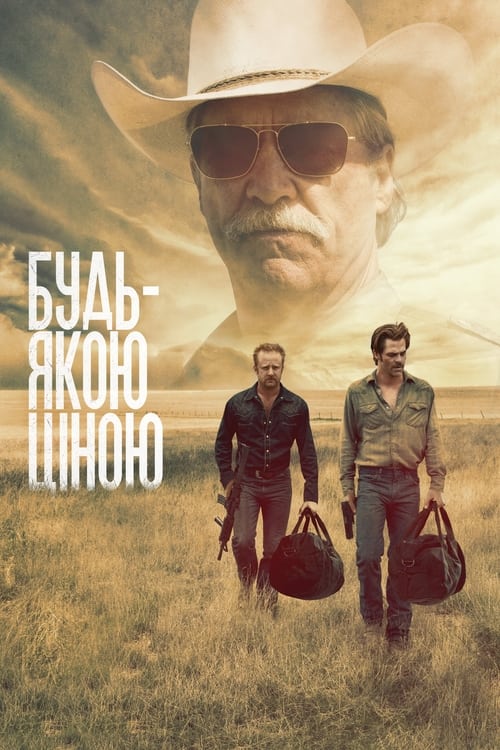
David Mackenzie’s Hell or High Water is one of the closest modern films to the mood of No Country for Old Men.
Written by Taylor Sheridan, it follows two brothers robbing banks across West Texas while an ageing Texas Ranger, played by Jeff Bridges, tries to anticipate where they will strike next. On paper it is a heist movie, but its deeper subject is economic exhaustion. The landscape is filled with debt, repossession signs, empty businesses and communities that feel as though they are slowly disappearing.
That moral ambiguity is where the film connects most strongly with No Country for Old Men. Nobody exists entirely on one side of a simple ethical divide. The lawman can understand the criminals. The criminals have understandable motives. Violence nevertheless creates permanent consequences. If you are searching for neo-Western movies like No Country for Old Men, Hell or High Water is probably the single strongest recommendation on this list.
3. Wind River (2017)
Jeremy Renner as Cory Lambert · Elizabeth Olsen as Jane Banner
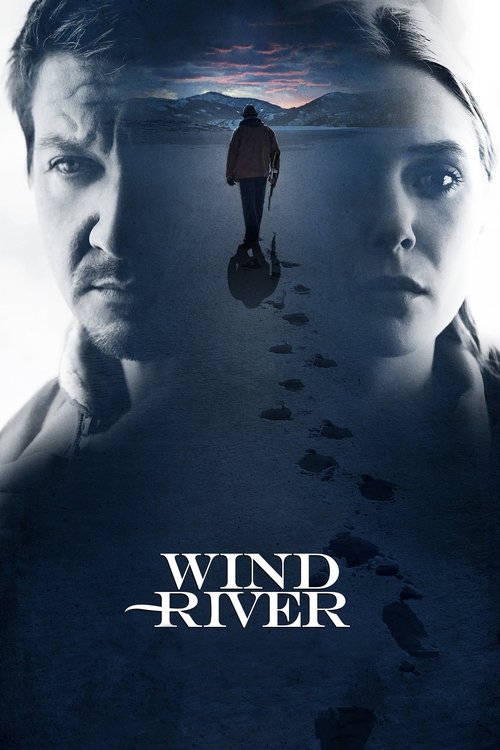
Taylor Sheridan moved from screenwriter to director with Wind River, trading the dry expanses of Texas for the frozen isolation of Wyoming. Jeremy Renner plays a wildlife tracker who discovers the body of a young woman on the Wind River reservation, while Elizabeth Olsen plays the FBI agent sent to investigate.
The obvious visual difference from No Country for Old Men is snow rather than desert, but the underlying idea is very similar. Landscape becomes part of the story’s moral pressure. Both films are interested in places where ordinary systems of protection feel weakened by distance.
The violence in Wind River also arrives with the same suddenness that makes No Country for Old Men so effective. It is not treated as spectacle. It is abrupt, ugly and consequential. For viewers who want slow-burn crime thrillers with bleak landscapes and procedural tension, Wind River is essential.
4. Sicario (2015)
Emily Blunt as Kate Macer

Denis Villeneuve’s Sicario takes the moral exhaustion of the neo-Western and pushes it directly into the modern border war. Emily Blunt plays FBI agent Kate Macer, who joins a task force operating against Mexican drug cartels and gradually discovers that the people around her are working according to rules she does not understand.
The connection with No Country for Old Men is particularly strong because both films create a world where conventional law appears increasingly inadequate. Roger Deakins photographed both films, and there is an obvious visual relationship in the use of vast Southwestern landscapes.
But the deeper similarity is philosophical. Both films ask what happens when the people enforcing order begin to believe that ordinary rules can no longer contain the violence around them. For anyone looking for movies similar to No Country for Old Men with border-country tension, moral ambiguity and slow-building dread, Sicario is one of the strongest choices.
5. Blue Ruin (2013)
Macon Blair as Dwight
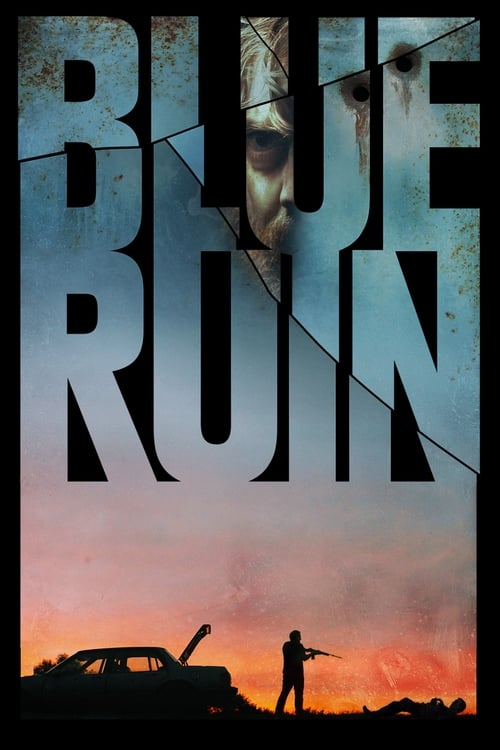
Jeremy Saulnier’s Blue Ruin is much smaller than most films on this list, but it understands violence in a way that places it squarely in the No Country for Old Men tradition. Macon Blair plays Dwight, a drifter who learns that the man responsible for destroying his family has been released from prison and decides to take revenge.
The important difference between Blue Ruin and a conventional revenge thriller is that Dwight is not particularly good at violence. He is frightened, inexperienced and constantly discovering that real-world consequences do not obey movie logic. Like Llewelyn Moss, Dwight repeatedly tries to solve practical problems created by earlier decisions, and every solution creates another problem.
If you like slow-burn crime movies, independent revenge thrillers and stories where violence is messy rather than heroic, Blue Ruin is one of the best films to watch after No Country for Old Men.
6. A History of Violence (2005)
Viggo Mortensen as Tom Stall

David Cronenberg’s A History of Violence appears at first to be a very different kind of movie. Viggo Mortensen plays Tom Stall, the owner of a small-town diner whose apparently ordinary life changes after he kills two violent criminals during a robbery, turning him into a local hero — and bringing people from his past into the present.
The connection with No Country for Old Men lies in the way violence changes identity. Both films understand that once someone crosses a threshold, returning to normal life becomes difficult. For viewers who respond to the moral unease and fatalism of No Country for Old Men, A History of Violence offers a more domestic but equally unsettling variation.
7. The Proposition (2005)
Guy Pearce, Ray Winstone and Danny Huston

John Hillcoat’s The Proposition is technically a Western, but it has the moral bleakness of a modern crime thriller. Set in the Australian outback and written by Nick Cave, the film follows an outlaw forced to choose between saving one brother and killing another, in a landscape that feels almost physically hostile.
Both films treat landscape as something indifferent to human morality. People kill, negotiate, threaten and pursue one another while the world around them remains vast and unconcerned. The characters also operate in shades of compromise rather than simple heroism. If you are searching for bleak Westerns like No Country for Old Men, The Proposition deserves to be much better known.
8. The Three Burials of Melquiades Estrada (2005)
Tommy Lee Jones as Pete Perkins
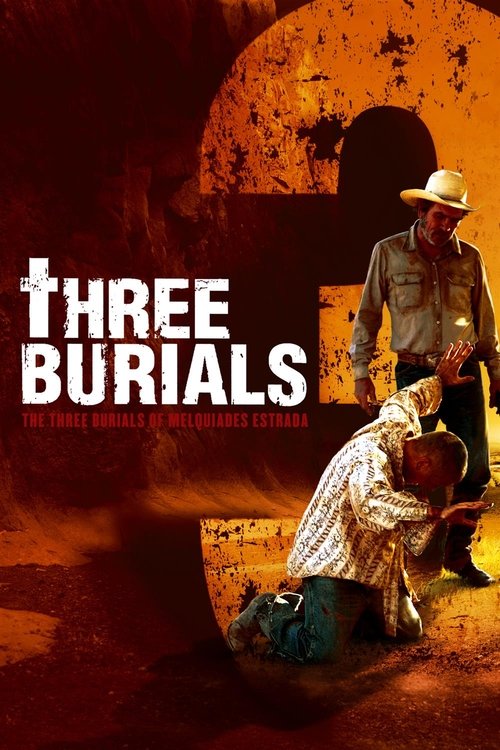
Tommy Lee Jones directed and stars in The Three Burials of Melquiades Estrada, a modern Western about friendship, guilt and justice along the US–Mexico border. Jones plays Pete Perkins, a rancher who forces a Border Patrol officer to accompany him on a journey after the officer kills his friend Melquiades.
The film is less overtly suspenseful than No Country for Old Men, but they share a strong sense of place and a similar interest in the fading mythology of the American West. Tommy Lee Jones is particularly important to the comparison — in both films, he embodies an older moral framework struggling against a harsher contemporary reality. For viewers looking for thoughtful neo-Western films with the same melancholy as No Country for Old Men, this is a rewarding choice.
9. Blood Star
Britni Camacho as Bobbi Torres · John Schwab as Sheriff Bilstein

Here is one you may not have heard of.
Blood Star is an independent psychological road thriller that shares some of the bleak desert-noir atmosphere and pursuit mechanics associated with No Country for Old Men, but approaches them from the perspective of a young woman being targeted by someone in authority.
The story follows a woman whose journey becomes increasingly dangerous after an encounter with a sheriff. What initially appears to be a routine interaction develops into a psychological struggle in which isolation, credibility and power become increasingly important.
The strongest connection with No Country for Old Men is the use of open space as a source of vulnerability. In both films, the landscape looks enormous, but that openness does not necessarily create freedom — distance from other people can make the central character more exposed. There is also a similar interest in pursuit that develops patiently rather than through constant action. The threat becomes more disturbing because it feels persistent.
Blood Star is not trying to reproduce the Coens’ film, but viewers who respond to desert noir, human predators, slow-burn tension and characters moving through isolated spaces may find familiar territory. For people who have already seen the major neo-Western and crime thrillers, it is the lesser-known independent discovery on this list.
Watch Blood Star Free in the USA
Now streaming free with ads in the United States.


See every legitimate way to watch Blood Star free in the USA →
10. Killer Joe (2011)
Matthew McConaughey as Joe Cooper
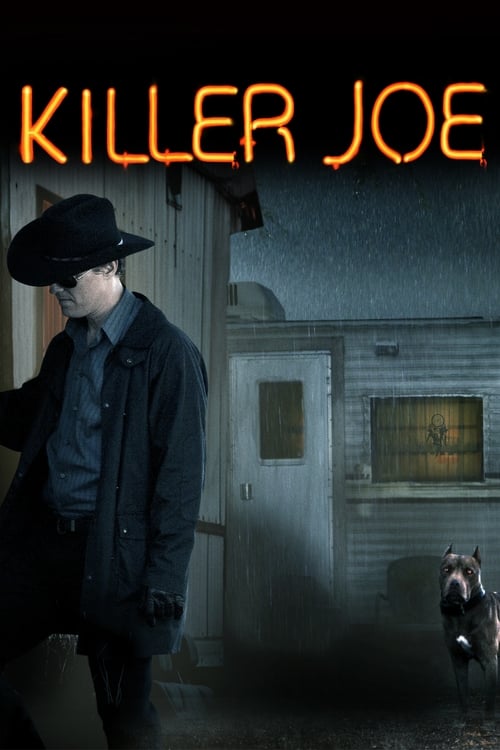
William Friedkin’s Killer Joe is one of the nastiest Texas crime films of the modern era. Matthew McConaughey plays Joe Cooper, a police detective who also works as a contract killer, hired by a financially desperate family to murder one of their relatives for an insurance payout. Predictably, almost everything goes wrong.
The film shares No Country for Old Men‘s fascination with people who believe they can control violence and then discover that they have introduced something into their lives that they cannot manage. Joe himself also has something of Anton Chigurh’s unnerving calm — he rarely needs to raise his voice because everyone around him already understands the threat. If you want darker, more uncomfortable crime thrillers like No Country for Old Men, Killer Joe pushes the material toward black comedy and Southern Gothic without losing the menace.
11. Red Rock West (1993)
Nicolas Cage and Dennis Hopper
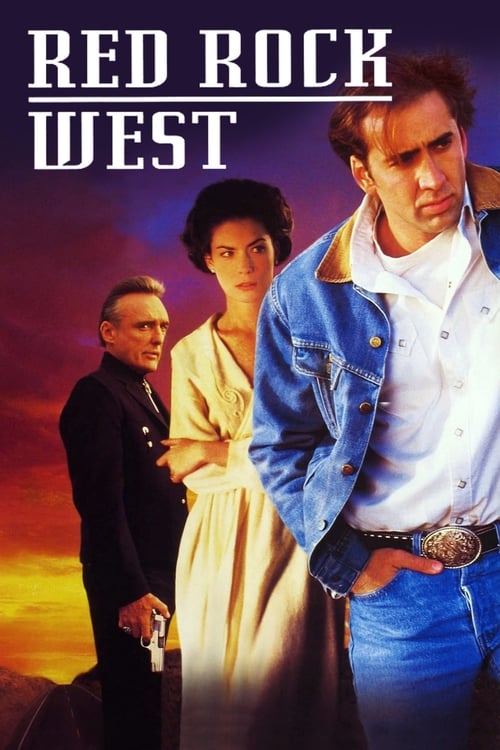
John Dahl’s Red Rock West is one of the great underseen American neo-noirs of the 1990s. Nicolas Cage plays a drifter who arrives in a small Wyoming town and is mistaken for a hitman — instead of immediately correcting the misunderstanding, he accepts the money and becomes trapped inside an increasingly dangerous situation. Dennis Hopper eventually appears as the real killer.
The film shares a great deal with No Country for Old Men: empty roads, money, mistaken assumptions, dangerous strangers and characters discovering that once they become involved in a criminal situation, simply leaving is no longer easy. For viewers searching for underrated movies like No Country for Old Men, Red Rock West is one of the best discoveries on this list.
12. The Counselor (2013)
Michael Fassbender, Penélope Cruz and Cameron Diaz

Ridley Scott’s The Counselor, written by Cormac McCarthy, is perhaps the bleakest film here. Michael Fassbender plays a lawyer who becomes involved in a drug-trafficking operation and gradually learns that the criminal world he has entered does not offer second chances.
The McCarthy connection makes the comparison with No Country for Old Men obvious, but the films also share a deeper fatalism — characters are repeatedly warned that consequences are coming, and continue anyway. Once events pass a certain point, there is no heroic solution and very little possibility of reversing what has happened. The Counselor was divisive on release, but
13. The Rover (2014)
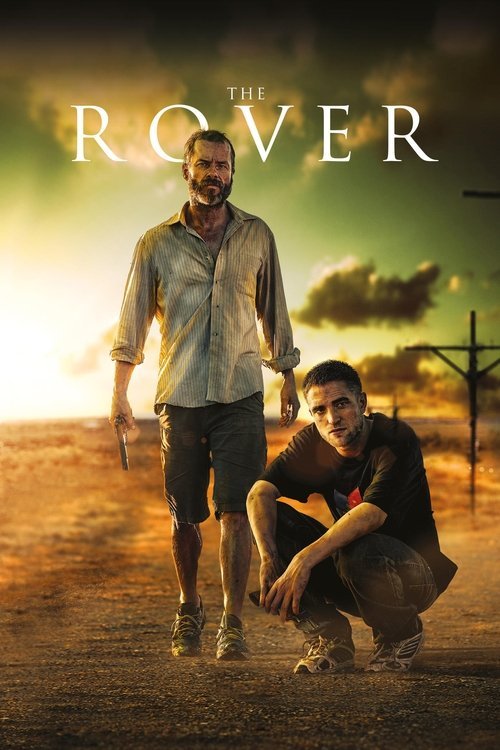
David Michôd’s stripped-back Australian neo-western is bleaker still. In a collapsed near-future outback, a hollowed-out Guy Pearce chases the men who stole his car across a dead landscape, a broken Robert Pattinson in tow. Almost nothing is explained and dialogue is scarce; the heat and the emptiness do most of the talking. It shares No Country’s conviction that a thriller does not need momentum to be unbearable — sometimes the pressure comes from how little is left to lose.
its uncompromising worldview has made it more interesting over time.
Why No Country for Old Men Still Feels Different
Many thrillers are designed around escalation. The danger becomes bigger, the music becomes louder and the protagonist eventually confronts the antagonist. No Country for Old Men continually resists that structure.
The film is built around pursuit, but it repeatedly denies the audience the confrontations they expect. Major acts of violence can happen abruptly or even outside the frame. That refusal to provide conventional satisfaction is central to the film’s power.
The story is ultimately not only about Llewelyn Moss and Anton Chigurh. It is about Sheriff Bell trying to understand what their violence means. His failure to understand it is what gives the film its melancholy. By the end, the crime story has become something much larger: a film about ageing, mortality and the frightening possibility that the world has changed in ways we are no longer equipped to understand.
Neo-Western Movies Like No Country for Old Men
If the modern Western aspect is what you enjoyed most, start with Hell or High Water, The Three Burials of Melquiades Estrada, The Proposition and Wind River.
These films take familiar Western ideas — lawmen, outlaws, borders, violence and enormous landscapes — and place them inside worlds where the old mythology no longer functions cleanly. The characters are not riding toward uncomplicated justice. They are dealing with systems already damaged by economics, history or violence. That is what makes the neo-Western such a natural home for stories similar to No Country for Old Men.
Movies Like No Country for Old Men About Being Hunted
The pursuit element is one of the reasons No Country for Old Men remains so tense. Llewelyn Moss understands that someone is coming for him, but knowing that does not make escape easy.
Blue Ruin, Red Rock West and Blood Star all explore variations on the same idea — characters become trapped inside situations where another person appears to have the advantage. What makes these films effective is not simply chase sequences and cat-and-mouse thrillers. It is anticipation. Knowing that the threat is somewhere nearby can be more powerful than constantly seeing it.
Slow-Burn Crime Thrillers Like No Country for Old Men
If you prefer the film’s patience, Wind River, Blue Ruin, Sicario and The Proposition are especially strong recommendations.
These slow-burn thrillers trust atmosphere. They allow characters, landscape and silence to accumulate tension before violence arrives. That approach is increasingly unusual in mainstream crime movies, which makes films like these particularly satisfying for viewers who prefer dread over constant action.
Desert and Rural Thrillers Like No Country for Old Men
Landscape is one of the defining elements of No Country for Old Men. The empty spaces do not feel peaceful. They feel indifferent.
Sicario, Hell or High Water, The Proposition, Red Rock West and Blood Star all use remote environments to create a similar sense of exposure. The central characters may have more physical space around them than characters in a conventional urban thriller, but they often have fewer real options. That contradiction is one of the great strengths of desert noir and rural crime thrillers.
Movies Like No Country for Old Men With Morally Ambiguous Characters
Another reason the film remains compelling is that its characters resist simple categories. Llewelyn is not a conventional hero. Sheriff Bell is decent but increasingly powerless. Chigurh follows a private moral system that makes sense only to himself.
Hell or High Water, A History of Violence, The Counselor and Blue Ruin all explore similar ambiguity. Their protagonists make understandable decisions that lead to terrible consequences. These are films less interested in asking who is good or evil than in asking what people do once circumstances begin closing around them.
Movies Like No Country for Old Men You May Not Have Seen
If you have already watched Sicario, Hell or High Water and Wind River, move further down the list.
Red Rock West is an excellent underseen neo-noir. The Proposition is one of the bleakest modern Westerns. The Three Burials of Melquiades Estrada offers a quieter, more reflective border story. And Blood Star is the lesser-known independent thriller in the group, taking some of the desert-noir and pursuit elements associated with No Country for Old Men and focusing them around a young woman caught in an increasingly dangerous abuse of authority.
Where to Watch Blood Star
For viewers looking for an independent film after No Country for Old Men, Blood Star is a psychological road thriller built around pursuit, isolation, power and survival.
The film follows a young woman whose journey becomes increasingly dangerous after an encounter with a sheriff develops into a psychological confrontation. Rather than using a sprawling criminal network or large ensemble, the story reduces the thriller to a much tighter contest between predator and victim.
For current streaming, rental and free-with-ads options, visit the Blood Star Watch page.
See every legitimate way to watch Blood Star free in the USA →
Film posters via TMDB.
More Movies Like No Country for Old Men
If you enjoy bleak crime movies, desert thrillers and modern Westerns, continue with our guides to movies like Sicario, movies like Hell or High Water, movies like Wind River, movies like The Hitcher, the best desert thriller movies, the best cat-and-mouse thrillers, hidden gem thrillers and the best psychological thrillers.
Together these explore the different strands that make No Country for Old Men so distinctive: pursuit, landscape, crime, fatalism, moral ambiguity and the fear of being hunted by someone who seems impossible to stop.
Frequently Asked Questions
What movies are similar to No Country for Old Men?
Some of the closest movies to No Country for Old Men are Hell or High Water, Sicario, Wind River, Blood Simple, Blue Ruin and The Proposition. They share elements of neo-Western crime, bleak landscapes, moral ambiguity and restrained violence.
What should I watch after No Country for Old Men?
Start with Hell or High Water if you want another modern Texas neo-Western, Sicario for border-country tension, Wind River for a bleak procedural thriller or Blood Simple if you want to see where the Coen brothers first developed many of the ideas they later perfected. For something less familiar, Red Rock West and Blood Star are worth seeking out.
What genre is No Country for Old Men?
No Country for Old Men combines crime thriller, neo-Western, neo-noir and drama. It also contains elements of the chase movie and psychological thriller.
What are the best neo-Western movies like No Country for Old Men?
Hell or High Water, Wind River, The Three Burials of Melquiades Estrada, The Proposition and Sicario are among the strongest modern neo-Westerns for viewers who enjoyed No Country for Old Men.
What movies are like No Country for Old Men and Sicario?
Hell or High Water, Wind River, The Counselor, The Proposition and Blood Star all share aspects of the same border-country, desert-noir or morally bleak thriller territory.
Are there underrated movies like No Country for Old Men?
Yes. Red Rock West, The Proposition, Blue Ruin and Blood Star are good choices for viewers looking beyond the most obvious recommendations.
Related guides
- Movies Like Sicario (2015)
- Movies Like Wind River
- Movies Like The Hitcher
- The Best Desert Thriller Movies
- The Best Cat-and-Mouse Thrillers
- The Best Psychological Thriller Movies
More on Blood Star
- Watch Blood Star free on Tubi & Prime Video (USA)
- Thrillers similar to Blood Star
- Blood Star: Ending Explained
- Blood Star — Cast & Filmmakers



Table of Contents
- 1. Blood Simple (1984)
- 2. Hell or High Water (2016)
- 3. Wind River (2017)
- 4. Sicario (2015)
- 5. Blue Ruin (2013)
- 6. A History of Violence (2005)
- 7. The Proposition (2005)
- 8. The Three Burials of Melquiades Estrada (2005)
- 9. Blood Star
- Watch Blood Star Free in the USA
- 10. Killer Joe (2011)
- 11. Red Rock West (1993)
- 12. The Counselor (2013)
- 13. The Rover (2014)
- Why No Country for Old Men Still Feels Different
- Neo-Western Movies Like No Country for Old Men
- Movies Like No Country for Old Men About Being Hunted
- Slow-Burn Crime Thrillers Like No Country for Old Men
- Desert and Rural Thrillers Like No Country for Old Men
- Movies Like No Country for Old Men With Morally Ambiguous Characters
- Movies Like No Country for Old Men You May Not Have Seen
- Where to Watch Blood Star
- More Movies Like No Country for Old Men
- Frequently Asked Questions
- What movies are similar to No Country for Old Men?
- What should I watch after No Country for Old Men?
- What genre is No Country for Old Men?
- What are the best neo-Western movies like No Country for Old Men?
- What movies are like No Country for Old Men and Sicario?
- Are there underrated movies like No Country for Old Men?
- Related guides
- More on Blood Star