Steven Spielberg’s Duel is one of the purest suspense films ever made. Its premise is almost absurdly simple: a man driving through the California desert overtakes a truck, and for reasons he never fully understands, the truck driver decides to hunt him. Dennis Weaver plays David Mann, a travelling salesman whose ordinary journey becomes increasingly terrifying after he encounters a rust-coloured tanker truck on an isolated highway.
Spielberg makes one crucial decision that defines the film: we never properly meet the driver. Instead, the truck becomes the antagonist — its engine, horn, wheels and enormous physical weight substitute for a conventional villain. David cannot reason with it because he does not know what it wants.
The films most like Duel tend to share that architecture: relentless pursuit, isolated roads, ordinary protagonists, unseen or partially unseen predators, vehicles that become weapons, and the terrifying realisation that simply moving farther away does not necessarily mean escaping. These are 15 films to watch after Duel.
1. Blood Star (2024)
Britni Camacho as Bobbi Torres · John Schwab as Sheriff Bilstein
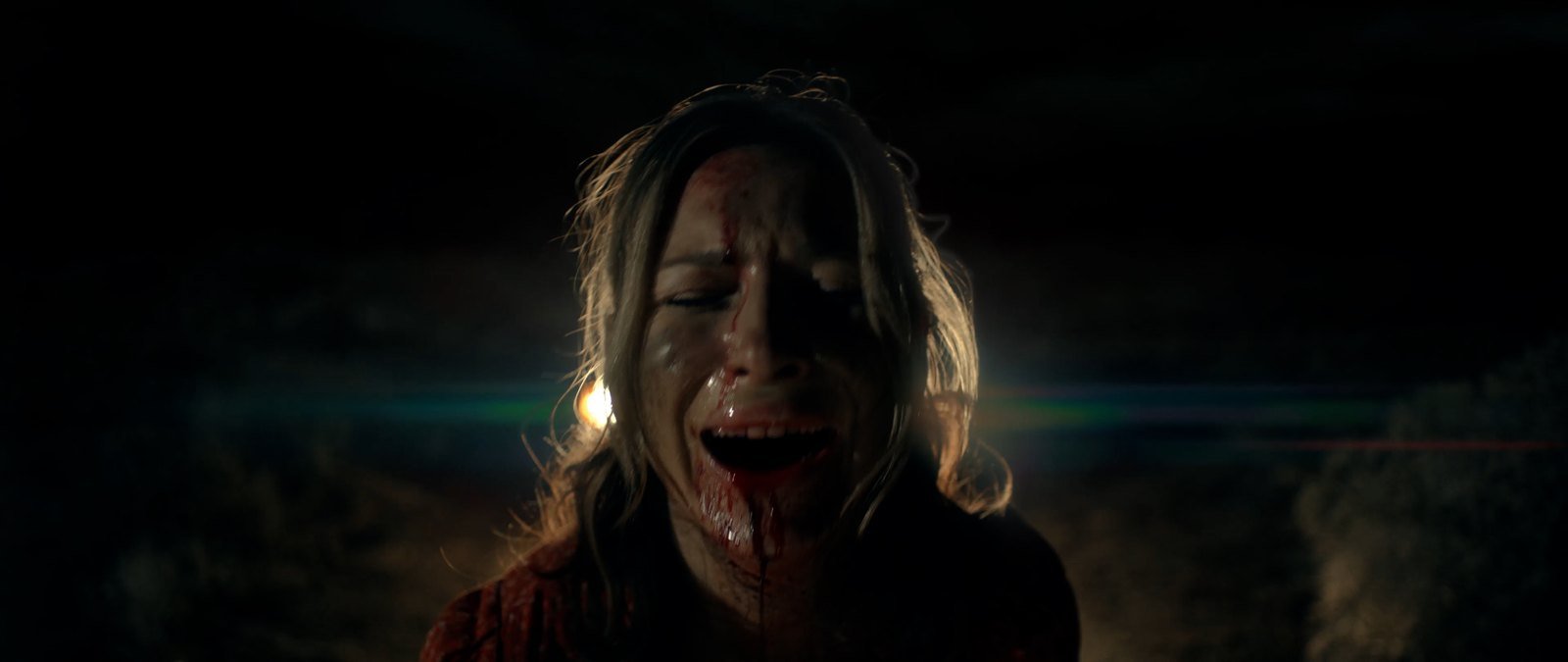
Blood Star is one of the closest modern descendants of Duel because it begins with the same deceptively simple idea: a person travelling alone encounters someone on the road and gradually realises that the encounter has become a hunt. Bobbi Torres is driving across the American desert when she attracts the attention of Sheriff Bilstein. At first, the situation still belongs to the world of ordinary road anxiety. Bilstein is intimidating, intrusive and clearly abusing the power of his position, but Bobbi does not yet understand how dangerous he really is.
Like David Mann in Duel, Bobbi discovers that distance is not solving the problem. The road should allow her to escape, yet the same figure keeps returning. The difference is that Spielberg deliberately removes the identity of the man behind the truck, while Blood Star places the predator directly in front of us — Sheriff Bilstein talks to Bobbi, questions her and carries a badge, using the appearance of legitimate authority to get closer than an obviously threatening stranger could.
Both films take enormous landscapes and somehow make them claustrophobic. If what you love about Duel is the idea of an ordinary journey becoming a private game between hunter and hunted, Blood Star belongs very close to the top of the list.
2. Jaws (1975)
Roy Scheider as Martin Brody
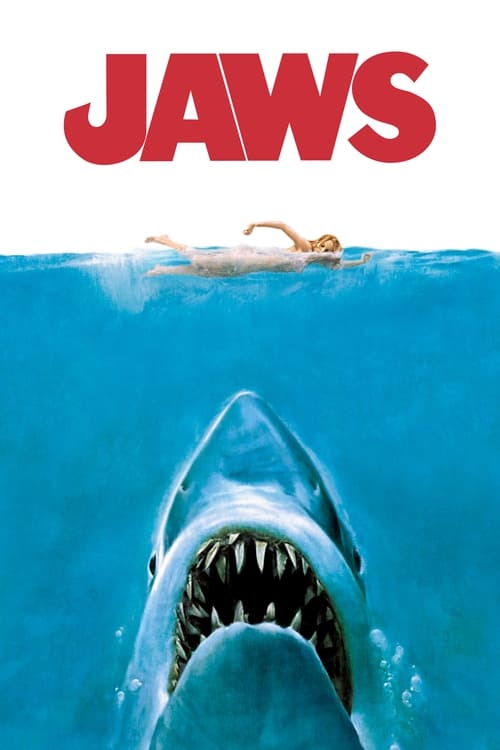
Jaws might appear to be an unusual recommendation in an article about movies like Duel, but the relationship between the two films is fundamental to understanding Steven Spielberg’s development as a suspense filmmaker. Roy Scheider plays Martin Brody, the police chief of Amity Island, who becomes convinced that a great white shark is responsible for a series of attacks while local officials resist closing the beaches.
The suspense mechanics are strikingly similar: Spielberg withholds the threat. In Duel, the tanker becomes frightening before we know anything about the driver. In Jaws, the shark becomes terrifying long before the audience gets a clear look at it. Both films are about something more primal than their plots suggest: an ordinary human being becomes aware that something powerful has identified him as prey.
3. The Hitcher (1986)
Rutger Hauer as John Ryder · C. Thomas Howell as Jim Halsey
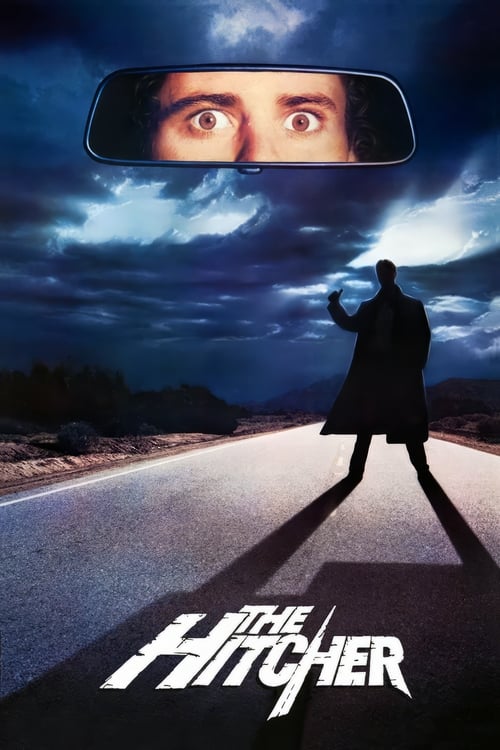
Robert Harmon’s The Hitcher takes the basic pursuit architecture of Duel and gives the predator a face. Jim Halsey makes the mistake of picking up a hitchhiker during a storm who introduces himself as John Ryder and within minutes reveals that he is a killer. Jim escapes the immediate encounter, but Ryder keeps reappearing along the highway.
The major difference is intimacy. Spielberg keeps the truck driver almost completely hidden. The Hitcher brings John Ryder directly into the protagonist’s space — he speaks to Jim, watches him and seems fascinated by him. That makes The Hitcher feel almost like Duel after the truck driver finally steps out of the cab.
4. Breakdown (1997)
Kurt Russell as Jeff Taylor
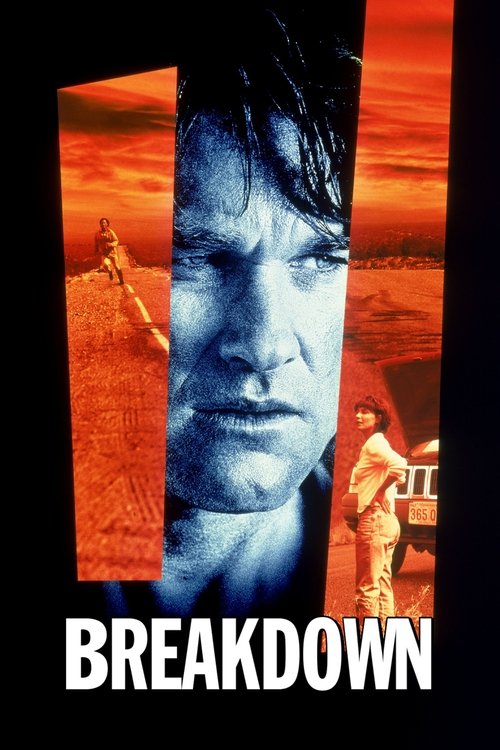
Jonathan Mostow’s Breakdown takes the fear of the isolated highway and adds another primal anxiety: someone you love disappears in a place you do not understand. Jeff Taylor is driving through the American Southwest with his wife Amy when their Jeep breaks down and a truck driver offers to take her to a diner — where she never arrives.
The connection to Duel lies in the same vulnerability. Both protagonists are outsiders travelling through enormous landscapes. Their cars initially represent independence, but something happens that makes the vehicle insufficient protection. What was once freedom becomes exposure.
5. Joy Ride (2001)
Paul Walker as Lewis Thomas · Steve Zahn as Fuller Thomas
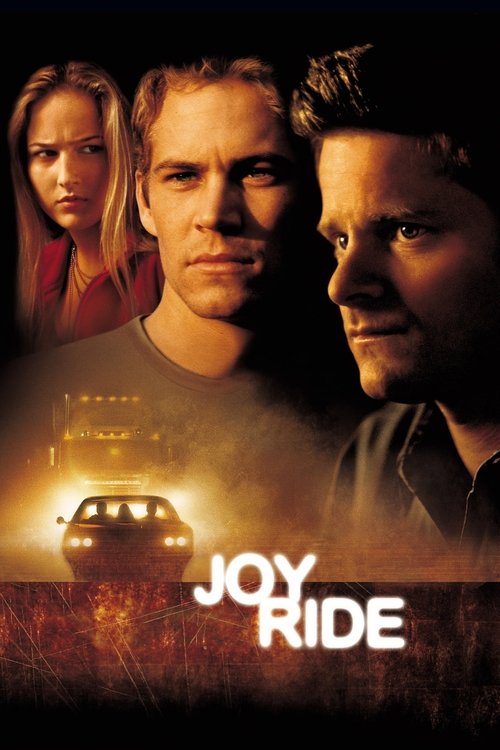
John Dahl’s Joy Ride brings the unseen highway predator into the age of CB radio. Two brothers amuse themselves during a cross-country drive by pranking a truck driver calling himself Rusty Nail — who decides they need to understand the consequences.
The connection to Duel is particularly strong because Rusty Nail, like Spielberg’s truck driver, is largely defined through sound and machinery rather than physical presence. He becomes frightening because he could be anywhere. The less we see, the larger he becomes.
6. Alone (2020)
Jules Willcox as Jessica
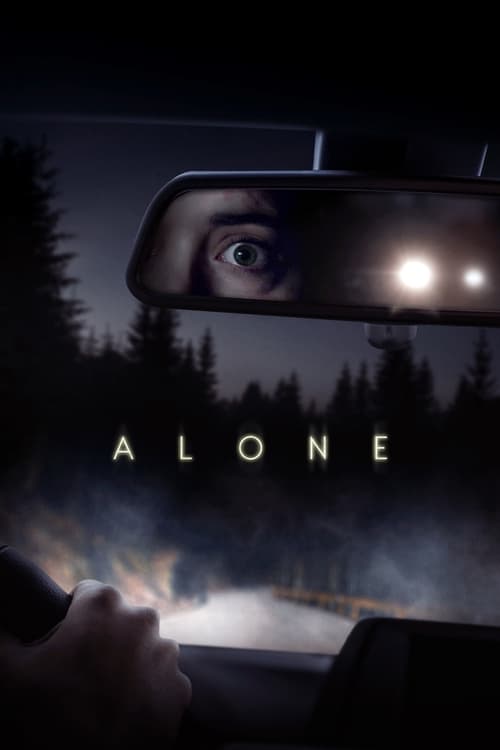
John Hyams’ Alone distils road pursuit back to something close to the simplicity of Duel. Jessica, driving alone through the Pacific Northwest, keeps encountering the same man on the road and slowly understands the encounters are not accidental.
That is precisely the mechanism Duel uses: David Mann initially interprets the tanker as an obnoxious driver, only gradually realising he has become the target of deliberate aggression. Both movies create suspense from the moment coincidence becomes intent.
7. No Country for Old Men (2007)
Javier Bardem as Anton Chigurh · Josh Brolin as Llewelyn Moss
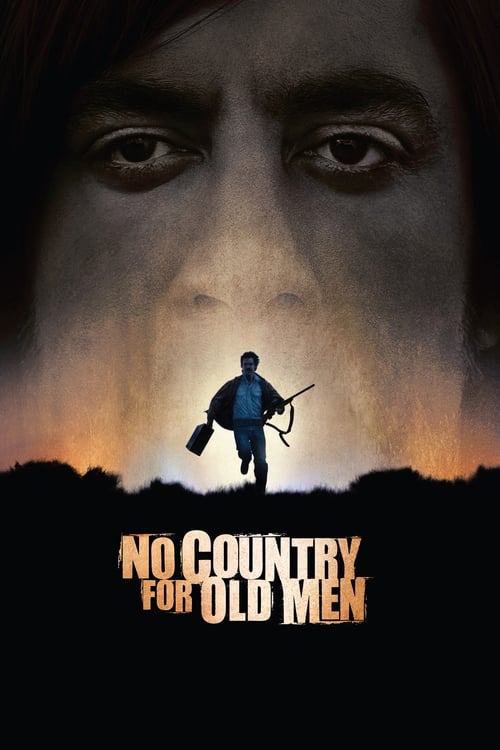
The Coen brothers’ No Country for Old Men takes the pursuit thriller into a more philosophical direction, but Anton Chigurh belongs to the same lineage of seemingly unstoppable predators. Llewelyn Moss takes a case of money from a drug deal gone wrong, bringing Chigurh into his life.
Like the tanker in Duel, Chigurh often feels less like an ordinary antagonist and more like a force moving through the landscape. He does not become emotional and does not appear hurried. He simply keeps coming.
8. Sorcerer (1977)
Roy Scheider
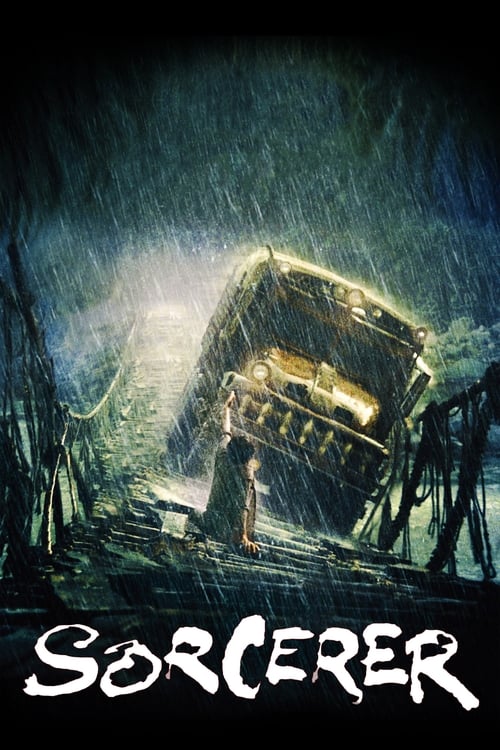
William Friedkin’s Sorcerer approaches vehicle suspense from a very different direction. Desperate men are hired to transport unstable dynamite through dangerous jungle roads, where every bridge, pothole and corner could trigger an explosion.
The connection to Duel lies in the way machinery and landscape become central dramatic characters. These are not films where trucks simply carry people between scenes — the vehicles are the scenes. Movement itself becomes suspense.
9. Mad Max (1979)
Mel Gibson as Max Rockatansky

George Miller’s original Mad Max takes road pursuit into a near-future Australia where highways have become spaces of violence and social collapse. Max Rockatansky pursues motorcycle gangs across increasingly lawless roads, and after violence reaches his own family, the pursuit becomes personal.
The world of Mad Max is much larger than Duel, but the films share a fundamental understanding of how powerful vehicle movement can be on screen: engines become voices, speed becomes threat and roads become arenas.
10. Roadgames (1981)
Stacy Keach as Pat Quid · Jamie Lee Curtis
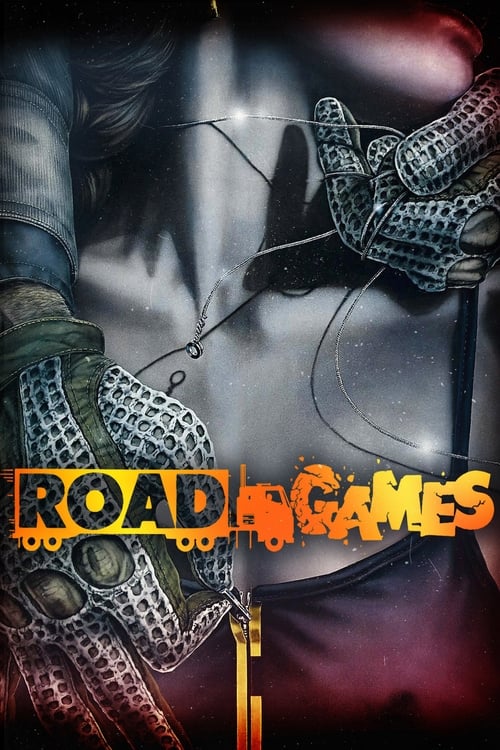
Richard Franklin’s Roadgames turns the Australian highway into a moving mystery. A truck driver crossing the Nullarbor begins noticing a suspicious van as women disappear along the route, and a hitchhiker becomes involved in his attempts to understand what he has seen.
Like Duel, the film is fascinated by what drivers can observe through windows and mirrors while travelling — a recurring vehicle begins to feel impossible to ignore.
11. Wolf Creek (2005)

Greg McLean’s Wolf Creek turns the huge Australian outback into a predator’s private territory. Three backpackers become stranded and are approached by a friendly local who offers assistance — a decision that puts them completely under his control. For more survival thrillers built on isolation and pursuit, see our full ranking.
The film differs from Duel because its predator eventually becomes highly visible, but the use of landscape is closely related: an enormous empty space can become more claustrophobic than a small room, because there is nowhere to hide and the person pursuing you understands the territory better than you do.
12. Death Proof (2007)
Kurt Russell as Stuntman Mike
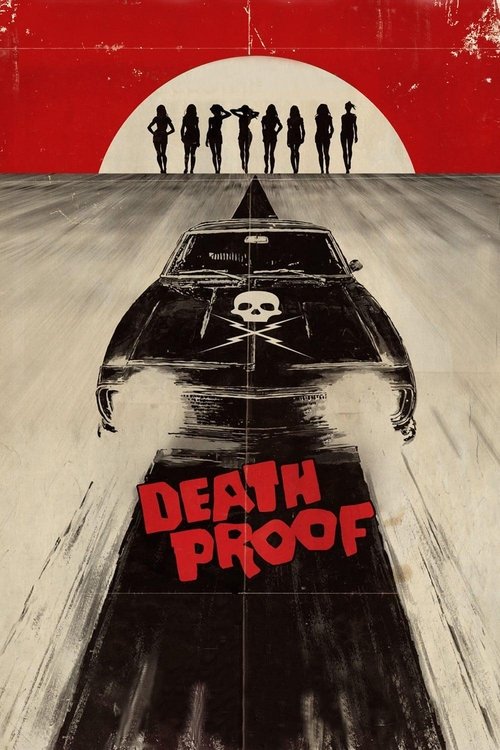
Quentin Tarantino’s Death Proof turns the vehicle itself into a deliberate murder weapon. Stuntman Mike has modified his car so he can survive crashes that would kill anyone else involved, and uses that advantage to hunt women on the road.
The link to Duel is obvious: the car is not simply something driven by the villain, it becomes an extension of him. Tarantino is far more explicit about his predator than Spielberg, but the fear comes from the same source.
13. The Wages of Fear (1953)

Henri-Georges Clouzot’s The Wages of Fear is another foundational example of mechanical suspense. Four desperate men agree to transport highly unstable nitroglycerin across dangerous terrain in two trucks, where one serious mistake could kill everyone.
Long before Duel, Clouzot demonstrated how a vehicle moving through a landscape could create almost unbearable tension without traditional action sequences. Duel applies a similar understanding to pursuit — the machinery is not background, it determines what the characters can survive.
14. Cape Fear (1991)
Robert De Niro as Max Cady · Nick Nolte as Sam Bowden
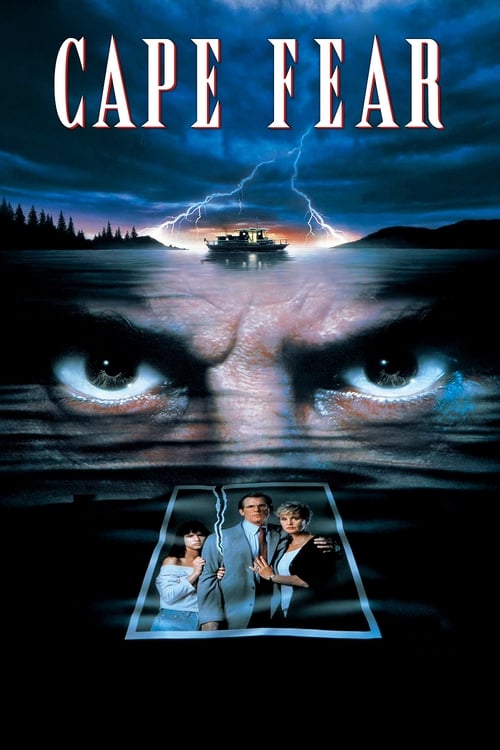
Martin Scorsese’s Cape Fear is not a road movie, but it belongs here because of the relentless-pursuer structure. Max Cady does not simply attack — he watches, appears, waits and allows the family to understand that he can reach them, which is psychologically close to what the truck does in Duel.
The film demonstrates that relentless pursuit works whether the predator uses a tanker truck, a car or simply his own physical presence.
15. Unhinged (2020)
Russell Crowe
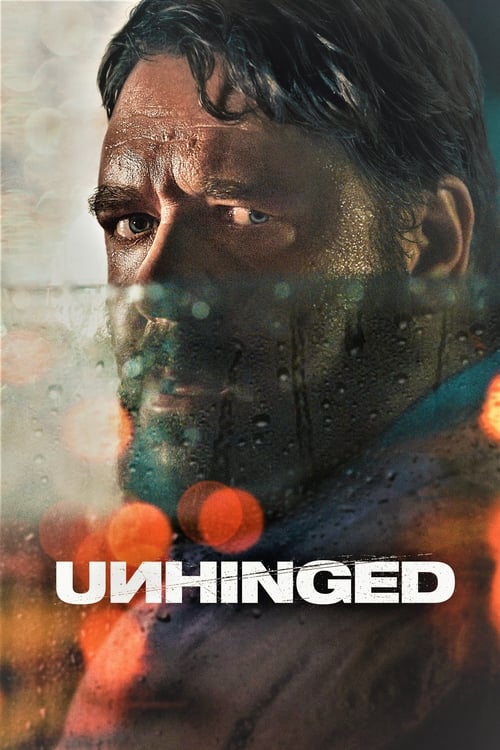
Unhinged takes the road-rage element of Duel and makes it brutally explicit. A volatile driver becomes enraged after a minor traffic confrontation with a woman named Rachel, and instead of letting the incident pass, begins stalking her and turning a moment of road irritation into a campaign of terror.
The similarity to Duel is immediate: both films begin with an everyday driving interaction that should have no lasting consequences.
16. Vanishing Point (1971)
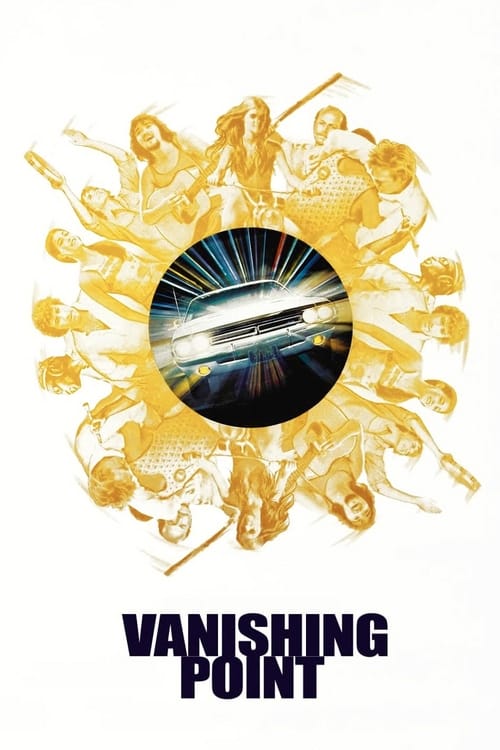
Released the same year as Duel, Vanishing Point is a useful companion to it. A driver named Kowalski bets he can deliver a car across the American West at impossible speed, and the police turn it into a slow national manhunt. It is less about terror and more about the highway as an existential dead end, all sun-blasted vistas and a man who can only keep his foot down. If Duel is about the road hunting you, this is about being unable to stop driving even when the road runs out.
Then one participant refuses to let it end.
How Duel Became the Blueprint for a New Kind of Spielberg Suspense
One of the reasons Duel remains so important is that it established techniques Spielberg would continue refining throughout his career. The film demonstrates how powerful withholding can be — the audience does not need to see the truck driver clearly because the truck already tells us everything we need emotionally. Its arrival means danger, its horn means threat and its engine becomes a voice. That is a lesson he would use brilliantly again in Jaws.
Duel and Jaws: The Truck Became the Shark
The connection between Duel and Jaws goes far deeper than both being Steven Spielberg thrillers — they are built around remarkably similar suspense principles. In Duel, David Mann sees the tanker truck and immediately understands the threat has returned. In Jaws, a fin, a barrel or John Williams’ music performs the same function. Both threats also dominate environments humans normally believe they control. For the full list of films that share this suspense architecture, see movies like Jaws.
Why the Truck in Duel Is Scarier Because We Never Meet the Driver
Showing the driver would have answered questions. Spielberg instead makes the questions part of the fear: who is he, why has he selected David, has he done this before? None of those questions receive a satisfying explanation, which makes the pursuit feel arbitrary — and arbitrary violence is frightening because it means there is no behaviour that guarantees safety.
Movies Where Vehicles Become the Villain
Cars and trucks usually represent freedom in cinema. Films like Duel reverse that idea. The tanker becomes a predator. Rusty Nail’s truck in Joy Ride becomes the physical embodiment of an unseen stalker. Stuntman Mike’s car in Death Proof becomes a murder weapon. Sheriff Bilstein’s patrol car in Blood Star represents both mobility and institutional authority. Once the vehicle changes sides, the road changes meaning too — it is no longer a route away from danger, it is where the danger lives.
What to Watch After Duel
If what you love most is the relentless road pursuit, start with Blood Star, The Hitcher, Joy Ride and Alone. If you are fascinated by Spielberg’s technique of withholding the threat, Jaws is essential. For vehicle-driven suspense, watch Sorcerer, The Wages of Fear, Death Proof and Mad Max. For stories about apparently unstoppable predators, move to No Country for Old Men or Cape Fear.
Watch Blood Star
Blood Star is a psychological desert road thriller about Bobbi Torres, a young woman driving alone across the American Southwest who becomes the target of Sheriff Bilstein, a predatory lawman using his badge, patrol car and knowledge of the landscape to control the hunt. If you like Duel, The Hitcher, Joy Ride and other films where a simple journey becomes a relentless predator-and-prey chase, Blood Star is built from the same road-thriller tradition.


See every legitimate way to watch Blood Star free →
Film posters via TMDB.
Related guides
- Movies Like The Hitcher
- Movies Like Breakdown
- Movies Like Joy Ride
- Movies Like No Country for Old Men
- Movies Like Death Proof
- Movies Like Cape Fear
More on Blood Star
- Watch Blood Star free on Tubi & Prime Video (USA + UK)
- Movies Like Blood Star
- Blood Star — Cast & Filmmakers

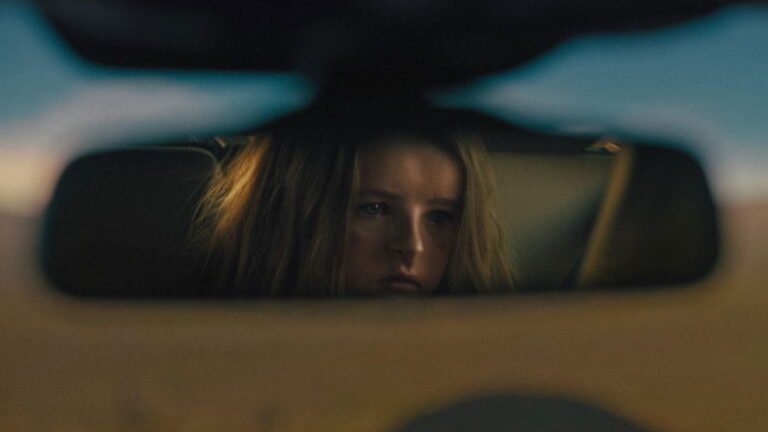
Table of Contents
- 1. Blood Star (2024)
- 2. Jaws (1975)
- 3. The Hitcher (1986)
- 4. Breakdown (1997)
- 5. Joy Ride (2001)
- 6. Alone (2020)
- 7. No Country for Old Men (2007)
- 8. Sorcerer (1977)
- 9. Mad Max (1979)
- 10. Roadgames (1981)
- 11. Wolf Creek (2005)
- 12. Death Proof (2007)
- 13. The Wages of Fear (1953)
- 14. Cape Fear (1991)
- 15. Unhinged (2020)
- 16. Vanishing Point (1971)
- How Duel Became the Blueprint for a New Kind of Spielberg Suspense
- Duel and Jaws: The Truck Became the Shark
- Why the Truck in Duel Is Scarier Because We Never Meet the Driver
- Movies Where Vehicles Become the Villain
- What to Watch After Duel
- Watch Blood Star
- Related guides
- More on Blood Star