Quick Answer
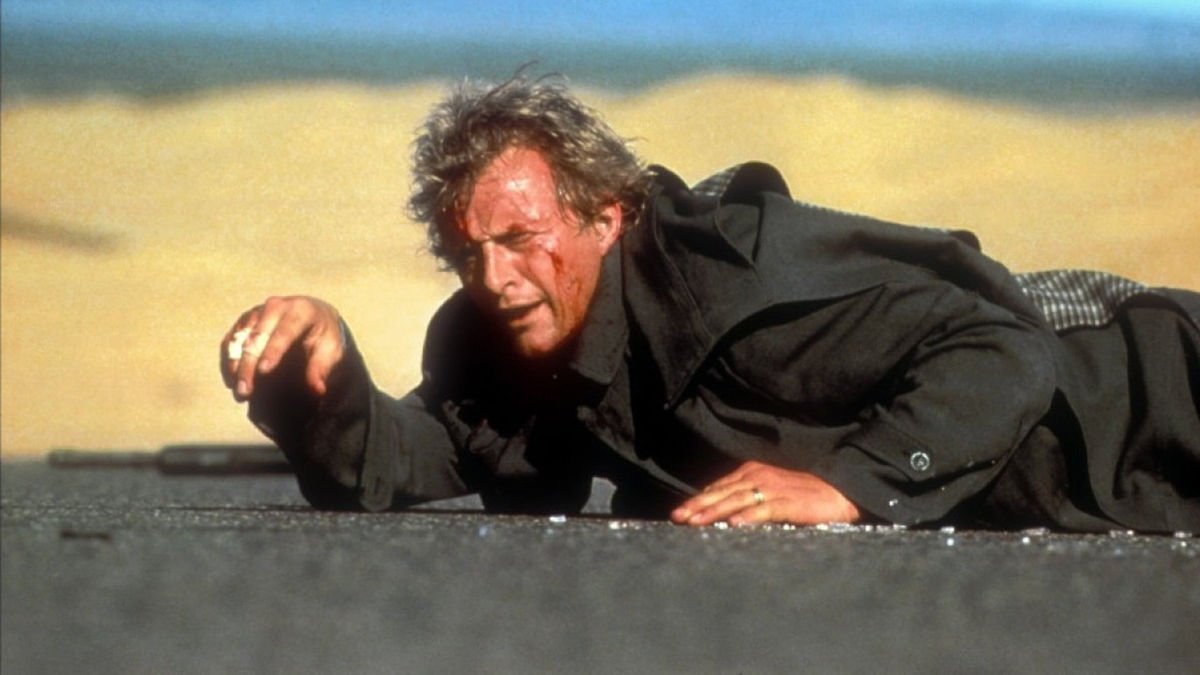
The 1970s defined the road and desert thriller by treating the open highway as a place of exposure rather than escape: Duel, Vanishing Point, Two-Lane Blacktop, Badlands, The Texas Chain Saw Massacre, Race with the Devil, The Hills Have Eyes, The Driver and Mad Max all strip away the safety of civilisation once a character leaves the city limits. Blood Star (2024) is the modern film that continues the same tradition — distance, authority and dread over spectacle.
Key Takeaways
- Duel (1971) set the template for the genre: an unseen, motiveless threat and a desert highway where civilisation’s rules quietly stop applying.
- Vanishing Point and Two-Lane Blacktop turned the road itself into the subject, prioritising motion, myth and identity over plot or destination.
- Badlands and The Texas Chain Saw Massacre used beautiful landscapes and ordinary rural Americana to conceal real horror and violence.
- Race with the Devil, The Hills Have Eyes and Mad Max escalated the decade’s central fear: that authority, community, or society itself could turn hostile.
- The Driver carried the same existential-loner sensibility into the nocturnal city, influencing decades of chase cinema that followed.
- Blood Star (2024) revives the sensibility today, using distance, isolation and a corrupt authority figure rather than constant spectacle.
The 1970s owned the road.
It was the decade when American cinema stopped treating the highway simply as a route toward adventure and began presenting it as a place of danger, isolation and psychological collapse. The open road still promised freedom, but freedom now came without protection. Once a character left the city limits, there might be no police, no witnesses and no guarantee that the ordinary rules of civilisation would continue to apply.
Across the decade, filmmakers transformed two-lane blacktop, desert truck stops, isolated farmhouses and enormous western skies into landscapes of paranoia. The protagonists were often ordinary people: salesmen, holidaymakers, young couples or drifters who found themselves pursued, stranded or confronted by something they could not understand. These films were frequently stripped down, physically punishing and suspicious of authority. Their villains did not always explain themselves, and sometimes the landscape itself seemed to be the real antagonist.
The influence of these films continues to run through modern survival thrillers, road movies and rural horror. Here are some of the essential road and desert films of the 1970s, followed by one recent independent thriller that feels as though it might have been discovered in a forgotten drive-in programme from the same era.
Duel (1971)
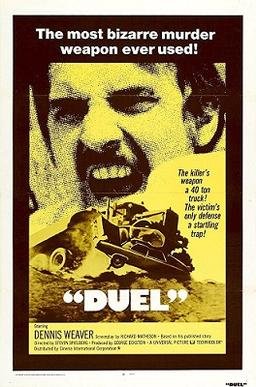
Before Jaws made Steven Spielberg a household name, he directed one of the purest road thrillers ever made. Originally produced for television, Duel follows David Mann, a mild-mannered travelling salesman whose attempt to overtake a slow-moving tanker truck develops into an inexplicable campaign of intimidation and attempted murder.
The premise is almost absurdly simple, but Spielberg understands that simplicity is the film’s greatest strength. The truck driver is never clearly seen, no motive is provided and there is no wider conspiracy waiting to be uncovered. The tanker simply appears to take offence at Mann’s existence. It becomes less like a vehicle than a prehistoric animal: filthy, relentless and apparently built to survive in an environment where its victim cannot.
The California desert roads are essential to the film’s terror. Mann is rarely entirely alone, yet nobody he encounters seems able to recognise what is happening or offer meaningful help. Diners, petrol stations and roadside businesses provide only the illusion of safety. Each return to the highway places him back inside a private nightmare shared only by himself and the unseen driver.
What makes Duel endure is its refusal to overcomplicate the conflict. It is about road rage, male insecurity, modern machinery and the fragility of civilised behaviour, but it never pauses to announce those themes. It simply tightens the pressure until an ordinary man is reduced to something instinctive and desperate.
Almost every subsequent film about a motorist being hunted across an empty landscape owes it something.
Vanishing Point (1971)
If Duel presents the road as a trap, Vanishing Point treats it as the last remaining form of freedom.
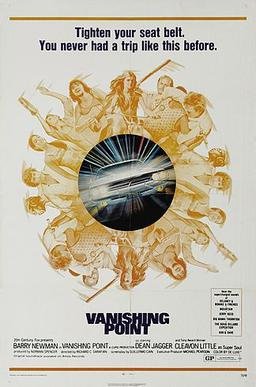
Barry Newman plays Kowalski, a car-delivery driver tasked with transporting a white Dodge Challenger from Denver to San Francisco. Fuelled by amphetamines and personal despair, he makes a seemingly impossible wager that he can complete the journey in a matter of hours. What begins as reckless driving gradually turns into a cross-state pursuit involving highway patrol officers, roadblocks and a growing countercultural audience.
Kowalski is not a conventional action hero. He speaks very little, reveals almost nothing and appears to be travelling toward an ending he already understands. His speed is less about reaching San Francisco than refusing to be stopped. The Challenger becomes both an escape vehicle and a moving declaration of independence.
The film’s desert imagery is now iconic: a brilliant white car cutting through immense stretches of Nevada and California, surrounded by landscapes that make both driver and vehicle appear temporary. The road offers Kowalski freedom, but it is a freedom that can only exist while he remains in motion.
Vanishing Point is part chase film, part existential western and part countercultural elegy. Its plot is deliberately fragmented, interrupted by memories, strange encounters and the commentary of a blind radio broadcaster who transforms Kowalski into a folk hero. The result feels less like a conventional thriller than a sun-bleached American myth.
Its influence can be seen throughout car cinema, music videos, advertising and films about doomed outsiders who choose momentum over surrender.
Two-Lane Blacktop (1971)
Released in the same year as Duel and Vanishing Point, Monte Hellman’s Two-Lane Blacktop approaches the American road from an entirely different direction.
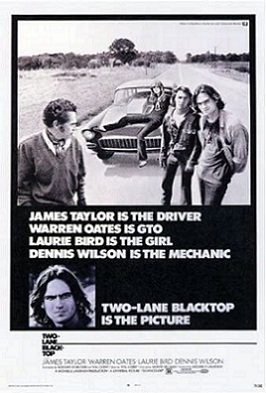
James Taylor and Dennis Wilson play two unnamed men known only as the Driver and the Mechanic. They travel across the country in a customised 1955 Chevrolet, earning money through informal street races. Along the way, they meet a drifting young woman and challenge the driver of a yellow Pontiac GTO to a cross-country race.
That description makes the film sound more eventful than it is. Two-Lane Blacktop deliberately removes almost everything that a traditional road movie would normally provide. There are no conventional character arcs, little backstory and no triumphant destination. Conversations begin without resolving anything. Relationships form and dissolve with barely an explanation. Even the central race gradually stops mattering.
The film is instead about people who have replaced identity with motion. The Driver and the Mechanic understand engines more easily than they understand themselves. Warren Oates‘s GTO driver continuously reinvents his personal history depending on who happens to be sitting beside him. Nobody appears entirely certain where they are going or what might happen if they arrive.
The American highway is presented as an endless system of petrol stations, diners, cheap rooms and temporary encounters. The film’s hypnotic rhythm, long silences and refusal to provide easy meaning have made it one of the defining cult road movies.
Where Vanishing Point turns the driver into a legend, Two-Lane Blacktop quietly suggests that the road can erase a person altogether.
Did You Know?
In 2012, Two-Lane Blacktop was selected for preservation in the United States National Film Registry by the Library of Congress for being “culturally, historically, or aesthetically significant” — a rare honour for a film that flopped commercially on its original 1971 release.
Badlands (1973)
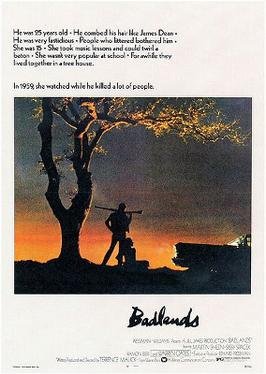
Terrence Malick‘s debut feature was inspired by the real-life murder spree of Charles Starkweather and Caril Ann Fugate, but Badlands is far removed from a conventional true-crime film.
Martin Sheen plays Kit, a young garbage collector with the appearance and mannerisms of James Dean. Sissy Spacek plays Holly, a teenage girl living with her strict father in South Dakota. After Kit kills Holly’s father, the couple flee together, drifting across the plains while leaving further violence behind them.
What makes the film so unsettling is the distance between what happens and how Holly describes it. Her calm, romantic voice-over transforms murder, flight and emotional emptiness into something resembling a teenage adventure story. She speaks as though she and Kit are lovers in a grand legend, even as the film reveals two profoundly immature people moving through consequences they barely comprehend.
Malick photographs the natural world with extraordinary tenderness. Golden fields, trees, rivers and enormous skies surround acts of abrupt violence. The beauty does not soften the horror; it makes it stranger. Kit and Holly seem both insignificant within the landscape and convinced that the landscape exists for them.
Unlike the enclosed pursuit of Duel, Badlands uses movement to expose its characters’ emptiness. Kit imagines himself as a charismatic outlaw, but the further he travels, the more clearly his performance begins to collapse. The road does not transform him into a legend. It reveals how badly he wants to become one.
The road does not transform him into a legend. It reveals how badly he wants to become one.
The film’s poetic detachment, romanticised criminal couple and dreamlike Americana influenced generations of filmmakers, including David Lynch, Quentin Tarantino and the Coen brothers.
The Texas Chain Saw Massacre (1974)
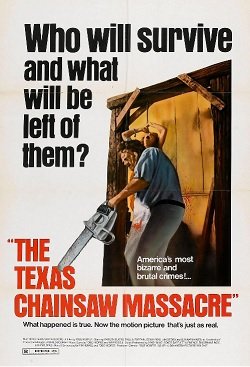
Although usually discussed as a horror film, Tobe Hooper‘s The Texas Chain Saw Massacre is also one of the decade’s most important road-trip nightmares.
A group of young people travel through rural Texas to investigate reports that a family grave may have been disturbed. Their journey begins with unsettling signs: reports of grave robbery, a disturbed hitchhiker, an apparently abandoned petrol station and a landscape scorched by heat. After leaving the main road, they discover a farmhouse occupied by a family whose relationship with the local slaughterhouse has taken a grotesque new form.
The film’s power comes partly from its physical texture. The heat appears unbearable. The rooms feel stale, the roads dusty and the air almost unbreathable. Hooper’s use of 16mm photography gives the film the appearance of something found rather than carefully manufactured. Even when relatively little explicit violence is visible, the experience feels dirty, immediate and dangerous.
The opening journey is crucial because it moves the characters steadily away from recognisable society. Each warning is ignored or misunderstood. By the time the group realises the nature of the place they have entered, the road that brought them there no longer offers a believable way out.
The film also reflects the economic anxiety running through much 1970s American cinema. The killers are not supernatural beings but the discarded products of an industrial system that no longer needs them. Their violence is horrifying, but it grows out of unemployment, isolation and a family structure that has decayed into ritual.
Its influence on horror is almost impossible to measure, but its vision of rural America as an unknowable and hostile territory also shaped countless road thrillers that followed.
Race with the Devil (1975)
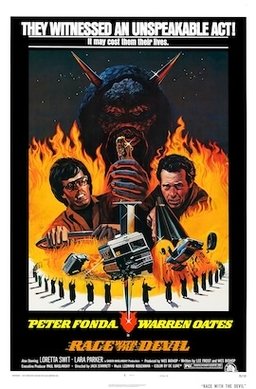
Few films capture 1970s road paranoia as directly as Race with the Devil.
Peter Fonda and Warren Oates play two friends travelling through Texas with their wives in a new recreational vehicle. During an overnight stop in an isolated area, they witness what appears to be a ritualistic murder. After reporting the crime, they begin to suspect that the people responsible know who they are and that the conspiracy extends far beyond the original group.
The RV is an inspired setting for the film. It initially represents comfort, mobility and middle-class escape: a private home capable of carrying its occupants safely through the wilderness. As the pursuit intensifies, that same vehicle becomes a fragile container surrounded by unseen enemies. Windows can be watched, doors can be forced, and every mechanical problem threatens to leave the travellers stranded.
The film steadily undermines the idea that help will be available in the next town. Police officers, campsite residents and apparently ordinary locals may all be connected. Whether every suspicion is justified becomes almost irrelevant because the characters can no longer afford to trust anybody.
Unlike the solitary conflict in Duel, Race with the Devil builds fear through the possibility of collective hostility. The heroes are not being pursued by one identifiable killer but by an entire environment that may have quietly turned against them.
Its combination of road movie, conspiracy thriller, action film and occult horror made it a drive-in favourite. More importantly, it captured a specifically 1970s fear: that respectable America was only a surface, and that beneath it existed a hidden network of violence and belief.
Breakdown (1978)
Not to be confused with Jonathan Mostow’s 1997 thriller of the same name, the lesser-known Breakdown belongs to the broad cycle of films that used mechanical failure and rural isolation as the beginning of a nightmare.
Stories of stranded travellers have always been central to road cinema, but they carried a particular force during the 1970s. Cars promised autonomy, yet that autonomy depended on fuel, machinery and access to help. The moment a vehicle stopped working, the driver was returned to the physical vulnerability that the automobile had appeared to remove.
This tension runs throughout the decade’s desert thrillers. The road offers escape only while the engine runs. A puncture, an empty fuel tank or an overheated radiator can transform an empty landscape from something beautiful into something lethal.
Even the less celebrated films from this period contributed to the genre’s visual and narrative vocabulary: the isolated garage, the unhelpful mechanic, the distant farmhouse, the stranger who knows more than he admits and the growing realisation that leaving the main road was a serious mistake.
The Hills Have Eyes (1977)
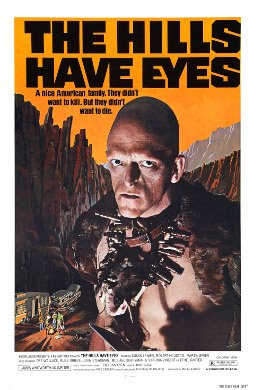
Wes Craven‘s The Hills Have Eyes takes the road-trip nightmare and strips away almost every remaining protection.
The Carter family are travelling through the Nevada desert when they leave the main route and crash in an isolated former military testing area. Trapped without transport, they become the targets of a violent family living in the surrounding hills.
Like The Texas Chain Saw Massacre, the film places two versions of the American family against one another. The Carters consider themselves ordinary and civilised, while the people attacking them are initially presented as monstrous outsiders. As the struggle continues, however, the distinction becomes increasingly unstable. Survival requires the supposedly respectable family to discover its own capacity for brutality.
The desert is not merely a backdrop. It exposes everyone. There are few places to hide, almost no reliable sources of water and no realistic expectation that assistance will arrive. The landscape has also been damaged by the military, giving the violence a wider historical context. This is not untouched wilderness but land abandoned after official power has finished using it.
Craven made the film with limited resources, yet that roughness gives it conviction. It feels hot, cruel and physically exhausting. Its influence can be seen throughout survival horror, from later mutant films to stories about tourists who discover that isolation has its own social order.
The Driver (1978)
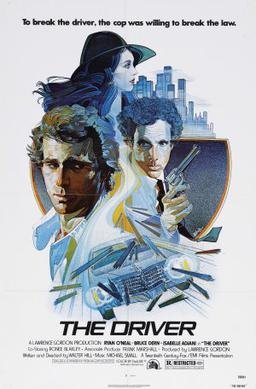
Walter Hill‘s The Driver relocates the existential cool of the early-1970s road movie into the nocturnal city, but it remains an essential part of the decade’s driving cinema.
Ryan O’Neal plays an unnamed getaway driver whose extraordinary control behind the wheel makes him the target of an equally obsessive detective. The characters are identified primarily by function rather than biography: the Driver, the Detective and the Player. Their identities have been reduced to the roles they perform.
Where Two-Lane Blacktop is loose and meditative, The Driver is controlled and geometric. Its car chases are not chaotic spectacles but precise contests of skill. Hill removes almost all unnecessary dialogue, allowing engines, streets and movement to define character.
Although the film spends little time in the desert, its emotional landscape is similar to the decade’s great road thrillers. The Driver exists outside ordinary society, communicating through action and remaining in motion because stillness would make him vulnerable. The city at night becomes its own wilderness: empty streets, anonymous garages and industrial spaces where normal life appears to have withdrawn.
The film was not a major success on its original release, but its reputation has grown enormously. Its influence can be traced through Michael Mann, Nicolas Winding Refn‘s Drive and countless films built around silent professionals and stripped-down automotive action.
Mad Max (1979)
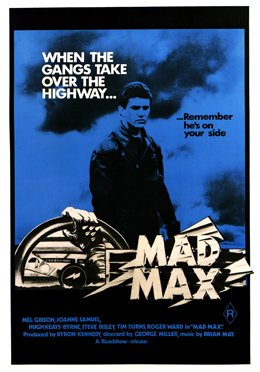
Produced in Australia at the end of the decade, George Miller‘s Mad Max pushed the road thriller toward a new and more extreme future.
Mel Gibson plays Max Rockatansky, a police officer attempting to maintain order as society begins to collapse. Violent motorcycle gangs dominate the highways, institutions are weakening, and the landscape seems to be moving rapidly toward the post-apocalyptic world that would define the later films in the series.
The original Mad Max is smaller and more grounded than many viewers remember. It is not yet a story about desert armies and fortified settlements. It is a revenge thriller unfolding in a recognisable society whose protections are failing. That partial familiarity makes the film disturbing. Cafés, homes and police stations still exist, but the roads between them have become lawless territories.
Miller’s use of speed and practical stunt work made the violence feel genuinely dangerous. Vehicles are not merely transportation but expressions of character, aggression and social power. The road has ceased to connect communities and instead become the place where civilisation is being dismantled.
Released in 1979, the film feels like a culmination of the decade’s anxieties. The suspicious truck driver, the stranded traveller, the hostile rural community and the alienated motorist have given way to a world in which the road itself belongs to whoever is violent enough to control it.
Where to Start
For the clearest through-line from 70s road paranoia to a modern equivalent, watch Duel, then Race with the Devil, then Blood Star — the unseen threat, the collective conspiracy, and the corrupt lone authority figure, back to back.
Blood Star (2024)
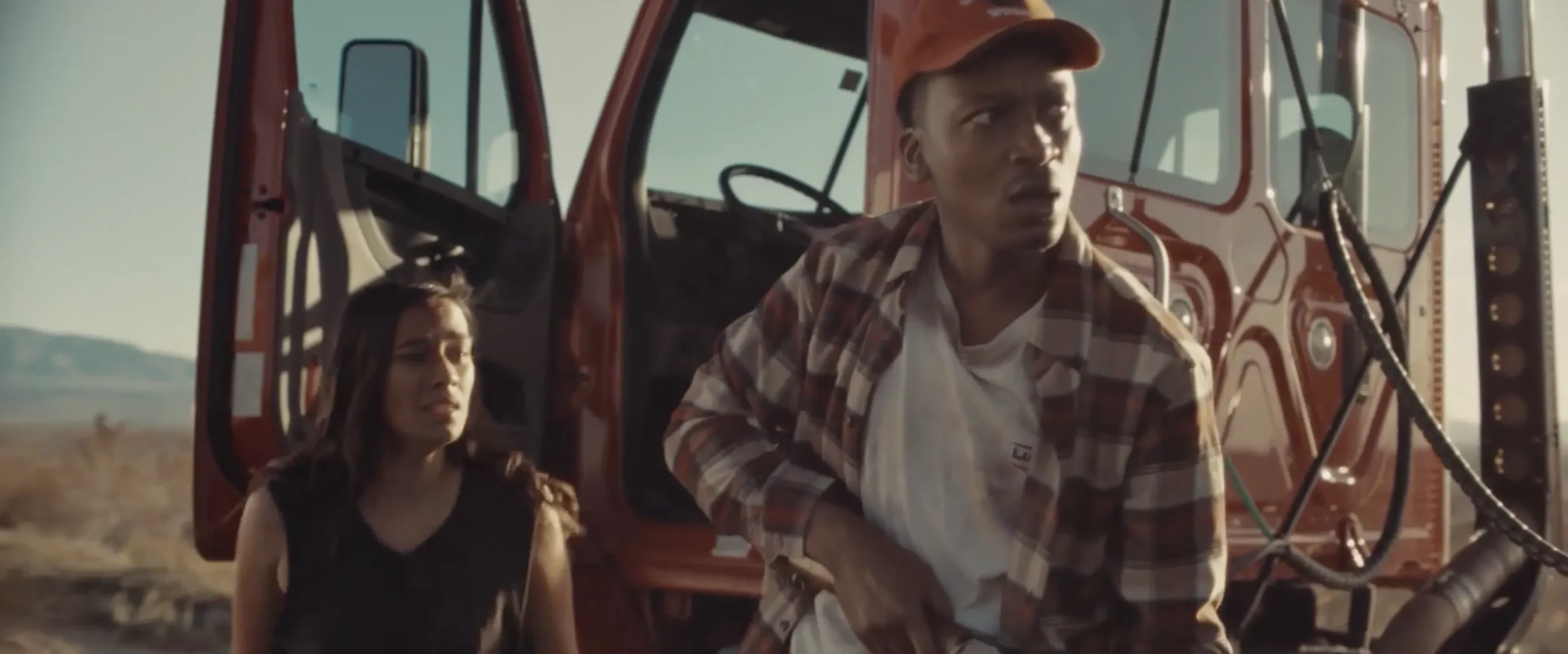
More than four decades later, Blood Star returns to the stripped-down language of the 1970s desert thriller.
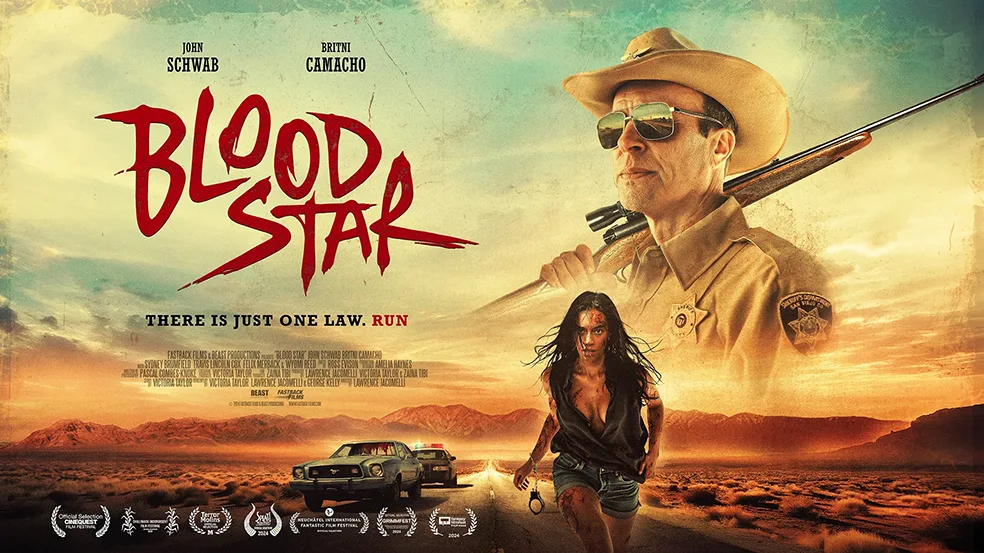
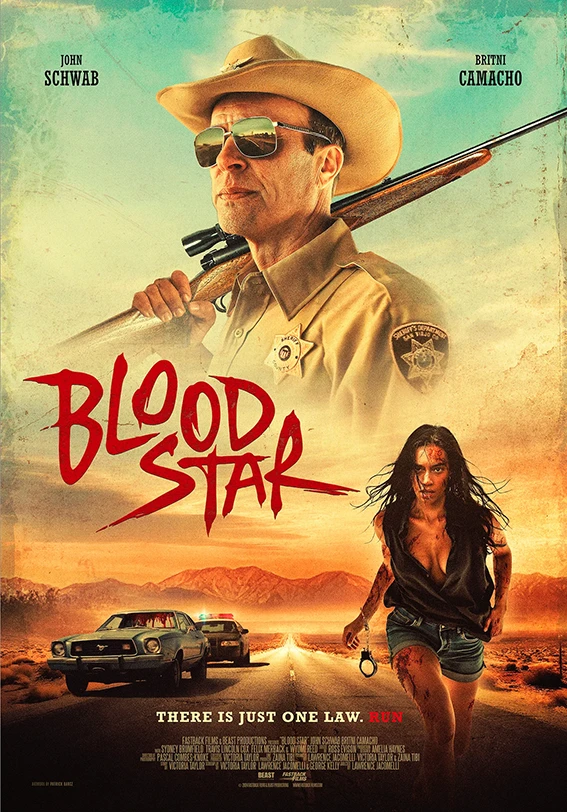
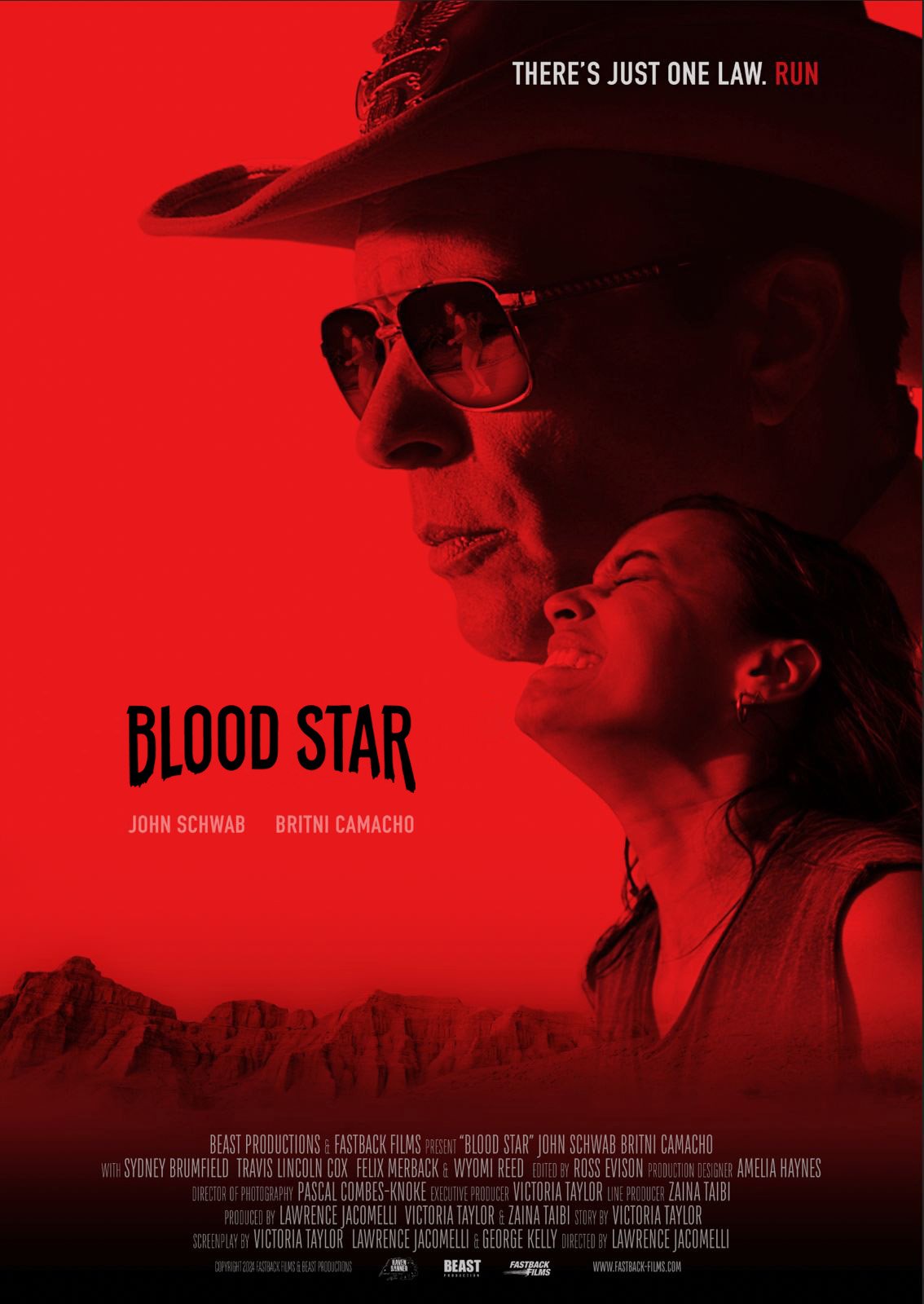
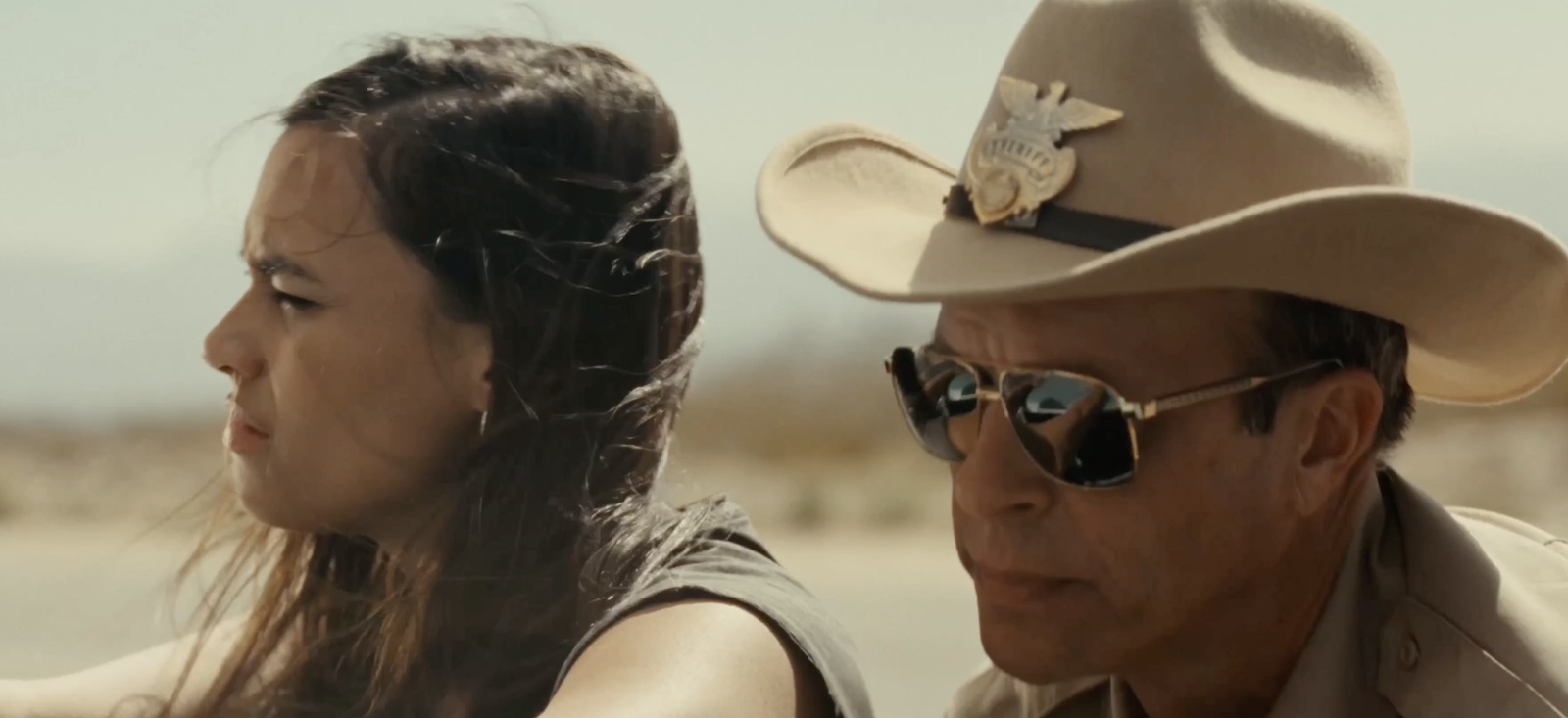
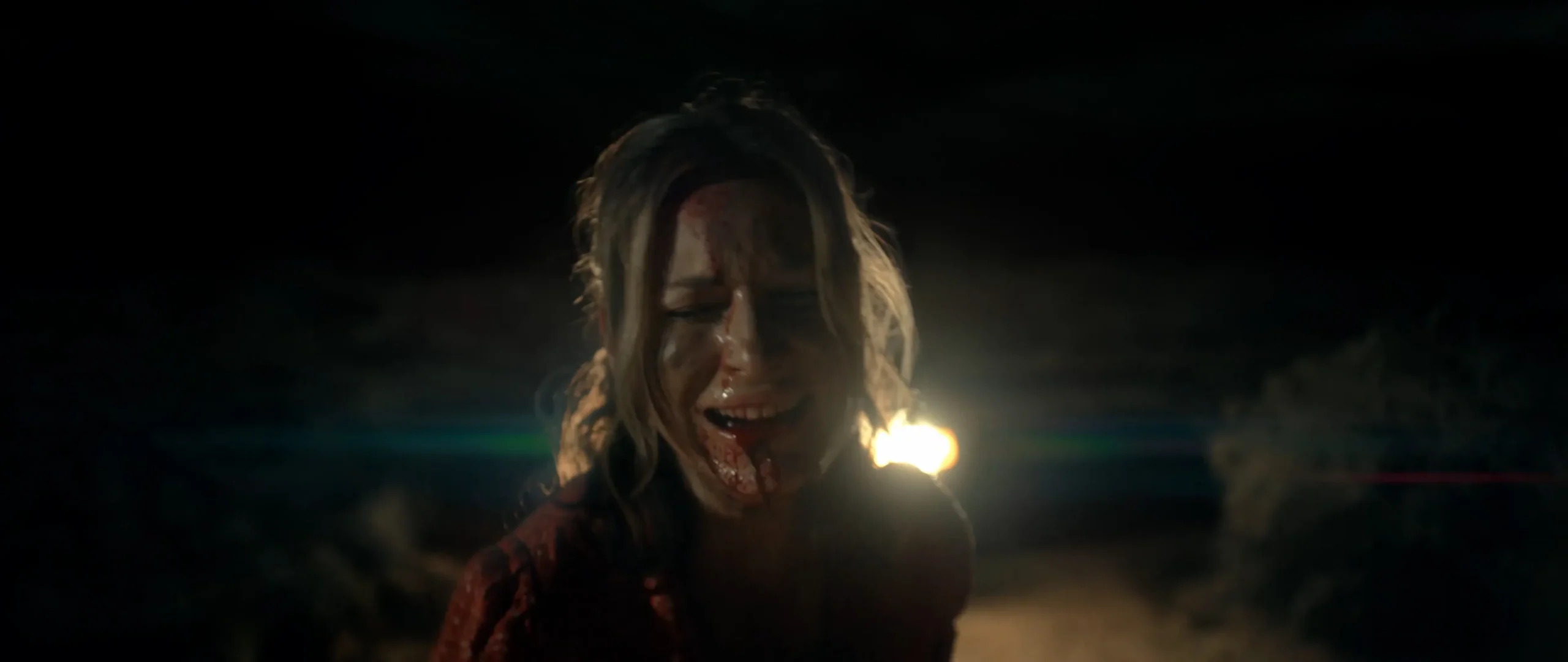
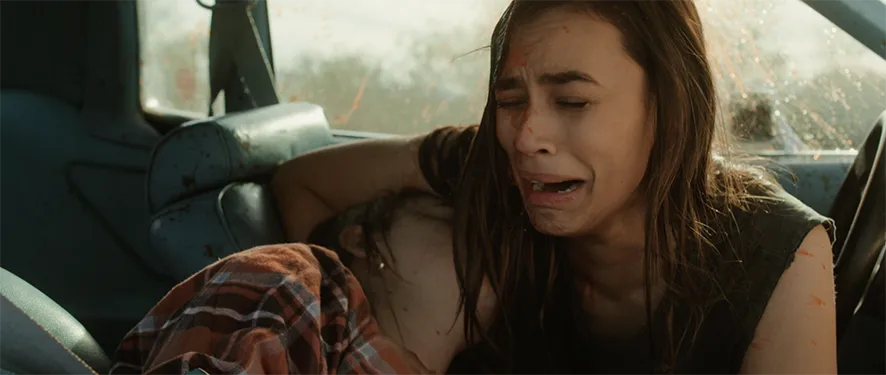
Directed by Lawrence Jacomelli and starring Britni Camacho, the film follows a young woman driving alone through the American Southwest whose encounter with a small-town sheriff develops into a prolonged battle for survival. Rather than relying on a complicated mythology or constant action, the film builds tension through distance, authority and the growing realisation that the person who should represent safety may be the greatest threat.
Shot on location in the Mojave Desert, Blood Star uses the landscape in the tradition of Duel, The Hills Have Eyes and Vanishing Point. The roads appear endless, but there are very few meaningful directions in which to escape. Petrol stations, roadside buildings and police vehicles carry familiar signs of civilisation while gradually becoming part of the trap.
The film’s connection to 1970s cinema is not simply visual. Its central conflict is built around mistrust of authority, the vulnerability of the lone traveller and the terrifying imbalance between a person who knows the territory and one who does not. Like the strongest thrillers of that period, it keeps the premise direct and allows pressure to accumulate through pursuit, delay and uncertainty.
Camacho’s performance anchors the film. Her character is forced to move from confusion and disbelief toward a much more instinctive form of resistance. The sheriff, meanwhile, belongs to a long tradition of road-thriller antagonists whose menace comes partly from the legitimacy of their outward appearance. He does not emerge from nowhere as an obvious monster. He carries a badge, understands the landscape and knows exactly how isolated his target has become.
The independent scale works in the film’s favour. There is little excess, and the emptiness surrounding the characters gives the action weight. Heat, dust, machinery and physical distance become central dramatic elements rather than production decoration.
For viewers drawn to the lean, sun-baked paranoia of 1970s road cinema, Blood Star feels less like a nostalgic imitation than a contemporary continuation of the same tradition.
Other 1970s Road Films Worth Seeking Out
The decade produced far more road cinema than any single list can accommodate. Sam Peckinpah‘s Convoy turned truck drivers into countercultural outlaws. Dirty Mary, Crazy Larry combined crime, speed and doomed rebellion. White Line Fever used the trucking industry as the setting for a story about corruption and resistance, while The Last Run and The Sugarland Express explored criminals, pursuit and the mythology of escape from very different perspectives.
Not all of these films are desert thrillers in the strictest sense, but they share the same fundamental anxiety. Movement is supposed to create freedom, yet the road repeatedly draws its characters deeper into danger.
Why the 1970s Road Thriller Endures
The great road thrillers of the 1970s understood a contradiction that remains powerful today: the open road promises independence, but independence also means exposure.
The open road promises independence, but independence also means exposure.
Inside a city, a person is surrounded by systems, witnesses and possible routes to safety. On an isolated highway, those protections become distant abstractions. A driver may have a vehicle, a map and a destination, yet remain completely vulnerable to mechanical failure, hostile strangers or an authority figure who decides not to obey the rules.
The era also produced a particular kind of antagonist. The tanker truck in Duel, the communities of Race with the Devil, the rural families of The Texas Chain Saw Massacre and The Hills Have Eyes, and the highway gangs of Mad Max all suggest that danger has become embedded in the landscape. There is rarely a simple place to return to once the journey begins.
Modern technology has changed the road movie, but it has not destroyed its central fear. Phones lose signal, batteries fail, authorities cannot always be trusted and enormous landscapes continue to make individuals appear very small. The best contemporary examples understand that technology may alter the details of isolation without eliminating it.
That is why filmmakers continue returning to the imagery established during the 1970s: the solitary car, the shimmering horizon, the roadside stop, the figure in the rear-view mirror and the terrible awareness that the next town may be much farther away than expected.
For audiences who love that tradition of heat, pursuit and highway paranoia, Blood Star is a modern film worth discovering. More information about the film and current viewing options can be found at bloodstarmovie.com and its watch page.
Frequently Asked Questions
Duel (1971), Steven Spielberg’s television debut, is widely regarded as the film that defined the genre: a mild-mannered salesman pursued by a faceless, motiveless tanker truck on a California desert highway.
Mad Max (1979) is closer to a revenge thriller than horror, but it belongs firmly to the 70s road-cinema tradition — it depicts a society whose highways have become lawless territory as institutions collapse around them.
Blood Star (2024) shares the same core ingredients as Duel, The Hills Have Eyes and Vanishing Point: a real desert location, mistrust of authority, a lone traveller with nowhere to hide, and tension built through pursuit and delay rather than spectacle.
The desert removes the usual protections of civilisation — witnesses, cover, water, cell signal and quick access to help — so that mechanical failure, a hostile stranger or a corrupt authority figure becomes immediately life-threatening.
Two-Lane Blacktop (1971) was a commercial flop on release but was later preserved in the US National Film Registry; The Driver (1978) also underperformed at the box office before becoming a major influence on later neo-noir chase cinema.
Learn More About Blood Star
If you’re interested in how independent filmmakers create ambitious thrillers on limited budgets, you can explore more about Blood Star, including its cast, production and behind-the-scenes story.
If you’d like to watch the film, visit the Blood Star Watch Page to see where it’s currently available to stream or purchase.