Quick Answer
The Mist, The Sixth Sense, The Others, Oldboy, Fight Club, The Usual Suspects, The Prestige, Incendies, Jacob's Ladder and Memento are widely regarded as the best movie twist endings - films whose final revelations transform everything the audience thought it understood.
The best movie twist endings do not simply hide an answer until the final scene. They encourage the audience to build the wrong conclusion from information that has been visible all along.
Sometimes the revelation changes a character’s identity, as in Fight Club, The Sixth Sense or The Others. Sometimes it alters our understanding of time, memory or reality, as in Memento, Arrival and Jacob’s Ladder. In other films, the twist comes through a final tactical reversal: a character appears defeated, dead or trapped, only for the closing moments to reveal that the apparent ending was part of the plan.
That distinction matters because not every great twist depends on a hidden fact. Frank Darabont’s The Mist creates its devastating reversal through timing. David Fincher’s Se7en reveals that the detectives have never escaped the killer’s design. In Blood Star, Lawrence Jacomelli stages what appears to be Bobbi’s suicide and the end of the film, before revealing that she has used the sheriff’s confidence against him and turned his own ritual of control into an opportunity to fight back. Read more on how The Mist’s false ending inspired Blood Star.
A great twist ending changes more than the plot. A conversation acquires a different meaning. An apparently ordinary performance becomes carefully constructed misdirection. Images that seemed incidental are revealed as evidence, while an apparent defeat may become the first move in a final act of resistance.
That is why the greatest movies with twist endings remain rewarding after their secrets are known. The first viewing provides surprise. The second reveals the craftsmanship.
M. Night Shyamalan’s The Sixth Sense remains the defining modern example because its ending is both structurally ingenious and emotionally necessary. Alejandro Amenábar’s The Others uses a comparable supernatural reversal but builds it around grief, denial and the possibility that a haunted house may be occupied by the wrong ghosts. David Fincher’s Fight Club hides a fractured identity inside aggressive editing and subjective narration, while Park Chan-wook’s Oldboy turns the solution to a mystery into something more horrifying than the mystery itself.
This ranking brings together 40 of the best movie twist endings, including supernatural revelations, hidden identities, unreliable narrators, temporal reversals, false endings and last-minute changes of control. Each film has been judged not only by how surprising its final turn is, but by how completely that turn transforms everything that came before it.
Major Spoiler Warning
This article reveals the endings, hidden identities and central plot twists of every film included. Do not continue beyond a title unless you have already seen the film or are comfortable having its final revelation explained.
What Makes a Great Movie Twist Ending?
A surprise is not automatically a twist.
A previously unseen killer jumping out of the darkness may shock the audience, but it does not necessarily change our understanding of the story. A genuine twist ending reveals that something fundamental has been misunderstood: who a character is, when events are occurring, whose perspective we have occupied or what the central conflict was actually about.
The strongest twists usually satisfy four conditions.
First, the revelation must be prepared. The evidence may be disguised, but it should exist. A film that introduces an entirely new explanation in its final minutes may surprise viewers, but it rarely rewards closer examination.
Second, the twist must arise from character rather than screenwriting mechanics alone. Malcolm Crowe’s revelation in The Sixth Sense matters because it allows him to accept his death and release his wife. The ending is not simply a puzzle solution; it completes his emotional journey.
Third, the film should remain effective after the twist becomes common knowledge. Psycho, Fight Club, The Others and The Prestige survive repeated viewings because their direction, performances and atmosphere offer more than one concealed answer.
Finally, the revelation should make the film larger rather than smaller. The best twist endings open new interpretations. The weakest reduce an entire story to a trick.
How the Movies Were Ranked
The ranking considers the effectiveness of the initial surprise, how fairly the twist is prepared, the director’s control of information, the performances supporting the deception, the emotional consequences of the revelation, how significantly it changes the earlier film, whether it rewards a second viewing, and its lasting influence on popular cinema.
Historical importance matters, but it does not determine the order by itself. Some early films established techniques later directors refined, while several modern movies combine structural ingenuity with greater emotional force.
The 40 Best Movie Twist Endings
40. Orphan (2009)
Director: Jaume Collet-Serra · Cast: Vera Farmiga, Peter Sarsgaard, Isabelle Fuhrman · Type of twist: Hidden identity

Jaume Collet-Serra presents Esther as an unusually intelligent and increasingly dangerous nine-year-old adopted by a grieving family. The behaviour is disturbing, but it initially fits a familiar horror pattern: a child whose innocence conceals manipulation and violence.
The late discovery that Esther is actually an adult woman with a hormonal disorder changes both the physical threat and the meaning of Isabelle Fuhrman’s performance. Her formality, sexual jealousy and contempt for the other children no longer appear to be evidence of supernatural evil or extreme precocity. They belong to an adult consciously performing childhood.
The explanation is undeniably sensational, but Collet-Serra commits to it with enough confidence to transform the final movement into a more direct domestic thriller. Fuhrman’s performance is the reason the twist survives its own implausibility.
39. The Skeleton Key (2005)
Director: Iain Softley · Cast: Kate Hudson, Gena Rowlands, John Hurt, Peter Sarsgaard · Type of twist: Body exchange and hidden identity

Kate Hudson plays Caroline, a hospice nurse who begins investigating strange activity inside an isolated Louisiana plantation house. The apparent danger seems to come from supernatural rituals performed against the house’s elderly owners.
The ending reveals that the bodies have concealed the opposite truth. The supposedly vulnerable old woman is occupied by a practitioner who has repeatedly transferred herself into younger victims, while the real occupants of the elderly bodies have been left unable to explain what happened.
Iain Softley makes the twist work by turning Caroline’s scepticism into the mechanism of her defeat. Hoodoo can harm her only once she believes in it, and the process of solving the mystery gives the ritual its power. The film’s darkest insight is that intelligence does not save Caroline. Her investigation completes the trap.
38. Identity (2003)
Director: James Mangold · Cast: John Cusack, Ray Liotta, Amanda Peet, John Hawkes · Type of twist: Psychological reality and false setting
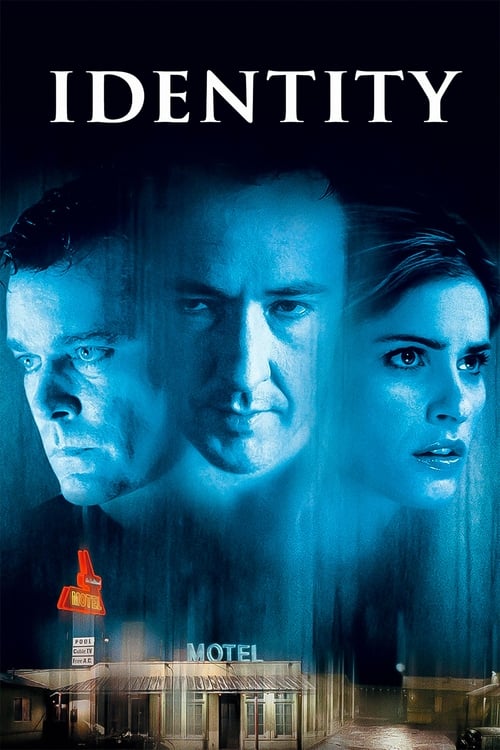
Ten strangers become trapped at an isolated motel during a storm and are killed one by one. James Mangold constructs the film like a classical closed-circle murder mystery, complete with missing keys, numbered rooms and a group of suspects who appear connected by coincidence.
The motel is eventually revealed to be a psychological landscape occupied by the separate identities of a convicted murderer. The killings represent an attempt to eliminate the violent personalities before his execution. That revelation is followed by another: the apparently innocent child is the surviving murderous identity.
The film explains its mechanism more openly than the best entries in this ranking, but Mangold’s control of atmosphere and John Cusack’s grounded performance help the transition from physical mystery to internal conflict.
37. The Invitation (2015)
Director: Karyn Kusama · Cast: Logan Marshall-Green, Tammy Blanchard, Michiel Huisman, Emayatzy Corinealdi · Type of twist: Expanding conspiracy
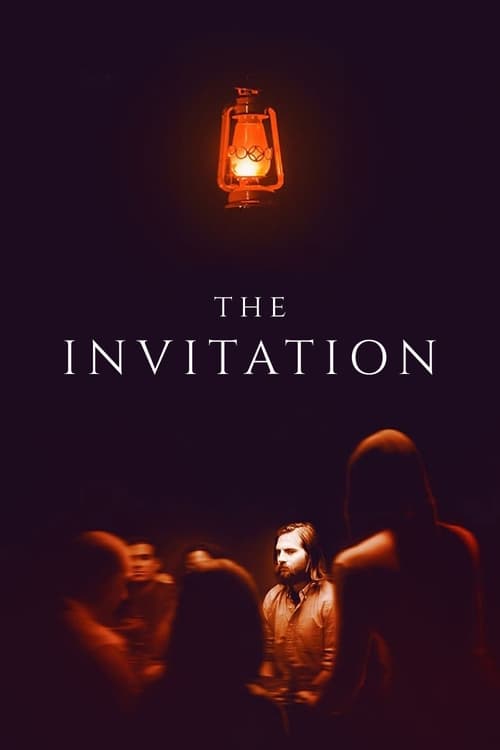
Karyn Kusama spends most of The Invitation making the audience question whether Will’s suspicion is justified. He attends a dinner hosted by his former wife, Eden, and her new partner, but his unresolved grief may be distorting every uncomfortable interaction.
The film gradually confirms that the evening is part of a planned murder-suicide ritual. The final image then expands the scale of the horror. Red lanterns appear throughout the surrounding Hollywood Hills, revealing that similar gatherings are occurring across the city.
The twist does not invalidate Will’s suspicions; it reveals that even he underestimated the danger. Kusama turns one disturbed dinner party into evidence of a much larger ideological infection.
36. The Village (2004)
Director: M. Night Shyamalan · Cast: Bryce Dallas Howard, Joaquin Phoenix, William Hurt, Sigourney Weaver · Type of twist: Hidden time period and manufactured mythology

The inhabitants of a nineteenth-century-looking settlement believe that dangerous creatures occupy the surrounding woods. Their isolation appears to belong to a supernatural period drama until Ivy crosses the boundary and encounters a modern park ranger.
The village was deliberately created in contemporary America by adults attempting to escape violence and grief. The monsters are costumes used to prevent younger generations from discovering the outside world.
M. Night Shyamalan’s revelation divided audiences because the film was marketed as a more conventional creature feature. Yet the twist is thematically coherent. The elders have built a society around the belief that innocence can be preserved through fear, only to reproduce manipulation, secrecy and violence inside their refuge.
35. Source Code (2011)
Director: Duncan Jones · Cast: Jake Gyllenhaal, Michelle Monaghan, Vera Farmiga, Jeffrey Wright · Type of twist: Alternate reality
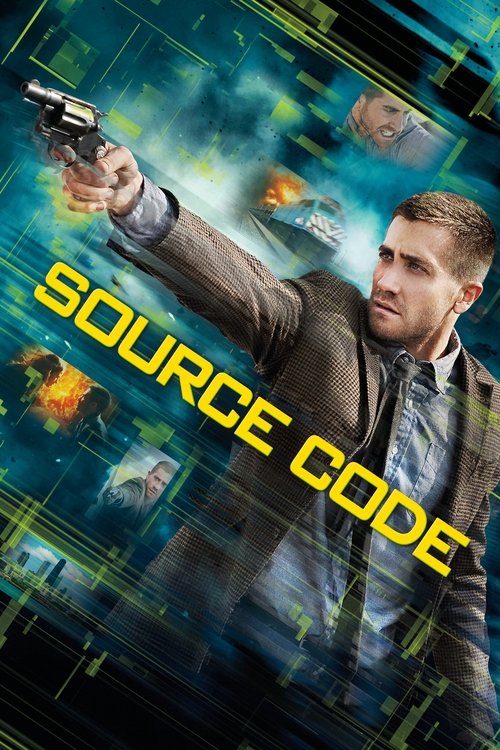
Jake Gyllenhaal plays Colter Stevens, a soldier repeatedly sent into the final eight minutes of another man’s life to identify the bomber responsible for destroying a commuter train.
The programme is initially described as a reconstruction that cannot alter the past. Stevens eventually discovers that each return creates or accesses a continuing reality rather than a closed simulation.
Duncan Jones uses the final revelation to transform the mission from forensic investigation into moral possibility. The passengers are not disposable recreations. In another version of events, they can survive. The twist changes the film’s governing rules, but it also provides an unexpectedly hopeful conclusion to a story built around repetition and death.
34. Coherence (2013)
Director: James Ward Byrkit · Cast: Emily Baldoni, Maury Sterling, Nicholas Brendon · Type of twist: Parallel realities and mistaken identity

A dinner party is disrupted when a comet causes neighbouring realities to overlap. The characters gradually discover other versions of themselves moving between almost identical houses.
James Ward Byrkit uses minimal resources to make ordinary domestic objects—photographs, coloured sticks, a box and a broken glass—essential tools for identifying which reality the characters occupy.
The ending follows Emily as she deliberately enters another version of the house and attacks her counterpart, hoping to take her place in a more desirable reality. Her plan appears to work until the man beside her receives a telephone call from the woman she attempted to replace. The final phone ring is devastating because it converts a complex science-fiction puzzle into a simple human exposure.
33. Timecrimes (2007)
Director: Nacho Vigalondo · Cast: Karra Elejalde, Candela Fernández, Bárbara Goenaga · Type of twist: Closed time loop
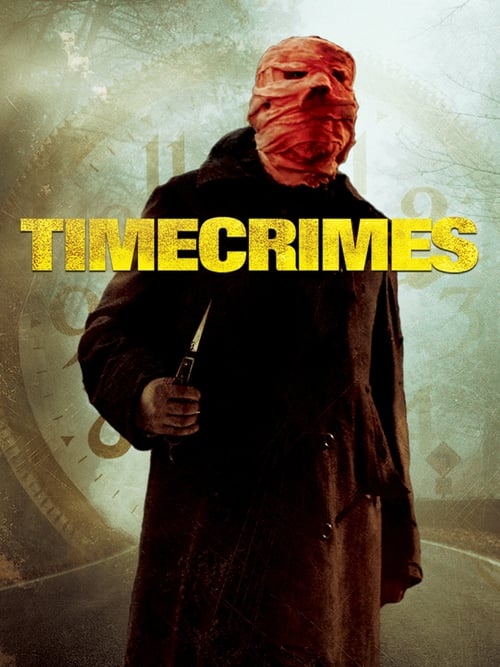
A man sees a woman undressing in the woods, follows her and becomes entangled in a violent encounter with a bandaged attacker. He then enters a machine that sends him backwards through the same period.
Nacho Vigalondo gradually reveals that the protagonist is responsible for creating most of the events he initially experienced as threats. The bandaged man, the pursuit and several apparent coincidences are generated by his attempts to correct the timeline.
The film’s ingenuity lies in allowing each solution to become the cause of another problem. What initially resembles a conspiracy is a closed system created by fear, jealousy and increasingly desperate improvisation.
32. Moon (2009)
Director: Duncan Jones · Cast: Sam Rockwell, Kevin Spacey, Dominique McElligott · Type of twist: Cloning and false identity
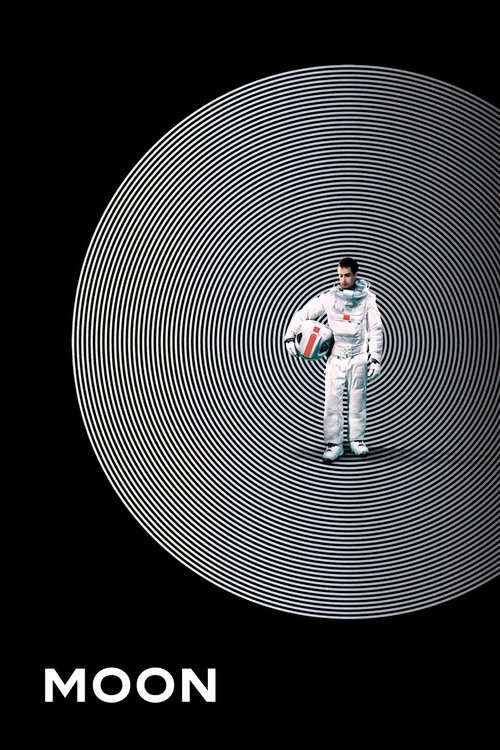
Sam Bell believes he is approaching the end of a three-year contract working alone on the Moon. After an accident, he encounters another version of himself and discovers that neither man is the original Sam.
Both are short-lived clones activated to maintain a profitable industrial operation. Their memories of marriage and family have been copied from someone who returned to Earth years earlier.
Duncan Jones reveals the central deception relatively early, allowing the film to explore its human consequences rather than saving everything for a final shock. The twist asks whether identity depends on biological uniqueness, memory or the ability to recognise another person’s suffering.
31. Predestination (2014)
Directors: Michael and Peter Spierig · Cast: Ethan Hawke, Sarah Snook, Noah Taylor · Type of twist: Temporal identity paradox
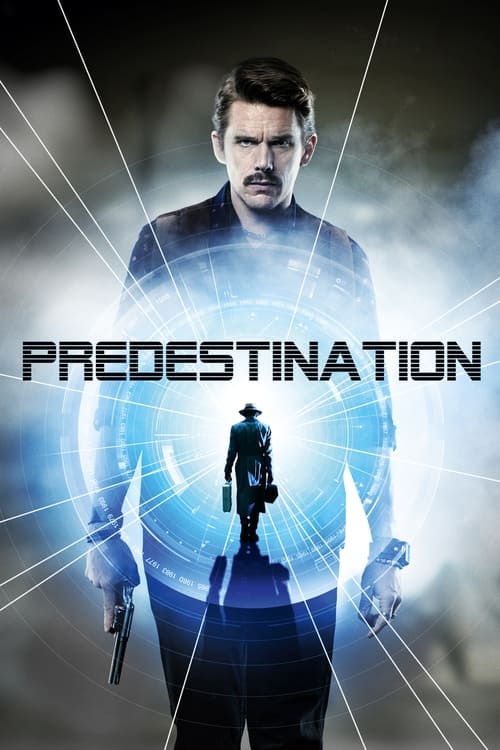
A temporal agent attempts to prevent a terrorist attack while recruiting a troubled writer whose life story involves abandonment, forced medical intervention and a missing lover.
The film eventually reveals that the agent, the writer, the lover, the abandoned child and the terrorist are all different stages of the same person’s life.
Michael and Peter Spierig construct the story as a closed identity loop in which cause and effect no longer have an external beginning. Sarah Snook’s performance gives the mechanism emotional credibility by making each transformation feel rooted in loss rather than existing only to complete a puzzle.
30. Blood Star (2024)
Director: Lawrence Jacomelli · Cast: Britni Camacho, John Schwab, Sydney Brumfield · Type of twist: False suicide and reversal of control · Rewards a second viewing: Yes

Throughout Blood Star, Bobbi refuses to become a willing participant in the sheriff’s sadistic game. The final confrontation appears to leave her with only the choice he has designed for her.
Given a gun containing a single bullet, she stands in the road facing the sheriff inside his cruiser. The staging suggests a western duel, but instead of aiming at him, Bobbi turns the weapon on herself. She fires.
Blood pours from her mouth rather than her head, and the film fades to black. For a moment, the ending appears absolute. Bobbi has denied the sheriff his victory, but only by choosing death on her own terms. Nobody has won.
How Lawrence Jacomelli Creates a False Ending
The twist depends on convincing the audience that the film is over.
When the image returns, droplets of blood fall onto the petals of a desert flower. Bobbi lies motionless, blood running from her mouth across her cheek. The sheriff approaches and searches for an entry wound, only to discover that there is none.
Bobbi used the space created by her severed tongue to fire the bullet harmlessly through her mouth. She then attacks him with the knife she took from the workshop—the weapon made with a handle formed from his mother’s jawbone—and runs towards the cruiser.
Why the Reversal Works
The ending does not reveal that Bobbi has suddenly become stronger than the sheriff. It reveals that she has understood the rules of his game and found a way to weaponise his confidence.
He expects fear, obedience or despair. By appearing to choose suicide, she gives him the conclusion he wants to witness while creating the only moment in which he will approach her without caution.
The knife deepens the reversal. An object connected to the sheriff’s violence and family mythology becomes the instrument Bobbi uses against him. The twist is therefore not simply that she survives the gunshot. It is that an apparent act of surrender was actually the first move in taking control.
29. The Wicker Man (1973)
Director: Robin Hardy · Cast: Edward Woodward, Christopher Lee, Britt Ekland · Type of twist: Investigation as ritual
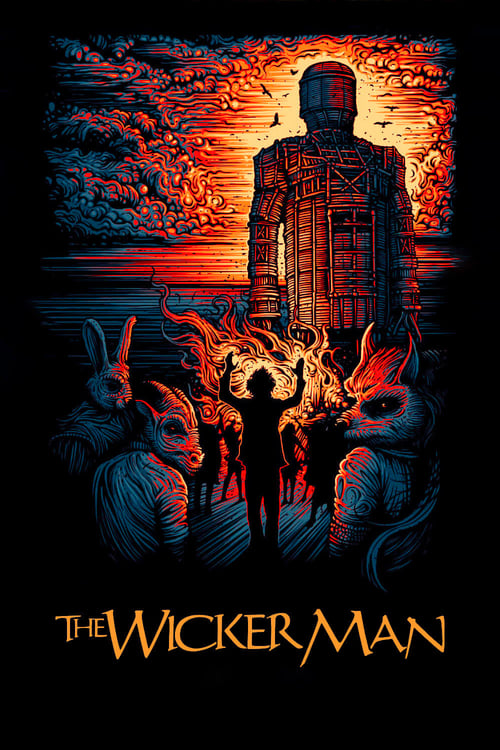
Edward Woodward plays Sergeant Howie, a devout police officer who travels to the remote island of Summerisle to investigate the disappearance of a young girl.
Every apparent obstruction encourages him to believe he is approaching the truth. The missing child is eventually found alive, but the discovery does not represent a rescue. The entire investigation has been staged to bring Howie to the island as the ideal human sacrifice.
Robin Hardy’s ending works because Howie has not failed to solve the clues. He has followed them exactly as intended. Christopher Lee’s Lord Summerisle does not need to overpower him until the final stage. Howie’s faith in his authority, morality and investigative purpose has delivered him to the ritual.
28. Don’t Look Now (1973)
Director: Nicolas Roeg · Cast: Donald Sutherland, Julie Christie · Type of twist: Misread premonition

A grieving couple travels to Venice after the death of their daughter. Donald Sutherland’s John repeatedly sees a small figure wearing a red coat similar to the one his daughter wore when she drowned.
Nicolas Roeg fragments time and perception so that memories, warnings and future events appear to occupy the same psychological space. John assumes the red figure represents his daughter or a message connected to her.
When he finally catches it, the figure turns and reveals an adult murderer who kills him. Images seen throughout the film are reassembled as glimpses of his own funeral. The twist is not that John lacks supernatural perception. It is that he possesses it without understanding what he sees.
27. The Cabinet of Dr. Caligari (1920)
Director: Robert Wiene · Cast: Werner Krauss, Conrad Veidt, Friedrich Fehér · Type of twist: Unreliable narrator
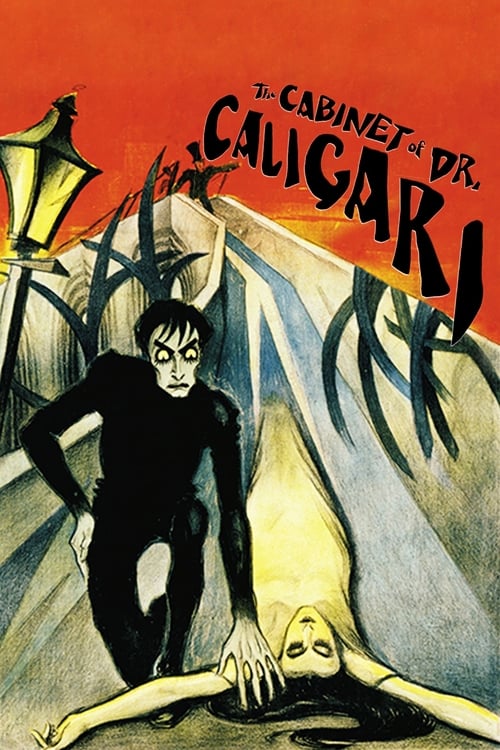
Robert Wiene’s silent expressionist landmark follows Francis as he recounts a series of murders apparently committed by a sleepwalker under the control of the sinister Dr. Caligari.
The framing story eventually reveals that Francis is a patient inside an asylum. Caligari appears to be the institution’s director rather than the murderous figure described in the tale.
The twist was reportedly added to make the story less openly hostile towards authority, but its effect became more complicated than simple reassurance. The distorted sets, painted shadows and impossible architecture can now be understood as expressions of Francis’s unstable perception. Rather than returning the film to certainty, the ending makes reality itself difficult to trust.
26. Les Diaboliques (1955)
Director: Henri-Georges Clouzot · Cast: Simone Signoret, Véra Clouzot, Paul Meurisse · Type of twist: False death and manipulated haunting
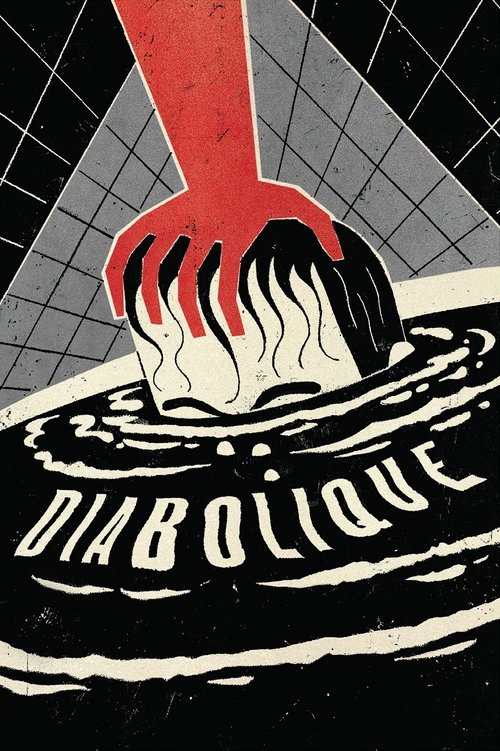
The wife and mistress of an abusive school headmaster conspire to murder him. They drown his body and hide it in a swimming pool, only for the corpse to disappear.
Henri-Georges Clouzot gradually turns the crime story into apparent supernatural horror. The dead man seems to return, and the wife’s fragile health makes every sign of his presence potentially fatal.
The haunting is ultimately revealed as an elaborate deception devised by the supposed victim and his mistress. Their intention is to frighten the wife to death. The BFI has described Les Diaboliques as a classic thriller capped by an unforgettable twist, and its influence can be felt in decades of domestic mysteries built around false deaths and psychological manipulation.
25. Witness for the Prosecution (1957)
Director: Billy Wilder · Cast: Charles Laughton, Marlene Dietrich, Tyrone Power · Type of twist: Disguise, false testimony and concealed guilt
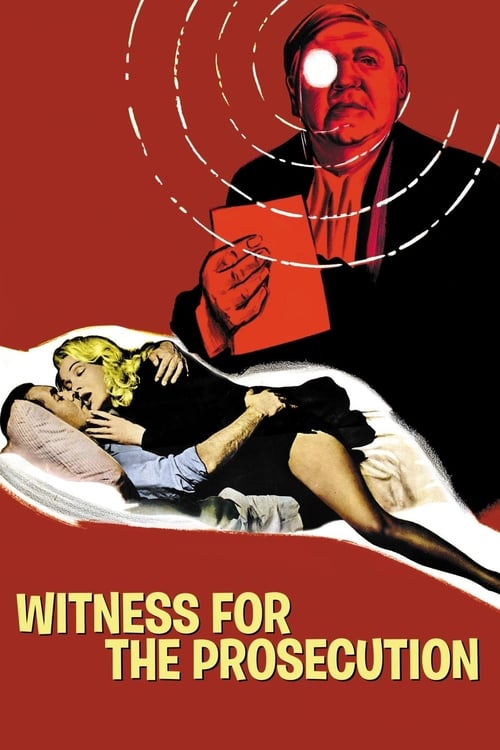
Billy Wilder’s courtroom drama follows barrister Sir Wilfrid Robarts as he defends Leonard Vole against a murder charge. Leonard’s wife, Christine, appears to damage his case by testifying for the prosecution.
Her betrayal is revealed to be part of an elaborate effort to discredit herself and secure Leonard’s acquittal. Once he is free, however, Leonard admits that he committed the murder and plans to abandon Christine for another woman. The film then delivers one final reversal when Christine kills him inside the courtroom.
The production’s secrecy became part of its history. The AFI records that audiences were asked not to reveal the ending and that even principal cast members reportedly did not receive the final pages until the last day of filming.
24. Psycho (1960)
Director: Alfred Hitchcock · Cast: Anthony Perkins, Janet Leigh, Vera Miles · Type of twist: Hidden identity
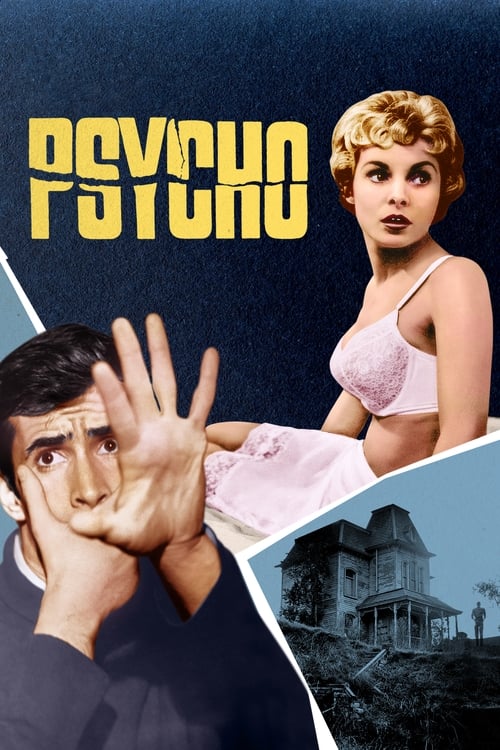
Alfred Hitchcock’s first great deception is structural. Janet Leigh appears to be the protagonist until Marion Crane is murdered less than halfway through the film.
The later revelation concerns Norman Bates and the mother he claims is controlling him. Norman’s mother has been dead for years. He has preserved her body and created a second personality through which he commits the murders.
Anthony Perkins makes the twist effective because Norman’s vulnerability feels genuine. The revelation does not replace one character with another; it exposes a fractured identity in which charm, fear and violence coexist.
23. Soylent Green (1973)
Director: Richard Fleischer · Cast: Charlton Heston, Edward G. Robinson, Leigh Taylor-Young · Type of twist: Hidden social system

In an overcrowded and environmentally devastated future, most of the population survives on processed food supplied by the Soylent Corporation.
Detective Thorn’s investigation eventually reveals that the latest product, Soylent Green, is manufactured from human remains. The oceans can no longer provide the plankton the company claims to use, so the dead are recycled to feed the living.
The revelation became more famous than the film surrounding it, but Richard Fleischer prepares it through scarcity, institutional secrecy and a society that has normalised the disappearance of individual dignity.
22. Planet of the Apes (1968)
Director: Franklin J. Schaffner · Cast: Charlton Heston, Roddy McDowall, Kim Hunter · Type of twist: Hidden location

Astronaut George Taylor believes he has landed on a distant planet where intelligent apes dominate primitive human beings.
The final discovery of the ruined Statue of Liberty reveals that the planet is Earth in the distant future. Humanity destroyed its own civilisation, and the ape society is not an alien alternative but the inheritor of the world humans ruined.
Franklin J. Schaffner delays the proof until the final image, allowing the landscape to change meaning instantly. The beach is no longer a route towards freedom. It is the edge of a familiar civilisation buried by time.
21. Chinatown (1974)
Director: Roman Polanski · Cast: Jack Nicholson, Faye Dunaway, John Huston · Type of twist: Family secret and moral defeat
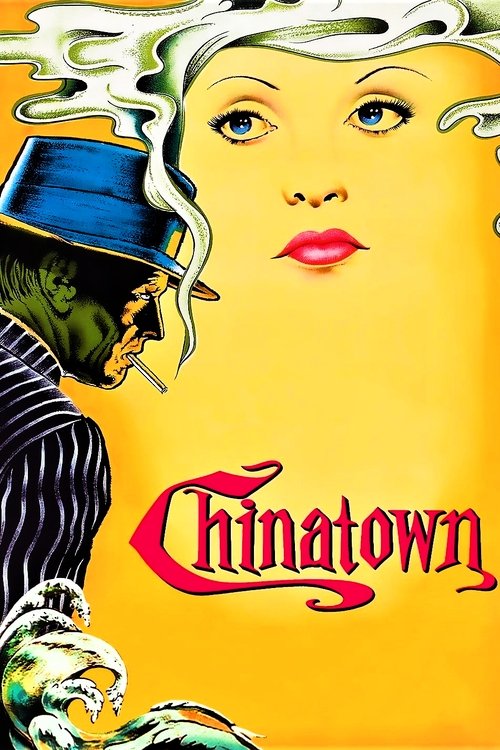
Private investigator Jake Gittes believes he is uncovering corruption connected to Los Angeles water rights. His investigation increasingly centres on Evelyn Mulwray, her father Noah Cross and a young woman whose identity Evelyn refuses to explain clearly.
Under pressure, Evelyn finally reveals that the girl is both her sister and her daughter, conceived through abuse by Cross.
Roman Polanski turns the revelation into the emotional centre of a larger system of power. The mystery is not only about water, money or murder. It is about a man wealthy enough to treat people, land and the future as his property. The final tragedy confirms that exposing the truth does not guarantee justice.
20. Arlington Road (1999)
Director: Mark Pellington · Cast: Jeff Bridges, Tim Robbins, Joan Cusack, Hope Davis · Type of twist: The investigator becomes the culprit
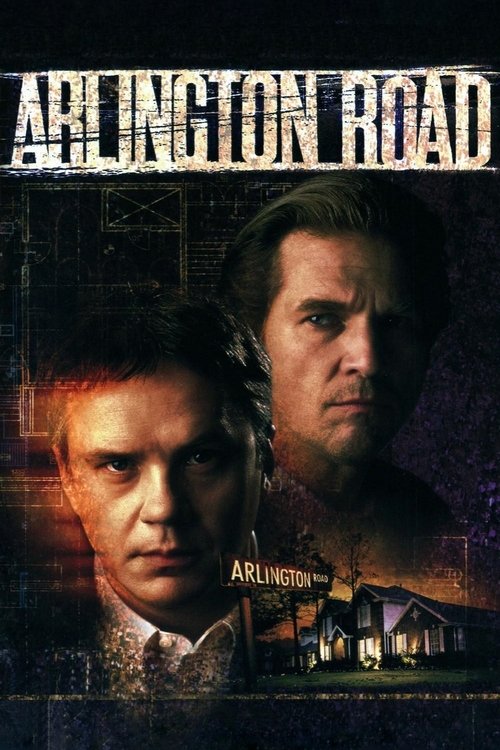
Jeff Bridges plays Michael Faraday, a professor whose research into domestic terrorism makes him suspicious of his new neighbour, Oliver Lang.
Michael’s obsession appears increasingly justified, but he never understands the role prepared for him. The terrorists manipulate his investigation, place a bomb inside his vehicle and direct him into a federal building, where the explosion kills him and makes him appear responsible.
Mark Pellington’s ending is unusually uncompromising. The protagonist uncovers the conspiracy but cannot communicate what he knows. Every action he takes to prevent the attack becomes evidence supporting the false story constructed around him.
19. Primal Fear (1996)
Director: Gregory Hoblit · Cast: Richard Gere, Edward Norton, Laura Linney · Type of twist: Performed personality
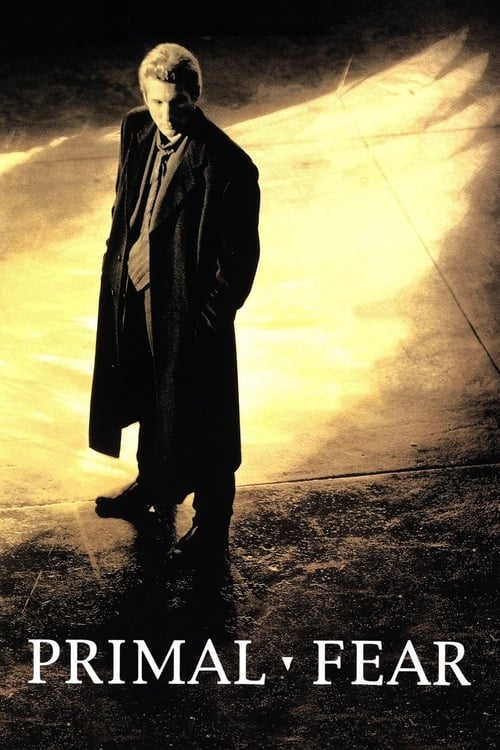
Richard Gere plays defence attorney Martin Vail, who represents Aaron Stampler, a frightened altar boy accused of murdering an archbishop.
Aaron appears to suffer from dissociative identity disorder, with a violent personality named Roy responsible for the murder. Vail secures a verdict that will send Aaron to psychiatric care rather than prison.
In the final scene, Aaron casually reveals that the timid personality never existed. “Roy” was not the hidden identity. Aaron performed vulnerability to manipulate his lawyer and the court. Edward Norton’s performance makes the twist exceptional because every hesitation and stammer must work both as apparent trauma and calculated technique.
18. Gone Girl (2014)
Director: David Fincher · Cast: Ben Affleck, Rosamund Pike, Carrie Coon · Type of twist: False victim narrative
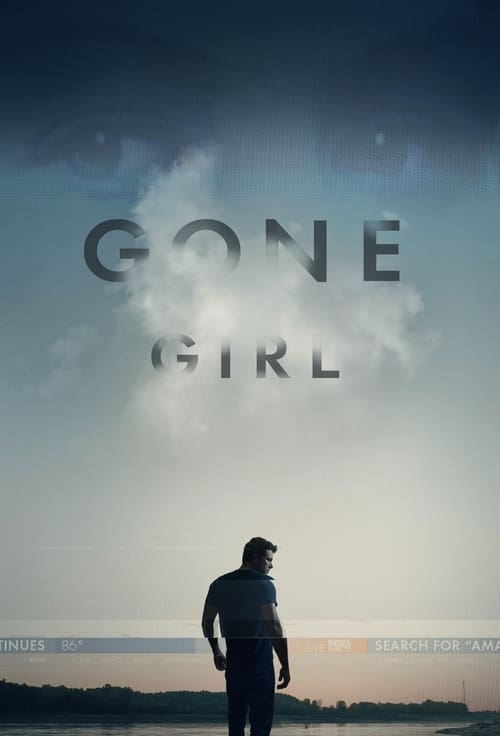
When Amy Dunne disappears, suspicion settles on her husband, Nick. The first section appears to expose a marriage in which male indifference may have escalated into murder.
The film then reveals Amy alive and travelling under a new identity. She has manufactured evidence, written a false diary and designed her disappearance to punish Nick by securing his conviction.
David Fincher and Rosamund Pike make the reversal more than a question of whether Amy is alive. The revelation changes the genre, shifting the film from missing-person mystery to a battle over narrative ownership. Amy understands that whoever constructs the most persuasive public story controls the truth.
17. Shutter Island (2010)
Director: Martin Scorsese · Cast: Leonardo DiCaprio, Mark Ruffalo, Ben Kingsley, Michelle Williams · Type of twist: Delusional identity
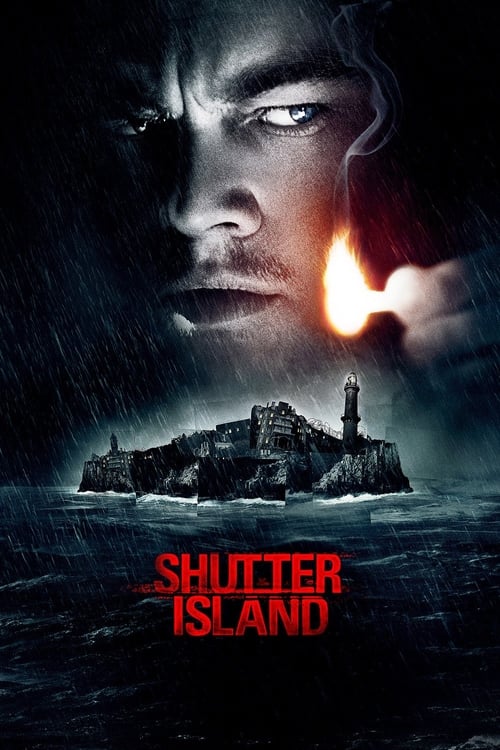
Leonardo DiCaprio plays federal marshal Teddy Daniels, who travels to an isolated psychiatric hospital to investigate a patient’s disappearance and uncover a suspected conspiracy.
Teddy is actually Andrew Laeddis, a patient who murdered his wife after she drowned their children. The investigation has been staged as an elaborate therapeutic role-play intended to help him confront reality.
Martin Scorsese fills the film with discontinuities, theatrical performances and dream imagery that appear to support conspiracy while quietly revealing the artificiality of Teddy’s world. The final line introduces another uncertainty: Andrew may have relapsed, or he may be choosing lobotomy because living with the truth is worse than dying inside the identity he created.
16. Angel Heart (1987)
Director: Alan Parker · Cast: Mickey Rourke, Robert De Niro, Lisa Bonet · Type of twist: Stolen identity
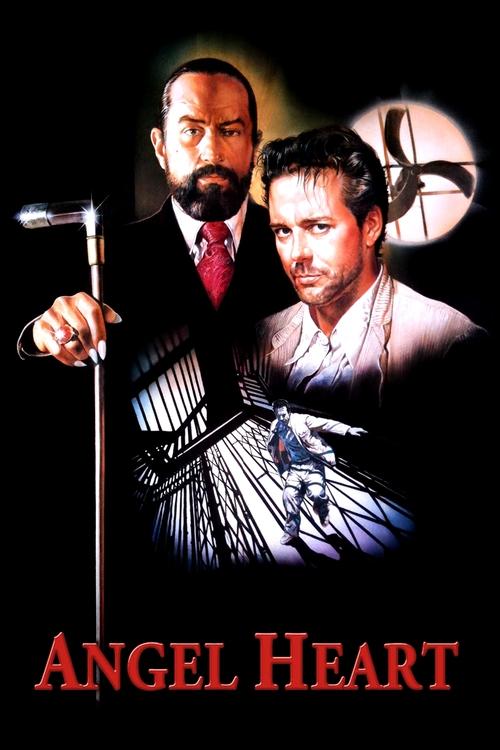
Private investigator Harry Angel is hired by the mysterious Louis Cyphre to locate a missing singer named Johnny Favorite.
The investigation leads through ritual murder, forgotten wartime history and fragments of identity. Harry eventually learns that he is Johnny Favorite. He stole another man’s identity in an attempt to escape a supernatural debt and then forgot what he had done.
Alan Parker makes the twist effective by surrounding Harry with symbols he refuses to interpret. Robert De Niro’s Louis Cyphre barely conceals his identity, but the audience remains aligned with Harry’s denial. The detective is not discovering someone else’s crime. He is recovering his own.
15. The Machinist (2004)
Director: Brad Anderson · Cast: Christian Bale, Jennifer Jason Leigh, Aitana Sánchez-Gijón · Type of twist: Repressed guilt
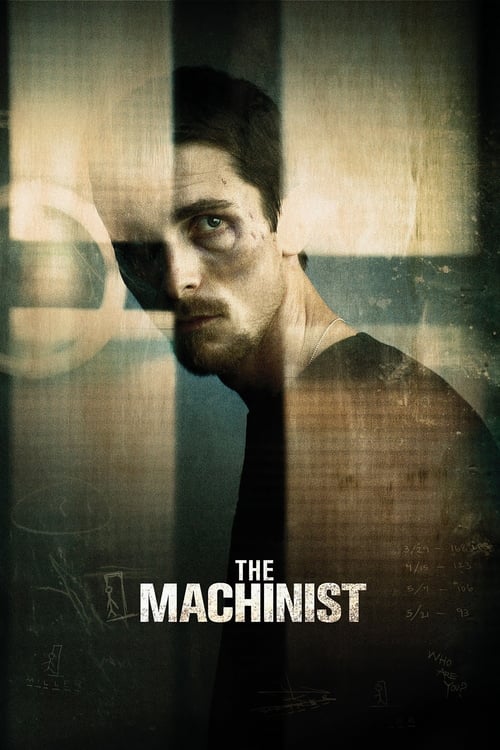
Christian Bale plays Trevor Reznik, an industrial worker who has not slept for a year. His body is deteriorating, and he becomes convinced that a mysterious coworker named Ivan is responsible for a conspiracy against him.
Ivan does not exist. He is a psychological construction connected to Trevor’s guilt over killing a child in a hit-and-run accident.
Brad Anderson uses physical decay, repeated imagery and impossible encounters to make Trevor’s mental state visible. The ending is less about solving a mystery than accepting responsibility. Trevor finally sleeps only after confessing.
14. The Vanishing (1988)
Director: George Sluizer · Cast: Gene Bervoets, Johanna ter Steege, Bernard-Pierre Donnadieu · Type of twist: Fatal fulfilment of curiosity
Rex spends years searching for Saskia after she disappears from a busy service station. Her abductor eventually approaches him and offers the answer he has always wanted, provided Rex agrees to experience exactly what happened to her.
He accepts, drinks drugged coffee and wakes inside a coffin underground.
George Sluizer does not conceal the identity of the kidnapper for most of the film. The true suspense concerns whether Rex’s need to know will become stronger than his instinct for survival. The ending is horrifying because Rex receives precisely what he requested.
13. Arrival (2016)
Director: Denis Villeneuve · Cast: Amy Adams, Jeremy Renner, Forest Whitaker · Type of twist: Nonlinear perception of time

Amy Adams plays linguist Louise Banks, recruited to communicate with extraterrestrial visitors. Throughout the film, she experiences what appear to be memories of raising and losing a daughter.
The scenes are not memories. They are visions of Louise’s future, made possible by learning the aliens’ nonlinear language.
Denis Villeneuve transforms what initially appears to be backstory into foreknowledge. Louise knows that her future relationship will end and that her child will die, but chooses to experience that life regardless. The revelation turns a global science-fiction mystery into an intimate question: whether love remains worth choosing when loss is already certain.
12. Se7en (1995)
Director: David Fincher · Cast: Morgan Freeman, Brad Pitt, Gwyneth Paltrow, Kevin Spacey · Type of twist: Final victim and completed design
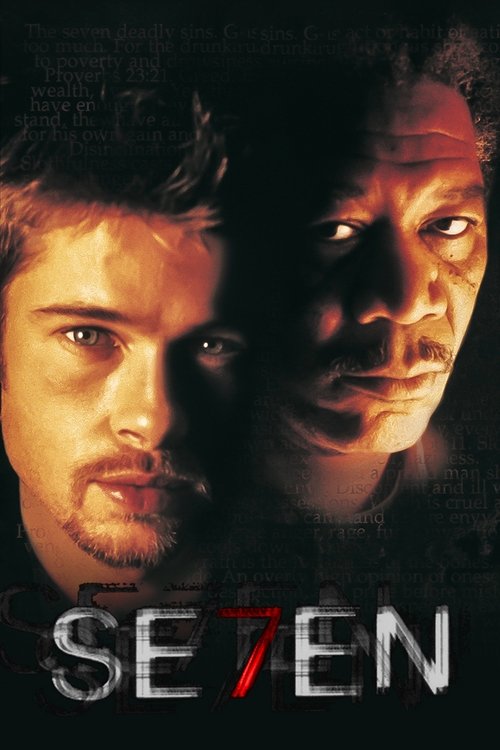
Detectives Somerset and Mills pursue a killer staging murders around the seven deadly sins. John Doe eventually surrenders with two sins still apparently unresolved.
He directs the detectives to the desert, where a delivery van brings a box containing the severed head of Mills’s pregnant wife. Doe identifies himself as envy and intends Mills to become wrath by killing him.
David Fincher fought to preserve the film’s brutal ending, which refuses the conventional satisfaction of arrest or rescue. The twist is not merely what the box contains. It is the discovery that the detectives have never been outside Doe’s plan.
11. Saw (2004)
Director: James Wan · Cast: Cary Elwes, Leigh Whannell, Tobin Bell · Type of twist: Hidden observer
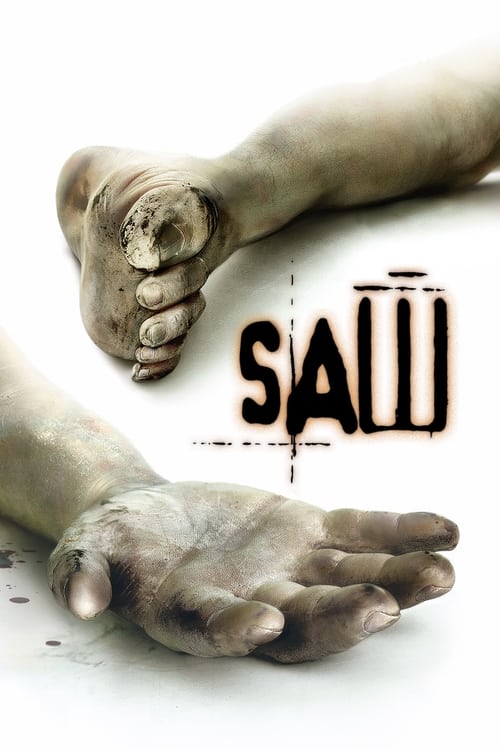
Two men wake chained inside a decaying bathroom with a dead body lying between them. Their captivity appears to be controlled remotely by the Jigsaw killer.
At the end, the corpse rises. The supposedly dead man has been alive inside the room throughout the entire ordeal and is revealed as John Kramer.
James Wan turns an element present in nearly every frame into the film’s central secret. The audience excludes the body from suspicion because cinematic grammar teaches us to treat a corpse as an object rather than an active character. The final movement, accompanied by Charlie Clouser’s escalating score, rapidly replays earlier evidence before Kramer closes the door and leaves Adam in darkness.
The Ten Greatest Movie Twist Endings
The final ten do more than conceal information effectively. Each revelation completes a directorial idea already embedded in the film’s structure, performances and visual language. These endings reward rewatching because the deception remains visible once the audience knows where to look.
10. Memento (2000)
Director: Christopher Nolan · Cast: Guy Pearce, Carrie-Anne Moss, Joe Pantoliano · Type of twist: Self-deception and manipulated chronology · Rewards a second viewing: Completely
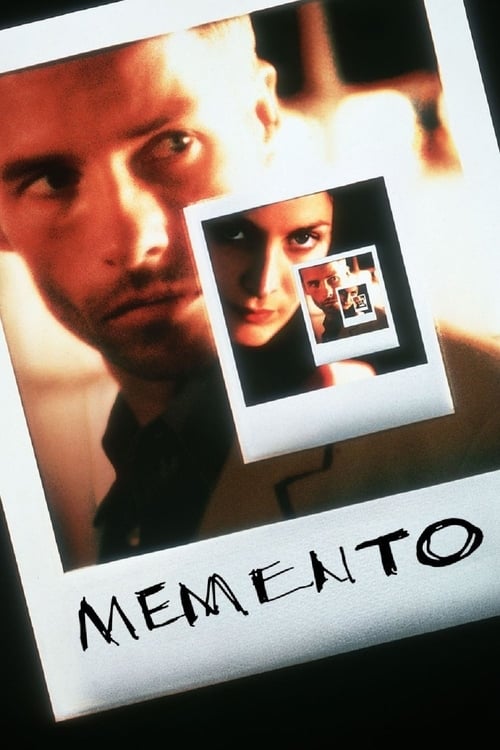
Christopher Nolan places the audience inside the condition of Leonard Shelby, a man unable to form new long-term memories. The colour sequences move backwards while black-and-white scenes move forwards until both timelines meet.
Leonard believes he is pursuing the man who murdered his wife. He relies on photographs, notes and tattoos because he assumes permanent physical records cannot deceive him.
The ending reveals that Leonard has already killed the person he believed responsible. Teddy claims that Leonard’s wife survived the original attack and that Leonard has repeatedly redirected his need for revenge towards new targets.
How Christopher Nolan Makes Structure Become Character
The reverse chronology prevents the audience from knowing what happened immediately before each scene. We share Leonard’s dependence on whatever explanation is currently available.
Nolan then reveals that Leonard knowingly manipulates his own system. He records Teddy’s licence plate and chooses to label him as the next target, understanding that his future self will believe the evidence. The twist is not simply that Leonard has been deceived. It is that he has created a method for deceiving himself indefinitely.
9. Jacob’s Ladder (1990)
Director: Adrian Lyne · Cast: Tim Robbins, Elizabeth Peña, Danny Aiello · Type of twist: Death and psychological transition · Rewards a second viewing: Yes

Tim Robbins plays Jacob Singer, a Vietnam veteran experiencing terrifying visions, fragmented memories and apparent conspiracies after returning to New York.
He believes his military unit may have been exposed to an experimental drug. That explanation is partially supported, but the final revelation places the entire narrative inside the last moments of Jacob’s life. He never returned from Vietnam. He is dying on an operating table, and the city, relationships and demons represent his struggle to release his attachment to life.
How Adrian Lyne Makes Horror Become Acceptance
Adrian Lyne fills the film with violent visual disruptions: trembling faces, impossible hospital corridors and figures whose bodies move incorrectly. These images appear to be invading reality.
Danny Aiello’s chiropractor offers the film’s interpretive key. If Jacob is afraid of dying, the figures appear to be demons tearing him away. If he accepts death, they may be angels freeing him. The ending does not dismiss the earlier horror as meaningless imagination. It reveals that the horror was created by resistance.
8. Incendies (2010)
Director: Denis Villeneuve · Cast: Lubna Azabal, Mélissa Désormeaux-Poulin, Maxim Gaudette, Rémy Girard · Type of twist: Hidden identity and family revelation · Rewards a second viewing: Completely, although the truth makes the journey even more painful

After their mother Nawal dies, Canadian twins Jeanne and Simon receive two letters from her will. One is addressed to a father they believed was dead. The other is intended for a brother they never knew existed.
Jeanne travels to the unnamed Middle Eastern country where Nawal grew up, gradually reconstructing her mother’s life through civil war, imprisonment, political violence and personal loss. Simon eventually joins her, and their investigation leads them towards the identities of both missing men.
The final revelation is that their father and their brother are the same person.
How Denis Villeneuve Builds the Revelation
Nawal gave birth to a son when she was young, but the child was taken from her and placed in an orphanage. He later became a fighter and torturer known as Abou Tarek. Neither recognised the other when Nawal was imprisoned and repeatedly assaulted by him, resulting in the birth of Jeanne and Simon.
Villeneuve prepares the revelation through numbers, photographs, scars and fragmented testimony. Each clue initially appears to answer one part of the mystery. Only at the end do the twins understand that the two people they have been searching for are one man. The equation “one plus one equals one” reduces an almost unimaginable family history to a simple, horrifying truth.
Why the Twist Is Emotionally Devastating
The revelation does not exist merely to shock the audience. It explains Nawal’s silence, her apparent emotional withdrawal and the impossible burden she carried after recognising her lost son.
It also transforms the purpose of the letters. Nawal does not divide the man into victim and perpetrator. One letter addresses the son who was taken from her; the other addresses the man who tortured her. Both must be delivered to the same person. Lubna Azabal’s performance gives the ending its power: the truth is devastating, yet the letters offer the possibility that knowledge and compassion might end a cycle that revenge would only preserve.
7. The Prestige (2006)
Director: Christopher Nolan · Cast: Christian Bale, Hugh Jackman, Michael Caine, Rebecca Hall · Type of twist: Double identities and concealed sacrifice · Rewards a second viewing: Exceptionally
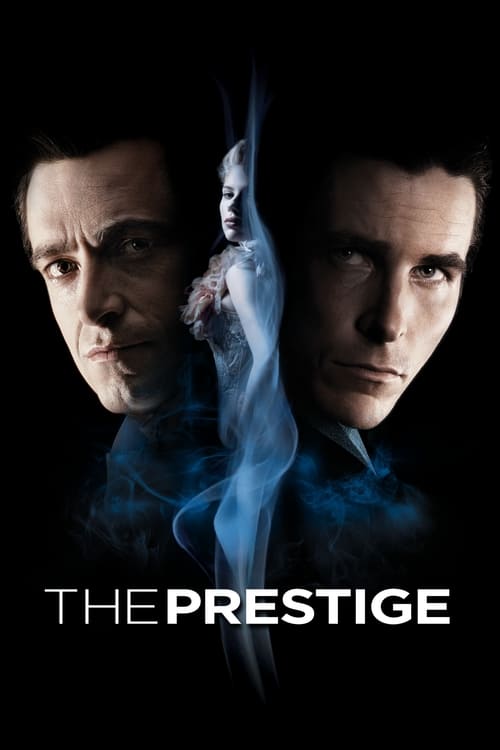
Two rival magicians, Robert Angier and Alfred Borden, dedicate their lives to discovering and destroying one another’s methods.
The film reveals that “Alfred Borden” is an identity shared by identical twins. Each man sacrifices half of his life, alternating between Borden and his assistant Fallon so completely that even their closest relationships are divided between them.
Angier’s secret is equally disturbing. His machine creates a duplicate during every performance, and one version is drowned beneath the stage while another receives the applause.
Christopher Nolan Shows the Secret Before Explaining It
The opening image presents rows of identical hats. Michael Caine’s Cutter explains that every magic trick consists of the pledge, the turn and the prestige. Nolan is describing not only stage illusion but the film itself.
Borden’s trick depends on lifelong discipline. Angier’s depends on repeated murder and the refusal to know whether he will become the man in the spotlight or the body in the tank. The final twist succeeds because it answers the mystery while revealing the human cost of needing an answer.
6. The Usual Suspects (1995)
Director: Bryan Singer · Cast: Kevin Spacey, Gabriel Byrne, Chazz Palminteri, Benicio del Toro · Type of twist: Invented testimony and hidden identity · Rewards a second viewing: Yes, although it exposes how completely the narrative is controlled
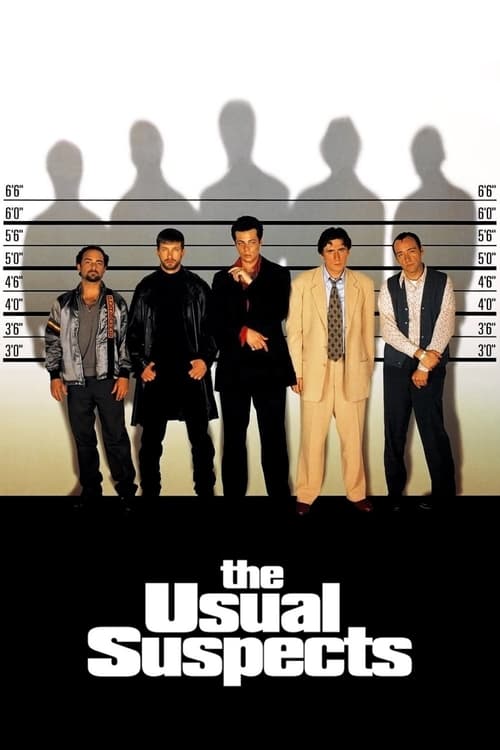
Verbal Kint tells customs agent Dave Kujan how five criminals became involved with the legendary underworld figure Keyser Söze.
Kujan believes he has broken Verbal’s story and identified Dean Keaton as Söze. After Verbal leaves, Kujan looks around the office and realises that names, locations and details from the testimony were taken from objects visible in the room.
Outside, Verbal’s limp disappears. He is Keyser Söze.
The Interrogation Room as a Writing Desk
The brilliance of the sequence lies in turning the setting into a source of fiction. Verbal has not simply lied about one crucial fact. He has constructed an entire narrative from whatever material was available.
The audience is deceived because cinema visualises his testimony. Once the film shows the harbour, criminals and violence, those images acquire an authority Verbal’s words alone would not possess.
5. Fight Club (1999)
Director: David Fincher · Cast: Edward Norton, Brad Pitt, Helena Bonham Carter · Type of twist: Split identity · Rewards a second viewing: More than almost any film on the list

Edward Norton’s unnamed narrator meets Tyler Durden, a charismatic stranger who appears to embody everything he lacks. Together they create an underground fighting network that expands into an anarchic organisation.
The narrator eventually discovers that Tyler is not another person. He is an identity the narrator created and inhabits during periods he cannot remember.
How David Fincher Hides Tyler in Plain Sight
Fincher briefly inserts Tyler into frames before the characters formally meet. The flashes register almost below conscious perception, establishing him as an image already emerging from the narrator’s mind.
Later scenes are staged so that other characters interact only with one identity at a time. Marla appears inconsistent because the narrator cannot understand that her relationship with Tyler is also a relationship with him.
Why the Twist Is More Than a Trick
Tyler is not simply an imaginary companion. He is the narrator’s fantasy of masculine certainty, physical freedom and ideological purpose.
The revelation forces him to accept responsibility for everything committed under Tyler’s authority. Destroying Tyler therefore means rejecting the idea that his actions belong to someone else. Fincher makes the second viewing unusually rich because Brad Pitt’s apparent independence is revealed as a product of staging, editing and subjective narration.
4. Oldboy (2003)
Director: Park Chan-wook · Cast: Choi Min-sik, Yoo Ji-tae, Kang Hye-jung · Type of twist: Engineered incest and revenge · Rewards a second viewing: Yes, although knowledge makes it more disturbing
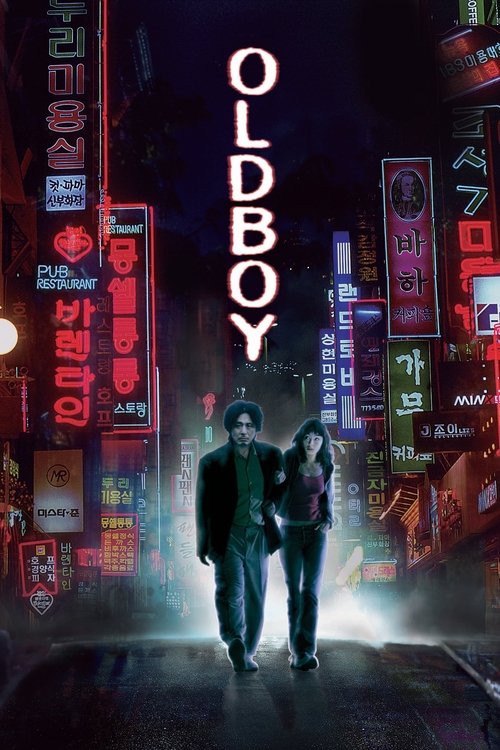
Oh Dae-su is abducted and imprisoned in a private room for 15 years without being told why. After his release, he begins a violent search for the person responsible and forms a relationship with a young woman named Mi-do.
His captor, Lee Woo-jin, eventually reveals that Mi-do is Dae-su’s daughter. Their meeting and attraction were deliberately engineered through hypnosis as punishment for Dae-su’s role in exposing Woo-jin’s incestuous relationship with his sister.
The Answer Is Worse Than the Mystery
Most revenge thrillers promise that discovering the villain’s motive will restore moral clarity. Park Chan-wook does the opposite.
Dae-su has spent the film believing that knowledge will free him. When he finally receives the answer, it destroys the identity he recovered after imprisonment. Park described Woo-jin as a godlike figure who also represents the director controlling the protagonist’s world. Choi Min-sik’s performance makes the revelation physically devastating, his earlier confidence collapsing into pleading, self-mutilation and the desperate hope that Mi-do will never discover the truth.
3. The Others (2001)
Director: Alejandro Amenábar · Cast: Nicole Kidman, Fionnula Flanagan, Alakina Mann, James Bentley · Type of twist: Reversed haunting · Rewards a second viewing: Completely
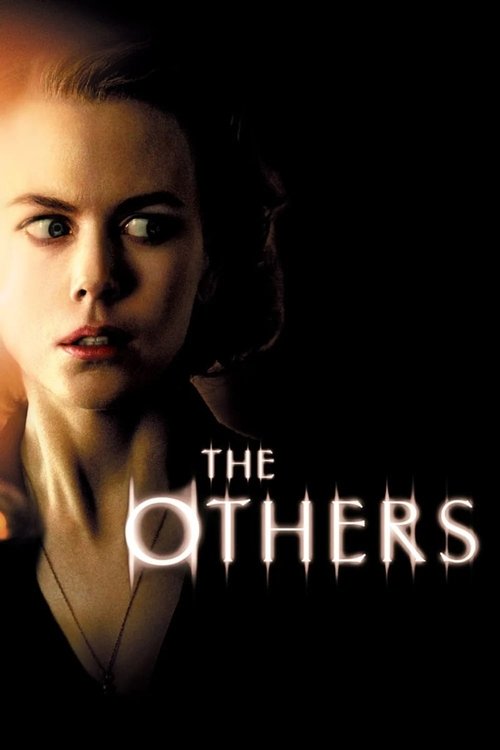
Nicole Kidman plays Grace, a devout and emotionally severe mother living with her two light-sensitive children inside a dark country house after the Second World War.
Grace becomes convinced that intruders have entered the property. Doors open, voices are heard and her daughter claims to see people Grace cannot. The final séance reveals that the apparent intruders are the living occupants of the house. Grace, her children and the servants are dead.
Alejandro Amenábar Reverses the Haunted-House Perspective
The twist works because the film never cheats about what Grace experiences. She hears the living family because they occupy the same space. The séance appears terrifying from her perspective because she does not understand that she is the spirit being contacted.
Nicole Kidman Makes the Revelation Emotional
The deeper horror concerns how Grace and the children died. Overwhelmed by isolation and despair, Grace killed them before taking her own life, then repressed the memory.
The ending therefore does not merely reveal that they are ghosts. It forces Grace to recognise what she did and accept that her rigid understanding of life, death and faith can no longer protect her. Amenábar allows the revelation to bring both terror and strange calm. The family remains inside the house, but for the first time they understand where they are.
2. The Sixth Sense (1999)
Director: M. Night Shyamalan · Cast: Bruce Willis, Haley Joel Osment, Toni Collette, Olivia Williams · Type of twist: Dead protagonist · Rewards a second viewing: Definitively
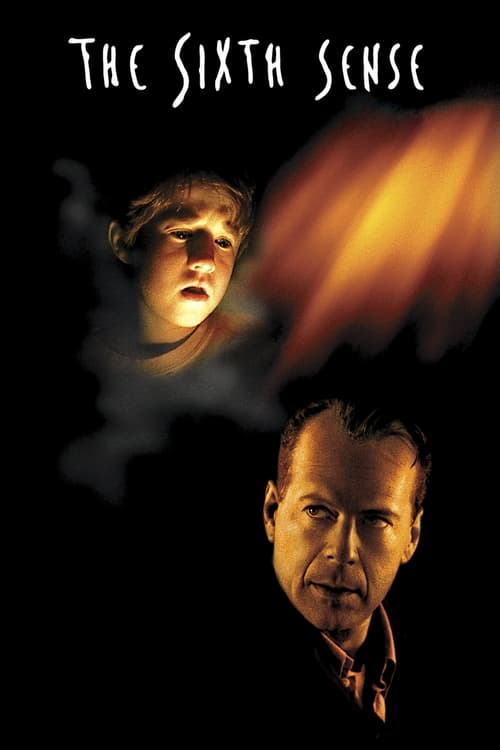
Child psychologist Malcolm Crowe begins working with Cole Sear, a boy who claims he can see dead people. Malcolm believes helping Cole may repair the sense of failure created by a former patient and perhaps restore his strained marriage.
The ending reveals that Malcolm died after being shot in the opening scene. Cole has been able to see him because Malcolm is one of the dead people who do not understand that they are dead.
M. Night Shyamalan Uses Assumption as Misdirection
The film rarely presents explicit falsehoods. Malcolm does not have conventional conversations with anyone except Cole after the shooting. His wife never answers him, but Shyamalan stages their scenes so that silence can be interpreted as emotional separation. The audience supplies the incorrect explanation.
Why the Twist Has Emotional Weight
Malcolm’s revelation is not the final purpose of the film. It allows him to say goodbye to his wife and accept that his work with Cole is complete.
Haley Joel Osment’s performance becomes even more impressive on a second viewing. Cole is not speaking to a reassuring adult who understands his condition. He is helping a confused ghost accept the same truth Cole has been forced to live with. The twist is structurally elegant, emotionally complete and fairly prepared. Only one ending ranks above it because that film turns its reversal into an even more devastating act of moral and psychological destruction.
1. The Mist (2007)
Director: Frank Darabont · Cast: Thomas Jane, Marcia Gay Harden, Laurie Holden, Andre Braugher · Type of twist: Irreversible decision followed by immediate rescue · Rewards a second viewing: Yes, but mercilessly
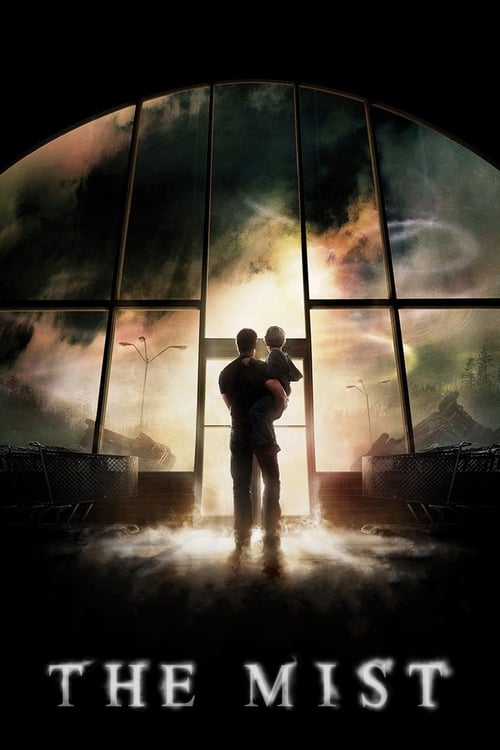
The Mist contains no concealed double identity, false chronology or alternative reality. Its ending is simpler and perhaps crueler than any of them.
David Drayton escapes the supermarket with his son and several other survivors. Their vehicle eventually runs out of fuel inside the mist. Believing that the creatures will find them and subject them to a worse death, David uses the remaining bullets to kill the others. There are only enough bullets for everyone except him.
He leaves the vehicle and waits to be killed. Instead, the mist begins to clear. Military vehicles emerge, accompanied by soldiers and rescued civilians.
Why Frank Darabont’s Ending Changes the Whole Film
The rescue does not merely arrive too late. It arrives almost immediately after David acts.
That timing transforms every earlier debate about courage, faith and survival. The film has repeatedly shown characters making irreversible decisions because uncertainty is intolerable. Mrs Carmody responds to fear with religious certainty. David responds with practical action. Both become dangerous when they believe they know what must happen next. The final reversal reveals that hope was justified at the precise moment David abandoned it.
A Twist Built From Character Rather Than Concealment
Darabont does not deceive the audience by hiding a secret. He aligns us so closely with David’s despair that his decision seems tragically understandable.
The twist is therefore directed at our judgement as much as his. We have seen the creatures, deaths and collapse inside the supermarket. We understand why he believes rescue is impossible. Then the film proves him wrong.
Why The Mist Ranks First
The Sixth Sense contains the most elegant constructed revelation. The Others offers the strongest supernatural reversal. Fight Club may provide the richest second viewing, while Oldboy reveals the most horrifying hidden relationship.
But no twist ending produces a more immediate or irreversible emotional effect than The Mist. Darabont changes the ending of Stephen King’s novella and commits the film to absolute tragedy. Rescue is not absent. It is late by only a few moments. That small interval is what makes the ending unbearable.
The Best Horror Movies With Twist Endings
Viewers looking specifically for horror movies with shocking endings should begin with The Mist, The Others, The Sixth Sense, Jacob’s Ladder, Saw, Psycho, The Wicker Man, Les Diaboliques, The Skeleton Key and Orphan.
These films use very different forms of horror. The Others and The Sixth Sense reverse the boundary between the living and the dead. Jacob’s Ladder turns psychological terror into a passage towards acceptance, while Saw places its hidden observer in the centre of the room.
The Mist is the most devastating because its final reversal remains entirely human. The monsters create the situation, but the ending is produced by a decision. Readers who want more of that territory should also see our full ranking of the best horror movies of all time.
The Best Psychological Thrillers With Plot Twists
The strongest psychological thrillers with twists include Fight Club, Memento, Shutter Island, Primal Fear, The Machinist, Identity, Angel Heart and Gone Girl.
These films depend heavily on unreliable perception. The central characters may misunderstand their identity, repress their actions or deliberately create a false version of themselves.
The most effective examples make the performance work in two directions. Edward Norton in Fight Club, Edward Norton again in Primal Fear, Leonardo DiCaprio in Shutter Island and Christian Bale in The Machinist all appear different once the audience knows what each character has concealed. Explore more in our guide to the best psychological thriller movies.
The Best Science-Fiction Movies With Twist Endings
The essential science-fiction twist movies are Arrival, Planet of the Apes, Moon, Predestination, Source Code, Coherence, Timecrimes and Dark City.
Science fiction often uses a final revelation to change the rules of time, identity or reality. Planet of the Apes reveals the location. Arrival changes the direction in which the story has been perceived. Moon exposes the industrial system behind one man’s memories, while Predestination collapses multiple characters into a single temporal identity.
Twist Endings That Reward a Second Viewing
Some films become more interesting once the ending is known.
Fight Club reveals how carefully David Fincher arranged every interaction involving Tyler Durden. The Sixth Sense exposes the precision with which M. Night Shyamalan prevented Malcolm from communicating with the living. The Others transforms every sound and claimed intrusion inside the house.
Memento becomes less confusing but more morally disturbing. The audience can see Leonard choosing the deception he will later experience as truth. The Prestige reveals how openly Christopher Nolan displayed the principles of duplication, sacrifice and misdirection from the beginning.
A weak twist loses its value once explained. A great twist changes the film from a mystery into a character study.
Famous Twist Endings That Were Spoiled by Popular Culture
Several endings have become so culturally familiar that many viewers encounter the revelation before seeing the film.
The Statue of Liberty in Planet of the Apes, Norman Bates’s mother in Psycho, the identity of Tyler Durden in Fight Club and Malcolm Crowe’s death in The Sixth Sense now exist beyond their original films.
That familiarity does not make the movies redundant. In each case, direction and performance remain effective even when the destination is known. Hitchcock’s control of audience identification matters more than the bare fact of Norman’s identity. Fincher’s depiction of alienation survives the Tyler revelation, while Shyamalan’s film retains its emotional relationship between Malcolm and Cole.
The endurance of these movies proves that the greatest twist endings are not valuable only because they were once secret.
What Is the Difference Between a Twist and an Ambiguous Ending?
A twist provides new information that changes the audience’s understanding of the story. An ambiguous ending withholds a definitive explanation.
The Sixth Sense contains a clear twist: Malcolm is dead. The Others confirms that Grace and the children are ghosts. Fight Club reveals that Tyler and the narrator are the same person.
An ambiguous ending may support several interpretations without confirming one. The spinning top in Inception, the final dance in Beau Travail or the closing images of Enemy invite interpretation rather than delivering a single concealed answer. For that reason, deliberately unresolved films have not been included simply because their endings are surprising or strange. This ranking focuses on genuine revelations and reversals.
Why Directors Matter More Than the Twist Itself
A twist exists in a screenplay, but its effectiveness depends on direction.
M. Night Shyamalan controls blocking and silence so that Malcolm’s isolation appears emotional rather than supernatural. David Fincher uses editing and subjective narration to give Tyler Durden apparent independence. Christopher Nolan turns chronology into the mechanism of Leonard Shelby’s self-deception.
Alejandro Amenábar places the audience inside the perspective of the ghosts without identifying it as such. Park Chan-wook builds Oldboy around the belief that solving a mystery will restore power, then reveals that the investigation itself is part of the punishment.
The weakest twist movies concentrate entirely on hiding the answer. The strongest directors shape every performance, composition and cut around the meaning that answer will eventually reveal — a principle just as central to psychological horror movies, where disturbed perception and emotional collapse do the same work as a concealed fact.
Bobbi’s ending only works if the audience genuinely believes the film is over. You have to let the tragedy land completely before you’re allowed to take it back.
Watch Blood Star
Blood Star is a desert road thriller about a young woman who becomes the target of a predatory small-town sheriff and must rely on instinct, deception and raw determination to survive.
Watch the film, view the trailer and find available streaming platforms on the official Blood Star watch page.
Frequently Asked Questions About Movie Twist Endings
Frequently Asked Questions
The Mist ranks first because its final reversal is inseparable from character, timing and moral consequence. The Sixth Sense, The Others, Oldboy and Fight Club complete the top five.
The revelation that Malcolm Crowe is dead in The Sixth Sense is one of the most famous modern movie twists. Norman Bates’s identity in Psycho and the Statue of Liberty ending in Planet of the Apes are equally important historical examples.
The Mist has one of the most devastating horror endings because rescue arrives moments after David makes an irreversible decision. The Others, Saw, The Wicker Man and Jacob’s Ladder also have major final revelations.
Yes. David Fincher reveals that Tyler Durden and the unnamed narrator are two identities occupying the same body. The film rewards a second viewing because its direction repeatedly shows evidence of that relationship.
Grace, her children and the household servants are dead. The people Grace believes are ghosts are the living family occupying the house.
Malcolm Crowe died after being shot in the opening sequence. Cole can see and speak to him because Malcolm is one of the dead people Cole encounters.
David kills the other survivors, including his son, because he believes death is preferable to being captured by the creatures. Moments later, the military arrives and the mist begins clearing.
Yes. Jacob is revealed to be dying in Vietnam, with much of the film representing his psychological struggle to release his attachment to life.
Yes. Leonard discovers, or chooses to ignore, that he has already completed his revenge and deliberately creates evidence that will direct his future self towards another victim.
Yes. Borden is revealed to be an identity shared by twins, while Angier has been creating duplicates of himself and killing one during every performance.
There is no single universally accepted first example, but The Cabinet of Dr. Caligari, released in 1920, is one of the earliest and most influential feature films built around a final revelation involving an unreliable narrator.
Fight Club, The Sixth Sense, The Others, Memento, The Prestige, Shutter Island and Primal Fear all change significantly once their central deception is known.
Not when the evidence is present and the film’s direction supports both the initial interpretation and the final truth. A twist feels dishonest when it depends on information the story could not reasonably have concealed or contradicts what the audience was explicitly shown.
A good twist does not need to be impossible to predict. It should feel surprising at first and inevitable afterwards. Viewers who identify the answer early should still find value in the performances, direction and consequences of the revelation.
Watch Blood Star Free
If you like films such as The Hitcher, Wolf Creek and No Country for Old Men, discover Blood Star, the psychological desert thriller directed by Lawrence Jacomelli.
Now streaming free with ads in the USA.


See every legitimate way to watch Blood Star free in the USA →
Film posters courtesy of The Movie Database (TMDB). This product uses the TMDB API but is not endorsed or certified by TMDB.
More on Blood Star
- Watch Blood Star free on Tubi & Prime Video (USA)
- More films about predators and survival
- Blood Star: Ending Explained
- Blood Star — Cast & Filmmakers
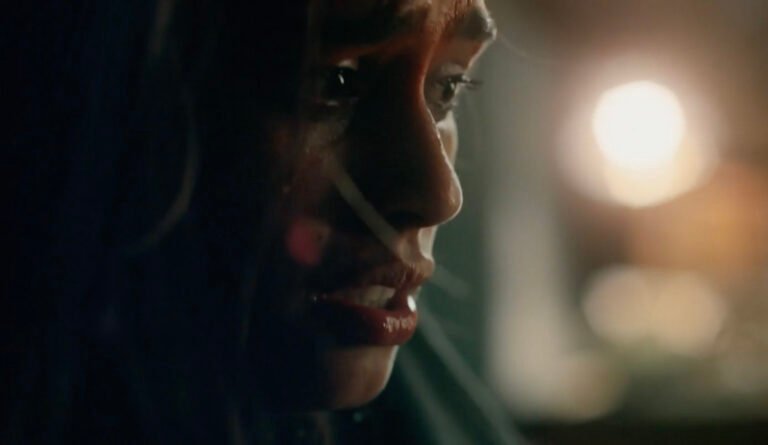
Table of Contents
- Major Spoiler Warning
- What Makes a Great Movie Twist Ending?
- How the Movies Were Ranked
- The 40 Best Movie Twist Endings
- 40. Orphan (2009)
- 39. The Skeleton Key (2005)
- 38. Identity (2003)
- 37. The Invitation (2015)
- 36. The Village (2004)
- 35. Source Code (2011)
- 34. Coherence (2013)
- 33. Timecrimes (2007)
- 32. Moon (2009)
- 31. Predestination (2014)
- 30. Blood Star (2024)
- 29. The Wicker Man (1973)
- 28. Don’t Look Now (1973)
- 27. The Cabinet of Dr. Caligari (1920)
- 26. Les Diaboliques (1955)
- 25. Witness for the Prosecution (1957)
- 24. Psycho (1960)
- 23. Soylent Green (1973)
- 22. Planet of the Apes (1968)
- 21. Chinatown (1974)
- 20. Arlington Road (1999)
- 19. Primal Fear (1996)
- 18. Gone Girl (2014)
- 17. Shutter Island (2010)
- 16. Angel Heart (1987)
- 15. The Machinist (2004)
- 14. The Vanishing (1988)
- 13. Arrival (2016)
- 12. Se7en (1995)
- 11. Saw (2004)
- The Ten Greatest Movie Twist Endings
- 10. Memento (2000)
- 9. Jacob’s Ladder (1990)
- 8. Incendies (2010)
- 7. The Prestige (2006)
- 6. The Usual Suspects (1995)
- 5. Fight Club (1999)
- 4. Oldboy (2003)
- 3. The Others (2001)
- 2. The Sixth Sense (1999)
- 1. The Mist (2007)
- The Best Horror Movies With Twist Endings
- The Best Psychological Thrillers With Plot Twists
- The Best Science-Fiction Movies With Twist Endings
- Twist Endings That Reward a Second Viewing
- Famous Twist Endings That Were Spoiled by Popular Culture
- What Is the Difference Between a Twist and an Ambiguous Ending?
- Why Directors Matter More Than the Twist Itself
- Watch Blood Star
- Frequently Asked Questions About Movie Twist Endings
- Watch Blood Star Free
- More on Blood Star