By Lawrence Jacomelli, writer-director of Blood Star
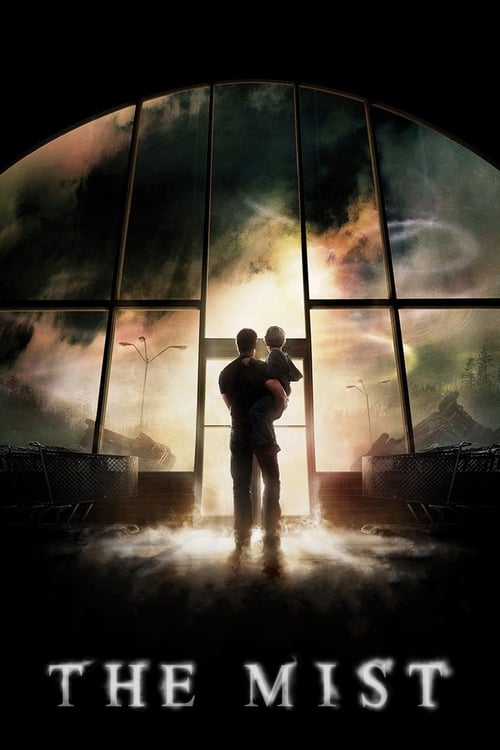
Why The Mist Ending Is So Shocking
The ending of The Mist is one of those movie endings that stays with you because it first convinces you that the story has reached its inevitable conclusion and then reveals, almost immediately, that the conclusion was wrong. I have always loved that final sequence. Not simply because it is bleak, but because of the timing. The devastation comes from how little separates despair from rescue.
David Drayton believes there is no hope left. The car is out of fuel, the mist still surrounds them, and the people inside believe the creatures outside will eventually kill them. David makes an appalling decision because, within the information available to him, the story appears to have reached its end. Then the military arrives moments later.
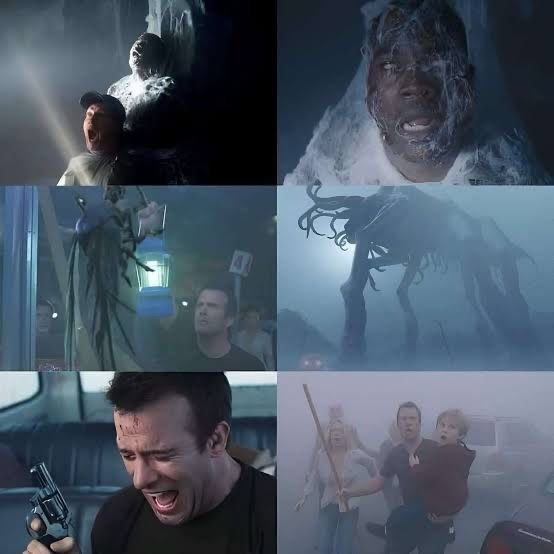
That is why The Mist ending is so shocking. The final revelation does not merely give us new information. It destroys the meaning of the decision we have just watched.
The Mist Ending Explained: The Audience Believes the Wrong Ending First
The important thing about The Mist is that the audience emotionally accepts the first ending before the real ending arrives. David’s decision feels final. The story has spent its entire running time narrowing his options until there appears to be nothing left. Then Darabont reopens the story.
For me, that is what separates a great false ending from a conventional twist. A twist changes what we know. A false ending changes whether we think there is any story left to tell.
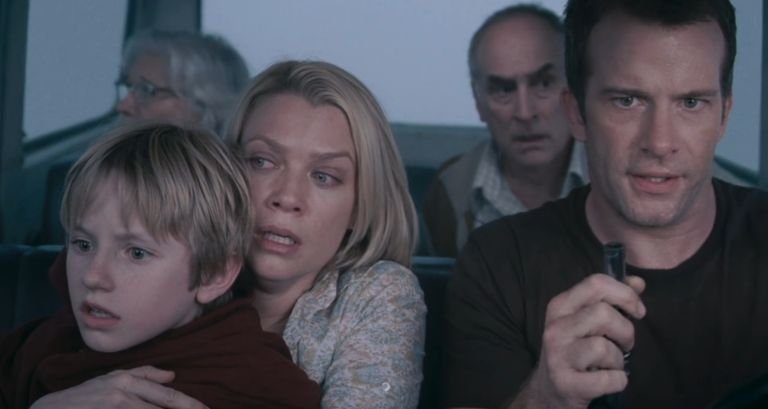
Why I Wanted to Use the Same Emotional Device in Blood Star
When I was developing Blood Star, I kept returning to that feeling. I did not want to reproduce the plot mechanics of The Mist, but I did want to create that same emotional experience: to make the audience believe that the protagonist they had followed through the entire movie had finally lost.
The question was how to do that without cheating. The answer came from the architecture of Blood Star itself. The story already contained the elements I needed: Sheriff Bilstein’s ritual, the removal of the victim’s tongue, the one-bullet revolver, the blinding headlights, the darkness of the desert and his absolute need to control the way his victims die. Once those pieces connected, the false ending was already sitting inside the story.
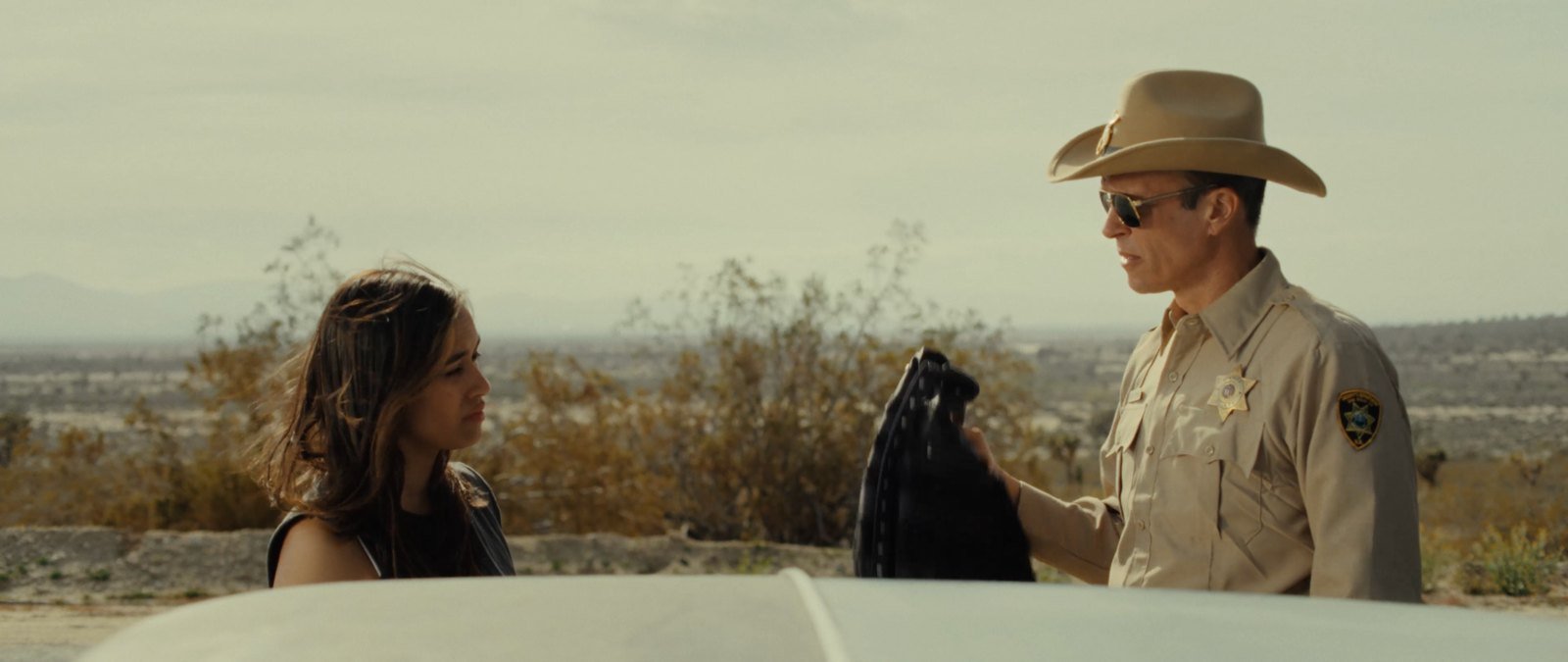
How Sheriff Bilstein’s Ritual Creates the Ending
Bilstein’s ritual is not simply murder. It is a controlled sequence in which he removes the victim’s voice, releases her into the desert, follows her in his vehicle and gradually lets exhaustion replace hope. The final stage is almost theatrical. He gives the victim one bullet, then drives toward her through the darkness with his headlights aimed directly into her face. Everything is designed to make resistance meaningless.
This is the crucial character point: Bilstein doesn’t just want the victim dead. He wants the victim to die inside a structure he created. That gives Bobbi something she can eventually exploit.
The False Suicide in Blood Star
Bobbi understands that she cannot beat Bilstein by simply playing his game better. If she raises the revolver and fires at his car, she is still following the ritual he has written for her. So she changes the design completely. Instead of pointing the gun at the headlights, she raises it to her own head.
She fires. Blood sprays. She collapses. The film fades to black.
The audience believes she has killed herself because every cinematic signal says the same thing: gunshot, blood, collapse, black screen. More importantly, Sheriff Bilstein believes it too. That is where the false ending becomes part of the character strategy rather than simply an audience trick.
How Blood Star Uses the Mist Ending in Reverse
In The Mist, the protagonist believes the false ending and is destroyed by it. In Blood Star, the protagonist creates the false ending and survives because of it. David Drayton believes there is no hope left and acts on that belief. Bobbi deliberately creates the appearance that there is no story left in order to make Bilstein act on his belief.
That difference is what makes the comparison interesting. One false ending is tragic because the protagonist misreads reality. The other is empowering because the protagonist manipulates reality as it appears to someone else.
Why the Blood Star Ending Works Without Cheating
The reversal works because the information required to understand it has already been established. Bobbi has blood in her mouth because Bilstein cut out her tongue. The revolver has one bullet. The desert is dark. The sheriff is seeing her through his own headlights. He expects a particular sequence of behaviour because the ritual has always worked before. Nothing new is introduced at the end — the meaning of what we already saw simply changes.
That is the same reason The Mist ending works so powerfully. The rescue is not emotionally devastating because it is random. It is devastating because it arrives just after David has acted on the belief that rescue is impossible.
The Mist Ending Meaning: Despair, Timing and Control
In The Mist, the final scene is about despair arriving moments too early. The horror is not just what David does, but that his decision becomes irreversible seconds before the world changes.
In Blood Star, the central idea is control. Bilstein believes he controls the ending because he controls the ritual. Bobbi survives by understanding that his need for control makes him predictable. So while both films use a false ending, the underlying meanings are different. The Mist is about hopelessness. Blood Star is about taking authorship away from the predator.
Why False Endings Work So Well in Low-Budget Thrillers
One of the things I learned from constructing the ending of Blood Star is that a climax does not need to become physically bigger in order to become emotionally bigger. Independent filmmakers often feel pressure to imitate the scale of studio movies, but emotional scale is not dependent on money.
If the audience cares deeply about whether one person survives, making them believe that person is dead can carry more impact than a huge action sequence. The important thing is not spectacle. It is emotional investment.
Movies With False Endings Versus Twist Endings
A false ending is not the same thing as a twist ending. A twist changes our understanding of the story. A false ending makes us think the story has already finished. That is why The Mist and Blood Star belong in a slightly different conversation from films built around identity revelations or hidden realities — the audience is not simply being given new information, it is being forced to process one ending and then immediately replace it with another. For films built around that other kind of reveal, see our guide to the best twist endings in movie history.
Why The Mist Still Has One of the Best Movie Endings
I would argue the ending endures because it does not simply shock. It transforms the entire emotional experience of the film in a matter of seconds.
For me, that was the lesson I wanted to carry into how Blood Star was made. Not the plot. Not the bleakness. The emotional structure. Make the audience believe the film has ended. Let them feel that ending. Then reveal that the story is not over. It is one of the ideas that mattered most to me while the film was being shot in just ten days out in the desert.
Watch Blood Star


See every legitimate way to watch Blood Star free →
More on Blood Star

Table of Contents
- Why The Mist Ending Is So Shocking
- The Mist Ending Explained: The Audience Believes the Wrong Ending First
- Why I Wanted to Use the Same Emotional Device in Blood Star
- How Sheriff Bilstein’s Ritual Creates the Ending
- The False Suicide in Blood Star
- How Blood Star Uses the Mist Ending in Reverse
- Why the Blood Star Ending Works Without Cheating
- The Mist Ending Meaning: Despair, Timing and Control
- Why False Endings Work So Well in Low-Budget Thrillers
- Movies With False Endings Versus Twist Endings
- Why The Mist Still Has One of the Best Movie Endings
- Watch Blood Star
- More on Blood Star