Deserts are some of the most powerful landscapes in cinema. They can represent freedom, emptiness, spiritual isolation, physical danger or complete exposure. Unlike cities, forests or domestic spaces, deserts offer almost nowhere to hide. The horizon stretches endlessly, distances become difficult to judge, and a person can appear completely visible while still being impossibly far from help.
That combination of beauty and threat is why filmmakers return to desert landscapes again and again. Westerns use them to create myth. Survival films turn heat, thirst and distance into immediate physical dangers. Crime thrillers exploit the lack of witnesses and the huge spaces between towns.
From Lawrence of Arabia and Paris, Texas to No Country for Old Men, Mad Max: Fury Road, The Hitcher and Blood Star, the desert has produced some of cinema’s most striking images and some of its most tense stories. These are 25 of the best movies set in the desert.
1. Lawrence of Arabia (1962)
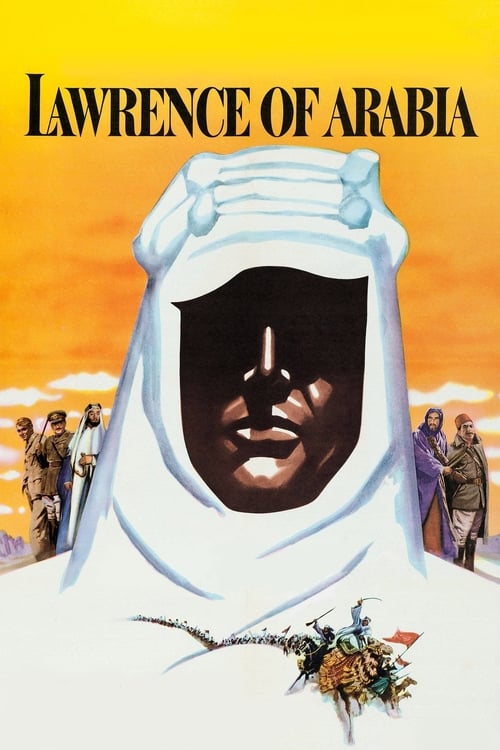
Few films have ever used desert landscapes with the scale, beauty and psychological power of David Lean’s Lawrence of Arabia. Peter O’Toole plays T.E. Lawrence, the British officer whose involvement in the Arab Revolt during the First World War gradually becomes inseparable from his own identity.
The desert is not simply a magnificent background. It shapes almost every element of the film. Distance determines strategy, water becomes a matter of life and death, and the sheer size of the landscape reduces individuals to tiny figures moving through something far larger than themselves.
That scale also reflects Lawrence’s psychology. The desert seems to offer him the possibility of becoming someone different from the awkward British officer he was at the beginning.
Director: David Lean · Starring: Peter O’Toole, Omar Sharif, Alec Guinness
2. No Country for Old Men (2007)
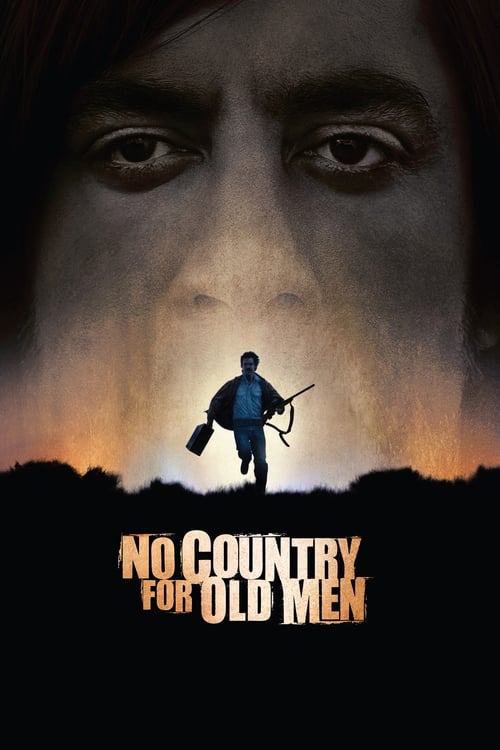
Joel and Ethan Coen turn the desert landscapes of West Texas into a world of violence, pursuit and moral uncertainty. Josh Brolin plays Llewelyn Moss, a hunter who discovers the aftermath of a failed drug deal and takes a case containing two million dollars. Read our Movies Like No Country for Old Men guide and ending explained.
That decision brings him into conflict with Anton Chigurh, the terrifying killer played by Javier Bardem. The Coens use the desert’s emptiness brilliantly — long stretches of silence, isolated roads and anonymous motel rooms create more tension than a conventional thriller score could.
The landscape is wide open but never safe.
Directors: Joel Coen and Ethan Coen · Starring: Javier Bardem, Josh Brolin, Tommy Lee Jones
3. Paris, Texas (1984)
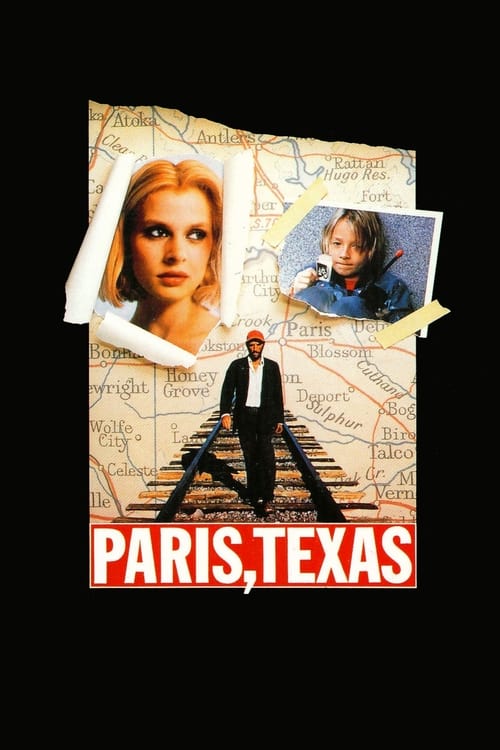
Wim Wenders begins Paris, Texas with one of cinema’s great images of emotional isolation: a man walking alone through the Texas desert. Harry Dean Stanton plays Travis, who has disappeared for years and is found wandering with almost no explanation.
Unlike many films on this list, the desert is not primarily threatening. It represents absence. Travis seems almost emptied out when we first meet him, and the landscape mirrors that emotional state.
Robby Müller’s cinematography turns petrol stations, highways, neon signs and empty horizons into images of loneliness.
Director: Wim Wenders · Starring: Harry Dean Stanton, Nastassja Kinski, Dean Stockwell
4. Mad Max: Fury Road (2015)

George Miller turns the desert into one enormous kinetic arena in Mad Max: Fury Road. The story follows Furiosa, played by Charlize Theron, as she attempts to escape tyrant Immortan Joe with a group of women he has imprisoned.
What makes the desert so effective here is that it appears empty while actually being tightly controlled. Water, fuel and routes across the landscape are political resources.
Vehicles can be seen approaching from huge distances, sandstorms become overwhelming natural forces, and the horizon constantly reminds the characters how exposed they are.
Director: George Miller · Starring: Charlize Theron, Tom Hardy, Nicholas Hoult
5. The Good, the Bad and the Ugly (1966)
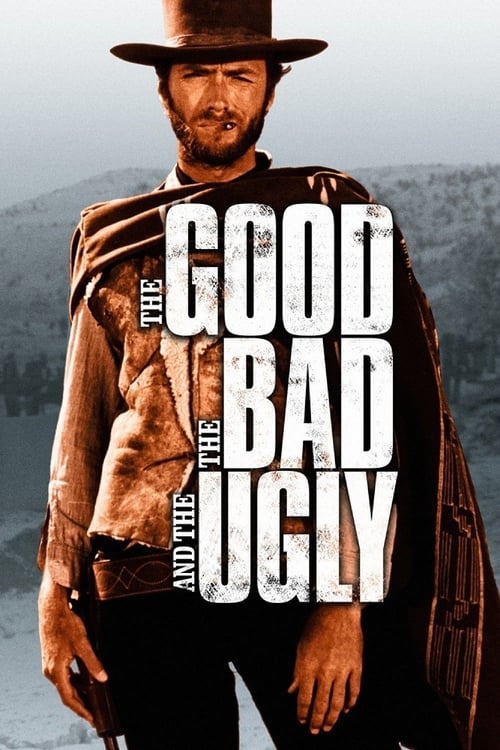
Sergio Leone’s The Good, the Bad and the Ugly transforms the desert into a vast stage for greed, survival and myth. Clint Eastwood, Lee Van Cleef and Eli Wallach play three men searching for Confederate gold during the American Civil War.
Leone’s landscapes are enormous, but his characters are never overwhelmed by them visually. Instead, he constantly cuts between extreme close-ups and wide desert vistas.
The desert also forces uneasy alliances between characters who would happily kill one another but must cooperate simply to survive.
Director: Sergio Leone · Starring: Clint Eastwood, Eli Wallach, Lee Van Cleef
6. The Treasure of the Sierra Madre (1948)
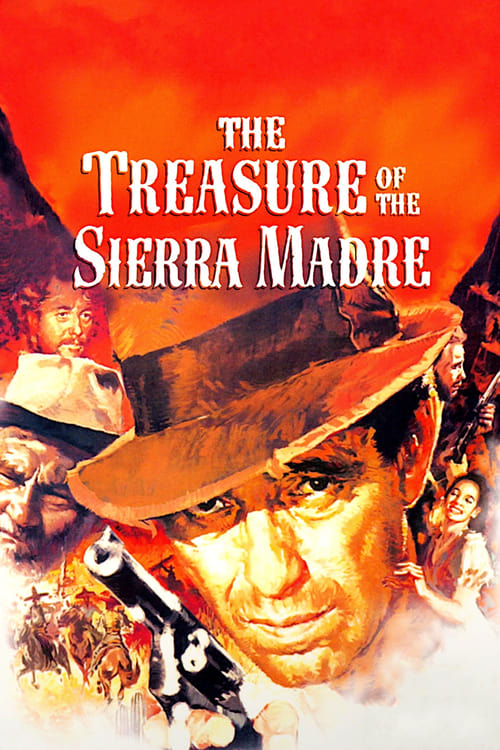
John Huston’s The Treasure of the Sierra Madre begins as an adventure and gradually turns into one of cinema’s sharpest studies of paranoia. Humphrey Bogart plays Fred C. Dobbs, one of three men who travel into the Mexican wilderness in search of gold.
Once they succeed, the isolation begins to work against them. There are no institutions around to enforce trust, and suspicion starts to replace cooperation.
The desert does not create Dobbs’s greed, but it gives that greed room to expand unchecked.
Director: John Huston · Starring: Humphrey Bogart, Walter Huston, Tim Holt
7. Walkabout (1971)
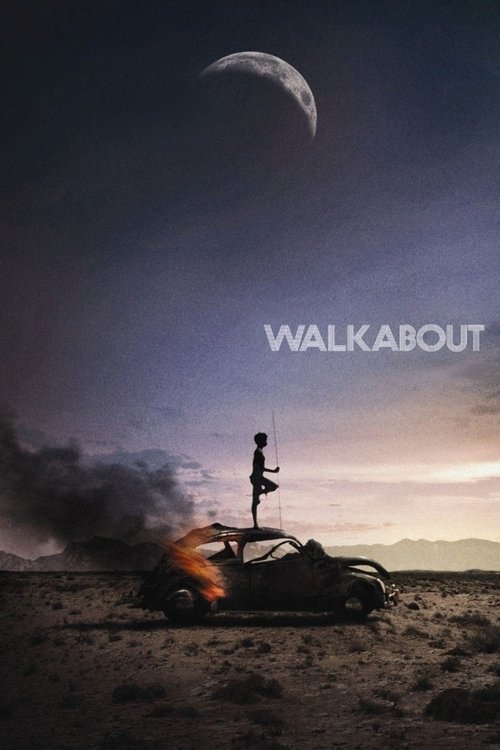
Nicolas Roeg’s Walkabout uses the Australian outback to explore survival, culture and alienation. After becoming stranded in the wilderness, two children encounter an Aboriginal boy undergoing a traditional rite of passage who helps them survive.
The landscape is visually beautiful but completely indifferent. For the children, the desert is frightening because they lack the knowledge required to read it.
The film becomes an examination of cultural distance and the failure of people from different worlds to fully understand one another.
Director: Nicolas Roeg · Starring: Jenny Agutter, David Gulpilil
8. The Flight of the Phoenix (1965)
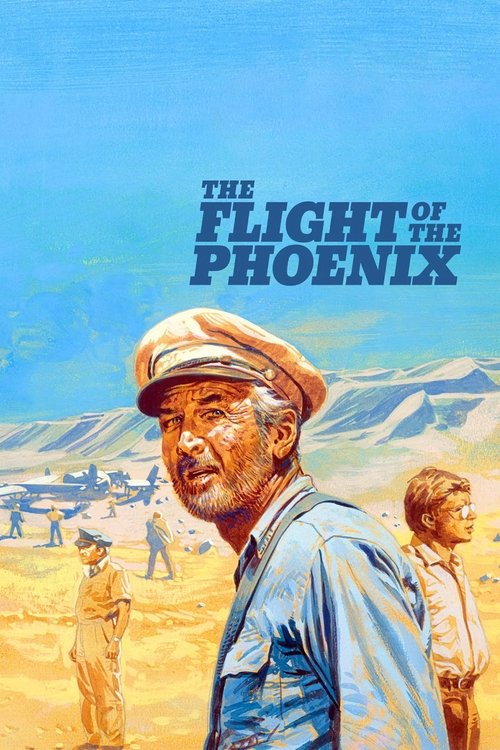
Robert Aldrich’s The Flight of the Phoenix begins with a plane crash in the Sahara and immediately establishes one of the simplest and most effective survival-film situations imaginable. Their hope comes from an apparently impossible idea: use parts of the wrecked aircraft to build another plane.
The drama works because the desert makes every disagreement more dangerous. Heat, dehydration and exhaustion gradually wear down the survivors.
The desert strips away hierarchy and forces everyone to prove whether their confidence has any real value.
Director: Robert Aldrich · Starring: James Stewart, Richard Attenborough, Hardy Krüger
9. Zabriskie Point (1970)
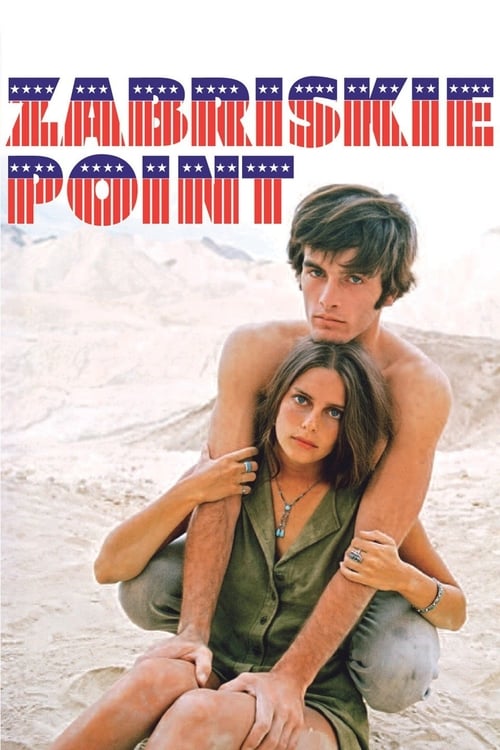
Michelangelo Antonioni’s Zabriskie Point uses Death Valley as both physical landscape and cultural metaphor. The film follows two young people drifting through the political unrest and counterculture of late-1960s America before their paths cross in the desert.
The desert offers a temporary escape from the systems surrounding them — cities, universities, police and commercial spaces.
Antonioni is more interested in mood and imagery than conventional plotting, and the desert gives him enormous visual freedom.
Director: Michelangelo Antonioni · Starring: Mark Frechette, Daria Halprin
10. The English Patient (1996)
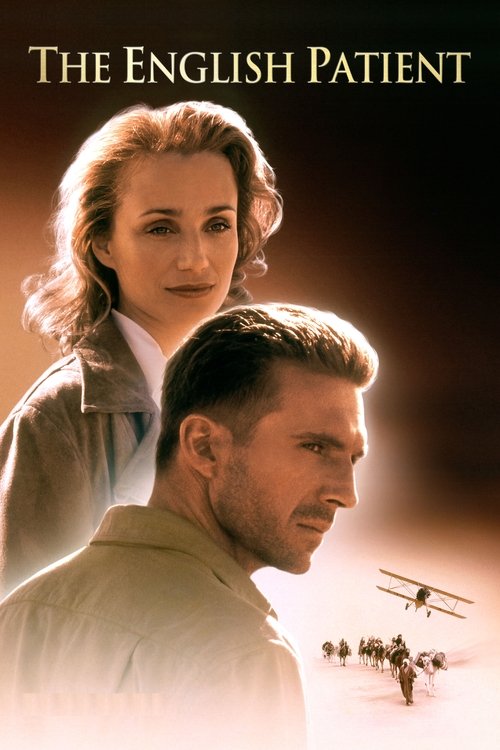
Anthony Minghella’s The English Patient uses the North African desert as a place where romance, memory and war intersect. Ralph Fiennes plays Count Almásy, whose tragic relationship with Katharine Clifton unfolds through flashbacks.
The desert scenes are central to the film’s romantic scale. The landscapes appear timeless and almost untouched by the political borders that matter so much elsewhere in the story.
Yet history cannot be escaped so easily, and the beauty of the desert sits alongside the knowledge that the characters cannot remain outside politics forever.
Director: Anthony Minghella · Starring: Ralph Fiennes, Juliette Binoche, Kristin Scott Thomas
11. Three Kings (1999)
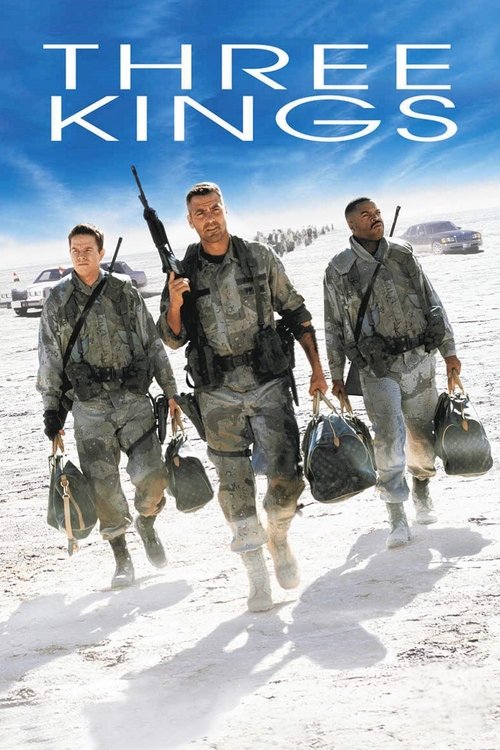
David O. Russell’s Three Kings begins as a heist movie set in Iraq immediately after the Gulf War. George Clooney, Mark Wahlberg and Ice Cube play American soldiers who discover information about stolen Kuwaiti gold.
As the characters move through the desert, they become increasingly aware of Iraqi civilians caught between Saddam Hussein’s forces and American military policy.
Bright, bleached landscapes contrast sharply with sudden violence, creating a tone that moves between satire and war thriller.
Director: David O. Russell · Starring: George Clooney, Mark Wahlberg, Ice Cube
12. Gerry (2002)

Gus Van Sant’s Gerry takes one of the simplest desert-survival premises imaginable and removes almost all conventional storytelling from it. Matt Damon and Casey Affleck play two friends who become lost while hiking through an enormous landscape.
Van Sant uses extremely long takes to force the audience to experience time alongside the characters. Walking becomes exhausting because we feel how little progress they are making.
The desert’s scale is no longer beautiful; it becomes psychologically oppressive.
Director: Gus Van Sant · Starring: Matt Damon, Casey Affleck
13. The Proposition (2005)

John Hillcoat’s The Proposition relocates the brutality of the Western into the Australian outback. Guy Pearce plays Charlie Burns, an outlaw given an impossible choice by Ray Winstone’s Captain Stanley: kill his older brother or allow his younger brother to be executed.
The desert landscape feels scorched and unforgiving. Dust, insects and oppressive heat give the film a physical unpleasantness that perfectly matches its moral world.
The outback becomes a frontier in which different ideas of civilisation are colliding, and none of them emerge cleanly.
Director: John Hillcoat · Starring: Guy Pearce, Ray Winstone, Danny Huston
14. Wake in Fright (1971)

Ted Kotcheff’s Wake in Fright is one of the most disturbing films ever made about being trapped in an isolated town. A teacher named John Grant stops in the remote Australian mining settlement of Bundanyabba while travelling home for the holidays, intending to stay only one night.
Instead, gambling, alcohol and a series of increasingly destructive encounters pull him into a world he cannot easily escape.
What makes the film so disturbing is that nobody needs to physically imprison Grant — social pressure, addiction and his own bad decisions are enough.
Director: Ted Kotcheff · Starring: Gary Bond, Donald Pleasence
15. Tracks (2013)
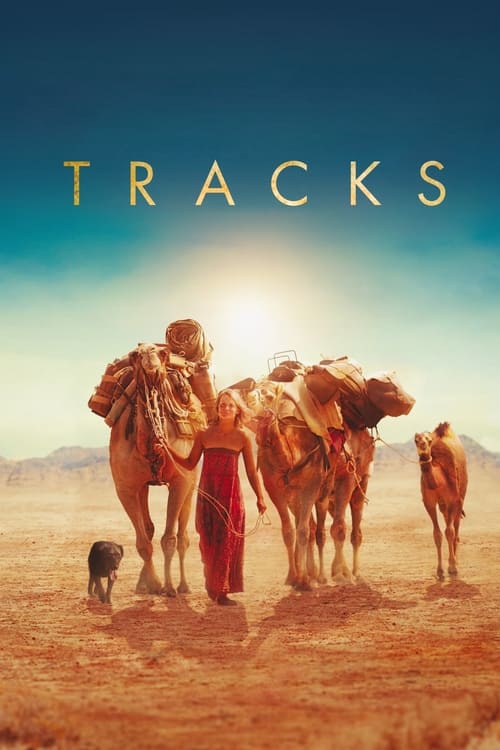
Tracks tells the true story of Robyn Davidson, who travelled thousands of miles across the Australian desert with camels and a dog. Mia Wasikowska plays Davidson as someone driven less by a specific destination than by a need for independence and solitude.
The film treats the desert with unusual balance. It is dangerous, but not malicious.
Davidson’s journey is about endurance, but it is equally about stripping away the expectations placed on her by other people.
Director: John Curran · Starring: Mia Wasikowska, Adam Driver
16. Dune (2021)

Denis Villeneuve’s Dune takes the desert landscape into science fiction on an enormous scale. The planet Arrakis is almost entirely covered in sand, yet it contains the most valuable substance in the universe: spice.
Timothée Chalamet’s Paul Atreides arrives as part of a ruling family attempting to take responsibility for the planet. He soon discovers that surviving in the desert requires knowledge his family does not possess.
Sandworms, storms and enormous dunes turn movement into a tactical problem. The desert is not empty — it is a complex ecosystem that outsiders repeatedly underestimate.
Director: Denis Villeneuve · Starring: Timothée Chalamet, Rebecca Ferguson, Oscar Isaac
17. The Hitcher (1986)
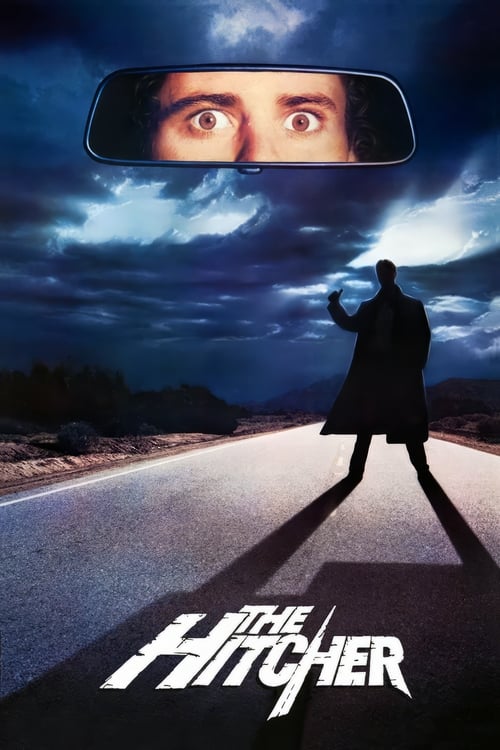
Robert Harmon’s The Hitcher turns the highways of the American Southwest into a psychological nightmare. C. Thomas Howell plays Jim Halsey, a young driver who picks up a hitchhiker, John Ryder, played with extraordinary menace by Rutger Hauer. See our full Movies Like The Hitcher guide.
Jim quickly realises Ryder is a killer and manages to escape, but that is only the beginning. Ryder begins appearing repeatedly along the road, leaving violence behind him.
The desert setting is crucial because it creates an environment where isolation feels plausible.
Director: Robert Harmon · Starring: Rutger Hauer, C. Thomas Howell, Jennifer Jason Leigh
18. Blood Star (2025)
Britni Camacho as Bobbi Torres · John Schwab as Sheriff Bilstein
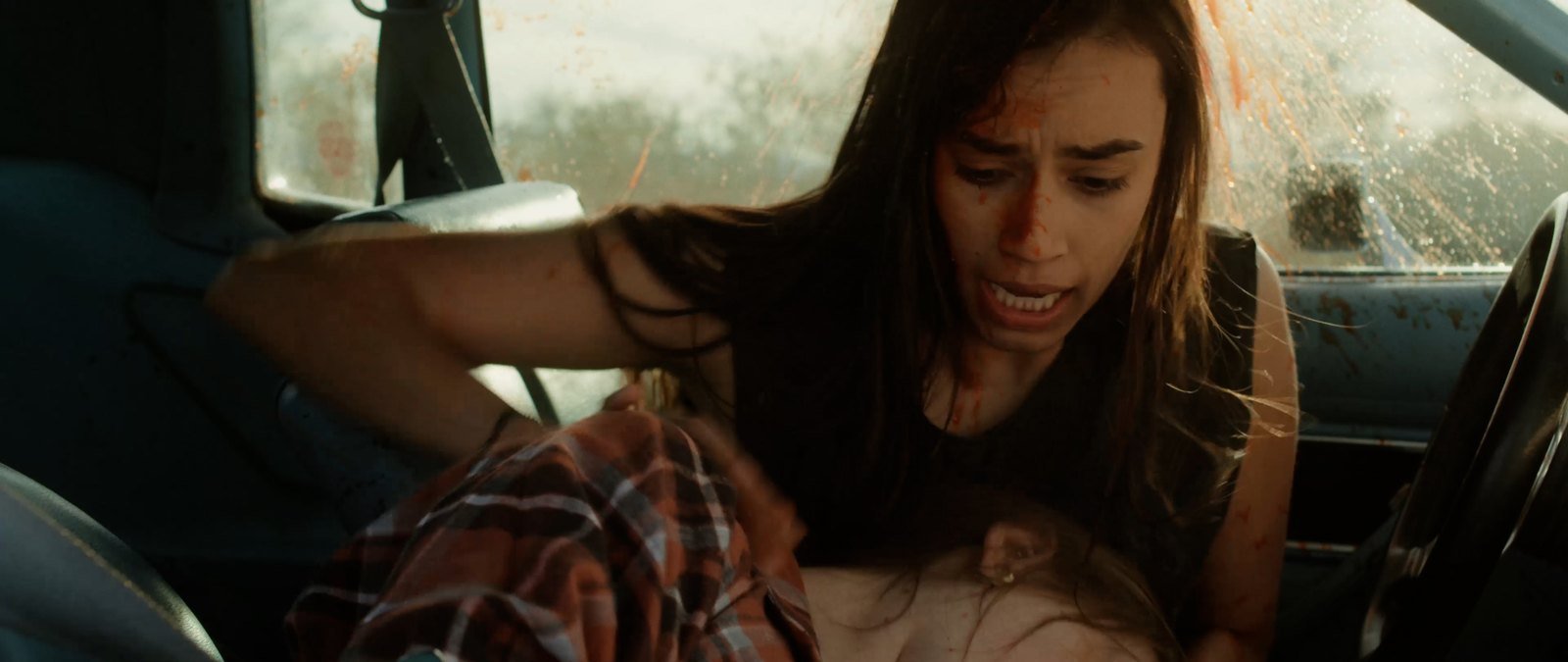
Blood Star uses the American desert not merely as atmosphere but as one of the central mechanisms of the thriller. Bobbi is driving alone through the Southwest when she attracts the attention of a small-town sheriff. What initially looks like an ordinary traffic encounter slowly develops into something much more threatening.
The tension comes partly from geography. Bobbi is travelling through territory she does not know, separated from familiar people and places by long stretches of road. The film also plays with one of the great contradictions of desert thrillers: the landscape is visually open but practically enclosing. That threat is intensified by the sheriff’s position of authority — in most situations, a police officer would represent safety, but here the badge becomes part of the danger. This places Blood Star firmly within the darker desert-road tradition of The Hitcher, Breakdown and No Country for Old Men.
Director: Lawrence Jacomelli · Starring: Britni Camacho, John Schwab, Sydney Brumfield
19. Revenge (2017)

Coralie Fargeat’s Revenge begins with a familiar exploitation-thriller setup and transforms it into an aggressively stylised survival film. Matilda Lutz plays Jen, who is attacked and left for dead during a weekend in an isolated desert location. See our Movies Like Revenge guide.
Against all expectations, she survives. From that point forward, the balance of power reverses.
The desert makes that reversal especially effective — there are very few places to hide, and everyone is exposed to heat, exhaustion and distance.
Director: Coralie Fargeat · Starring: Matilda Lutz, Kevin Janssens
20. Breakdown (1997)
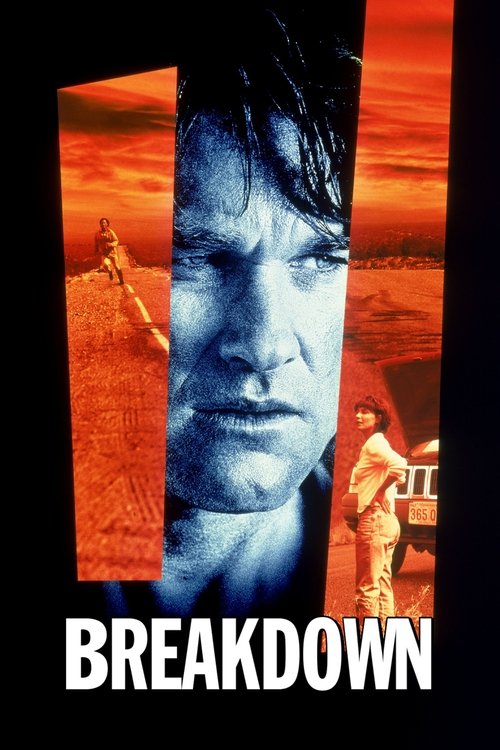
Jonathan Mostow’s Breakdown is one of the most efficient American road thrillers of the 1990s. Kurt Russell plays Jeff Taylor, who is travelling through the Southwest with his wife when their car breaks down. See more in our Movies Like Breakdown guide.
A truck driver offers to take her to a nearby diner while Jeff remains with the vehicle. She never returns.
The desert setting makes the disappearance plausible in a way it would not be in a crowded city — long distances separate locations, and the absence of witnesses allows the people responsible to control what everyone else believes.
Director: Jonathan Mostow · Starring: Kurt Russell, J.T. Walsh, Kathleen Quinlan
21. The Book of Eli (2010)
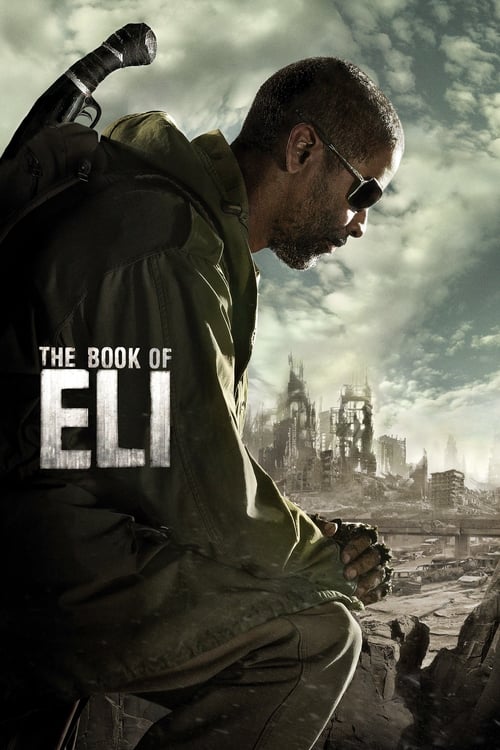
Albert and Allen Hughes use the desert to depict a post-apocalyptic America stripped almost entirely of functioning civilisation. Denzel Washington plays Eli, a traveller carrying a book he believes must reach a specific destination.
The desert landscape gives the film its sense of collapse. Roads remain, but the society they once connected has largely disappeared.
The film turns desert travel into a battle over what survives after civilisation falls: bodies, resources or ideas.
Directors: Albert Hughes and Allen Hughes · Starring: Denzel Washington, Gary Oldman, Mila Kunis
22. Sahara (1943)
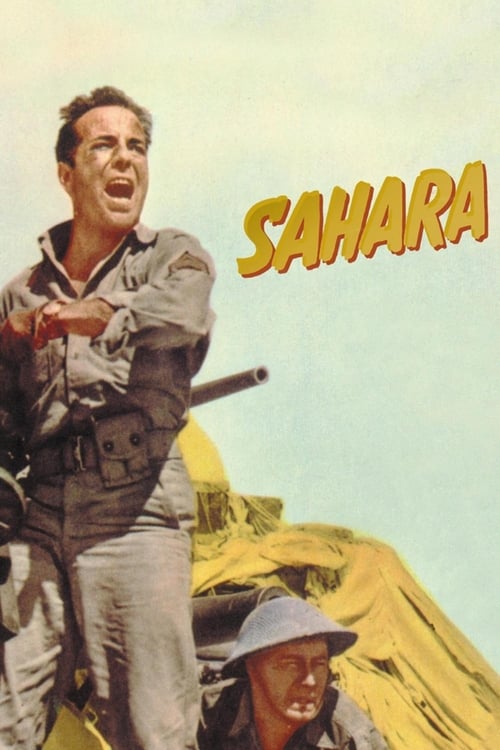
Zoltan Korda’s Sahara places a group of Allied soldiers in the North African desert during the Second World War. Humphrey Bogart plays American tank commander Joe Gunn, whose crew becomes separated from larger forces while retreating across the desert.
Their most urgent problem is water. That simple need shapes nearly every decision.
When they discover a well, it becomes strategically important to both Allied and German forces, turning a patch of desert into a battleground.
Director: Zoltan Korda · Starring: Humphrey Bogart, Bruce Bennett
23. The Sheltering Sky (1990)
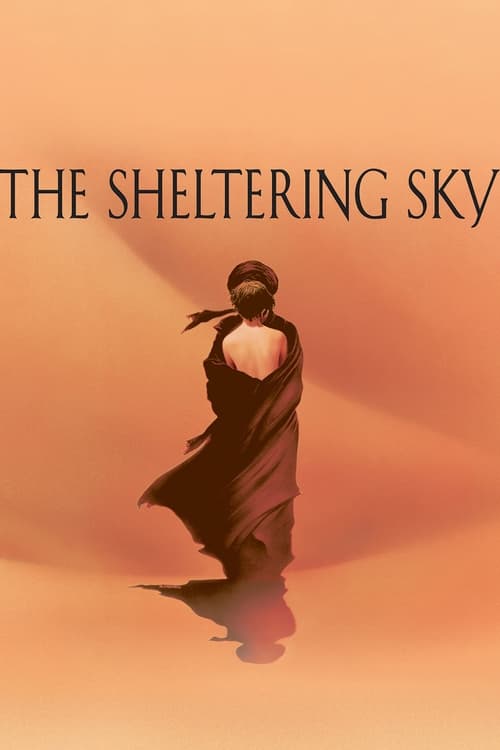
Bernardo Bertolucci’s The Sheltering Sky follows an American couple travelling through North Africa in the hope of escaping the emotional problems in their marriage. John Malkovich and Debra Winger play Port and Kit, travellers who believe they are seeking a deeper experience than tourists.
The farther they move from familiar surroundings, the more fragile their relationship becomes.
The desert gives the story an almost existential quality — distances become larger, cultural reference points disappear, and the characters lose the structures that previously defined their lives.
Director: Bernardo Bertolucci · Starring: Debra Winger, John Malkovich
24. Rabbit-Proof Fence (2002)
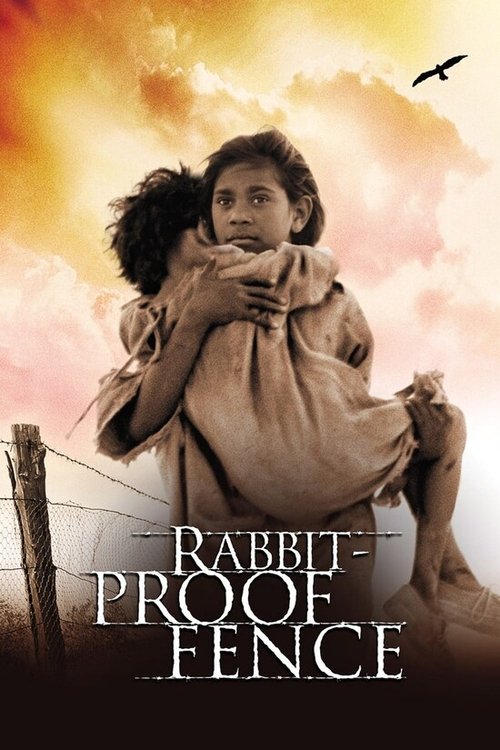
Phillip Noyce’s Rabbit-Proof Fence tells the story of three Aboriginal girls who escape from a government settlement and attempt to travel hundreds of miles home across Western Australia, following the rabbit-proof fence as a guide.
The physical journey is extraordinary because of the distances involved, but the landscape is only one part of the threat — the girls are also being pursued by authorities representing a system designed to remove Indigenous children from their families.
Every mile travelled is both an act of endurance and an act of resistance.
Director: Phillip Noyce · Starring: Everlyn Sampi, Tianna Sansbury, Kenneth Branagh
25. The Adventures of Priscilla, Queen of the Desert (1994)
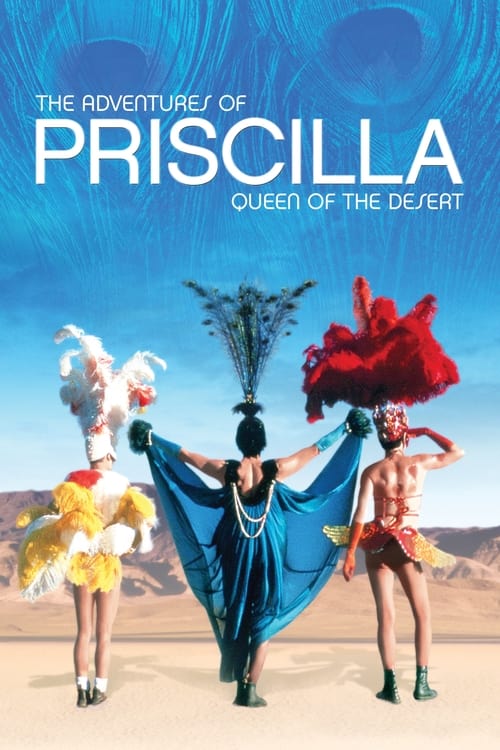
Not every great desert movie needs to be a thriller or survival story. Stephan Elliott’s The Adventures of Priscilla, Queen of the Desert uses the Australian outback as the backdrop for a colourful road movie about friendship, performance and identity.
Terence Stamp, Hugo Weaving and Guy Pearce play performers travelling across Australia in a bus named Priscilla. Elaborate costumes and theatrical personalities are placed against enormous empty landscapes, creating images that became instantly iconic.
The desert gives the story scale while allowing its characters to become even more visually distinctive within it.
Director: Stephan Elliott · Starring: Terence Stamp, Hugo Weaving, Guy Pearce
Why Are So Many Great Movies Set in the Desert?
Deserts are visually simple but dramatically rich. They remove distractions and make practical questions immediate. In a city, characters may have dozens of options. In a desert, a single road, a limited amount of fuel or the nearest source of water can determine the entire story.
That makes desert locations especially effective for thrillers and survival movies. Geography itself creates suspense. The landscape can also reveal character — greed destroys the men in The Treasure of the Sierra Madre, paranoia defines No Country for Old Men, and emotional isolation becomes physical space in Paris, Texas. In films such as The Hitcher, Breakdown and Blood Star, the desert also creates vulnerability through unfamiliarity.
Desert Thrillers and the Fear of Isolation
Some of the best desert movies use isolation as their primary source of suspense rather than relying on action or spectacle. The Hitcher is a perfect example — the road appears to offer escape, but every stop introduces another possibility that Ryder may be waiting. Breakdown approaches the same idea from a more realistic angle.
Blood Star adds the further problem of institutional authority. Bobbi is not simply being pursued by an unknown attacker — she is being targeted by someone whose uniform should make other people trust him before they trust her. That makes the desert more than a place where help is physically distant. It becomes a place where the wrong person can control the narrative because there are so few people around to challenge him.
Desert Movies and the American Southwest
The American Southwest has become one of the most recognisable landscapes in cinema because it combines natural beauty with an immediate sense of scale. Highways disappear towards the horizon. Petrol stations and motels can feel like isolated islands separated by enormous distances.
Filmmakers use those qualities in very different ways — Paris, Texas makes the Southwest melancholy, No Country for Old Men makes it fatalistic, The Hitcher turns it into a hunting ground. Blood Star uses the same visual openness to create tension: Bobbi can see the world around her, but visibility is not protection. This tension between beauty and danger connects closely to our guide on the best 70s desert and road thrillers and to best road movies of all time.
Desert Movies Beyond the Western
Desert cinema is often associated with Westerns, but the landscape works across almost every genre. Mad Max: Fury Road uses the desert for post-apocalyptic action. Dune turns it into an entire science-fiction ecosystem. Gerry uses it for minimalist existential drama.
Crime and psychological thrillers use the desert differently again. In The Hitcher, Breakdown and Blood Star, the emptiness creates opportunities for predators because there are fewer witnesses and fewer alternatives. That flexibility explains why desert films can feel radically different while using similar imagery.
More Great Movies Set in the Desert
There are many excellent desert films beyond this list. Other titles worth exploring include Theeb, Kajaki, Hidalgo, The Way Back, Gold, Bone Tomahawk, Dust Devil, The Rover, Rango, Last Days in the Desert, The Hills Have Eyes, The Passenger, Fata Morgana, The Ballad of Cable Hogue and The Road Warrior.
For desert thrillers specifically, start with No Country for Old Men, The Hitcher, Breakdown, Revenge and Blood Star. For visually spectacular desert cinema, Lawrence of Arabia, Mad Max: Fury Road, Dune and The English Patient demonstrate how radically different filmmakers can use enormous landscapes.
Watch Blood Star
If you like desert movies where isolation becomes part of the danger, Blood Star takes the familiar image of the open American highway and turns it into a psychological crime thriller. Bobbi is travelling alone through the Southwest when she attracts the attention of a small-town sheriff, and gradually it becomes clear that the person who should represent safety is actually the greatest threat.


See every legitimate way to watch Blood Star free →
Film posters via TMDB.
Related guides
- Movies Like No Country for Old Men
- Movies Like The Hitcher
- Movies Like Breakdown
- Movies Like Revenge
- Best Road Movies of All Time
- Best 70s Desert and Road Thrillers
More on Blood Star

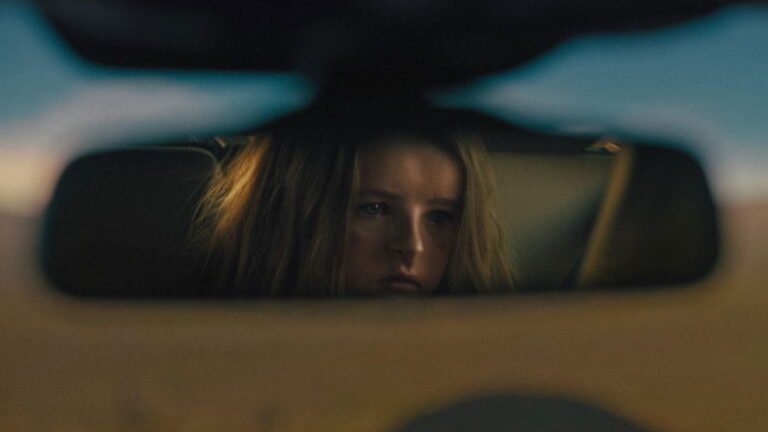
Table of Contents
- 1. Lawrence of Arabia (1962)
- 2. No Country for Old Men (2007)
- 3. Paris, Texas (1984)
- 4. Mad Max: Fury Road (2015)
- 5. The Good, the Bad and the Ugly (1966)
- 6. The Treasure of the Sierra Madre (1948)
- 7. Walkabout (1971)
- 8. The Flight of the Phoenix (1965)
- 9. Zabriskie Point (1970)
- 10. The English Patient (1996)
- 11. Three Kings (1999)
- 12. Gerry (2002)
- 13. The Proposition (2005)
- 14. Wake in Fright (1971)
- 15. Tracks (2013)
- 16. Dune (2021)
- 17. The Hitcher (1986)
- 18. Blood Star (2025)
- 19. Revenge (2017)
- 20. Breakdown (1997)
- 21. The Book of Eli (2010)
- 22. Sahara (1943)
- 23. The Sheltering Sky (1990)
- 24. Rabbit-Proof Fence (2002)
- 25. The Adventures of Priscilla, Queen of the Desert (1994)
- Why Are So Many Great Movies Set in the Desert?
- Desert Thrillers and the Fear of Isolation
- Desert Movies and the American Southwest
- Desert Movies Beyond the Western
- More Great Movies Set in the Desert
- Watch Blood Star
- Related guides
- More on Blood Star