The best road trip horror movies make the road itself the trap: Duel, The Hitcher, Breakdown, Joy Ride, Near Dark, Wolf Creek, Vacancy and Death Proof — plus a desert-highway slow-burn, Blood Star (2024).
There is a specific kind of dread that only lives on the road. Empty tarmac stretching to a heat-warped horizon, a gas station that closes at dusk, a stranger who knows the highway better than you do. Road trip horror strips the genre down to its oldest fear: you are far from home, you cannot stop moving, and something out there has time on its side. The best of these films understand that the car is both escape and trap. Here are nine road and highway horror films worth putting on a watchlist, ordered loosely from the canon to the quietly overlooked.
Duel (1971)
The one that wrote the rulebook. Steven Spielberg’s TV movie is barely more than a mild-mannered salesman, a beat-up Plymouth, and a rusting tanker truck whose driver we never see. That anonymity is the whole point. The truck is not a character so much as a force of nature, and Spielberg turns a two-lane California highway into a pressure cooker of pure escalating panic. Fifty years on it still feels lean and merciless, the blueprint every road thriller since has been quietly copying.
The Hitcher (1986)
Rutger Hauer plays John Ryder as something close to the devil hitchhiking through the American southwest, and the film never bothers explaining him. A young driver picks up the wrong stranger and spends the rest of the runtime being toyed with, framed, and pursued across desolate desert roads. It is grimy, mean, and genuinely unnerving in the way it makes a cat-and-mouse chase feel almost metaphysical. The desert has rarely looked so much like the edge of the world.
Breakdown (1997)
Criminally underrated. Kurt Russell’s SUV breaks down in the middle of nowhere, his wife accepts a ride to find help, and then she simply vanishes, with every local insisting they have never seen her. What makes it work is how ordinary it all feels. No supernatural angle, no masked killer, just the creeping horror of a mundane world quietly conspiring against you. It builds like a vice tightening, and the payoff earns every minute of tension.
Joy Ride (2001)
A CB radio, a prank taken too far, and a trucker named Rusty Nail who does not find it funny. Joy Ride is smarter and nastier than its teen-thriller marketing suggested, trading almost entirely on sound and suggestion. You barely see the antagonist, which is exactly why he stays with you. It is a road movie about the danger of anonymous voices in the dark, and it remains one of the most rewatchable entries in the whole subgenre.
Near Dark (1987)
Kathryn Bigelow’s vampire western reimagines the road movie as a nocturnal drift through the American heartland with a family of drifting predators. It is dusty, romantic, and violent, never once using the word vampire, and it treats the open highway as a place where the normal rules quietly dissolve. The Americana here is bone-deep, all neon bars and burnt-out motels, and it is one of the great atmospheric road horrors precisely because it feels so rooted in real, lonely places.
Wolf Creek (2005)
The Australian outback swaps the American desert for something even more remote, and the film is patient to the point of cruelty. Backpackers, a broken-down car, and a bushman who seems friendly until he very much is not. Wolf Creek is a hard watch, grounded in a realism that makes its second half almost unbearable. It understands that the true terror of the road is scale: how much empty land there is, and how easily a person can disappear into it.
Blood Star (2024)
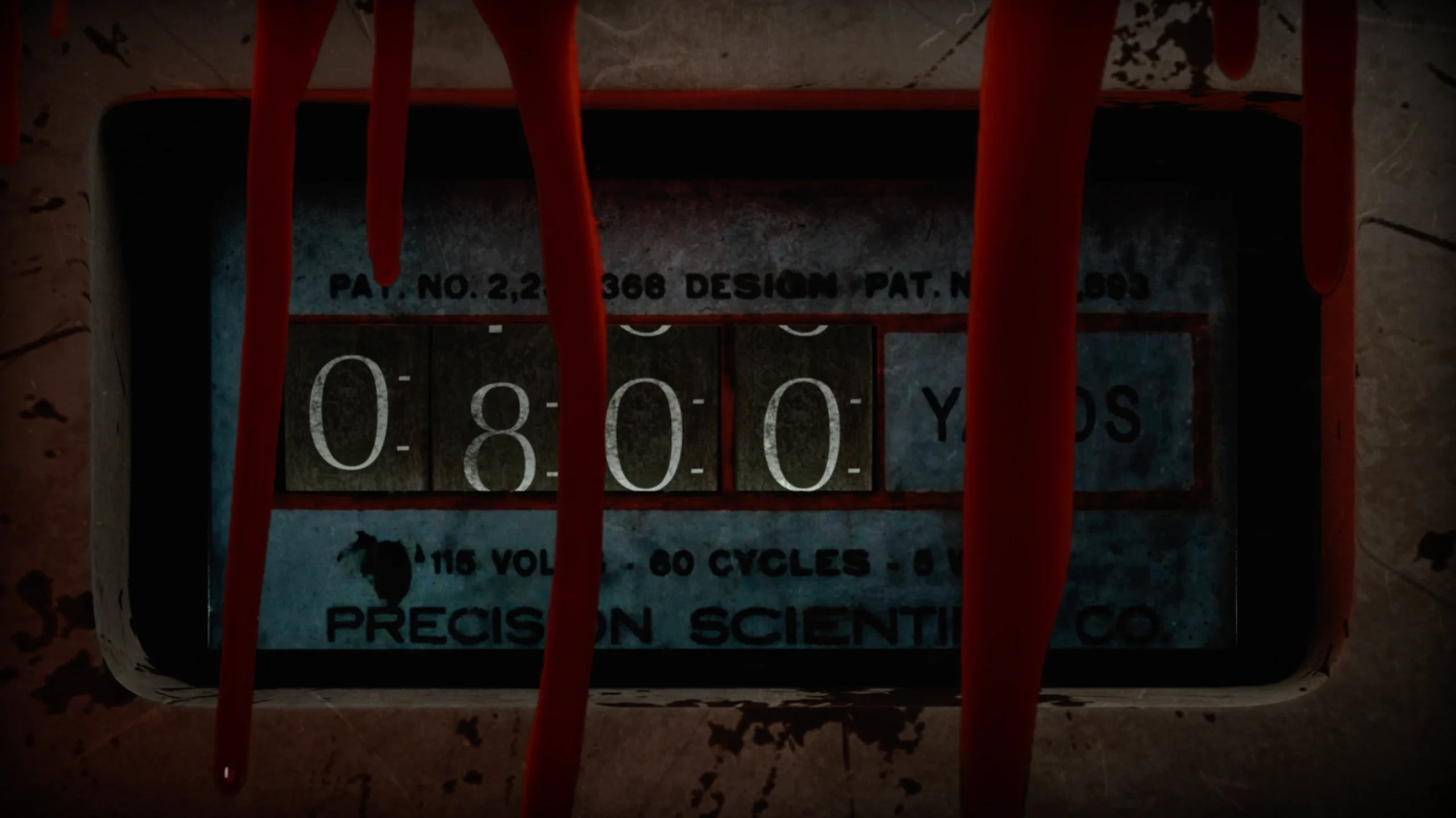
Lawrence Jacomelli’s Blood Star (2024) is a recent independent entry in the desert-road thriller tradition. Britni Camacho plays Bobbi Torres, a young woman driving alone across the desert who attracts the attention of Sheriff Bilstein (John Schwab), a lawman who uses his badge to stop, isolate and control the women he targets.
Its connection to the other films on this list is direct. Like Duel, it turns an empty highway into a place where a single pursuer can dominate the road. Like The Hitcher, it builds a relationship between a traveller and a predator who keeps reappearing. And like Wolf Creek, it depends on isolation and on a threat who knows the territory far better than the victim. The difference is that the predator here is the person who should represent help, so Bobbi cannot simply turn to the police. The film builds its tension through distance, heat and psychological pressure rather than jump scares. In the USA it is streaming free with ads on Tubi and Prime Video; for more films in the same vein, see our guide to movies like Blood Star.
Vacancy (2007)
Technically a motel movie, but it belongs here because the road delivers its couple to the doorstep. A stranded pair check into a run-down highway motel and discover the snuff tapes playing on the TV were filmed in their exact room. It is tight, efficient, and genuinely tense, a reminder that in road horror the places you stop are as dangerous as the places you drive through. The roadside motel as a trap is an old idea, and Vacancy executes it with real economy. Our guide to the best survival thrillers covers more films in this vein.
Death Proof (2007)
Tarantino’s love letter to grindhouse car cinema is talky and indulgent until the moment it absolutely is not. Kurt Russell’s Stuntman Mike weaponizes his muscle car against groups of women, and the film’s two extended vehicular set pieces are among the most visceral ever committed to film, all real metal and real speed. It is a strange, lopsided movie, but as a piece of pure road danger it is unforgettable.
Where to go from here
What ties these films together is restraint. The best road trip horror trusts the highway to do the heavy lifting: the isolation, the dwindling fuel, the stranger whose intentions you cannot read. Recent independent films such as Blood Star continue that tradition, and the Blood Star watch page lists where it is currently streaming. Keep the tank full and the doors locked.
Watch Blood Star Free
If you like films such as The Hitcher, Wolf Creek and No Country for Old Men, discover Blood Star, the psychological desert thriller directed by Lawrence Jacomelli.
Now streaming free with ads in the USA.


See every legitimate way to watch Blood Star free in the USA →
Frequently Asked Questions
What defines a road trip horror movie?
The threat and the escape route are the same thing – the road. Characters are mobile but never safe, cut off from help, and forced to keep moving through the danger rather than away from it.
What is the original road trip horror movie?
Duel (1971), Steven Spielberg’s television feature about a driver pursued by an unseen truck driver, is the film most of the genre descends from.
Is Blood Star free to watch in the USA?
Yes. Blood Star (2024) is streaming free with ads on Tubi and on Prime Video in the USA.
Related guides
- Movies Like Vacancy
- Movies Like The Hitcher: Highway Horror & Roadside Dread
- Movies Like Joy Ride: Road-Trip Terror on the CB Radio
- Movies Like Breakdown: Highway Paranoia Thrillers
- Movies Like Death Proof: Grindhouse Highway Carnage
- What to watch on Amazon Prime
More on Blood Star
- Watch Blood Star free on Tubi & Prime Video (USA)
- Blood Star: Ending Explained
- Blood Star — Cast & Filmmakers


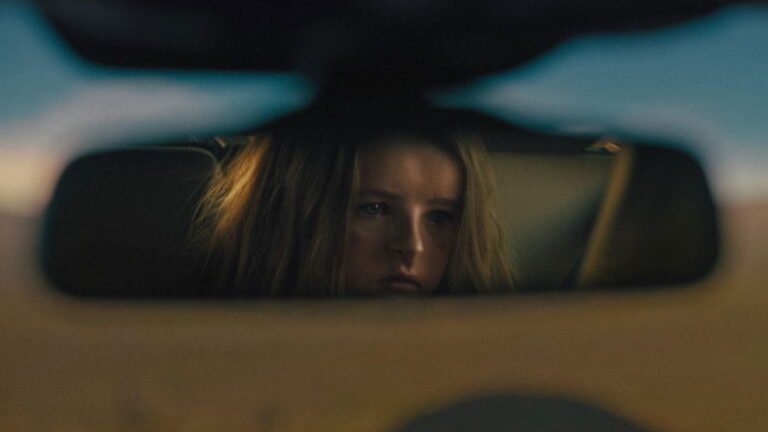
Table of Contents
- Duel (1971)
- The Hitcher (1986)
- Breakdown (1997)
- Joy Ride (2001)
- Near Dark (1987)
- Wolf Creek (2005)
- Blood Star (2024)
- Vacancy (2007)
- Death Proof (2007)
- Where to go from here
- Watch Blood Star Free
- Frequently Asked Questions
- What defines a road trip horror movie?
- What is the original road trip horror movie?
- Is Blood Star free to watch in the USA?
- Related guides
- More on Blood Star