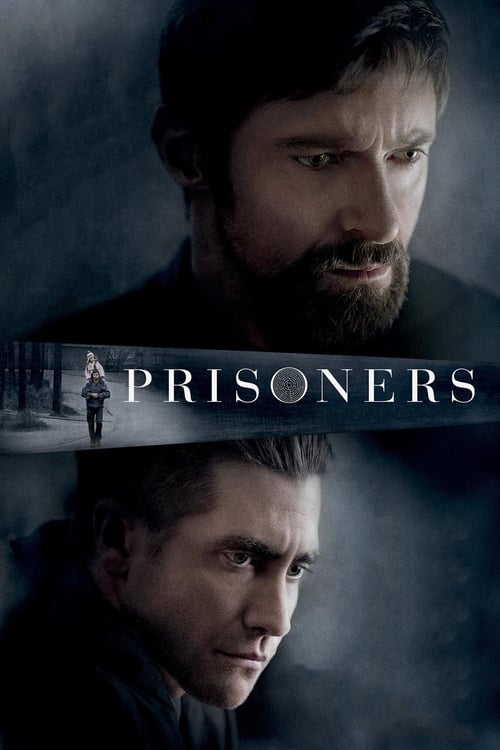
Denis Villeneuve’s Prisoners is one of the most disturbing crime thrillers of the last twenty years because it refuses to offer the audience an easy moral position. By the final act, the mystery of who abducted Anna Dover and Joy Birch has largely been solved. Holly Jones is revealed as the person behind the kidnappings, Alex Jones is exposed as one of her earlier victims rather than the criminal Keller Dover believed him to be, and Detective Loki manages to rescue Anna. Yet the film still ends with one major question hanging in the air: Keller is trapped inside the underground pit beneath Holly’s property, and then Loki hears a faint whistle. The film cuts to black before showing whether Keller is actually rescued.
That final whistle is the key to the ending. By the time the truth is uncovered, Keller has become both victim and perpetrator, father and torturer, rescuer and prisoner.
What Happens at the End of Prisoners?
The final act begins when Keller Dover finally realises that Holly Jones is connected to his daughter’s disappearance. For most of the film, Keller has focused almost entirely on Alex Jones, the intellectually disabled young man who had been driving the RV seen near the girls before they vanished. When the police release Alex for lack of evidence, Keller decides he will obtain the truth himself — kidnapping Alex, imprisoning him and subjecting him to increasingly brutal torture.
The terrible irony is that Alex is not the calculating kidnapper Keller imagines. He is himself a victim of the same people responsible for Anna and Joy’s disappearance. Years earlier, Holly and her husband began abducting children after the death of their own son, describing their actions as a “war against God.” Alex was one of those abducted children, psychologically damaged so severely that his development and ability to communicate were permanently affected.
Who Really Kidnapped Anna and Joy?
Holly Jones is ultimately revealed as the person responsible. She and her late husband had been kidnapping children for years, using the suffering of other families as part of their warped attempt to punish God. Holly does not want ransom money or revenge against one particular family. She wants to break people — and Keller becomes exactly the kind of parent they are trying to destroy.
Was Alex Jones Actually Guilty?
Alex is not completely disconnected from the kidnappings, but he is not the mastermind Keller believes him to be. His fragmented memories and strange remarks make him appear guilty, particularly because he seems to know things he should not know. Yet his behaviour is rooted in his own childhood abduction. Keller becomes convinced that Alex’s inability to explain himself is proof that he is deliberately hiding something, when in reality that inability is one of the clearest signs that Alex is another victim.
Why Does Keller Torture Alex?
Keller’s decision to torture Alex comes from desperation rather than sadism, but that does not make it morally defensible. He cannot tolerate the idea of waiting while somebody he believes has information remains free, so he decides that normal rules no longer apply. Once he makes that decision, everything he sees begins to reinforce it — every refusal, hesitation and confused answer becomes further evidence.
What Does Alex Mean When He Says They Didn’t Cry Until I Left Them?
One of the lines that convinces Keller that Alex is involved is his disturbing statement that the girls did not cry until he left them. The later revelations make the line far more complicated: Alex does possess knowledge connected to the kidnappings, but he is also psychologically damaged and unable to communicate clearly. What Keller hears as a confession may actually be a confused fragment of memory shaped by years of abuse.
Who Is the Man With the Maze Drawings?
Bob Taylor, the man whose home is filled with drawings of mazes and boxes of children’s clothing, is another major red herring — another former victim of Holly and her husband, someone whose life has been permanently distorted by childhood trauma. The real criminals have created a world full of broken survivors, and the investigation repeatedly risks mistaking the damage they caused for evidence of new crimes.
What Does the Maze Mean in Prisoners?
The maze is one of the film’s central symbols because almost every character is trapped inside one. Detective Loki is trapped inside an investigation that keeps producing false paths. Keller is trapped inside desperation and certainty. Alex is trapped inside childhood trauma he cannot explain. The more aggressively Keller tries to force his way toward the centre of the mystery, the more lost he becomes. By contrast, Loki moves slowly through the maze, collecting evidence until the pieces finally begin to connect.
Why Does Holly Shoot Keller and Put Him in the Pit?
Once Keller confronts Holly and understands that she is responsible, she forces him outside at gunpoint, shoots him in the leg and leaves him trapped inside the hidden pit on her property. The reversal is deliberate and brutal — Keller has spent much of the film imprisoning Alex because he believes captivity will force the truth out of him; by the end, Keller himself becomes the prisoner.
Where Is Anna Being Held?
Anna is not inside the pit with Keller. She is being held inside Holly’s house, drugged and hidden close to the very place where Keller is trapped — a cruel irony that undercuts Keller’s belief that force and action will necessarily produce control. The person who actually rescues Anna is Loki, the detective Keller increasingly distrusts.
How Does Detective Loki Rescue Anna?
Loki eventually arrives at Holly’s house after the investigation begins to converge on her. He discovers Anna inside and confronts Holly, leading to a violent final encounter in which Holly is killed. Loki then rushes Anna to hospital while injured himself. Anna survives — but the person who saves her is not Keller. It is Loki, the representative of the system Keller had come to believe was incapable of protecting his daughter.
What Happens to Keller at the End of Prisoners?
After the main investigation has apparently concluded, Loki is still standing at Holly’s property in the quiet after the case seems to have reached its end. Then he hears a faint sound: Keller using Anna’s whistle from inside the pit. The film cuts to black before Loki opens the pit, but the implication is extremely strong — Loki has spent the entire film noticing details other people overlook.
Does Loki Find Keller?
Almost certainly. Villeneuve does not show the rescue because the recognition is enough. By cutting on the sound, the film keeps the emphasis on the connection between the two men. Keller, who spent much of the film rejecting Loki’s methods, is ultimately dependent upon Loki’s ability to notice what others might miss.
Why Does Prisoners Cut to Black Before Keller Is Rescued?
Showing the rescue would provide conventional closure, but Prisoners is not interested in giving its characters that kind of emotional simplicity. The cut also preserves the moral uncertainty surrounding Keller — the audience wants him to be found, but we also know what happened to Alex. The ending allows us to hope for Keller’s survival without pretending that survival absolves him. Rescue is not redemption.
Is Keller a Hero or a Villain?
Keller is compelling because he does not fit neatly into either category. His love for his daughter is unquestionable, yet he is also capable of extraordinary cruelty once he convinces himself that cruelty is necessary. The frightening question is not whether Keller is secretly evil. It is whether a decent person can become capable of terrible things when fear, love and certainty combine.
What Is Prisoners Really About?
On the surface, Prisoners is about two missing children and the desperate attempt to bring them home. Beneath the mystery, it is about what fear does to certainty and what certainty does to morality. The title extends far beyond the kidnapped girls — almost everyone in the film is imprisoned by something: fear, trauma, obsession, grief, faith, revenge or guilt.
Prisoners and the Fear That the System Cannot Save You
One of the strongest anxieties running through Prisoners is the fear that legitimate authority may not be able to save someone you love in time. That fear creates a natural connection with other psychological thrillers concerned with vulnerability, authority and control. In Blood Star, the same anxiety is inverted. Bobbi is not frightened that law enforcement will fail to protect her quickly enough — she gradually discovers that Sheriff Bilstein, the authority figure who should represent protection, may actually be the danger itself.
In Prisoners, Keller responds by trying to replace the system. In Blood Star, Bobbi has to survive someone who appears to embody it. Both understand how quickly fear escalates once conventional protection stops feeling dependable.
Psychological Thrillers to Watch After Prisoners
Viewers drawn to the moral darkness of Prisoners should start with Zodiac, another thriller built around an investigation that gradually consumes the people involved. Gone Girl is another strong companion piece, using a crime story to explore identity, manipulation and the dangerous gap between what happened and what people believe happened. For viewers attracted to Denis Villeneuve’s oppressive atmosphere, Sicario pushes similar moral uncertainty into the world of cartels and borders, while The Vanishing is an especially strong recommendation for anyone disturbed by the kidnapping element, and Mystic River explores grief, suspicion and the catastrophic consequences of acting on incomplete information.
For something more stripped back, Blood Star moves the idea of vulnerability and unreliable protection onto the isolated roads of the American Southwest.
What Does the Final Whistle Mean?
The whistle represents hope, but it also represents surrender. For most of the film Keller believes survival depends upon his ability to act. At the end, he is incapable of doing any of that. He is injured, trapped underground and completely dependent upon another person noticing him. The man who stopped trusting the system must finally rely on the system’s representative to save him.
Final Thoughts
The ending of Prisoners is deliberately restrained, but it is not as ambiguous as it initially appears. Anna survives, Holly is dead, Alex is revealed as a victim and Keller remains trapped underground, with everything we know about Loki’s character strongly suggesting he will investigate and find him. The more difficult questions concern what happens after the rescue — Keller will survive with the knowledge that his daughter is safe, but he must also live with what he did to Alex. The final whistle may offer Keller a way out of the pit. It does not offer him a way out of what he has done.
Watch Blood Star
Blood Star is a psychological desert road thriller about Bobbi Torres, a young woman travelling alone who becomes the target of a predatory lawman using his badge and knowledge of the territory to control the hunt — a story about vulnerability and unreliable protection that sits alongside Prisoners’ darker questions about justice and certainty.


See every legitimate way to watch Blood Star free →
Film poster via TMDB.
More on Blood Star


Table of Contents
- What Happens at the End of Prisoners?
- Who Really Kidnapped Anna and Joy?
- Was Alex Jones Actually Guilty?
- Why Does Keller Torture Alex?
- What Does Alex Mean When He Says They Didn’t Cry Until I Left Them?
- Who Is the Man With the Maze Drawings?
- What Does the Maze Mean in Prisoners?
- Why Does Holly Shoot Keller and Put Him in the Pit?
- Where Is Anna Being Held?
- How Does Detective Loki Rescue Anna?
- What Happens to Keller at the End of Prisoners?
- Does Loki Find Keller?
- Why Does Prisoners Cut to Black Before Keller Is Rescued?
- Is Keller a Hero or a Villain?
- What Is Prisoners Really About?
- Prisoners and the Fear That the System Cannot Save You
- Psychological Thrillers to Watch After Prisoners
- What Does the Final Whistle Mean?
- Final Thoughts
- Watch Blood Star
- More on Blood Star