Few modern crime thrillers create the same atmosphere of dread as Denis Villeneuve’s Sicario (2015). From its opening raid on a house in Arizona to the terrifying journey through Juárez, the film places its audience inside a world where danger is everywhere, nobody can be trusted and the distinction between right and wrong becomes increasingly difficult to recognise.
Emily Blunt plays Kate Macer, an idealistic FBI agent recruited into a covert operation against a Mexican drug cartel. She believes she’s joining a mission designed to bring dangerous criminals to justice, but gradually discovers that the people she’s working alongside operate according to an entirely different set of rules. Josh Brolin’s Matt Graver and Benicio del Toro’s mysterious Alejandro know far more than they’re willing to reveal, leaving Kate increasingly powerless within an operation she barely understands.
What makes Sicario extraordinary isn’t simply its depiction of cartel violence. It’s the way Villeneuve builds suspense through uncertainty, using Roger Deakins’ cinematography, Jóhann Jóhannsson’s ominous score and Taylor Sheridan’s screenplay to create a world in which every decision carries potentially devastating consequences.
The best movies like Sicario share these qualities. Some explore the brutality of the drug trade, while others examine corruption, compromised institutions and the psychological consequences of crossing moral boundaries. From Hell or High Water and Wind River to Traffic and No Country for Old Men, these 15 films capture different aspects of what makes Sicario such an unforgettable thriller.
What Makes Sicario So Effective? Five Essential Ingredients
Understanding what makes Sicario work helps explain why certain films feel like natural companions, even when they don’t involve drug cartels or border operations. Its power comes from five interconnected elements: an outsider entering a dangerous world, institutions that cannot be trusted, violence that arrives without warning, threatening environments and the gradual erosion of moral certainty.
1. The Outsider Entering a Dangerous World
Kate Macer is an experienced FBI agent who believes in the principles of law enforcement, but she’s recruited into an operation where everyone else appears to understand rules that nobody will explain to her. Her professional experience offers little protection because the people around her control the information, the objectives and ultimately the outcome.
This creates one of the film’s most effective sources of suspense. We experience the operation almost entirely through Kate’s perspective, discovering information only when she does and sharing her growing suspicion that something is fundamentally wrong. Her journey isn’t simply about confronting dangerous criminals; it’s about realising that the institutions she trusts may be operating according to principles she cannot accept.
This same structure appears in Wind River, where an inexperienced FBI agent enters an unfamiliar community, and in Miss Bala, where an ordinary woman is pulled into a criminal world she has no power to escape.
2. Institutions That Cannot Be Trusted
One of Sicario’s most disturbing ideas is that the boundary between law enforcement and organised crime is not always clearly defined. Kate begins the film believing that the authorities operate within established legal and moral limits, but the operation gradually reveals a system in which those limits are manipulated or ignored.
The people supposedly fighting the cartels employ intimidation, deception and violence to achieve their objectives. Their methods raise uncomfortable questions about whether defeating criminal organisations justifies adopting some of their tactics, particularly when the people making those decisions face little accountability.
Films such as Traffic, Zero Dark Thirty and A Most Violent Year explore similar conflicts, examining what happens when institutions become compromised or individuals discover that operating within the rules places them at a disadvantage.
3. Violence That Arrives Without Warning
Villeneuve understands that the anticipation of violence can be more frightening than the violence itself. Sicario contains several explosive confrontations, but much of its tension comes from the moments leading up to them, when the audience senses danger without knowing precisely when or where it will appear.
The journey through Juárez is a masterclass in this approach. Vehicles move through crowded streets, armed men scan their surroundings and traffic gradually slows near the border crossing. For long stretches, nothing happens, yet every stopped vehicle and unfamiliar face feels threatening because the film has established that violence could erupt at any moment.
No Country for Old Men, Prisoners and Hell or High Water employ similar techniques, allowing quiet moments to become increasingly uncomfortable before suddenly transforming them into scenes of extreme danger.
4. An Environment That Becomes Threatening
The landscapes of Sicario are central to its atmosphere. The desert, border crossings, highways and underground tunnels are not simply locations where events take place; they contribute directly to the characters’ vulnerability and the audience’s sense of unease.
Roger Deakins’ cinematography frequently places small human figures against enormous landscapes, emphasising how exposed and powerless they have become. Even wide-open spaces offer little reassurance because danger can arrive from almost any direction, while the tunnels beneath the border create an entirely different kind of claustrophobia.
The modern American frontier becomes a place where traditional authority seems increasingly fragile. No Country for Old Men, Hell or High Water and Wind River use their landscapes in similarly powerful ways, making geography an essential part of the storytelling.
5. Moral Compromise: When Right and Wrong Become Unclear
At the centre of Sicario is Kate’s gradual loss of moral certainty. She begins with a clear understanding of the difference between lawful and unlawful behaviour, but the operation forces her to confront situations in which those distinctions become increasingly difficult to maintain.
The film doesn’t simply ask whether the mission will succeed. It asks what success actually means when the methods used to achieve it undermine the principles the mission supposedly exists to defend. Kate’s greatest struggle is ultimately not against the cartel but against a system that demands her cooperation while denying her the information necessary to make an informed moral choice.
This conflict connects Sicario to films such as Prisoners, The Counselor and A Most Violent Year, where characters are forced to decide how much of themselves they’re willing to sacrifice to achieve their objectives.
The 15 Best Movies Like Sicario
Rather than presenting these films as a simple ranking, we’ve organised them according to the aspects of Sicario they most closely resemble. Some explore the drug trade and the corruption surrounding it, while others concentrate on moral compromise, hostile landscapes or the devastating consequences of becoming involved in criminal systems.
Cartels and the Drug War
The cartels in Sicario are frightening because they operate as vast organisations rather than conventional movie villains. Removing one individual does little to change the system, and the people caught inside it often have no meaningful way to escape. These four films explore that same world from different perspectives, examining how organised crime affects everyone from government officials to ordinary civilians.
1. Traffic (2000)
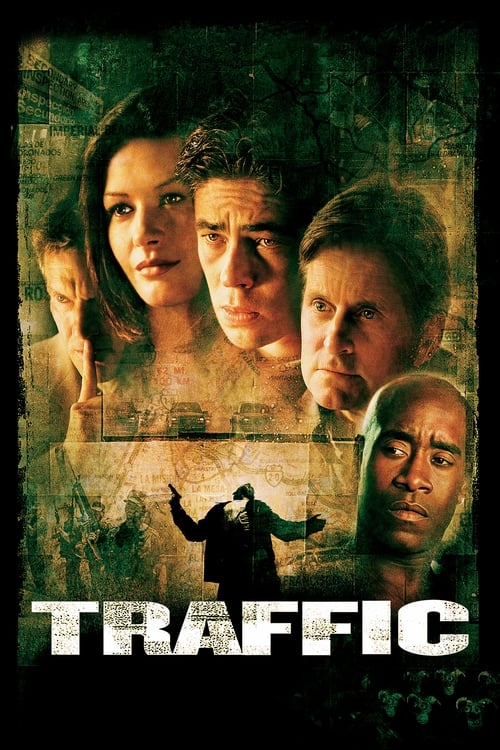
Director: Steven Soderbergh
Starring: Michael Douglas, Benicio del Toro, Catherine Zeta-Jones
Genre: Crime Drama / Political Thriller
Steven Soderbergh’s Traffic approaches the American war on drugs through three interconnected stories, following a newly appointed US drug czar, a Mexican police officer caught between rival cartels and a wealthy San Diego woman whose husband is arrested for drug trafficking. Each storyline reveals a different part of the same system, gradually exposing how corruption, addiction and political ambition connect people who may never meet.
Like Sicario, the film questions whether the institutions responsible for fighting organised crime genuinely understand the forces they’re confronting. Benicio del Toro delivers an Oscar-winning performance as a Mexican police officer attempting to navigate a world in which honesty can be as dangerous as corruption. Where Sicario concentrates its tension through Kate Macer’s limited perspective, Traffic provides a much broader view of the machinery surrounding the drug trade.
Why you’ll like it: A complex, intelligent examination of the drug war that shares Sicario’s distrust of institutions and simplistic solutions.
2. Miss Bala (2011)

Director: Gerardo Naranjo
Starring: Stephanie Sigman, Noé Hernández, James Russo
Genre: Crime Thriller / Psychological Drama
Laura Guerrero is a young woman hoping to compete in a beauty pageant in Tijuana when she becomes caught in the aftermath of a violent cartel attack. What begins as an ordinary night out rapidly transforms into a nightmare as she is forced into the service of a criminal organisation, with the police offering little protection from the people controlling her.
Miss Bala shares Sicario‘s sense of helplessness, but its protagonist has even less power than Kate Macer. Laura possesses no authority, training or understanding of the criminal world into which she’s been dragged, and her attempts to escape repeatedly place her in greater danger. Director Gerardo Naranjo uses long, immersive takes to keep the audience close to her experience, creating an atmosphere of constant uncertainty.
Why you’ll like it: A terrifying ground-level perspective on cartel violence, with an ordinary woman trapped inside a system she cannot control.
3. The Counselor (2013)

Director: Ridley Scott
Starring: Michael Fassbender, Penélope Cruz, Javier Bardem, Brad Pitt
Genre: Crime Thriller / Neo-Noir
A successful lawyer becomes involved in a cartel drug shipment, believing he can make a substantial profit without exposing himself to the dangers of organised crime. When the operation goes wrong, he discovers that the people he’s dealing with have no interest in explanations, negotiations or the distinctions between guilt and innocence.
Written by Cormac McCarthy, The Counselor is a bleak examination of greed, arrogance and the consequences of entering a world governed by rules you don’t understand. Like Sicario, it presents cartel violence as something impersonal and almost inevitable, with characters discovering too late that wealth and professional status offer little protection.
Why you’ll like it: An uncompromising crime thriller about moral blindness and the devastating consequences of underestimating organised crime.
4. Savages (2012)
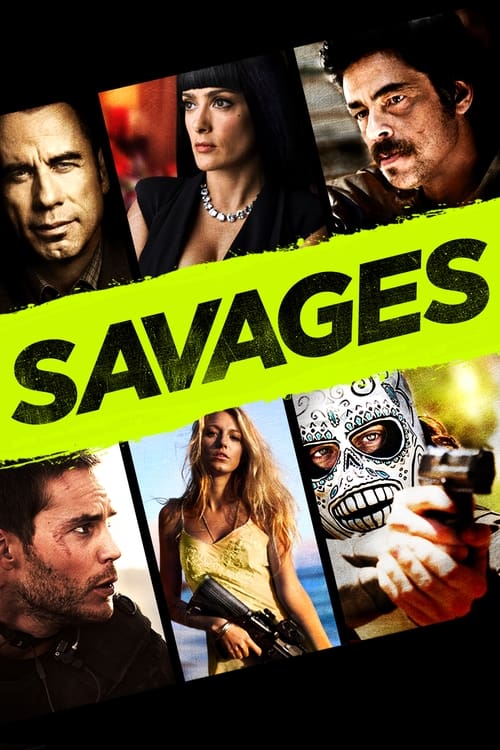
Director: Oliver Stone
Starring: Taylor Kitsch, Aaron Taylor-Johnson, Blake Lively, Salma Hayek
Genre: Crime Thriller / Action Drama
Two successful marijuana growers in Southern California refuse to enter a partnership with a powerful Mexican cartel, triggering a violent confrontation when the organisation kidnaps the woman they both love. Their attempts to negotiate and retaliate draw them deeper into a criminal world where loyalty is temporary and betrayal is an accepted part of doing business.
Oliver Stone’s film is considerably more colourful and extravagant than Sicario, but both explore the consequences of becoming entangled with organisations that operate beyond conventional moral boundaries. Benicio del Toro delivers another unsettling performance, this time as a ruthless cartel enforcer whose unpredictable behaviour adds an atmosphere of constant danger.
Why you’ll like it: A more flamboyant cartel thriller featuring dangerous alliances, shifting loyalties and escalating violence.
The Law Versus Moral Compromise
One of Sicario‘s defining qualities is its refusal to offer a comfortable distinction between right and wrong. These films explore similar territory, following characters who believe they’re pursuing legitimate objectives but gradually discover that achieving them may require crossing lines they once considered absolute.
5. Prisoners (2013)
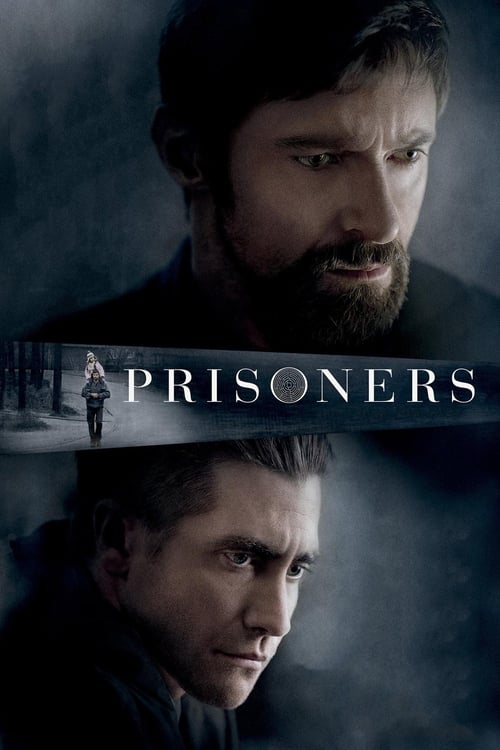
Director: Denis Villeneuve
Starring: Hugh Jackman, Jake Gyllenhaal, Viola Davis
Genre: Psychological Thriller / Crime Mystery
When two young girls disappear from a suburban Pennsylvania neighbourhood, one of their fathers becomes convinced that a man released by the police is responsible. Frustrated by the investigation and terrified for his daughter’s safety, he decides to take matters into his own hands, setting in motion a series of increasingly disturbing events.
Directed by Denis Villeneuve two years before Sicario, Prisoners explores the same uncomfortable question of whether an apparently justifiable objective can excuse morally indefensible behaviour. Hugh Jackman’s desperate father and Jake Gyllenhaal’s determined detective approach the investigation from different perspectives, creating a powerful conflict between personal desperation and professional responsibility. Roger Deakins’ cinematography gives the film a similarly oppressive atmosphere.
Why you’ll like it: Villeneuve’s trademark suspense, morally compromised characters and an atmosphere of escalating psychological dread.
6. Zero Dark Thirty (2012)
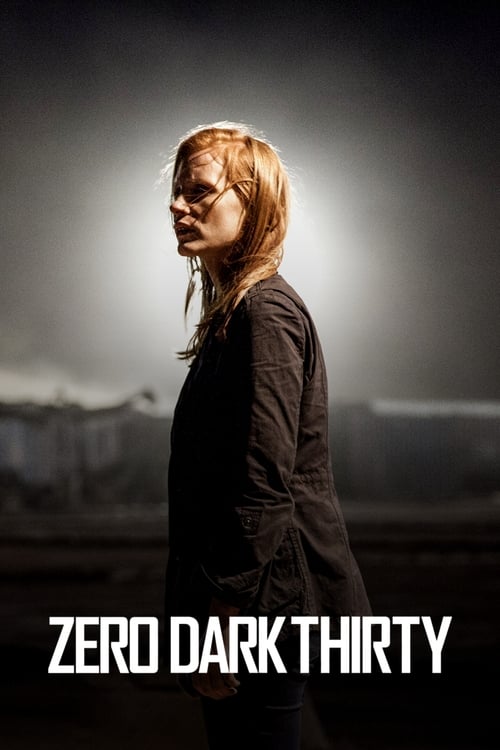
Director: Kathryn Bigelow
Starring: Jessica Chastain, Jason Clarke, Joel Edgerton
Genre: Political Thriller / Procedural Drama
Kathryn Bigelow’s Zero Dark Thirty follows CIA analyst Maya as she spends years pursuing intelligence that might lead to Osama bin Laden. Her investigation takes her through interrogation facilities, intelligence briefings and dangerous overseas operations, gradually revealing the enormous human and political costs involved in the pursuit.
Like Kate Macer in Sicario, Maya operates inside a powerful institution whose methods raise difficult ethical questions. Both films examine the relationship between national security, personal conviction and the willingness of governments to operate beyond conventional moral boundaries. Bigelow’s restrained approach to action also creates suspense through careful observation and anticipation, particularly during the film’s extended final operation.
Why you’ll like it: A meticulous procedural thriller about institutional power, moral ambiguity and the psychological cost of pursuing a single objective.
7. A Most Violent Year (2014)
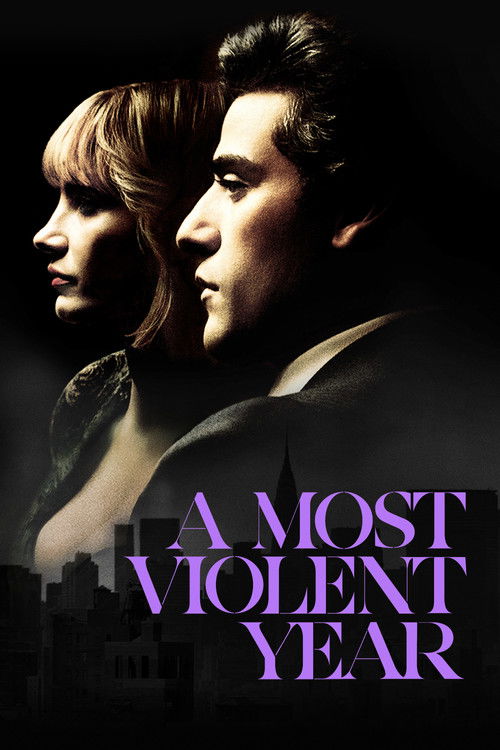
Director: J. C. Chandor
Starring: Oscar Isaac, Jessica Chastain, David Oyelowo
Genre: Crime Drama / Psychological Thriller
Set in New York during 1981, the film follows Abel Morales, an ambitious businessman attempting to expand his heating-oil company while facing violent attacks, financial pressure and a government investigation. Determined to operate legally, Abel discovers that maintaining his principles may place his business and family in increasing danger.
Although quieter than Sicario, A Most Violent Year explores a similar moral conflict. Its protagonist believes that success should be possible without embracing the corruption surrounding him, but each new setback challenges that conviction. Oscar Isaac gives a restrained performance as a man attempting to preserve control while the world around him becomes increasingly unpredictable.
Why you’ll like it: A sophisticated slow-burning thriller about integrity, ambition and the pressure to compromise in a corrupt environment.
The Modern American Frontier
Taylor Sheridan’s screenplay for Sicario helped establish a distinctive kind of contemporary American thriller, one in which vast landscapes, economic hardship and fragile institutions create environments where violence seems almost inevitable. These films explore similar territory, using remote communities and border regions to examine the limits of law and the consequences of desperation.
8. Hell or High Water (2016)
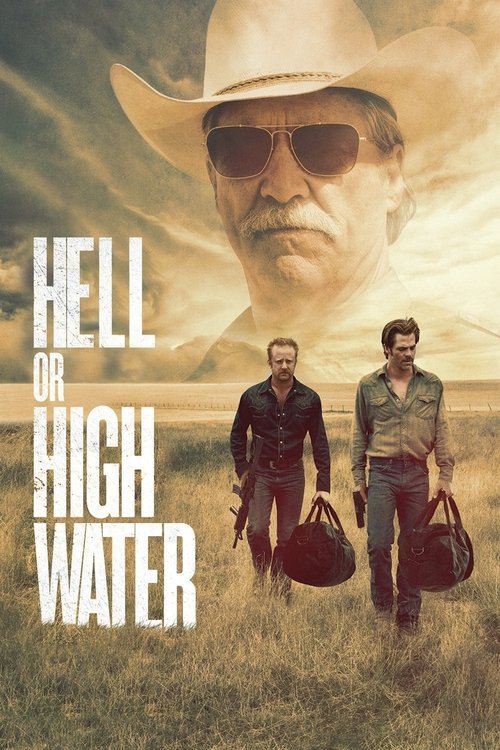
Director: David Mackenzie
Starring: Chris Pine, Ben Foster, Jeff Bridges
Genre: Neo-Western / Crime Thriller
Two brothers begin robbing small banks across West Texas in an attempt to prevent foreclosure on their family ranch. As their carefully planned robberies attract the attention of a veteran Texas Ranger approaching retirement, the film develops into a tense pursuit shaped by economic desperation, family loyalty and the changing landscape of rural America.
Written by Taylor Sheridan immediately after Sicario, Hell or High Water shares its fascination with the uneasy relationship between legality and morality. The brothers are criminals, but their motivations are understandable, while the Ranger pursuing them recognises the social forces that have contributed to their desperation. The film is warmer and occasionally funnier than Sicario, but its moments of violence are equally sudden and devastating.
Why you’ll like it: The closest match to Sicario’s combination of frontier landscapes, moral ambiguity and tightly controlled suspense.
9. Wind River (2017)
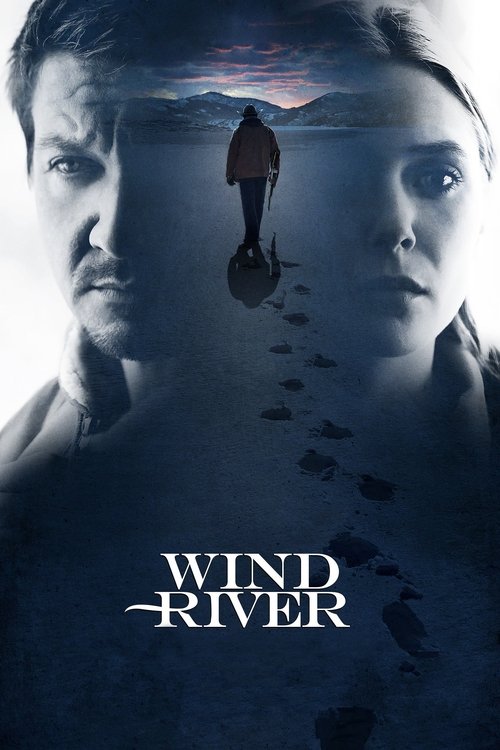
Director: Taylor Sheridan
Starring: Jeremy Renner, Elizabeth Olsen, Graham Greene
Genre: Crime Mystery / Neo-Western Thriller
When a young woman’s body is discovered on a remote Wyoming reservation, an FBI agent arrives to investigate with little experience of the community or its unforgiving environment. She relies on a local wildlife tracker whose knowledge of the landscape and its people becomes essential to understanding what happened.
Written and directed by Taylor Sheridan, Wind River shares Sicario‘s structure of an outsider entering a world where established authority offers limited protection. Elizabeth Olsen’s character is capable and determined, but her unfamiliarity with the environment places her at a significant disadvantage. The film gradually builds tension through its investigation before delivering an explosive confrontation that recalls Sicario’s most unsettling sequences.
Why you’ll like it: Another Taylor Sheridan thriller featuring an outsider investigator, hostile landscapes and violence that erupts without warning.
10. No Country for Old Men (2007)
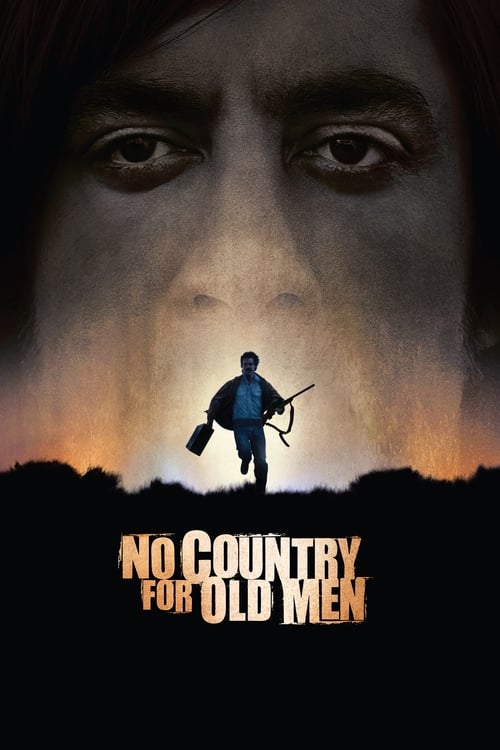
Directors: Joel and Ethan Coen
Starring: Josh Brolin, Javier Bardem, Tommy Lee Jones
Genre: Neo-Western / Crime Thriller
A hunter discovers a suitcase filled with money following a drug deal gone wrong near the Texas–Mexico border and decides to keep it. His decision places him in the path of Anton Chigurh, a ruthless killer whose relentless pursuit transforms the desert landscape into a place of constant danger.
The Coen brothers share Villeneuve’s ability to create suspense through silence, geography and the anticipation of violence. Javier Bardem’s Chigurh is frightening because his behaviour appears governed by a moral logic that nobody else can understand, while Tommy Lee Jones’ ageing sheriff struggles to comprehend the brutality of the world he’s attempting to police. Like Sicario, the film suggests that traditional ideas of justice may be inadequate when confronted with forces that operate beyond familiar rules.
Why you’ll like it: Relentless pursuit, border-country dread and one of modern cinema’s most unsettling antagonists.
11. Lone Star (1996)

Director: John Sayles
Starring: Chris Cooper, Kris Kristofferson, Elizabeth Peña
Genre: Mystery Drama / Neo-Western
When human remains are discovered in a small Texas border town, Sheriff Sam Deeds begins investigating a decades-old disappearance that may implicate his own father. As the investigation unfolds, long-buried conflicts involving race, power, family loyalty and local history gradually emerge.
Lone Star is more reflective than Sicario, but both films examine the border as a place where competing identities and systems of authority overlap. John Sayles explores how communities construct their own versions of history and how those narratives can protect powerful individuals while concealing uncomfortable truths. Its suspense is quieter, but the moral complexity is equally compelling.
Why you’ll like it: A thoughtful border mystery exploring institutional power, buried secrets and the complicated relationship between justice and history.
Dangerous Operations and Escalating Violence
Sicario creates much of its tension through dangerous operations in which the participants understand only part of the larger objective. These films explore similar situations, following police officers, operatives and individuals drawn into violent confrontations where the consequences quickly extend beyond their control.
12. End of Watch (2012)
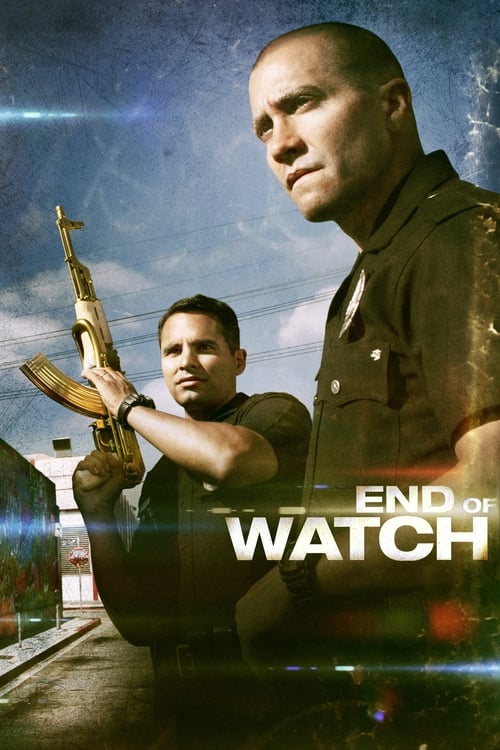
Director: David Ayer
Starring: Jake Gyllenhaal, Michael Peña, Anna Kendrick
Genre: Crime Thriller / Police Drama
Two Los Angeles police officers patrol South Central, developing a close friendship through the everyday dangers of their work. When a series of apparently routine investigations brings them into contact with a powerful criminal organisation, they become targets in a confrontation far more dangerous than anything they’ve previously encountered.
David Ayer uses handheld cameras and footage presented from the officers’ perspectives to create an unusually immediate sense of danger. Unlike Sicario, which often maintains emotional distance from its characters, End of Watch invests heavily in the friendship between its central officers. That relationship makes the escalating threat particularly effective, transforming an urban crime thriller into a deeply personal survival story.
Why you’ll like it: Authentic police camaraderie, escalating danger and an intimate perspective on the violence surrounding organised crime.
13. Man on Fire (2004)
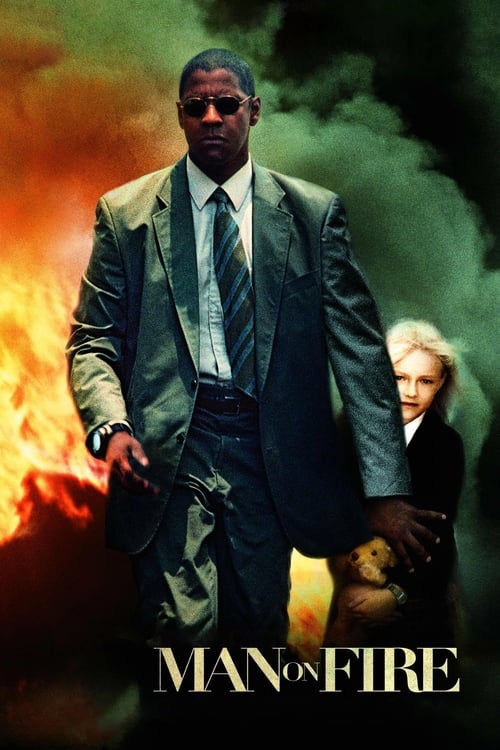
Director: Tony Scott
Starring: Denzel Washington, Dakota Fanning, Christopher Walken
Genre: Action Thriller / Revenge Drama
A former operative struggling with his past accepts a job protecting a young girl in Mexico City. When she is kidnapped, he begins a violent campaign to uncover the people responsible, gradually exposing a network of corruption involving criminals, police officers and powerful intermediaries.
Tony Scott’s film is more emotional and visually extravagant than Sicario, but both explore environments in which criminal organisations and official institutions have become dangerously intertwined. Denzel Washington’s performance gives the story its emotional centre, while the protagonist’s increasingly ruthless methods raise questions about the personal consequences of revenge.
Why you’ll like it: A powerful revenge thriller set against a backdrop of kidnapping, institutional corruption and organised crime.
14. Sicario: Day of the Soldado (2018)
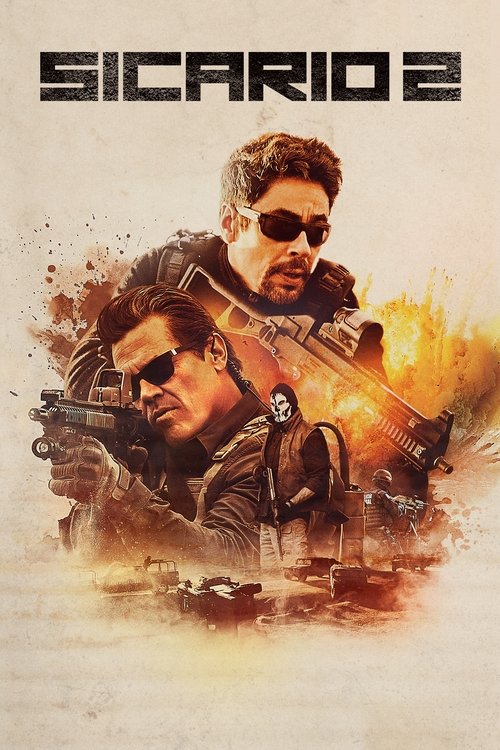
Director: Stefano Sollima
Starring: Benicio del Toro, Josh Brolin, Isabela Merced
Genre: Crime Thriller / Action Drama
Matt Graver and Alejandro return in a covert operation intended to provoke conflict between rival Mexican cartels. When the mission begins to unravel, Alejandro finds himself responsible for protecting a young girl whose survival complicates the objectives of the people who recruited him.
Without Kate Macer as the audience’s moral reference point, the sequel adopts a more direct approach to action and political intrigue. Nevertheless, Taylor Sheridan’s screenplay continues exploring the dangerous consequences of covert operations and the instability of alliances built around violence. Benicio del Toro’s Alejandro also becomes a more emotionally complicated character as his personal loyalties begin to conflict with his orders.
Why you’ll like it: A direct continuation of Sicario’s world, with more Alejandro, covert operations and dangerous moral choices.
Ordinary People Drawn Into Criminal Systems
One of the most disturbing aspects of Sicario is the suggestion that powerful criminal organisations operate according to systems that ordinary people can neither understand nor influence. The final film on this list approaches that idea from an unexpected direction, following someone who becomes involved in the drug trade without initially appreciating the consequences.
15. The Mule (2018)

Director: Clint Eastwood
Starring: Clint Eastwood, Bradley Cooper, Laurence Fishburne
Genre: Crime Drama / Thriller
An elderly horticulturist facing financial difficulties accepts work transporting packages across the United States, gradually discovering that he’s become a courier for a Mexican drug cartel. His age and apparently harmless appearance make him unusually effective, but his increasing involvement exposes him to dangers he cannot fully control.
The Mule is considerably gentler than Sicario, concentrating on regret, family relationships and the consequences of personal choices rather than sustained suspense. Nevertheless, it shares an interest in the invisible machinery of organised crime and the way individuals become valuable to systems that regard them as entirely disposable. Clint Eastwood’s understated performance gives the film an unexpectedly reflective quality.
Why you’ll like it: A character-driven crime drama exploring how ordinary people become entangled in powerful criminal organisations.
Which Movies Like Sicario Should You Watch First?
The best starting point depends on which aspect of Sicario you found most compelling. If you want another film written by Taylor Sheridan, Hell or High Water and Wind River are the obvious choices. Both share his fascination with the modern American frontier, morally complicated characters and sudden eruptions of violence, although each approaches those ideas from a different perspective.
For viewers particularly interested in cartels and the drug war, Traffic provides the most comprehensive examination of the subject, while Miss Bala offers a more immediate and frightening perspective through an ordinary woman caught inside a criminal organisation. The Counselor is a darker and more philosophical alternative, exploring the consequences of entering a world where violence operates according to an entirely different set of rules.
If Villeneuve’s direction was the main attraction, Prisoners is essential viewing. It shares Sicario’s oppressive atmosphere, carefully controlled suspense and fascination with moral compromise. Meanwhile, No Country for Old Men is perhaps the strongest choice for audiences drawn to the desert landscapes, unpredictable violence and terrifying antagonists that define Sicario’s atmosphere.
Why Sicario Remains One of the Best Modern Crime Thrillers
What separates Sicario from many conventional crime thrillers is its refusal to provide the audience with a reassuring sense of control. Kate Macer is competent, courageous and committed to doing the right thing, but those qualities offer little protection when she enters a system designed to operate beyond her understanding. Her gradual loss of authority becomes the film’s central psychological conflict, transforming what initially appears to be a procedural investigation into a disturbing examination of institutional power.
Villeneuve reinforces that uncertainty through his visual storytelling. The journey into Juárez is particularly effective because the geography is so carefully established. The audience understands the movement of the vehicles, the position of the armed operatives and the vulnerability created by the crowded border crossing. When traffic begins to slow, every surrounding vehicle becomes a potential threat, and the suspense emerges from the possibility of violence rather than the violence itself.
The film’s sound design and Jóhann Jóhannsson’s score intensify that atmosphere, creating a sense of impending danger even during apparently routine moments. Roger Deakins’ cinematography frequently contrasts enormous landscapes with the vulnerability of the individuals moving through them, suggesting that the characters are small participants in forces far beyond their control.
Ultimately, Sicario is less concerned with whether its operation succeeds than with what that success reveals about the people responsible. The film leaves its audience confronting uncomfortable questions about justice, morality and the willingness of institutions to compromise their principles in pursuit of an objective. That’s what makes it such a powerful thriller, and why the films on this list provide such compelling alternatives.
Frequently Asked Questions
What is the closest movie to Sicario?
Hell or High Water and Wind River are among the closest films to Sicario in tone, largely because all three were written by Taylor Sheridan. Both feature morally complicated characters, threatening environments and carefully controlled suspense. For a film that focuses more directly on cartels and the drug war, Traffic is an excellent alternative.
What movies are like Sicario but focus more on drug cartels?
Traffic, Miss Bala, The Counselor and Savages all explore organised crime and the Mexican drug trade from different perspectives. Traffic offers a broad political examination, while Miss Bala provides a particularly unsettling portrayal of an ordinary woman caught inside a cartel-controlled environment.
What movies like Sicario have the same dark atmosphere?
Prisoners, No Country for Old Men, Wind River and Zero Dark Thirty share Sicario’s oppressive atmosphere and morally complicated storytelling. These films rely heavily on anticipation, uncertainty and the psychological consequences of violence rather than constant action.
Is there a sequel to Sicario?
Yes. Sicario: Day of the Soldado was released in 2018 and brings back Josh Brolin as Matt Graver and Benicio del Toro as Alejandro. Emily Blunt does not return as Kate Macer, and the sequel places greater emphasis on covert operations and action.
Did Denis Villeneuve direct other films like Sicario?
Prisoners (2013) is one of Villeneuve’s closest films to Sicario in terms of genre and atmosphere. Both explore moral compromise, institutional limitations and the psychological consequences of violence. His films Enemy (2013) and Incendies (2010) also explore disturbing psychological themes, although they belong to different genres.
What are Taylor Sheridan’s best movies like Sicario?
Hell or High Water (2016) and Wind River (2017) are essential recommendations for fans of Taylor Sheridan’s writing. Together with Sicario, they are frequently described as his modern American frontier trilogy, exploring violence, justice and the limits of institutional authority in remote communities.
Final Thoughts: Crime Thrillers Where Nobody Can Be Trusted
The best movies like Sicario share more than violent criminals, dangerous operations or hostile landscapes. They explore what happens when people enter systems they don’t fully understand and discover that the principles they’ve relied upon no longer offer protection.
Some of these films approach that idea through the brutality of the drug trade, while others examine compromised institutions, personal desperation or the moral consequences of violence. What connects them is the same atmosphere of uncertainty that makes Villeneuve’s film so effective.
If you’re looking for the closest overall experience, start with Hell or High Water, Wind River and No Country for Old Men. But if what stayed with you was Kate Macer’s gradual realisation that the people around her could no longer be trusted, Prisoners, Traffic and Miss Bala may prove just as unsettling.
Because the most frightening thing about Sicario isn’t the violence itself. It’s the possibility that the people supposedly protecting us are operating according to rules we will never be allowed to understand.
Film posters courtesy of The Movie Database (TMDB). This product uses the TMDB API but is not endorsed or certified by TMDB.

Table of Contents
- What Makes Sicario So Effective? Five Essential Ingredients
- 1. The Outsider Entering a Dangerous World
- 2. Institutions That Cannot Be Trusted
- 3. Violence That Arrives Without Warning
- 4. An Environment That Becomes Threatening
- 5. Moral Compromise: When Right and Wrong Become Unclear
- The 15 Best Movies Like Sicario
- Cartels and the Drug War
- 1. Traffic (2000)
- 2. Miss Bala (2011)
- 3. The Counselor (2013)
- 4. Savages (2012)
- The Law Versus Moral Compromise
- 5. Prisoners (2013)
- 6. Zero Dark Thirty (2012)
- 7. A Most Violent Year (2014)
- The Modern American Frontier
- 8. Hell or High Water (2016)
- 9. Wind River (2017)
- 10. No Country for Old Men (2007)
- 11. Lone Star (1996)
- Dangerous Operations and Escalating Violence
- 12. End of Watch (2012)
- 13. Man on Fire (2004)
- 14. Sicario: Day of the Soldado (2018)
- Ordinary People Drawn Into Criminal Systems
- 15. The Mule (2018)
- Which Movies Like Sicario Should You Watch First?
- Why Sicario Remains One of the Best Modern Crime Thrillers
- Frequently Asked Questions
- What is the closest movie to Sicario?
- What movies are like Sicario but focus more on drug cartels?
- What movies like Sicario have the same dark atmosphere?
- Is there a sequel to Sicario?
- Did Denis Villeneuve direct other films like Sicario?
- What are Taylor Sheridan’s best movies like Sicario?
- Final Thoughts: Crime Thrillers Where Nobody Can Be Trusted