Kane Parsons’ Backrooms brings one of the internet’s most enduring horror concepts to feature-film scale: the fear that the ordinary architecture surrounding us might contain an entrance into somewhere that should not exist. The film begins with a strange doorway appearing in the basement of a furniture showroom, providing an apparently mundane route into a world governed by completely different spatial rules.
What makes the concept frightening is not simply the possibility that something dangerous may be hiding inside those corridors. Even without a creature, the space itself is hostile — architecture continues, but meaning disappears. If you are searching for movies like Backrooms, the strongest recommendations are films about impossible spaces, liminal environments, alternate realities, endless structures and characters who realise that the physical world surrounding them no longer obeys familiar rules.
1. Cube (1997)
Nicole de Boer and Nicky Guadagni
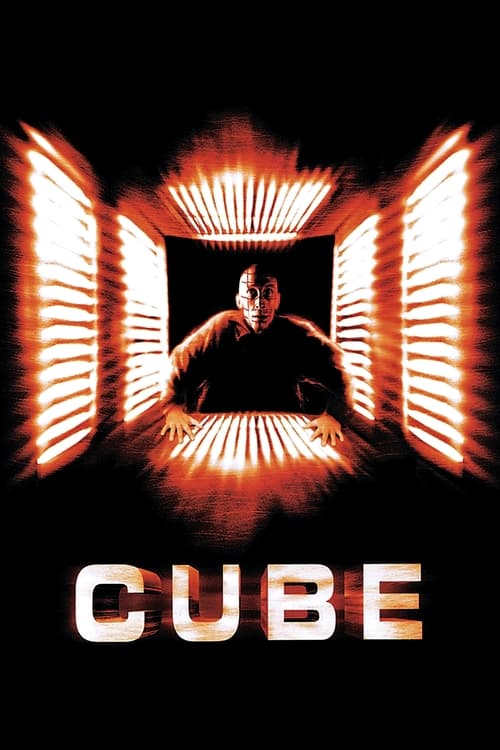
Vincenzo Natali’s Cube is one of the purest examples of architectural horror. A group of strangers wake inside an enormous structure consisting of apparently identical cube-shaped rooms connected by hatches, with no idea how they arrived there, who built the structure or why they were selected.
That makes Cube a foundational recommendation for anyone interested in movies like Backrooms. Both create horror by removing architecture from ordinary human purpose — rooms still exist, but they no longer behave as places designed for people.
2. Vivarium (2019)
Jesse Eisenberg and Imogen Poots
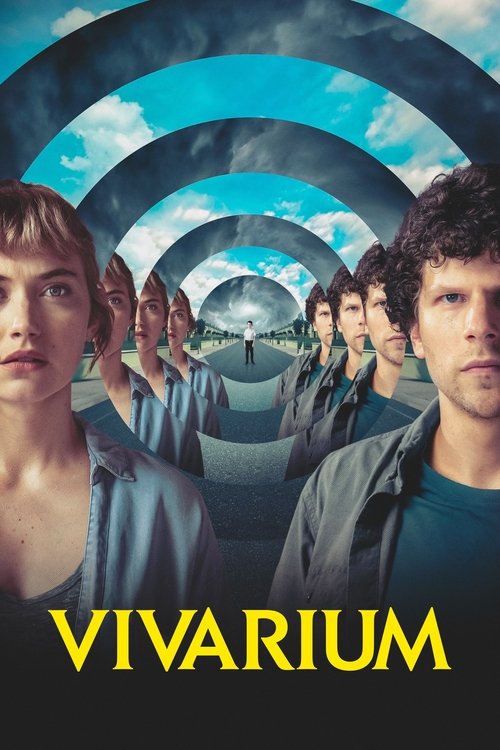
Lorcan Finnegan’s Vivarium takes one of the most recognisable environments imaginable — a suburban housing development — and transforms it into an apparently infinite prison, as a couple looking for a home find that no matter which direction they drive, they repeatedly return to the same house.
The connection to Backrooms is exceptionally strong because Vivarium uses repetition to destroy our understanding of space, appearing artificial without providing any clear explanation of who created it or why.
3. Skinamarink (2022)
Lucas Paul and Dali Rose Tetreault
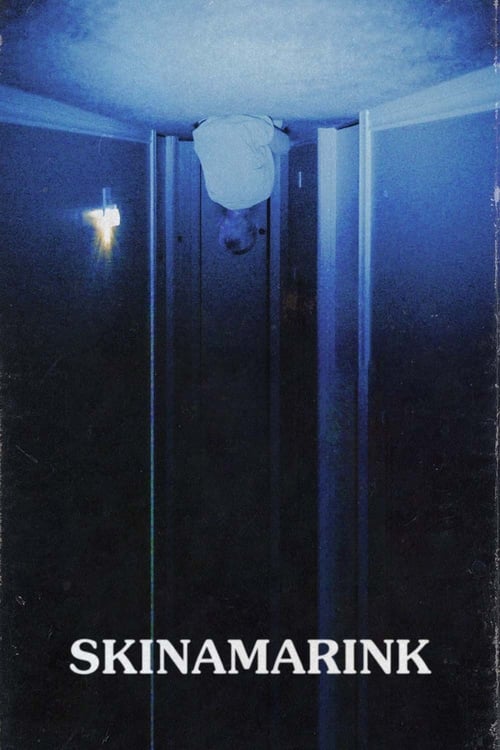
Kyle Edward Ball’s Skinamarink turns a childhood home into something resembling a nightmare remembered only in fragments, as two young children discover their father has disappeared — and then the doors and windows begin disappearing as well.
The relationship to Backrooms lies in the loss of spatial certainty. A home without doors or windows is still recognisable as a home, just as a Backrooms corridor still resembles an office or hotel passage.
4. Grave Encounters (2011)
Sean Rogerson
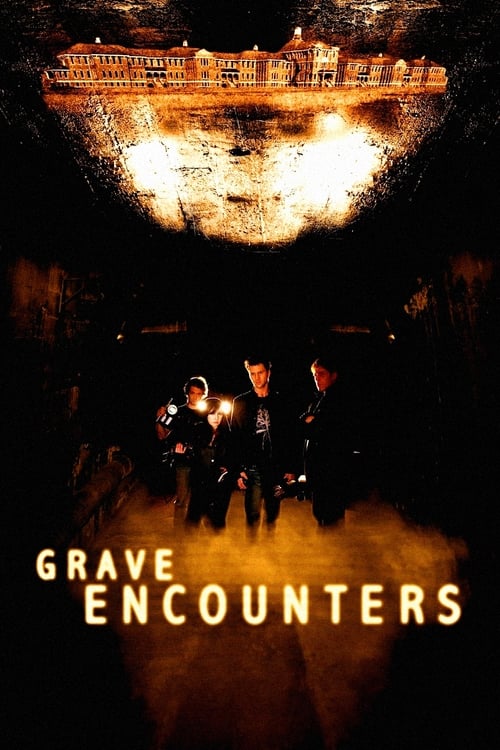
Grave Encounters follows a television crew filming an episode of a paranormal-investigation programme inside an abandoned psychiatric hospital, who discover once night falls that doors that should lead outside open into more corridors, and the interior dimensions no longer correspond to the building they entered.
This makes it one of the strongest direct companions to Backrooms — the characters are not simply trapped inside a haunted building, but trapped inside an environment that has ceased obeying geometry.
5. The Endless (2017)
Justin Benson and Aaron Moorhead
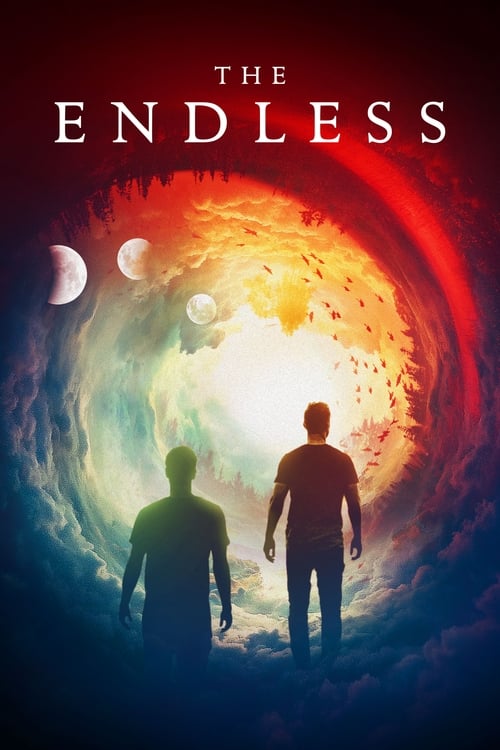
Justin Benson and Aaron Moorhead’s The Endless follows two brothers who return to the isolated cult community they escaped years earlier, gradually discovering that the surrounding area appears to be governed by forces capable of distorting time and reality.
The connection to Backrooms comes through the terrifying idea of becoming trapped inside a system much larger than human understanding — reality itself has become unreliable.
6. As Above, So Below (2014)
Perdita Weeks and Ben Feldman
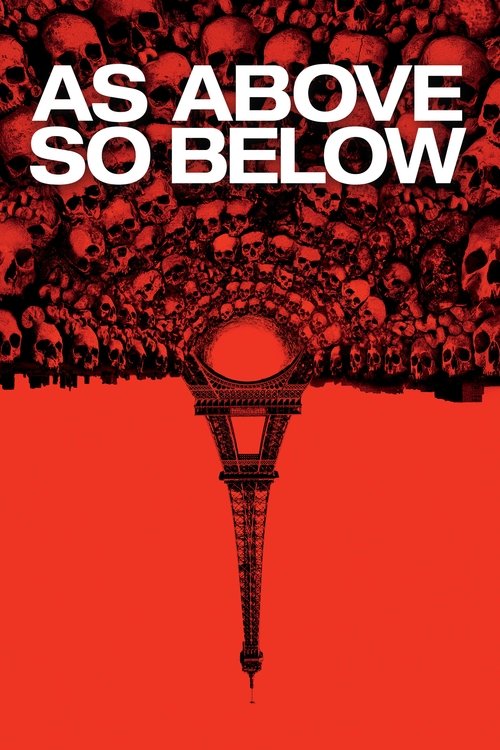
As Above, So Below takes a group of explorers beneath Paris into the catacombs and gradually transforms physical underground space into something much stranger — passages appear where they should not exist, and the journey downward begins to resemble a movement through personal guilt.
The film is more explicitly supernatural than Backrooms, but both create terror through exploration, where curiosity draws characters deeper into environments precisely because they do not understand them.
7. 1408 (2007)
John Cusack and Samuel L. Jackson

Mikael Håfström’s 1408 takes place largely inside a single hotel room, yet the physical boundaries of that room become increasingly meaningless once a writer specialising in supposedly haunted locations checks in despite repeated warnings.
The connection to Backrooms is powerful because both remove the reassuring idea that physical space must remain consistent — the terror lies in discovering that the concept of “outside” may no longer apply.
8. Coherence (2013)
Emily Baldoni

James Ward Byrkit’s Coherence begins at an ordinary dinner party on the night a comet passes close to Earth, as a power failure reveals that a nearby house may contain another version of the same gathering.
Unlike Backrooms, Coherence does not create an enormous physical maze — instead, it turns reality itself into the maze, exploiting the fear of being only a tiny distance away from normal reality while becoming unable to return to the correct version of it.
9. The Platform (2019)
Ivan Massagué and Antonia San Juan
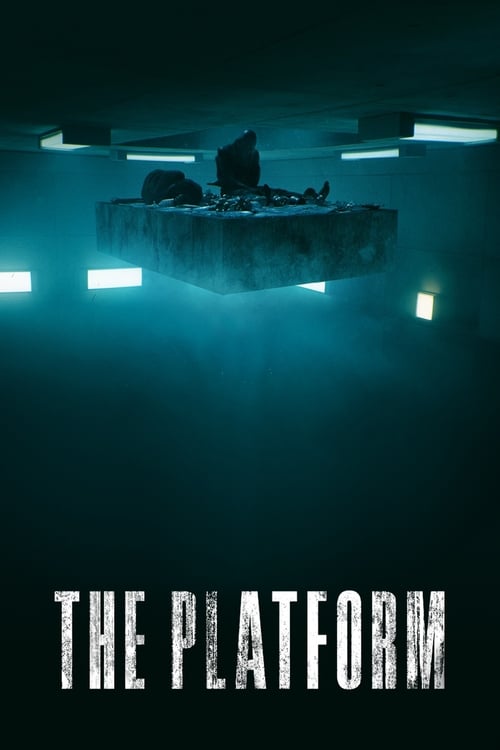
Galder Gaztelu-Urrutia’s The Platform takes place inside an enormous vertical prison consisting of hundreds of stacked levels, where a platform of food descends through the structure each day, turning the building itself into a mechanism of inequality.
Its connection to Backrooms lies less in visual similarity than in the idea of an apparently enormous structure whose complete dimensions and purpose remain difficult to comprehend.
10. The Night House (2021)
Rebecca Hall as Beth
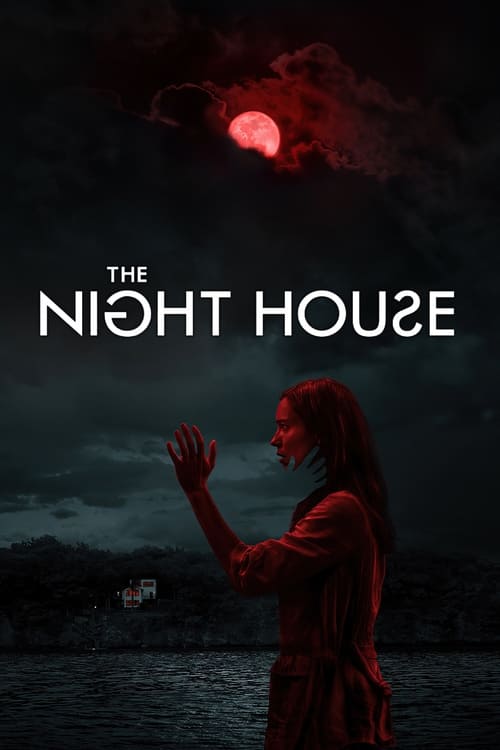
David Bruckner’s The Night House follows a widow who remains alone in the lakeside house her husband designed, discovering architectural plans and strange details suggesting that another structure — a reversed version of the home she thought she understood — may exist nearby.
That makes it a sophisticated companion to Backrooms. Both films understand that architecture becomes frightening when familiar geometry begins suggesting another reality immediately beside our own.
11. In the Tall Grass (2019)
Laysla De Oliveira and Patrick Wilson

Adapted from Stephen King and Joe Hill, In the Tall Grass transforms an ordinary field into an impossible geographical maze, as characters entering to help a calling child discover that distance and direction no longer behave normally.
The conceptual connection to Backrooms is extremely strong despite the opposite visual setting — being able to move does not necessarily mean you are getting anywhere.
12. Blood Star
Britni Camacho as Bobbi Torres · John Schwab as Sheriff Bilstein

Blood Star contains no alternate dimension or impossible architecture, but it provides an interesting grounded counterpart to Backrooms because both films transform apparently enormous environments into psychological traps.
The film follows a young woman driving alone through The Desert who attracts the attention of a small-town sheriff. As an ordinary roadside interaction develops into something increasingly threatening, the huge landscape surrounding her begins to work against the freedom it initially seemed to represent. This creates an almost inverse relationship with Backrooms: the Backrooms are claustrophobic because the walls never end, while Blood Star creates claustrophobia without walls. There may be an open horizon in every direction, but distance from towns, witnesses and meaningful assistance makes that apparent freedom increasingly useless.
The connection is particularly interesting through the idea of liminal space. Highways, petrol stations, motels, corridors and waiting rooms are places designed primarily for passing through rather than remaining in — they become unsettling when movement stops and the temporary space becomes the whole world. Blood Star grounds that fear in physical reality: its desert roads are not supernatural, but the protagonist’s growing isolation can make them feel detached from normal society. For viewers interested in isolated road movies, endless landscapes and stories where movement fails to provide escape, Blood Star offers a realistic desert-noir counterpart to the impossible architecture of Backrooms.
Watch Blood Star Free in the USA
Now streaming free with ads in the United States.


See every legitimate way to watch Blood Star free in the USA →
13. The Incident (2014)
Hernán Mendoza and Humberto Busto
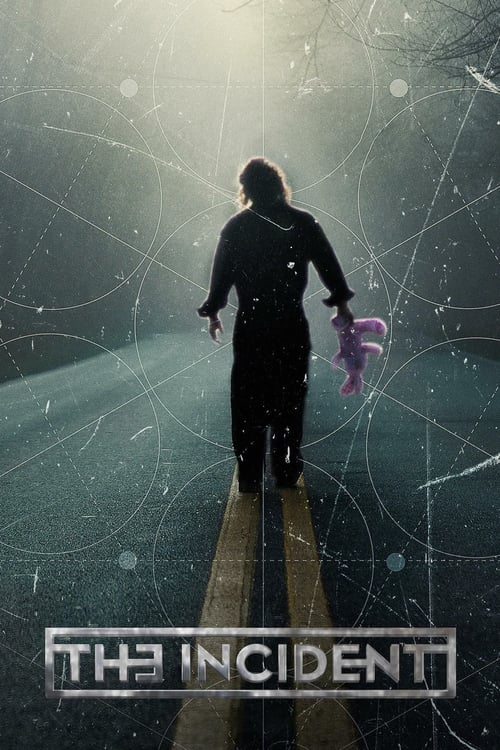
Isaac Ezban’s The Incident is built around two apparently simple environments that become impossible prisons — an endless staircase in one storyline, and a road that appears to repeat indefinitely in another.
That makes the film an exceptionally direct conceptual companion to Backrooms. The horror is not produced by elaborate monsters but by removing the assumption that movement eventually produces arrival.
14. YellowBrickRoad (2010)
Michael Laurino and Anessa Ramsey

YellowBrickRoad follows an expedition attempting to understand the mysterious disappearance of an entire New Hampshire town whose residents abandoned their homes decades earlier and walked into the wilderness, following the same route as orientation and psychological stability begin deteriorating.
Like Backrooms, the film revolves around entering a space from which the normal relationship between movement and return has been disrupted — curiosity becomes entrapment.
15. Triangle (2009)
Melissa George
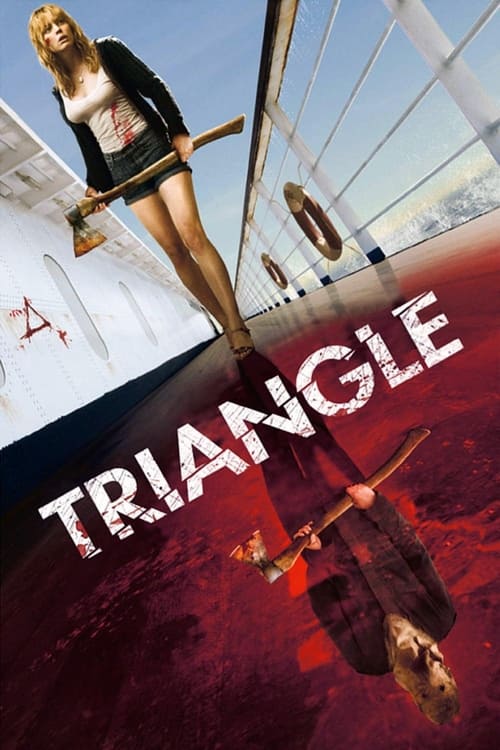
Christopher Smith’s Triangle begins when a group of people encounter an apparently abandoned ocean liner after their yacht is caught in a storm, and events begin repeating in ways that suggest the ship is caught inside a temporal loop.
Like Backrooms, the environment operates according to rules that initially appear incomprehensible — repetition gradually reveals a pattern, but understanding the pattern does not necessarily make escape possible.
Why the Backrooms Are So Frightening
The visual language of the Backrooms works because it is almost aggressively ordinary. Fluorescent ceiling panels, office carpeting, yellowish walls and empty corridors belong to offices, hotels, schools and commercial buildings — spaces many people have experienced without attaching any strong emotional significance to them. Removing people changes that relationship, and repetition makes it worse because architecture normally communicates direction. When every corridor merely leads to another corridor, that underlying purpose disappears.
Movies Like Backrooms About Liminal Spaces
Vivarium, Skinamarink, Grave Encounters, The Night House and The Incident are particularly strong choices for viewers interested in liminal-space horror — a corridor, waiting room, airport or motel that normally feels temporary. Horror emerges when the transitional space becomes permanent.
Movies Like Backrooms About Impossible Architecture
For viewers fascinated by buildings that physically cannot exist, start with Cube, Grave Encounters, 1408, The Night House and Vivarium. These films make architecture itself antagonistic, removing the basic certainty that walking away from a place increases our distance from it.
Endless Roads, Corridors and Spaces in Horror Movies
A fascinating connection exists between endless-corridor horror and road movies because both depend upon movement through transitional space. The Incident, In the Tall Grass and Blood Star demonstrate different ways that promise can become threatening — in supernatural versions, geography literally stops behaving correctly, while in a grounded thriller such as Blood Star, geography remains physically normal but isolation still functions as a trap.
See every legitimate way to watch Blood Star free in the USA →
Film posters via TMDB.
Related guides
More on Blood Star
- Watch Blood Star free on Tubi & Prime Video (USA)
- Blood Star: Ending Explained
- Blood Star — Cast & Filmmakers
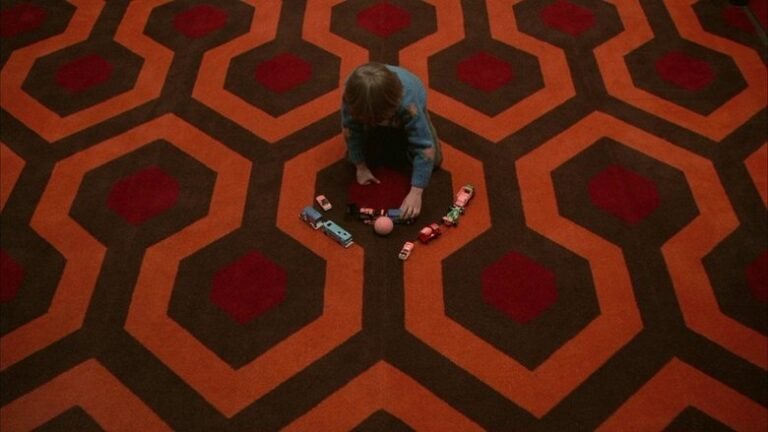

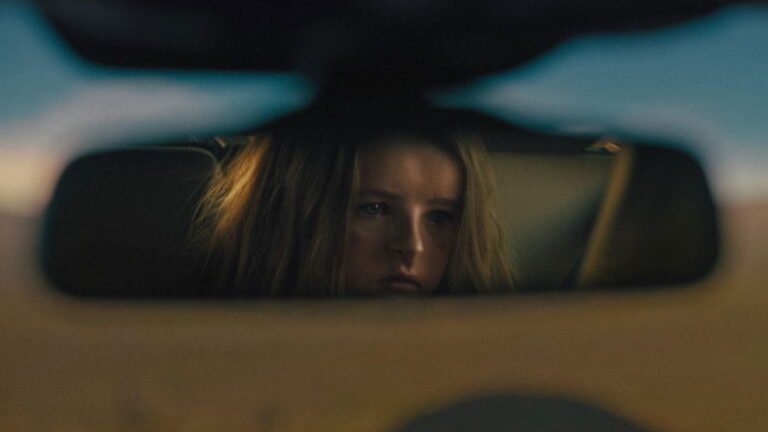
Table of Contents
- 1. Cube (1997)
- 2. Vivarium (2019)
- 3. Skinamarink (2022)
- 4. Grave Encounters (2011)
- 5. The Endless (2017)
- 6. As Above, So Below (2014)
- 7. 1408 (2007)
- 8. Coherence (2013)
- 9. The Platform (2019)
- 10. The Night House (2021)
- 11. In the Tall Grass (2019)
- 12. Blood Star
- Watch Blood Star Free in the USA
- 13. The Incident (2014)
- 14. YellowBrickRoad (2010)
- 15. Triangle (2009)
- Why the Backrooms Are So Frightening
- Movies Like Backrooms About Liminal Spaces
- Movies Like Backrooms About Impossible Architecture
- Endless Roads, Corridors and Spaces in Horror Movies
- Related guides
- More on Blood Star