Cast Spotlight
Lawrence
Jacomelli
Writer, Director and Producer of Blood Star
Discover Lawrence Jacomelli, the British writer, director and producer of Blood Star, including his career, filmmaking style and making of the desert thriller.
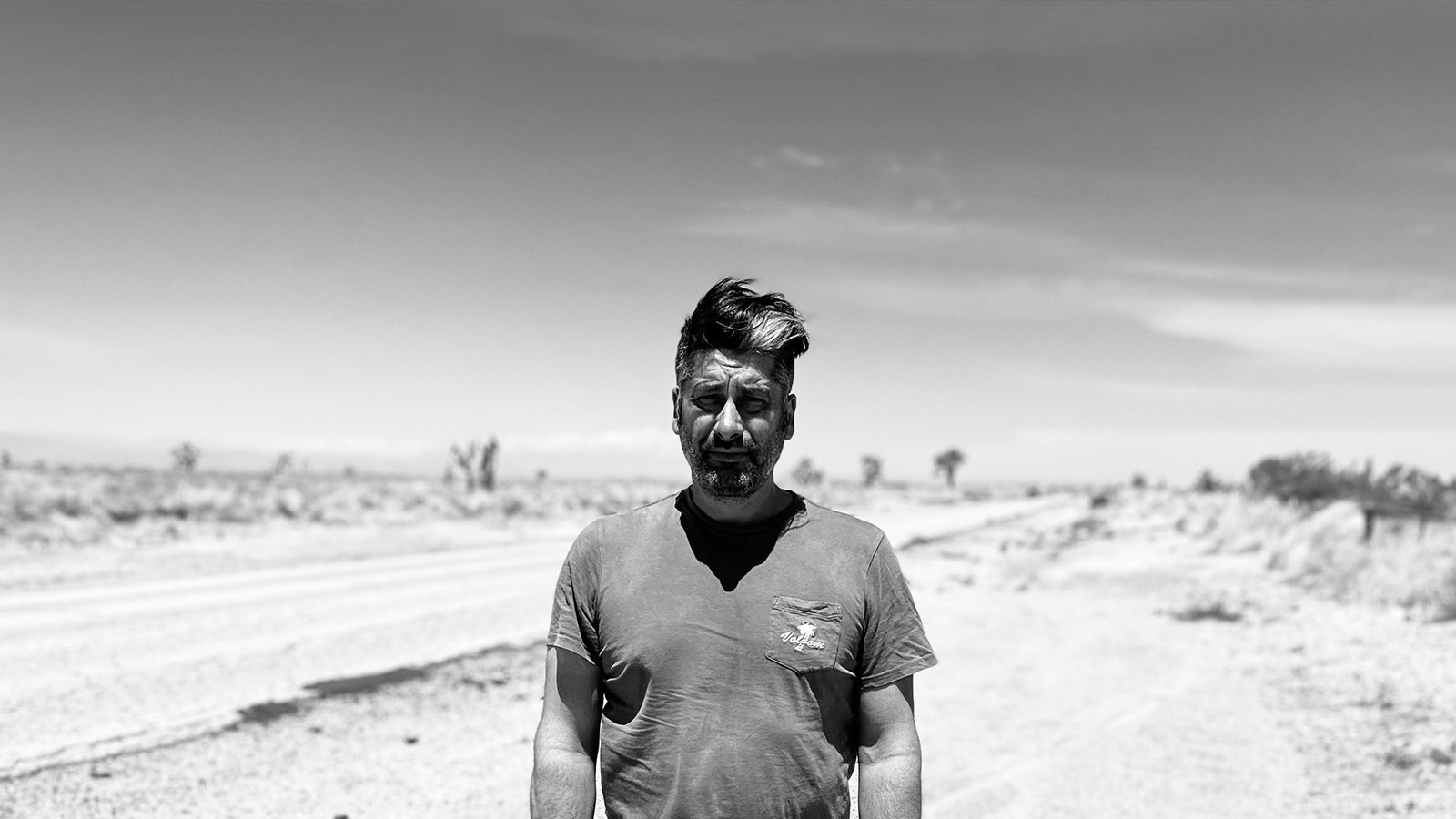
Lawrence Jacomelli is a British writer, director and producer whose work spans award-winning commercials, branded storytelling and independent cinema. Over more than two decades, he has directed campaigns for international brands including British Airways, IKEA, Burger King, KFC, Pepsi, Toyota, Lexus and General Motors, building a career defined by visual precision, grounded performances and disciplined storytelling.
With Blood Star, Jacomelli made his feature directorial debut, bringing the control and economy of commercial filmmaking to a lean psychological road thriller set in the American desert. Written by Lawrence Jacomelli and Victoria Taylor, with additional writing by George Kelly, the film follows a young woman who becomes the target of a predatory small-town sheriff and must rely on instinct, defiance and street intelligence to survive.
Director of Blood Star
Blood Star grew from Jacomelli’s fascination with stripped-back thrillers in which landscape, performance and tension carry more weight than spectacle. Influenced by road movies, survival thrillers and desert noir, the film places two central characters inside an increasingly confined contest for control.
The story follows Bobbi Torres, played by Britni Camacho, as she crosses the desert and encounters Sheriff Bilstein, played by John Schwab. What initially appears to be a routine interaction becomes a deliberate campaign of intimidation, isolation and violence. The sheriff believes his authority allows him to determine how the encounter will end, but Bobbi refuses to play the role he has prepared for her.
Jacomelli directs the film as a psychological struggle rather than a conventional chase movie. The threat is not only physical. It comes from the sheriff’s badge, his certainty that he will be believed and his ability to turn ordinary spaces into extensions of his control.
From Commercial Filmmaking to Independent Cinema
Before directing Blood Star, Jacomelli established an international career in commercials and branded films. His work has taken him across more than 30 countries and has included large-scale campaigns, performance-led storytelling and technically demanding productions for global clients and creative agencies.
Commercial filmmaking requires decisions to be made quickly and precisely. Every shot must serve a clear purpose, performances must register immediately and complex productions must be delivered within strict schedules. Jacomelli brought that discipline directly into the making of Blood Star.
Rather than treating independent film as a smaller version of a studio production, he designed the project around its limitations. The film uses a concentrated cast, a small number of locations and a carefully controlled visual plan. Those restrictions became part of the film’s identity, giving it an economy and focus that reinforce the tension of the story.
The Making of Blood Star
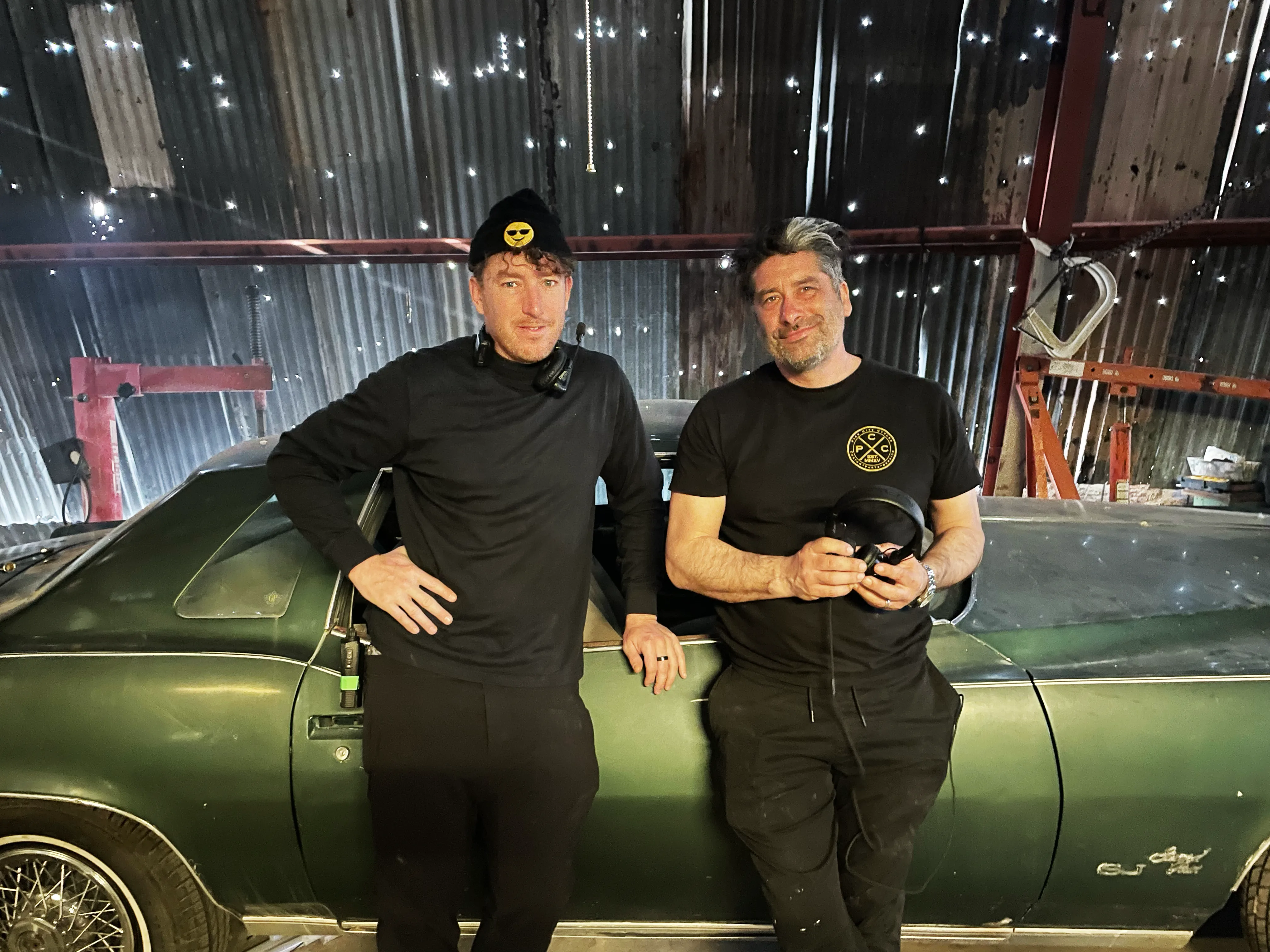
Jacomelli directed Blood Star across ten principal photography days in the desert with a compact independent crew. Every scene was planned in advance through detailed storyboards and a full-length animatic containing dialogue, temporary music and sound effects.
The animatic allowed Jacomelli to see the film before production began. It established the required coverage, clarified the rhythm of each sequence and helped determine whether the complete story could be captured within the schedule. By the time filming started, the team knew which shots were essential and how those shots would fit together.
This approach did not remove spontaneity from the set. Instead, it created enough structure for the actors and crew to work freely without losing time or narrative focus. The production could concentrate on performance, atmosphere and visual detail because the architecture of the film had already been tested.
The result is a feature that appears larger than its production model might suggest. Desert highways, isolated buildings, police vehicles and open landscapes create scale, while the camera remains closely connected to Bobbi’s experience.
A Director-Led Production
For Jacomelli, Blood Star was built as a director-led film from its earliest development. He co-wrote the screenplay, helped produce the project and remained closely involved in every stage of visual preparation, casting, production and post-production.
That degree of involvement allowed the film’s themes, performances and visual language to remain unified. The sheriff’s control is reflected in the framing and geography of the film, while Bobbi’s resistance gradually changes the way she is photographed. The desert initially appears open and limitless, but becomes increasingly oppressive as her available choices disappear.
As the balance of power changes, the visual language shifts with it. The camera begins to register Bobbi less as a target and more as someone actively studying her environment and preparing to act.
Working With Britni Camacho and John Schwab
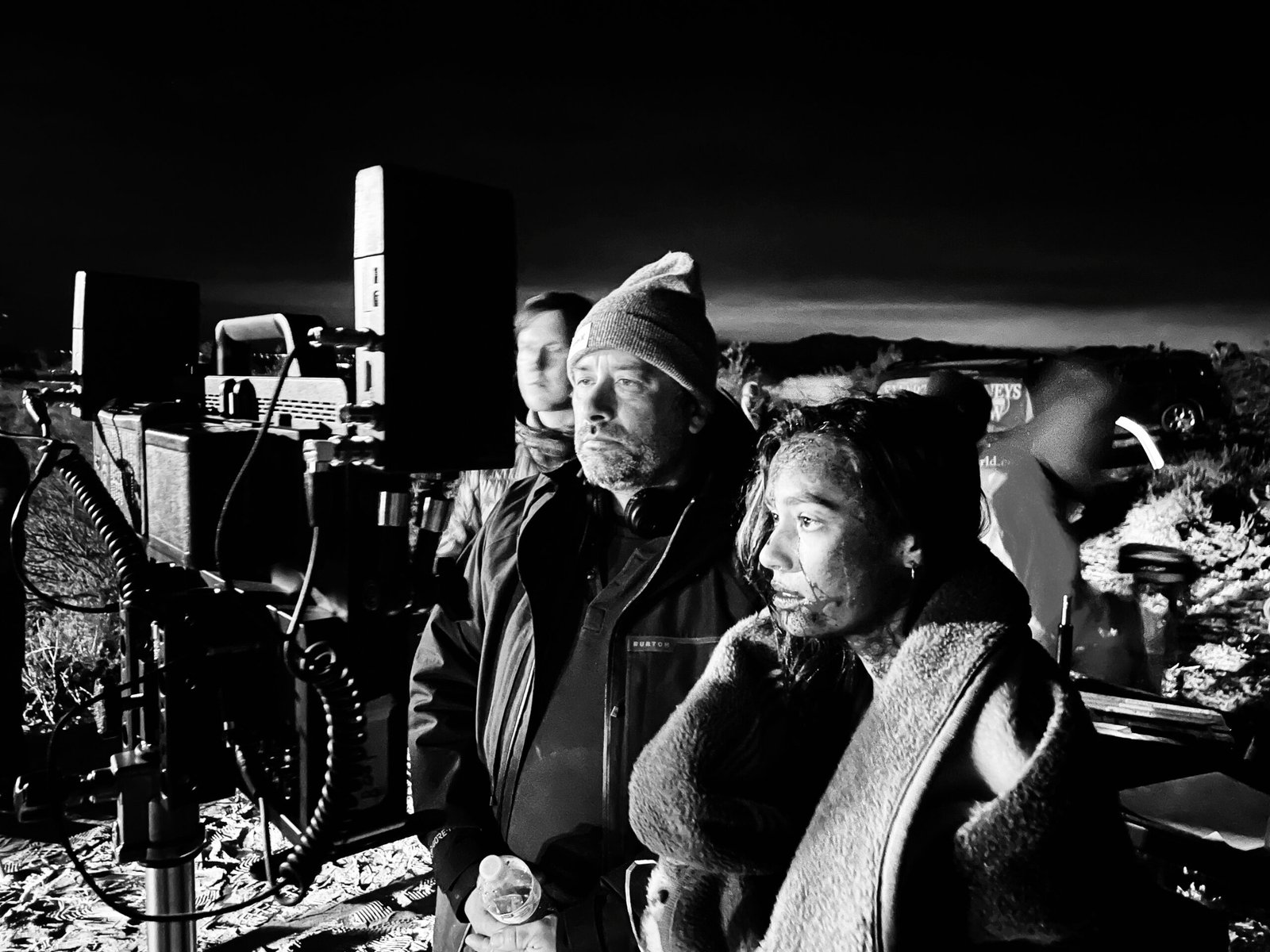
The relationship between Bobbi Torres and Sheriff Bilstein is the centre of Blood Star. Jacomelli cast Britni Camacho and John Schwab because both actors could communicate complex shifts in power without relying on excessive dialogue.
Camacho’s performance is physical, reactive and emotionally precise. Much of Bobbi’s experience is conveyed through observation, movement and survival instinct. The character is frightened but never passive, and her refusal to behave predictably becomes one of her greatest strengths.
Schwab approaches Bilstein with restraint. Rather than presenting him as openly monstrous from the beginning, he plays the sheriff as controlled, conversational and confident in the protection of his authority. The menace comes from how comfortable he appears within the system that enables him.
Jacomelli directs their scenes as a changing tactical relationship. Each character studies the other, tests boundaries and looks for the moment when control might shift.
The Monster Behind the Badge
One of the central ideas behind Blood Star was to hide the film’s monster inside a familiar symbol of safety. Sheriff Bilstein is not an outsider who operates beyond society. His power comes from his position within it.
The uniform, badge, vehicle and weapon all communicate authority before the character speaks. Bobbi understands that resisting him is dangerous not only because he is armed, but because he controls the official version of events.
Jacomelli uses that imbalance to explore institutional power without allowing the film to become abstract. The political idea remains grounded in immediate physical danger. Bobbi does not have the luxury of debating the system around her; she has to survive the man using it against her.
The sheriff’s greatest mistake is believing that his victims will continue to follow the pattern he has designed. Bobbi’s unpredictability eventually becomes the force he cannot control.
Visual Style and Influences
Jacomelli’s visual approach combines the scale of the American road movie with the pressure of an intimate psychological thriller. The desert is photographed as both an expansive landscape and a trap, offering apparent freedom while leaving Bobbi exposed.
The film draws from the tradition of road thrillers in which ordinary journeys become confrontations with violence and authority. Its tonal influences include Duel, The Hitcher, Breakdown, No Country for Old Men, Badlands, Kalifornia, Wolf Creek and Death Proof.
These films share an interest in pursuit, isolation and hostile landscapes, but Blood Star places its own emphasis on control. The central danger is not simply that Bobbi may be killed. It is that Bilstein believes he can determine her behaviour, identity and ending.
Jacomelli’s commercial background is visible in the economy of the images. The film avoids decorative coverage and relies on carefully selected angles, graphic compositions and restrained camera movement. Every visual choice is designed to increase pressure or reveal a change in the relationship between the characters.
Awards and International Work
Across his commercial career, Jacomelli’s work has received recognition from Cannes Lions, Eurobest, Epica, Dubai Lynx, the Golden Drum and other international advertising and craft awards.
His projects have included performance-led commercials, large-scale automotive campaigns, public-service films and branded content for major companies and organisations. Working across different countries, agencies and production cultures helped develop the adaptability required to make an independent feature under demanding conditions.
That experience also shaped the way Blood Star was produced. The film was not approached as a first-time experiment, but as the extension of an established directing practice into longer-form narrative filmmaking.
Writer, Director and Producer
Jacomelli’s role on Blood Star extended beyond directing. As a writer and producer, he was involved in shaping both the dramatic structure and the practical form of the production.
The screenplay was designed around achievable locations, a limited central cast and a clear escalation of danger. Those production considerations did not simply reduce cost. They strengthened the narrative by keeping the story focused on Bobbi and Bilstein.
The production model also reflected Jacomelli’s belief that independent filmmakers must build projects around what they can control. Precision in development allowed the film to preserve ambition while avoiding unnecessary scale.
Critical Reception of Blood Star
Blood Star has been described by The Guardian as a “snappily shot debut,” while MovieMaker Magazine highlighted its “unforgettable Tarantinoesque moments.” Grimmfest called the film “gritty and gruelling,” and its performances, photography and controlled tension have been singled out by filmmakers, reviewers and festival audiences.
The film premiered internationally on the genre-festival circuit before being released across digital platforms in multiple territories. Its reception has helped establish Jacomelli as a British filmmaker working within the contemporary independent thriller and horror landscape.
Building a Film Before Shooting It
A defining feature of Jacomelli’s method is the belief that the filmmaker should solve as many problems as possible before arriving on set.
For Blood Star, the full animatic functioned as a working model of the finished movie. Voices, music, effects and planned shots allowed the filmmakers to test pacing and identify missing information long before principal photography began.
That preparation was particularly important because the film had to be completed in ten days. There was little room for unnecessary coverage or scenes that had not been properly designed. Each day needed to produce material that would cut together as intended.
Jacomelli has described the process as a way of guaranteeing that, so long as the production captured everything contained in the animatic, the team would have the complete film. It was not a substitute for creativity, but the foundation that made creativity possible within the schedule.
Independent Filmmaking and Creative Control
Blood Star represents Jacomelli’s move from short-form commercial work into long-form narrative filmmaking, but it also reflects a broader commitment to independent production.
The film was created without waiting for a traditional studio structure to provide permission. Jacomelli and producer Victoria Taylor backed the project themselves, developed a practical production strategy and assembled cast and crew through a combination of established relationships and online production platforms.
That model required the filmmakers to take responsibility for every stage of the process, from development and finance to casting, production and release. It also allowed the film to retain a clear creative identity.
For Jacomelli, independence does not mean abandoning structure or professional discipline. It means using both to protect the film.
Lawrence Jacomelli’s Directing Style
Jacomelli’s work is characterised by strong visual planning, grounded performances and an interest in people under pressure. His films frequently place characters inside situations where ordinary systems of safety, trust or authority begin to fail.
Rather than explaining emotion through dialogue, he often builds scenes around behaviour. A pause, a glance or a change in physical distance can carry as much narrative weight as a spoken line.
That approach is central to Blood Star. Bobbi and Bilstein are constantly interpreting each other, and the audience is asked to do the same. Tension develops through what each character understands, what they conceal and when they decide to act.
What Comes After Blood Star
Following Blood Star, Jacomelli has continued developing feature projects through Fastback Films, the company created with Victoria Taylor for long-form narrative production.
His upcoming work continues to explore psychological pressure, power, performance and characters whose desire to control their own stories pushes them into increasingly dangerous situations.
The aim is to build on the production model established by Blood Star: ambitious genre storytelling, carefully controlled budgets, strong central performances and a visual approach designed around the specific identity of each film.
Selected Lawrence Jacomelli Credits
Feature Film
Blood Star — Writer, Director and Producer
A psychological desert road thriller starring Britni Camacho and John Schwab. The film follows a young woman targeted by a predatory sheriff who uses his authority to isolate and control his victims.
Industry Profiles
Commercial and Branded Work
Jacomelli has directed international campaigns and films for brands including:
- British Airways
- IKEA
- Burger King
- KFC
- Pepsi
- Toyota
- Lexus
- General Motors
- McDonald’s
- Swatch
- Clarks Originals
- Cambridge Audio
- Liberty Global
- DAZN
- Orange
- T-Mobile
His work has been produced across the United Kingdom, Europe, North America, the Middle East, Asia and Africa.
Explore the Blood Star Cast & Filmmakers
Watch Lawrence Jacomelli’s Blood Star
Blood Star is Lawrence Jacomelli’s feature directorial debut, combining the visual control of commercial filmmaking with the tension, performance and atmosphere of an independent psychological thriller.

