Quick Answer
Obsession is a horror triumph because it treats its supernatural premise as an extension of teen relationship drama, not a replacement for it: Bear’s wish for Nikki to love him strips away her consent and turns devotion into something monstrous. Made for roughly $750,000 in a 20-day shoot, it draws clear lines to Big, Gremlins, American Pie and Scream, and works best when it trusts that central emotional idea over exhaustive mythology.
Spoiler Warning
This review contains discussion of the film’s premise, character relationships and selected scenes, but avoids revealing the complete ending.
Key Takeaways
- Obsession works because it treats its horror concept as an extension of a teen relationship drama, not a replacement for one.
- Bear’s wish removes Nikki’s consent and turns her devotion into something monstrous — the film’s real horror.
- It draws clear lines to Big, Gremlins, Little Shop of Horrors, American Pie, Scream and The Vampire Diaries.
- Made for roughly $750,000 in a 20-day shoot, the film had grossed more than $400 million worldwide by July 2026.
- Curry Barker uses character blocking and physical positioning — especially in the chair scene — to tell the story visually.
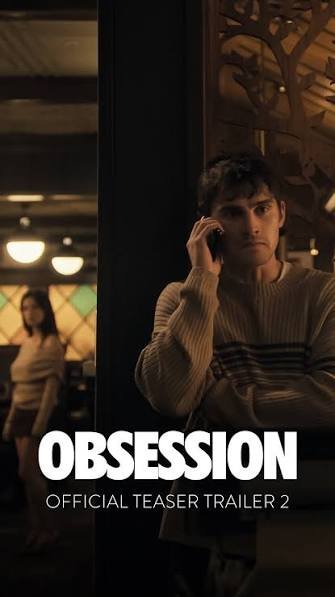
Obsession Is Really a Teen Drama About Wanting to Be Loved
The most interesting thing about Obsession is that beneath its supernatural horror, grotesque violence and increasingly unhinged set pieces, it is fundamentally a story about a group of young people trying to understand love.
Bear wants to be loved by Nikki. Nikki wants to retain her own identity and emotional freedom. The other characters are navigating friendship, attraction, jealousy and the uncertainty of early adulthood. The horror does not replace those concerns. It magnifies them until an ordinary romantic desire becomes dangerous.
Writer-director Curry Barker understands that the concept only works if Bear’s wish initially feels emotionally recognisable. He does not begin as a conventional horror villain. He is lonely, insecure and afraid of rejection. Rather than risk expressing his feelings honestly, he chooses a supernatural shortcut and wishes for Nikki to love him more than anyone else in the world.
The wish is granted, but the wording removes everything that makes love meaningful.
Nikki’s affection is no longer freely chosen. It becomes total, compulsive and destructive. The innocent young woman Bear believed he wanted is transformed into an unwitting monster, not because she has independently become evil, but because his wish has overwritten her emotional autonomy.
That is the central horror of the film.
Bear does not simply create a dangerous version of Nikki. He removes the real Nikki from the relationship and replaces her with the fantasy of unconditional devotion he thought he desired.
The film’s supernatural premise therefore exposes something uncomfortable about romantic obsession. Wanting another person to love you may appear innocent, but wanting to control their feelings is something else entirely.
The Horror Version of Big
Structurally, Obsession has a surprising amount in common with Big.
In Penny Marshall’s film, a child encounters a strange fortune-telling machine, makes an impulsive wish and wakes to discover that the fantasy has become real. The wish initially appears exciting. Josh gets access to the adult world he imagined he wanted, but gradually learns that receiving the result without undergoing the necessary emotional development creates confusion, pain and responsibility.
Obsession follows a darker version of that framework.
Bear encounters a mysterious object, makes a wish rooted in an immature emotional desire and receives exactly what he asked for in the most destructive possible form. Like Josh in Big, he discovers that magical fulfilment does not eliminate consequences. It accelerates him into a situation for which he is emotionally unprepared.
The difference is that Josh wishes to change himself, while Bear wishes to change another person.
That distinction turns the coming-of-age fantasy into horror.
Josh must understand that adulthood is more complicated than it appears. Bear must understand that love obtained without consent is not love at all. His wish does not make him more mature, courageous or worthy of Nikki. It changes Nikki so that he no longer has to face rejection.
Seen from this perspective, Obsession is not simply a film about a cursed object. It is a corrupted coming-of-age story about a young man who tries to avoid emotional growth and instead unleashes a consequence he cannot control.
The supernatural element works because the emotional problem beneath it is so ordinary.
The Magic Shop Tradition
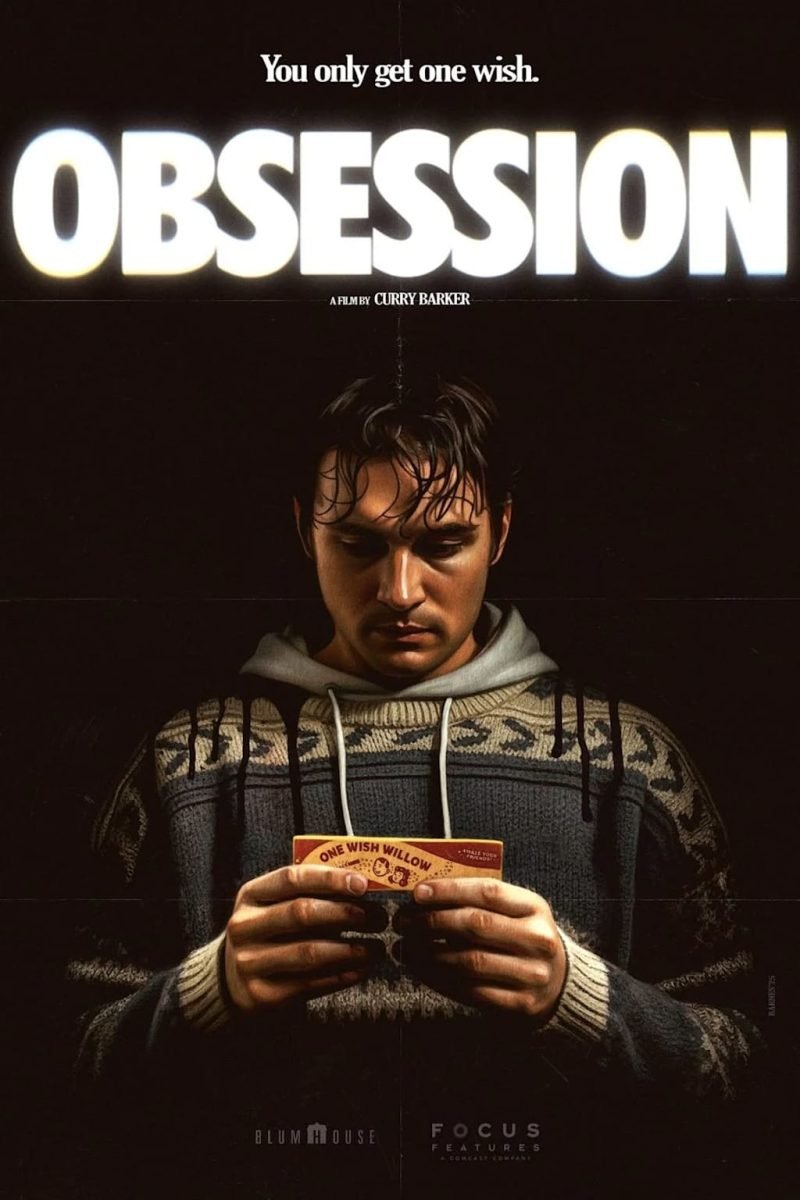
The early encounter with the One Wish Willow places Obsession within a long tradition of stories in which an apparently harmless shop, salesman or object offers access to forbidden fulfilment.
The magic shop is one of cinema’s most useful narrative devices because it allows the extraordinary to enter an otherwise recognisable world with very little explanation. A character crosses a threshold, encounters an eccentric proprietor or unusual artefact, and is offered something that appears small enough to dismiss.
The object is rarely dangerous because it malfunctions.
It is dangerous because it works too precisely.
In Gremlins, the mysterious shop introduces Gizmo and the three rules that must be followed. The danger emerges not from a defective gift but from human carelessness and the failure to respect conditions that were clearly stated.
In Little Shop of Horrors, an apparently extraordinary plant offers Seymour a pathway out of obscurity. As Audrey II grows, the fulfilment of Seymour’s ambitions becomes inseparable from escalating violence.
Even Needful Things develops the idea of a shop that gives people exactly what they desire while using those desires to expose their weaknesses.
Obsession belongs to this tradition, but the One Wish Willow has the deceptive innocence of a novelty gift. It does not look like a grand occult object. Its name almost sounds like the kind of sentimental item someone might buy impulsively at a New Age shop.
That tonal lightness is important.
The object enters a youthful world of friendships, work and unspoken attraction. Its threat is not announced through elaborate Gothic design. The wish seems childish enough to make, which helps the consequences feel even more disturbing.
Gremlins and the Rules of a Dangerous Gift
The comparison with Gremlins is especially useful because both films begin with a magical gift whose initial appeal conceals the scale of the danger it contains.
Gizmo is charming and apparently manageable, but the rules surrounding him reveal that the gift carries consequences. When those rules are broken, one innocent creature gives rise to a group of destructive monsters.
In Obsession, the One Wish Willow similarly turns a simple desire into something uncontrollable. Bear’s wish produces a version of Nikki whose love multiplies beyond any healthy emotional limit.
The transformation is not as visibly creature-driven as Gremlins, but the underlying structure is related. An appealing supernatural possibility enters an everyday youthful world, the central character fails to understand the responsibility attached to it, and innocent behaviour mutates into chaos.
Both films also understand that horror and humour can coexist. The absurdity of a wish producing a catastrophically devoted girlfriend allows Obsession to move through moments of discomfort, comedy and violence without becoming tonally incoherent.
Barker does not treat the premise as a solemn metaphor from the first frame. He allows the awkwardness to be funny before it becomes threatening. That shift is one of the film’s strongest qualities.
The audience initially recognises a fantasy.
Then it watches that fantasy become unbearable.
The Emotional World of American Pie
Although Obsession is a supernatural horror film, much of its dramatic foundation belongs to the teen and young-adult relationship movie.
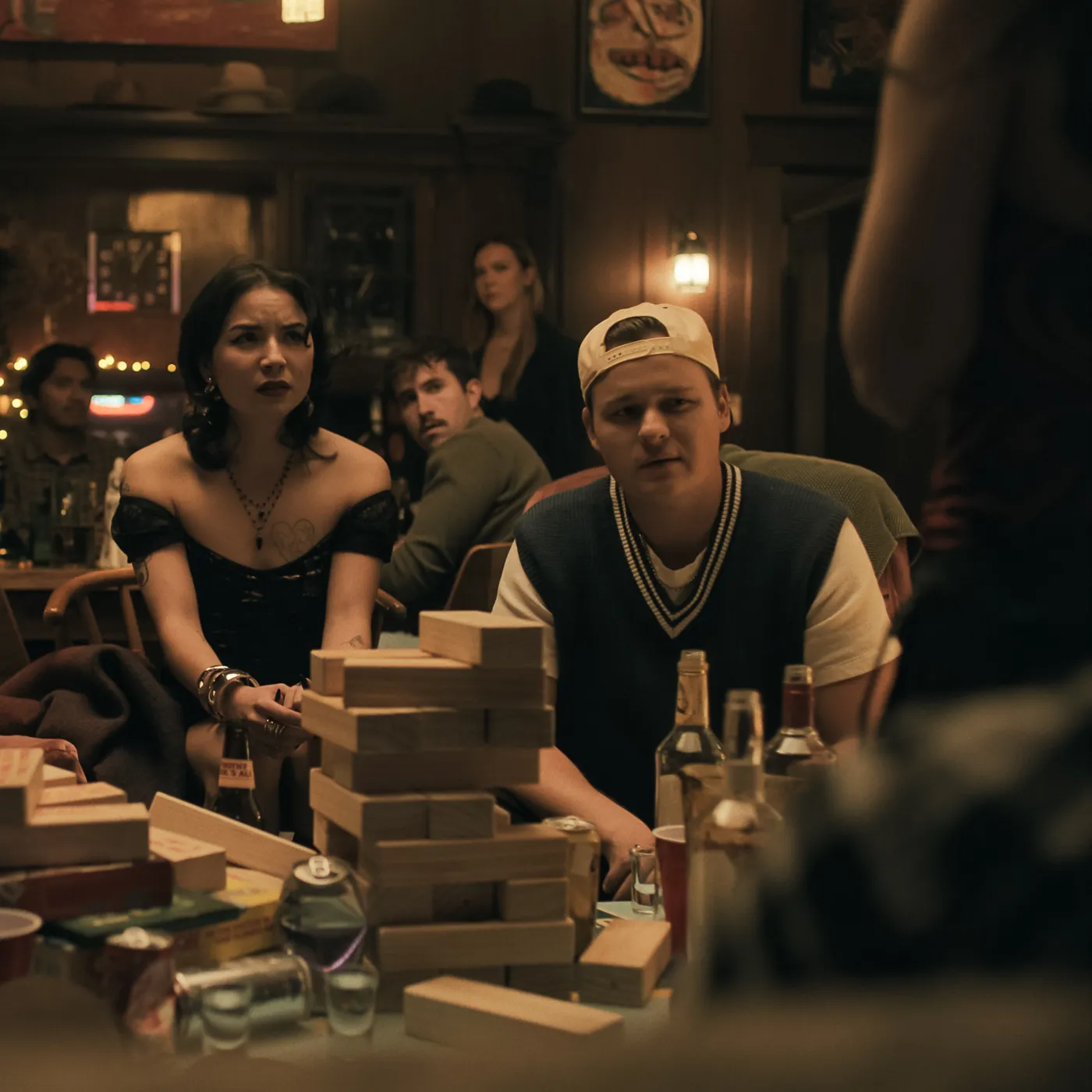
Its characters work together, socialise together and exist inside a small emotional ecosystem where friendships, romantic feelings and group loyalties overlap. Bear’s inability to tell Nikki how he feels would be completely at home in a film such as American Pie, where embarrassment, sexual insecurity and the fear of rejection drive much of the story.
The difference is what Obsession does with that insecurity.
In a conventional teen comedy, Bear might misunderstand Nikki, make a series of humiliating mistakes and eventually learn to speak honestly. The narrative would reward emotional maturity and direct communication.
Instead, Bear avoids that process entirely.
The wish allows him to skip the difficult scene in which Nikki might reject him. That avoidance is the original sin of the film. Everything that follows grows from his refusal to accept that another person’s feelings may not match his own.
This is why the teen-drama element is not incidental. Without it, the film would become a more generic cursed-object story. The horror has force because it emerges from the recognisable emotional fears of young adulthood: being unwanted, watching someone choose somebody else and believing that love will solve a damaged sense of self.
The early group scenes establish these relationships economically. The characters feel like people who already have a history rather than figures assembled solely to become victims.
That emotional familiarity gives the supernatural escalation something meaningful to destroy.
Scream, The Vampire Diaries and Horror Through Young Relationships
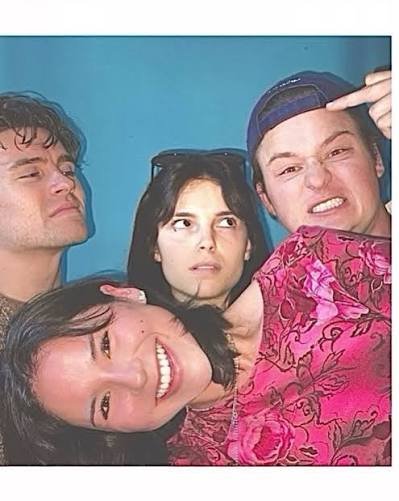
Obsession also sits within the tradition of horror stories in which the supernatural or violent plot grows directly out of the relationships between young characters.
Scream is not merely a slasher about identifying a masked killer. Its power comes from the fact that the murders invade a recognisable network of friendships, romances, rivalries and betrayals. The horror matters because the characters already matter to one another.
Similarly, The Vampire Diaries uses supernatural mythology to intensify familiar adolescent emotions. Love becomes eternal devotion. Jealousy becomes centuries-long conflict. Attraction can carry literal mortal danger.
Obsession uses a comparable form of escalation.
Bear’s crush does not remain a crush. It becomes a supernatural command. Nikki’s affection does not simply grow; it becomes an all-consuming force. Emotional dependence becomes physical threat.
This is one reason the film feels accessible despite the extremity of its horror. The characters’ emotional language is familiar, even when the consequences are not.
Barker recognises that the high concept should not float above the character drama. It should transform it.
The wish does not introduce an unrelated monster into the group. It turns one of the group’s most important relationships into the monster.
How Obsession compares to its clearest influences
| Film | Shared Idea | Key Difference |
|---|---|---|
| Big | A wish grants an impossible fantasy overnight | Josh wishes to change himself; Bear wishes to change someone else |
| Gremlins | A charming magical gift conceals rules whose violation unleashes danger | Gremlins multiplies a creature; Obsession multiplies one person’s devotion |
| American Pie | A youthful friend group defined by embarrassment, insecurity and the fear of rejection | American Pie rewards honesty; Bear’s wish lets him avoid it entirely |
| Scream / The Vampire Diaries | Horror or violence grows directly out of relationships between young characters | Those stories add an outside threat; Obsession turns the relationship itself into the threat |
The Innocent Girl Becomes an Unwitting Monster
The smartest element of Obsession is the way it complicates Nikki’s position.
She becomes the immediate source of danger, but she is not the original author of that danger. Her obsession has been imposed upon her through Bear’s wish. The monstrous version of Nikki is therefore both antagonist and victim.
This creates a more interesting moral structure than a simple story about a possessive woman.
Bear wanted Nikki to love him. The wish creates a version of that love stripped of independence, judgement and restraint. She becomes the literal embodiment of his fantasy, and the horror lies in seeing how dehumanising that fantasy was from the beginning.
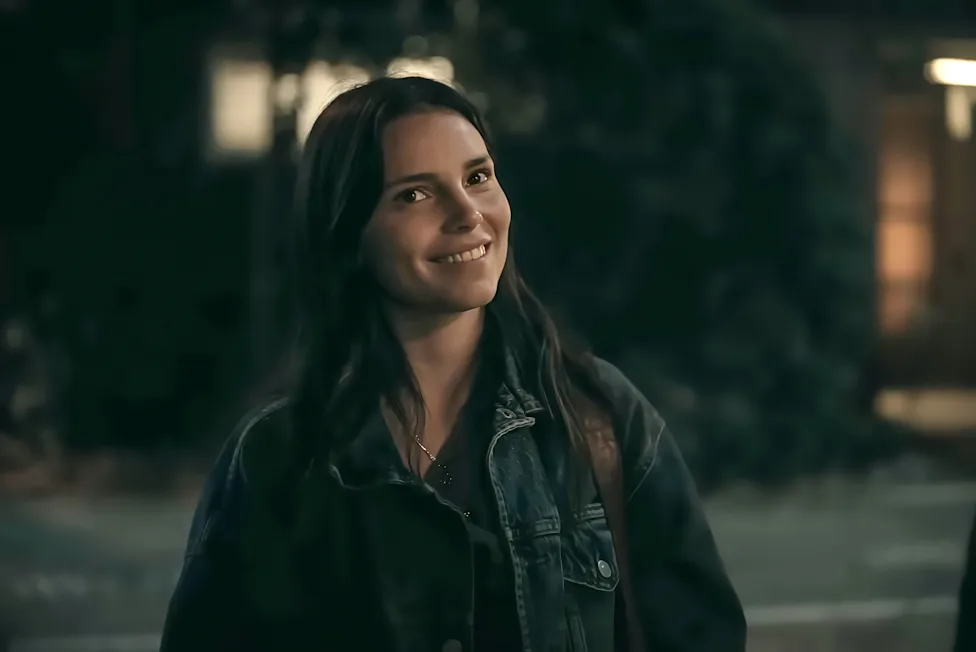
Inde Navarrette has to make the transformation work across several emotional registers. Her devotion must initially feel flattering enough for Bear to accept it, exaggerated enough to become uncomfortable and eventually powerful enough to become terrifying.
The performance avoids making Nikki feel like a completely unrelated demonic entity. Elements of the innocent young woman remain visible within the monster, which makes the situation more tragic.
She is not pursuing Bear because she independently decided that violence was justified.
She is fulfilling the emotional command he placed inside her.
Bear does not simply create a dangerous version of Nikki. He removes the real Nikki from the relationship and replaces her with the fantasy of unconditional devotion he thought he desired.
The film therefore reverses a familiar horror dynamic. The young woman may become the visible monster, but the young man’s desire created the conditions for her transformation.
The British Film Institute’s review similarly noted that the film reverses the roles of the obsessed person and the object of obsession, while allowing both the supernatural version of Nikki and the real Nikki to illuminate the consequences of Bear’s desire. (BFI)
A Strong Concept Designed for a Low Budget
From a filmmaking perspective, Obsession is an excellent example of a concept creating scale without requiring constant spectacle.
The film was reportedly made for approximately $750,000 and shot over 20 days, yet it became a major commercial success. (Forbes)
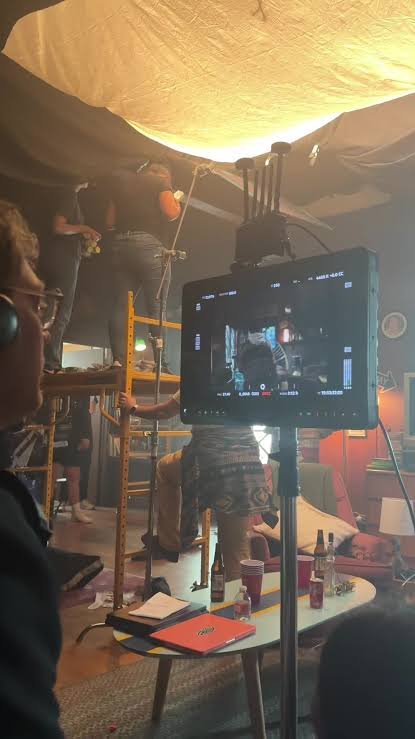
The production model works because the film concentrates its resources.
There is a contained group of principal characters, a limited number of central relationships and a small selection of significant horror set pieces. Much of the running time is carried by performance, blocking, dialogue and the gradual transformation of Nikki’s behaviour.
The film does not need a creature attack every five minutes. Its core concept generates suspense whenever Nikki enters a scene because the audience is watching for the moment when affection becomes possession.
This is the same principle that supports many successful low-budget genre films.
Paranormal Activity uses one house and one relationship. The original Saw is constructed around two men in a room and a small number of carefully selected reveals. The Blair Witch Project turns limited visibility and three performers into the entire source of dread.
Obsession is more visually polished and contains larger set pieces than those examples, but it shares their discipline. It understands that one memorable idea, performed well, can create more value than a large quantity of generic action.
The strength of the premise also allows the production to spend selectively. When violence or effects arrive, they feel significant because the film has not exhausted the audience with constant incident.
This is intelligent low-budget design.
Curry Barker’s Direction Is Built Around Character Geography
One of the most interesting aspects of Curry Barker’s direction is his use of physical placement to define the emotional relationships around Bear.

For much of the film, the two principal young women occupy distinct positions on either side of him. This is more than convenient blocking. It gives the relationships a visual geography.
Bear becomes the central point between two competing emotional realities. One woman represents the life and relationships that existed before the wish. Nikki represents the desire he has unnaturally brought into existence.
By repeatedly keeping the women on separate sides of Bear, Barker allows the composition to express a division that the dialogue does not always need to state.
The positions become meaningful through repetition.
Cinema teaches audiences how to read space. When characters consistently occupy particular sides of the frame or particular positions in relation to one another, those placements begin to feel stable. A director can then create unease simply by breaking the established arrangement.
Barker uses that principle effectively.
The blocking gives Bear the illusion of remaining at the centre of his own story. The women appear to exist in relation to him, arranged on either side of his emotional conflict.
But the apparent control is unstable.
The wish has created a force that will eventually rearrange the relationships according to Nikki’s obsessive logic rather than Bear’s desire.
The Chair Scene Breaks the Established Order
The chair scene is especially effective because it disrupts the visual pattern Barker has established.
Until this point, each of the central women has largely retained her own side of Bear. The geography keeps their identities and relationships visually separate.
During the chair sequence, Nikki pulls the other woman backwards and physically takes her place.
The action is disturbing on a literal level, but its visual meaning is even stronger.
Nikki does not merely attack a rival. She occupies her position.
The blocking shows the supernatural obsession eliminating an existing relationship and replacing it with itself. The woman who previously belonged in that part of Bear’s world is removed, while Nikki assumes the space beside him.
This is a simple directorial decision, but it demonstrates careful visual thinking.
The meaning does not depend on a character explaining that Nikki is taking over Bear’s emotional life. The composition has already taught the audience what the positions mean. When Nikki drags the other woman away and moves into her place, the film completes the idea through movement.
It is an example of blocking functioning as storytelling rather than simply organising actors for camera coverage.
The most effective directing choices often operate this way. They are understandable without drawing attention to themselves, but become richer when reconsidered after the scene.
Bear Is Not a Traditional Hero
The film’s structure encourages the audience to identify with Bear, but it never completely absolves him.
He is sympathetic because his loneliness is recognisable and because the results of the wish quickly exceed anything he consciously intended. Yet the story repeatedly returns to the fact that he made a choice concerning Nikki’s mind and emotions without her consent.
This makes him a more complicated protagonist than the innocent recipient of a curse.
Bear is both victim and instigator.
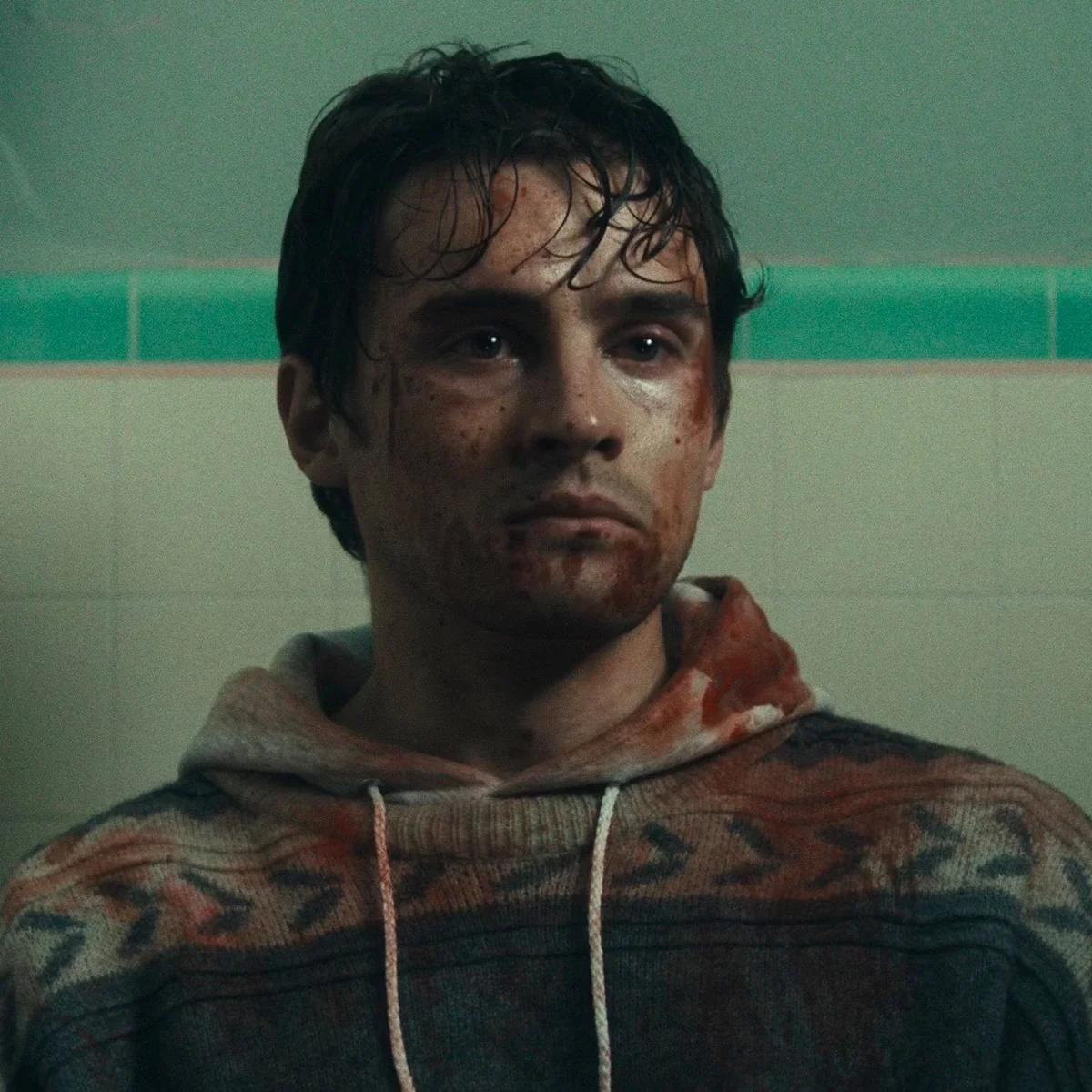
The wish exposes a form of entitlement hiding inside apparent romantic vulnerability. He believes his love for Nikki is sincere, but sincerity does not give him the right to determine how she feels.
The film does not need Bear to be consciously malicious for the decision to be wrong. In fact, the premise becomes more effective because he considers himself harmless.
His self-image allows the audience to recognise how controlling ideas can hide within familiar romantic language. “I only want her to love me” sounds tender until the other person’s freedom is removed from the sentence.
Michael Johnston plays Bear with enough vulnerability to prevent the character from becoming easily dismissible. The audience can understand why he makes the wish while still recognising the moral failure inside it.
That tension keeps the film emotionally alive after the supernatural rules have been established.
The Film Understands the Difference Between Love and Possession
At its centre, Obsession asks a simple question: what is love worth when it is not freely chosen?
Bear initially believes that Nikki’s devotion will solve his unhappiness. Instead, her transformed behaviour reveals the emptiness of what he has received.
She may focus entirely on him, but that focus no longer reflects knowledge, trust or genuine emotional choice. It is simply supernatural compulsion.
The horror version of Nikki expresses the difference between being loved and being possessed.
Her devotion leaves no room for Bear to remain independent either. The wish that was intended to give him emotional security begins controlling his life. Every other relationship becomes a threat, and every attempt to move away from Nikki becomes an act she must prevent.
Possession therefore works in both directions.
Bear has attempted to possess Nikki’s feelings, but the transformed Nikki begins to possess Bear’s entire existence.
The film’s concept becomes a closed emotional trap in which neither character can experience genuine love because the wish has destroyed the freedom on which love depends.
Where Obsession Is Most Effective
The film is strongest when it remains close to its emotional premise.
The early awkwardness, the gradual intensification of Nikki’s behaviour and the shifting dynamics within the friendship group are more compelling than any attempt to explain the supernatural mythology in exhaustive detail.
Barker trusts the central idea.
He understands that an affectionate gesture can become frightening if it lasts too long, arrives with too much intensity or ignores another person’s discomfort. Inde Navarrette’s performance gives him the ability to move from innocence to threat without requiring an obvious visual transformation in every scene.
Pro Tip for First-Time Viewers
Watch how Curry Barker positions the two women on either side of Bear throughout the film — the blocking is quietly telling you exactly where the story is headed long before the chair scene makes it explicit.
The sound design and visual control amplify this discomfort. The film often creates dread before anything explicitly violent occurs because Nikki’s presence changes the emotional temperature of the room.
The direction also maintains a useful tension between dark humour and genuine horror. The premise is inherently absurd, but the emotional consequences are treated seriously.
That balance prevents the film from becoming either a one-joke horror comedy or an oppressively self-important metaphor.
Where the Film Is Less Convincing
The film is less secure when its supernatural mechanics become more important than its emotional logic.
Like many high-concept horror films, Obsession must eventually explain enough of its rules to move towards a conclusion. Those explanations are necessary, but they are rarely as interesting as the original transformation.
The most powerful idea is easy to understand: Bear wished for Nikki to love him more than anyone, and the wish turned that love into something monstrous.
Everything added around that premise risks diluting its simplicity.
Heads Up
If you’re the type of viewer who fixates on plot logic, temper your expectations around the film’s third act — recent discussion of the film’s streaming release has focused on the questionable logic surrounding the death of Bear’s cat. (CinemaBlend)
There are also individual plot details that may invite questions. Recent discussion of the film’s streaming release, for example, has focused on the questionable logic surrounding the death of Bear’s cat. (CinemaBlend)
However, these weaknesses do not damage the film’s central achievement. The concept, performances and controlled escalation remain strong enough to carry the narrative over occasional gaps in logic.
Why Obsession Became Such a Breakout
The film’s extraordinary commercial performance is not difficult to understand from a creative perspective.
It has an immediately communicable concept: a lonely young man wishes that his female friend will love him, and the wish turns her into a monster.
That sentence contains romance, horror, irony and consequence.
It also provides a strong trailer structure. The audience can see the innocent world, the wish, the initial fulfilment and the first signs that something is wrong without being shown the entire narrative.
The film is recognisably contemporary but built from durable storytelling elements: a magic object, an impulsive wish, a youthful friendship group and a desire that carries an unexpected price.
Did You Know?
Obsession’s reported $750,000 production budget and 20-day shoot make its eventual box-office performance particularly remarkable. By July 2026, reports placed its worldwide gross above $400 million — making it, by some measures, the highest-grossing film ever made relative to its budget.
Its reported $750,000 production budget and 20-day shoot make its eventual box-office performance particularly remarkable. By July 2026, reports placed its worldwide gross above $400 million. (Forbes)
The success demonstrates something independent filmmakers repeatedly need to remember: production value is not only visible expenditure.
A strong concept is production value.
A memorable performance is production value.
Clear character relationships are production value.
A scene whose blocking communicates the entire dramatic idea is production value.
Final Verdict
Obsession works because Curry Barker does not treat the horror concept as a replacement for the teen drama beneath it.
The film is about wanting to be loved, fearing rejection and attempting to avoid the vulnerability required to form a real relationship. The One Wish Willow takes those recognisable emotions and transforms them into supernatural consequences.
The magic-shop setup recalls Gremlins and Little Shop of Horrors, where an apparently appealing gift or opportunity contains the mechanism of destruction. Its wish-fulfilment structure makes it feel like a horror version of Big, except Bear attempts to change somebody else rather than himself. Its youthful social world connects it to American Pie, Scream and The Vampire Diaries, stories in which friendship, attraction and jealousy become the foundations for comedy, violence or supernatural drama.
But Obsession has an identity of its own.
Its best idea is the transformation of an innocent young woman into an unwitting monster created by someone else’s romantic desire. Nikki becomes terrifying, but she is also the person most completely violated by Bear’s wish.
From a directorial perspective, Barker reinforces that idea through careful character placement. The women occupy separate positions around Bear until the chair scene, when Nikki physically removes the other woman and assumes her place. It is a precise visual expression of the entire story: obsession does not simply want to be included in Bear’s world. It wants to replace everything else inside it.
For a film made on a remarkably small budget and short schedule, Obsession feels focused rather than restricted. It relies on concept, character, performance and a small number of memorable set pieces instead of trying to imitate the scale of a studio blockbuster.
The film proves that a horror movie does not need an enormous mythology or endless kills to feel substantial.
Sometimes it needs only one wish, one unspoken desire and one person who never had the chance to say no.
Frequently Asked Questions
No. Obsession is an original screenplay written and directed by Curry Barker, drawing on the long “magic shop” horror tradition of films like Gremlins and Needful Things rather than any real-life event.
Curry Barker directed the film, his feature debut following the viral short “The Chair” and his earlier film “Milk & Serial.” Michael Johnston plays Bear and Inde Navarrette plays Nikki. It was produced by Blumhouse Productions and released by Focus Features.
The film was reportedly made for approximately $750,000 and shot over 20 days. By July 2026 it had grossed more than $400 million worldwide, making it one of the highest-grossing films ever relative to its production budget.
It discusses the film’s premise, character relationships and selected scenes, but avoids revealing the complete ending.
Learn More About Blood Star
If you’re interested in how independent filmmakers create ambitious thrillers on limited budgets, you can explore more about Blood Star, including its cast, production and behind-the-scenes story.
If you’d like to watch the film, visit the Blood Star Watch Page to see where it’s currently available to stream or purchase.
Watch Blood Star
Blood Star is a psychological desert road thriller about Bobbi Torres, a young woman travelling alone across the American Southwest who becomes the target of Sheriff Bilstein, a predatory lawman whose badge, patrol car and knowledge of the territory allow him to control the hunt.


See every legitimate way to watch Blood Star free →
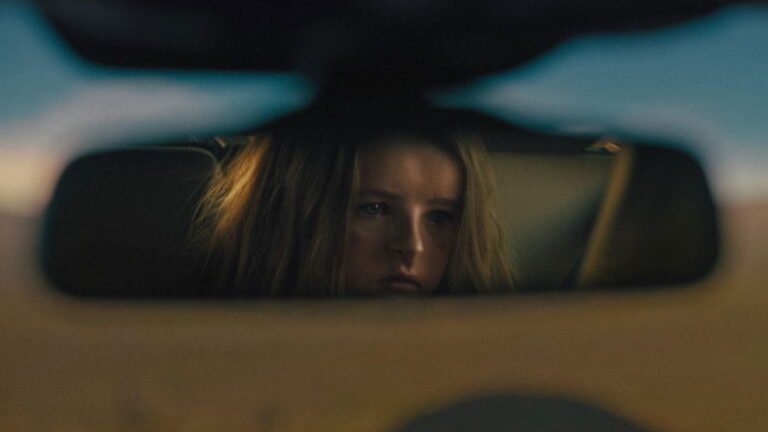
Table of Contents
- Obsession Is Really a Teen Drama About Wanting to Be Loved
- The Horror Version of Big
- The Magic Shop Tradition
- Gremlins and the Rules of a Dangerous Gift
- The Emotional World of American Pie
- Scream, The Vampire Diaries and Horror Through Young Relationships
- The Innocent Girl Becomes an Unwitting Monster
- A Strong Concept Designed for a Low Budget
- Curry Barker’s Direction Is Built Around Character Geography
- The Chair Scene Breaks the Established Order
- Bear Is Not a Traditional Hero
- The Film Understands the Difference Between Love and Possession
- Where Obsession Is Most Effective
- Where the Film Is Less Convincing
- Why Obsession Became Such a Breakout
- Final Verdict
- Learn More About Blood Star
- Watch Blood Star