Behind the Scenes
Making Blood Star
How We Shot an Independent Feature Film in 10 Days
By Lawrence Jacomelli, Writer and Director
I was 49 when we made Blood Star. I had spent more than two decades directing commercials, travelling around the world and working with extraordinary actors, cinematographers and crews, but I still had not directed a feature film.
I was determined to make one before I turned 50.
There is always a reason to postpone a film. The budget is not large enough. The cast is not attached. The schedule is too ambitious. The market is uncertain. Someone tells you to wait for a better opportunity. Eventually, Victoria and I decided that waiting had become a greater risk than making the film ourselves.
So we backed ourselves.
We did not have a studio, a major financier or a large production infrastructure behind us. We had a screenplay, years of production experience and the conviction that, with enough preparation, we could make the film at a level far beyond what its resources might suggest.
What followed was a British-American independent feature produced largely from the United Kingdom, assembled through online platforms and filmed in the desert in ten principal photography days.
Producing an American Film from the UK
Victoria and I developed and produced Blood Star from our home in the UK.
The film was set in the American Southwest and needed to feel unmistakably American, but we were thousands of miles from the locations, crew and actors who would eventually bring it to life. Instead of treating that distance as an obstacle, we built the production remotely.
We found and hired freelancers through online production platforms, including Staff Me Up. Interviews, casting discussions, location searches and production meetings took place through video calls. Crew members who had never met us in person were being asked to join an unusually ambitious independent feature led by two British filmmakers working from the other side of the Atlantic.
This required trust on both sides. We needed people who understood what we were trying to achieve, but also people capable of working independently and solving problems without the support structure of a conventional studio production.
Our line producer, department heads, local crew and cast became the physical production team on the ground. Victoria and I remained closely involved in every decision, but the film could only work if everyone understood the plan before the cameras started rolling.
Remote production did not mean reduced control. It meant that every conversation, document and creative decision had to be unusually clear.
Seeing the Entire Film Before We Shot It
The central reason we were able to make Blood Star in ten days was that I had already made the film before we arrived on set.
I storyboarded every sequence and photographed every frame of the film using actors. Those images were then edited together into a complete 70-minute animatic, with temporary dialogue, music and sound effects.
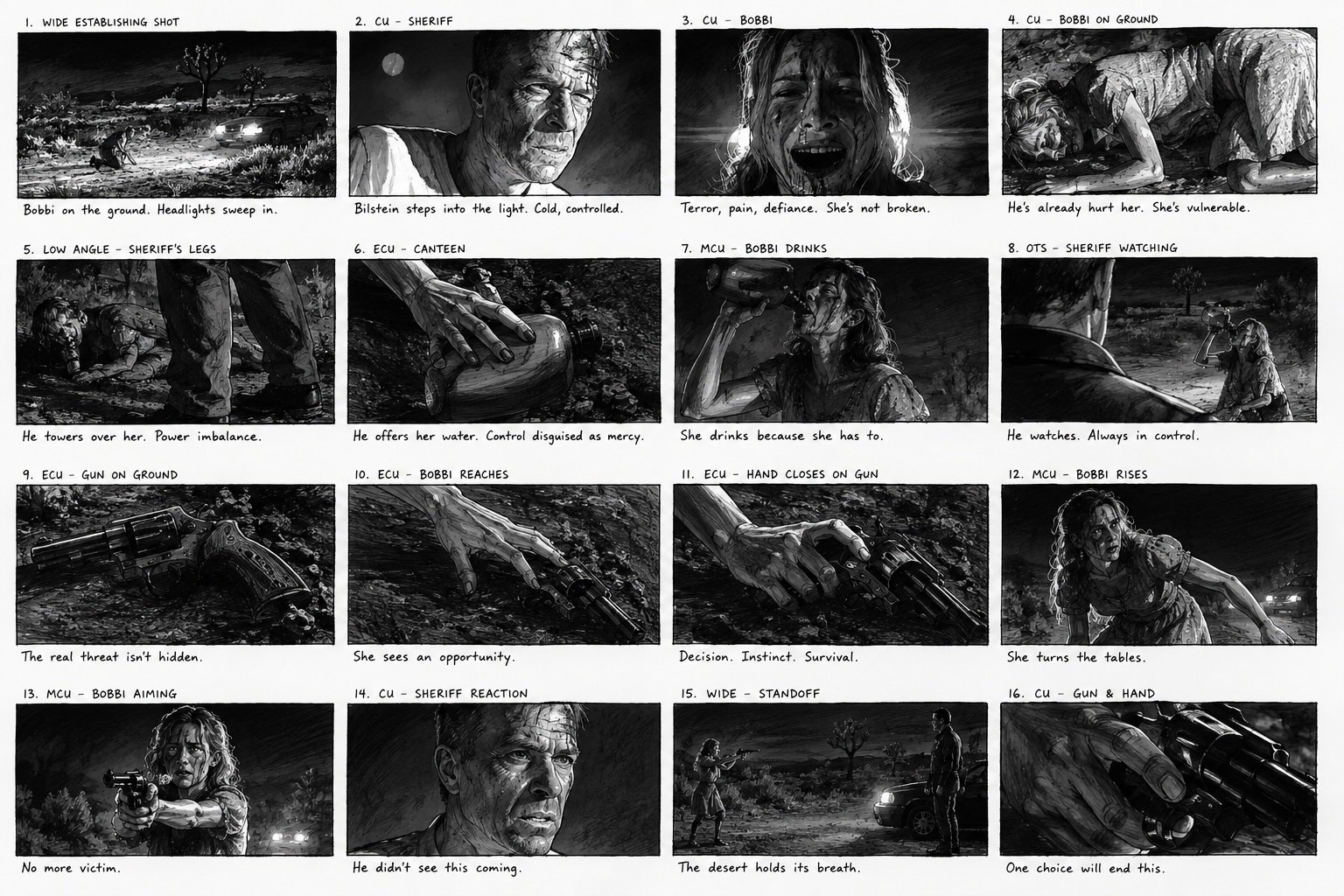
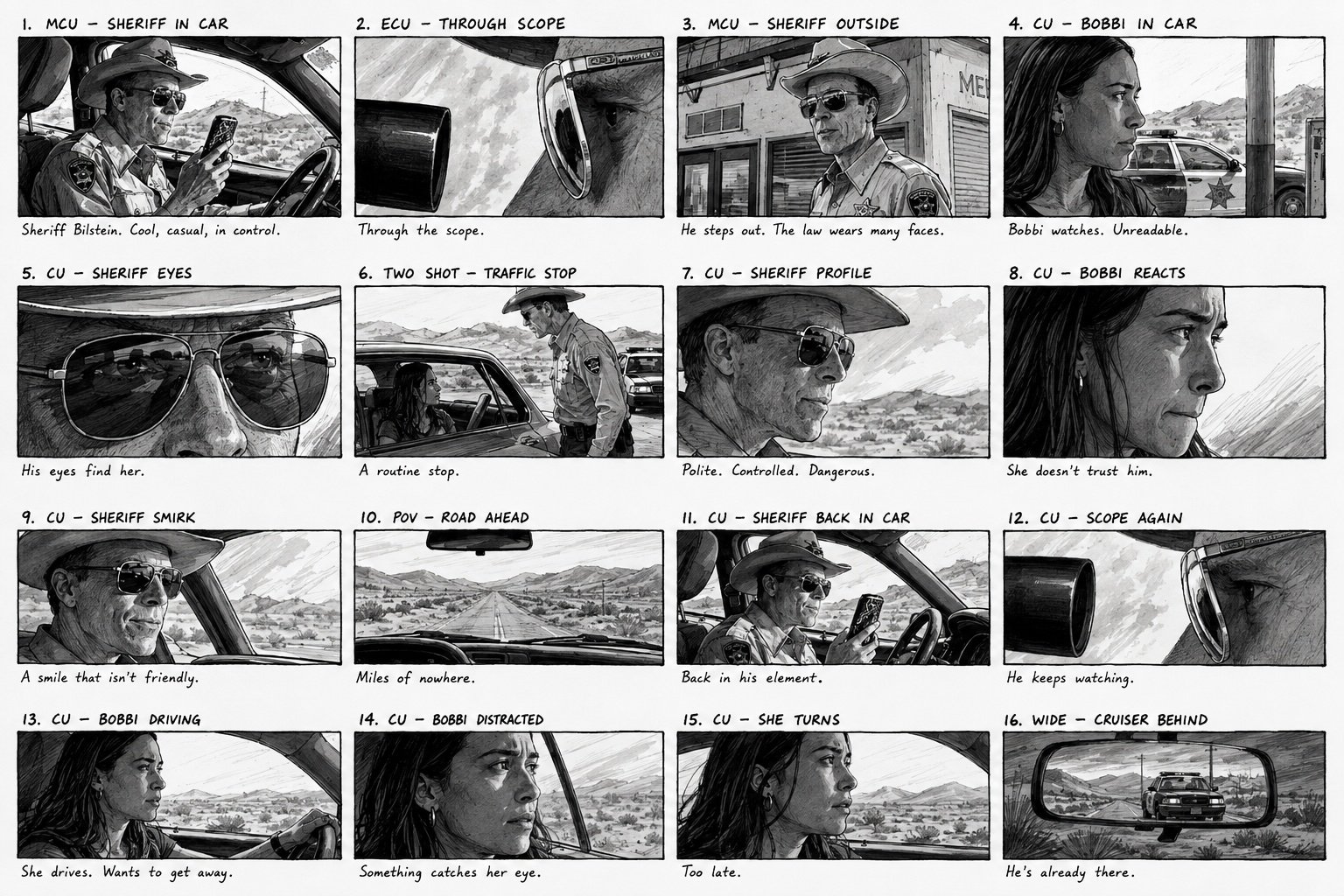
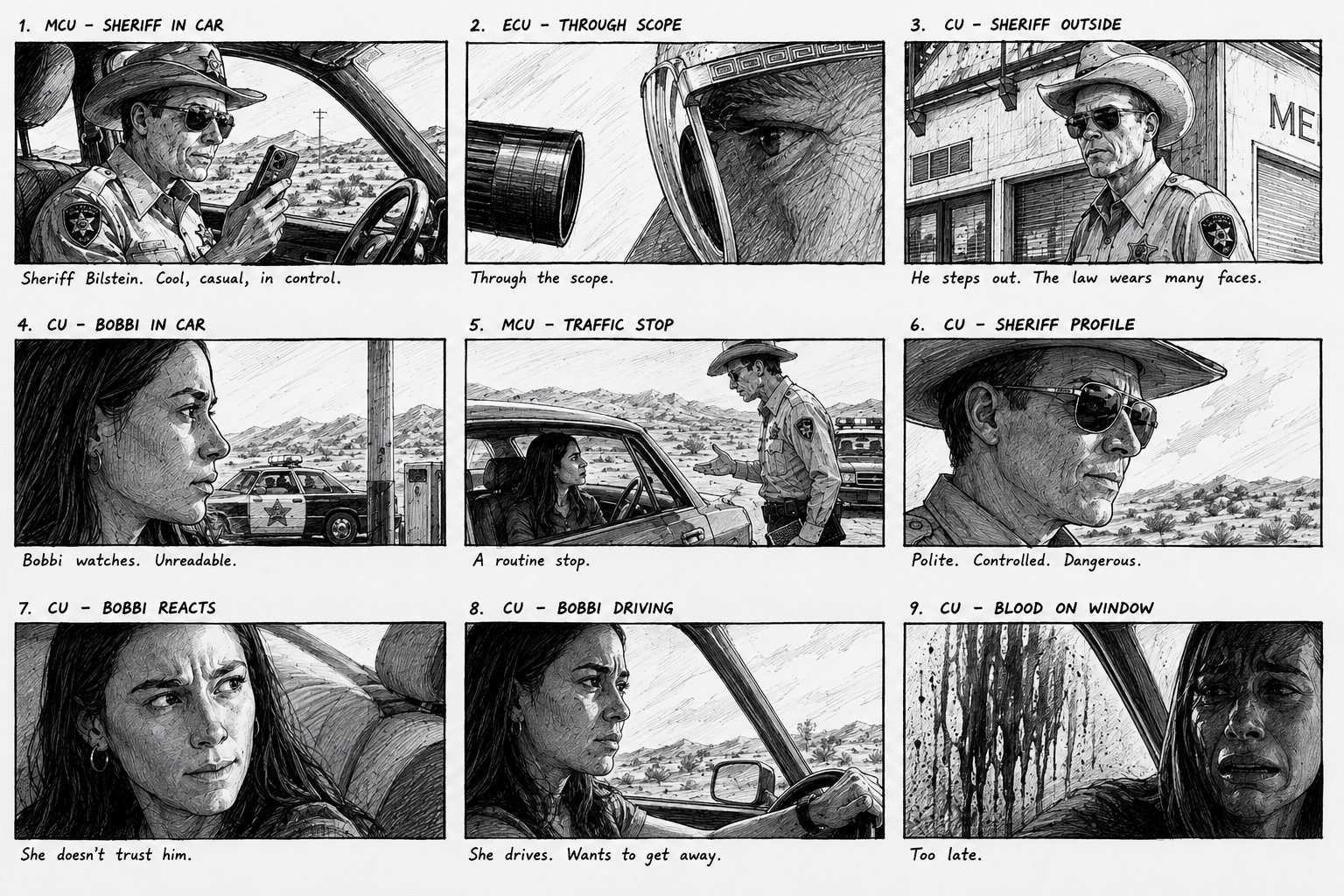
It was not simply a collection of visual references or a few storyboards for the action scenes. It was the entire film in an early form.
I could watch the story from beginning to end, assess the pace of a scene, test the visual geography and understand exactly which shots were essential. I could identify where a transition did not work, where coverage was missing and where an idea that appeared effective on the page failed when placed into a visual sequence.
The animatic allowed me to see the movie before we shot it.
That was the moment I knew a ten-day schedule was possible. It was still an enormous risk, but it was a calculated one. I knew that, provided we captured everything contained in the animatic, we would have the material required to assemble the film.
We were not going into the desert hoping to discover the movie. We were going there to execute a movie that had already been designed.
Preparation Was Our Production Value
Low-budget filmmaking is often associated with compromise, but the real danger is not having too little money. It is attempting to make a film whose fundamental design requires more resources than you possess.
We built Blood Star around a small number of principal characters, carefully selected locations and a very precise production plan. The screenplay was developed with those realities in mind.
The desert gave the film scale without requiring enormous sets or hundreds of extras. The open highways, isolated gas stations, scrapyards and roadside buildings already possessed a visual identity. Rather than attempting to manufacture production value, we placed the story inside landscapes that naturally provided it.
The limited cast also allowed us to concentrate our time and resources. Britni Camacho and John Schwab carried the central confrontation, supported by a small group of characters whose appearances moved Bobbi’s journey forward.
Every location needed to serve the story and the schedule. Every company move had to justify the time it consumed. Every camera position had to produce material that would appear on screen.
The secret was not simply working quickly. It was removing as much uncertainty as possible before the shoot began.
Ten Days in the Desert
Shooting a feature film in ten days means that there is almost no margin for indecision.
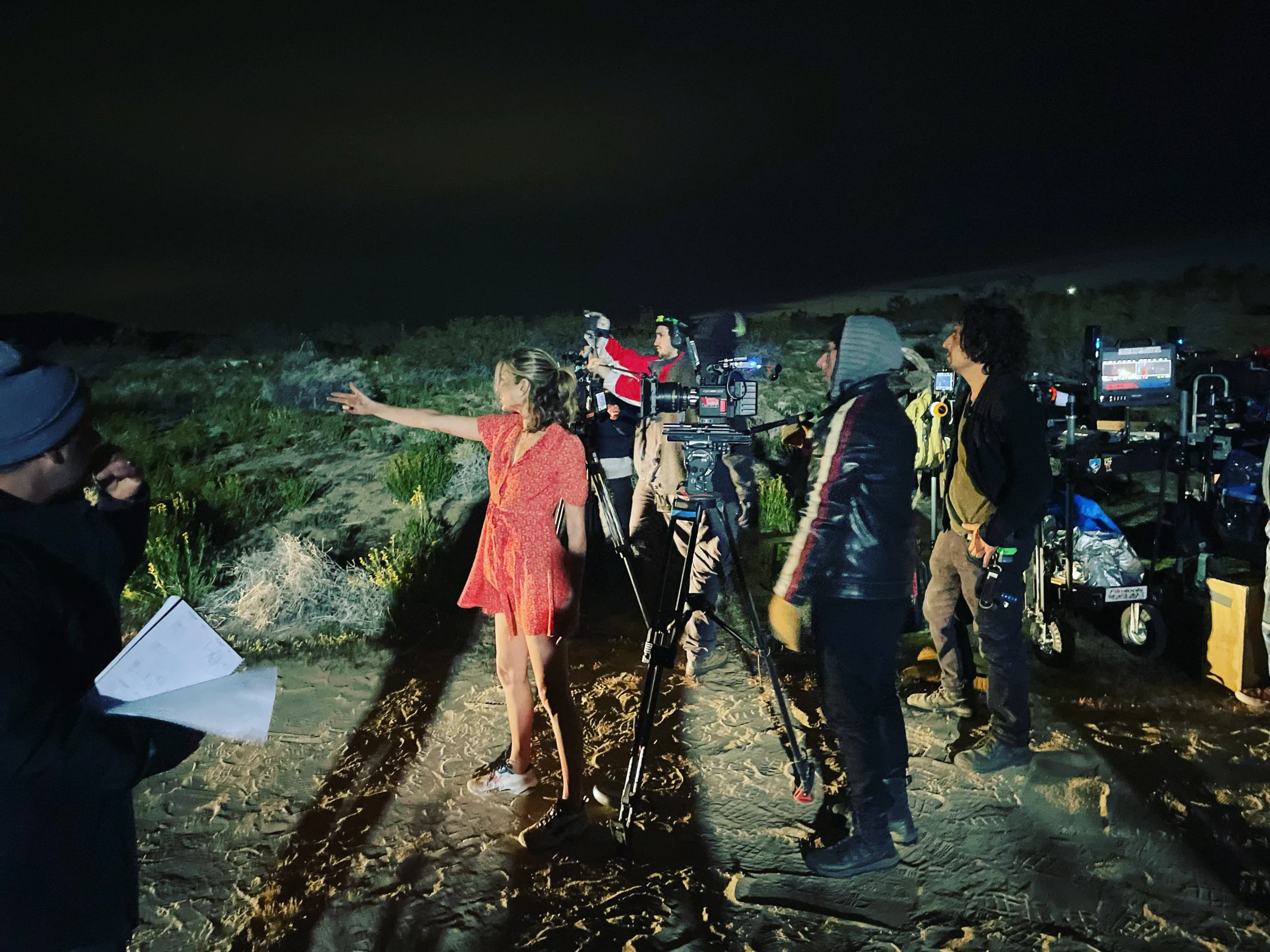
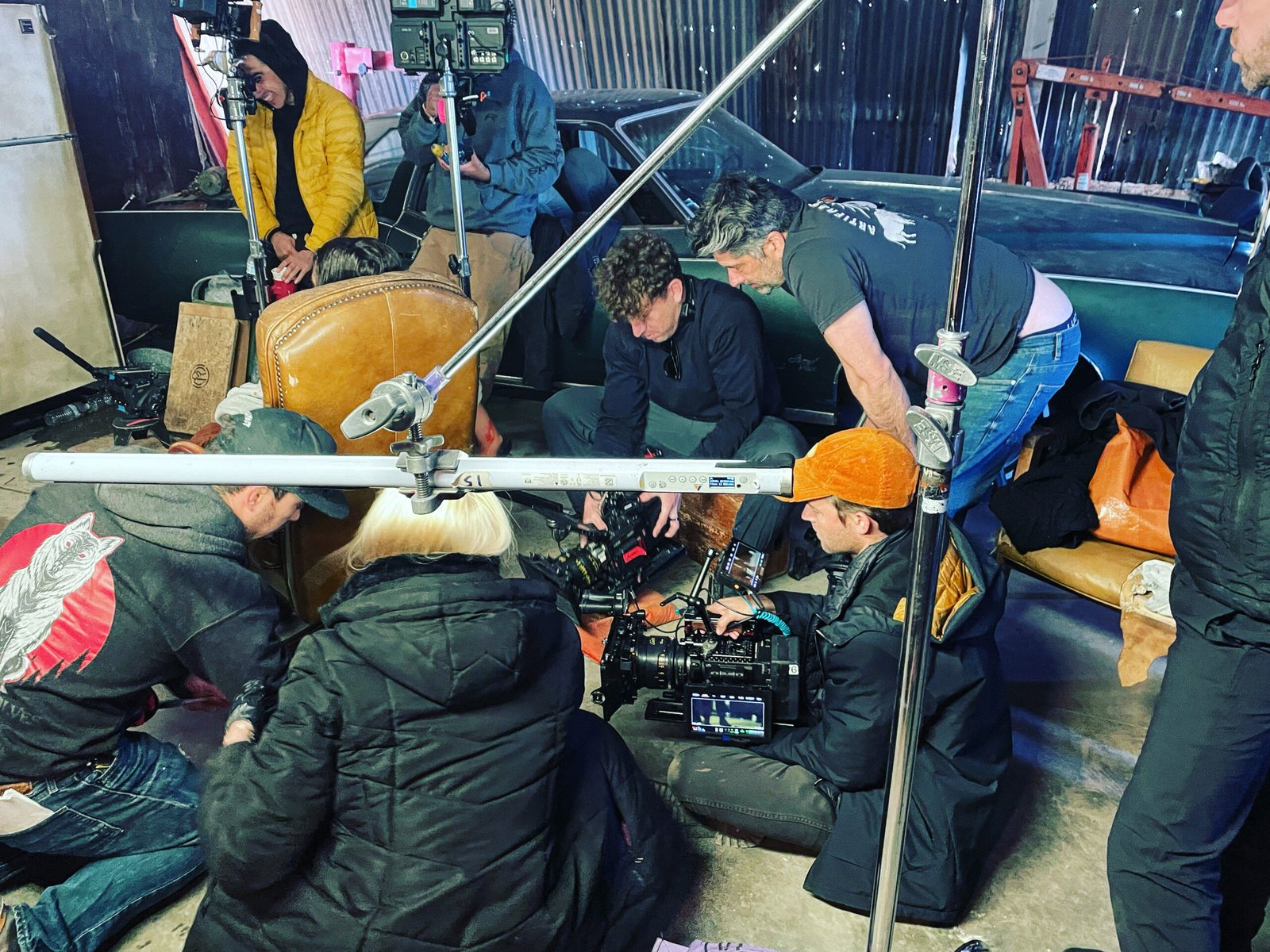
We generally worked with three cameras: two RED Geminis and a RED Komodo. They were not used simply to generate more footage. Each camera had a specific purpose within the planned sequence, allowing us to capture complementary angles and performance coverage simultaneously.
The film had been designed for this approach. I knew which lenses, compositions and movements were required, and the cinematography team knew how the different cameras would work together.
There was very little improvisation once we were on set. The opportunity for creative exploration had happened during writing, storyboarding, rehearsals and the construction of the animatic. Principal photography was about precision.
That did not mean the production was mechanical. Performances still had to feel alive, the desert constantly presented new problems and plans sometimes had to change. But we always had a visual structure to return to.
On a conventional schedule, a director might spend time exploring multiple interpretations of a scene. We did not have that luxury. We needed to arrive knowing what the scene was, why it existed and how it would be assembled.
Ten days did not make the process easier. It made preparation more important.
Working Without a Safety Net
Independent filmmaking is a succession of problems that appear capable of destroying the entire production.
Two days before filming began, the Nissan 300ZX intended to be Bobbi’s hero car suffered a transmission failure during a drone test. We were preparing to shoot a road movie without a working picture vehicle.
After hours of searching, we found a 1977 Ford Mustang II Ghia advertised late at night. We bought it almost immediately. The car that had arrived as an emergency replacement became one of the film’s defining visual elements.
It is difficult to imagine Blood Star without it now.
There were also remote locations, night shoots, extreme heat, complicated vehicle work and the logistical challenge of moving a small crew through the desert. Because the crew was lean, nobody could retreat entirely into a single job description. People stepped across departmental boundaries and solved whatever problem was immediately in front of them.
That flexibility was essential, but it only worked because the overall creative plan remained controlled.
The production may have been small, but the ambition was never small.
Making a Low-Budget Film That Does Not Look Low Budget
The phrase “low budget” is often used to explain or excuse what appears on screen. We never wanted the audience to be thinking about the limitations behind the camera.
Our objective was to make a film that felt intentional in every department: cinematography, performances, production design, costumes, sound, music and editing.
A limited budget does not necessarily create a cheap-looking film. Indecision creates a cheap-looking film. Generic locations, inadequate preparation, unnecessary coverage and a story that exceeds the production’s means will expose the budget very quickly.
Precision allows the money to remain on screen.
Recent independent horror successes have demonstrated the power of this approach. Curry Barker’s Obsession, widely celebrated as a low-budget production, was reportedly filmed over a 20-day principal photography schedule. We completed Blood Star in half that time. The comparison is not about claiming that one production was more difficult than another; every film has different demands. It demonstrates what became possible for us when the screenplay, locations, visual design and schedule were engineered as one system.
The film has the scale of a road movie, multiple vehicles, desert exteriors, night work, practical effects and a violent final act. None of that would have been achievable in ten days without the animatic and a production model built around speed from the beginning.
The finished film should not scream “shoestring”. It should simply feel like a movie.
From Commercials to a First Feature
My commercial background was fundamental to the way we approached Blood Star.
Advertising taught me how to communicate an idea visually, make decisions quickly and deliver ambitious work inside fixed budgets and schedules. It also taught me that preparation creates freedom. When the technical and logistical decisions have already been made, more attention can be given to the actors and the emotional purpose of a scene.
At the same time, a feature requires a different kind of endurance. A commercial may ask the audience to engage for 30 or 60 seconds. A feature has to maintain tension, character and visual coherence across an entire narrative.
The animatic helped bridge those two disciplines. It gave me the precision of commercial filmmaking while allowing me to consider the rhythm of the film as a complete dramatic experience.
Blood Star was my first feature, but it was not my first production. It represented the point at which everything Victoria and I had learned through years of commercial filmmaking could be redirected towards a story of our own.
Backing Ourselves
The most important decision was not choosing the cameras, finding the locations or constructing the shooting schedule.
It was deciding to stop waiting for permission.
Victoria and I had spent years developing projects, speaking with financiers and trying to assemble the conventional pieces required to make a feature. Eventually, we understood that the only way to prove we could make the film was to make it.
We accepted the financial and professional risk because the alternative was reaching another birthday with the same unrealised ambition.
I began the production at 49, determined to direct a feature before I turned 50. That deadline gave the project urgency, but it also forced clarity. We could no longer allow the ideal circumstances to become the enemy of actually making the film.
We backed the screenplay, we backed the preparation and we backed each other.
Ten days later, we had shot a feature film.
The Film Beyond the Shoot
Completing principal photography was only the beginning. The film still had to be edited, scored, mixed, graded, completed and taken into the world.
Blood Star premiered at the Neuchâtel International Fantastic Film Festival before screening at genre and international festivals including Grimmfest, the Fantasy Filmfest in Germany, Terror Molins, the Paris International Fantastic Film Festival, Splat! FilmFest and Cinequest.
The production has since been discussed by publications including British Cinematographer and MovieMaker. MovieMaker described the film as a meeting of grindhouse and arthouse, reflecting the combination of American genre cinema and controlled visual filmmaking that shaped the project from its earliest stages.
The coverage is valuable not simply because people are writing about the finished film, but because the production itself has become part of its story.
We made an American desert thriller from the UK, hired much of the team online, visualised the entire film before photography and completed the shoot in ten days.
It should not have been possible.
But we had already seen the film. We simply had to go into the desert and capture it.
Further Reading
Read More About the Making of Blood Star
British Cinematographer
A detailed look at the cinematography, camera package and visual strategy behind the ten-day desert production.
MovieMaker Magazine — “In Blood Star, Grindhouse Meets Arthouse on Desert Roads”
An interview exploring the film’s visual influences, the desert setting and Lawrence Jacomelli’s transition from commercials into feature filmmaking.
Indie Cinema Magazine — “The 10-Day Desert Shoot That Shouldn’t Have Been Possible”
A wide-ranging discussion with Lawrence Jacomelli and Victoria Taylor covering the production, casting, performances, lost hero car and challenges of the desert shoot.
Top 10 Films — “How Two UK Filmmakers Made a Serial-Killer Road Epic in 10 Days”
The story of how a British filmmaking team created an American road thriller through preparation, instinct and a highly disciplined production model.
Ten days in the desert. A film shot before it was filmed.


Full behind-the-scenes documentary coming soon — link currently opens the official trailer.