Quick Answer
The best atmospheric thrillers of 2023-2025 — Red Rooms, The Royal Hotel, Eileen, You’ll Never Find Me, Anatomy of a Fall, Love Lies Bleeding, Blood Star, Strange Darling, Oddity, Sleep, Presence and The Plague — build tension through psychology, silence and behaviour rather than action or explanation. Not all were made by A24, and their directors come from Canada, Australia, South Korea, France, Britain and the US, but all share the belief that atmosphere is storytelling, not decoration.
Key Takeaways
- These films place psychology before explanation — the audience senses something is wrong long before it can identify exactly what.
- Location is never neutral: the desert in Blood Star, the pub in The Royal Hotel, the mobile home in You’ll Never Find Me and the apartment in Sleep all actively shape the danger.
- Not every “A24-style” film is made by A24 — this list’s directors come from Canada, Australia, South Korea, France, Britain and the United States.
- Violence is usually psychological before it becomes physical, built on control, isolation, obsession and shame rather than spectacle.
- These stories resist simple moral divisions — victims can behave destructively, and threatening people can be vulnerable.
- Atmosphere is not decoration in these films. It is the storytelling itself.
The Best Atmospheric Thrillers for Fans of A24-Style Cinema
Over the past decade, “A24-style” has become a convenient description for a particular kind of independent film: visually distinctive, psychologically unsettling and more interested in atmosphere than conventional plot mechanics. Not every film fitting that description was produced or distributed by A24, but audiences increasingly use the term to identify thrillers that feel intelligent, strange, emotionally complicated and difficult to shake off.
These films do not always behave like traditional thrillers. They may contain violence, disappearances, murder investigations or supernatural threats, but suspense is rarely created through action alone. Instead, tension accumulates through uncomfortable silences, carefully controlled framing, ambiguous behaviour and the nagging suspicion that something important is being concealed.
The best atmospheric thrillers make locations feel psychologically charged. An isolated hotel, a desert highway, an unfamiliar house or an anonymous courtroom becomes more than a setting. It becomes an extension of the characters’ fears. The audience is not simply waiting to discover what happens next; it is trying to understand what kind of world it has entered.
For viewers drawn to slow-burn psychological thrillers, elevated horror, desert noir and visually driven independent cinema, these are some of the most compelling atmospheric thrillers released between 2023 and 2025.
Red Rooms (2023)
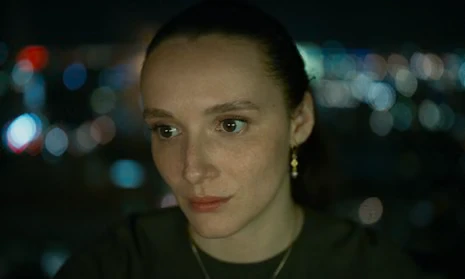
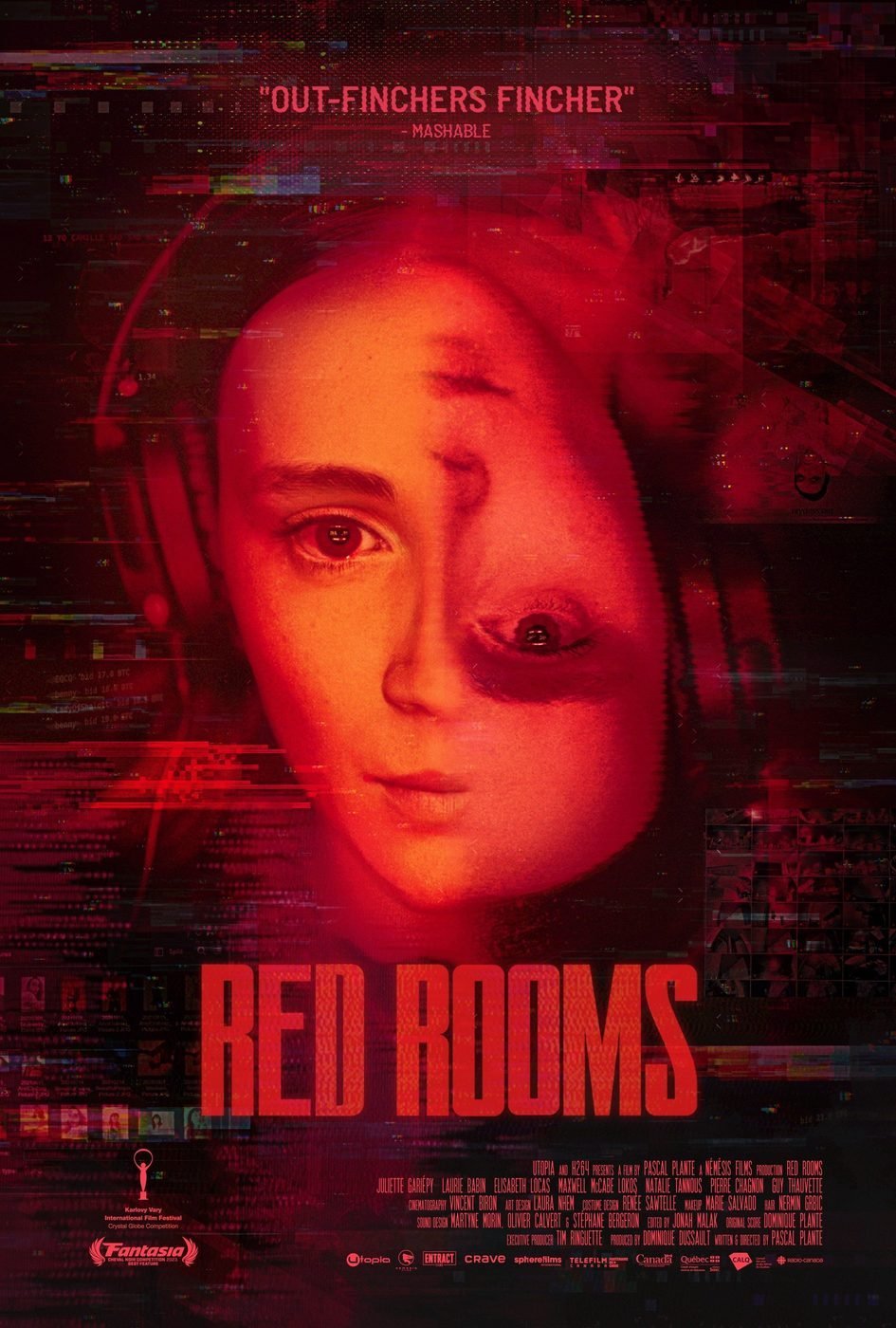
Pascal Plante‘s Red Rooms is one of the most disturbing psychological thrillers of recent years, despite refusing to show much of the violence around which its story revolves. Kelly-Anne, a fashion model with an unexplained fixation on a high-profile murder trial, spends her days sitting in court and her nights searching the darkest corners of the internet.
The film is not primarily concerned with determining whether the accused man is guilty. Its real subject is spectatorship: why people are attracted to horrific crimes, how suffering becomes entertainment and what obsession allows someone to conceal from themselves. The colder and more controlled Kelly-Anne appears, the more disturbing her behaviour becomes.
Much of the film’s tension comes from distance. Rooms are sterile, screens mediate human contact and violent acts are discussed rather than dramatised. The result is a cyber-thriller that feels clinical, alienating and morally dangerous. The BFI described the film as confronting audiences with an uncomfortable reflection of their own fascination with true crime. (BFI)
The Royal Hotel (2023)
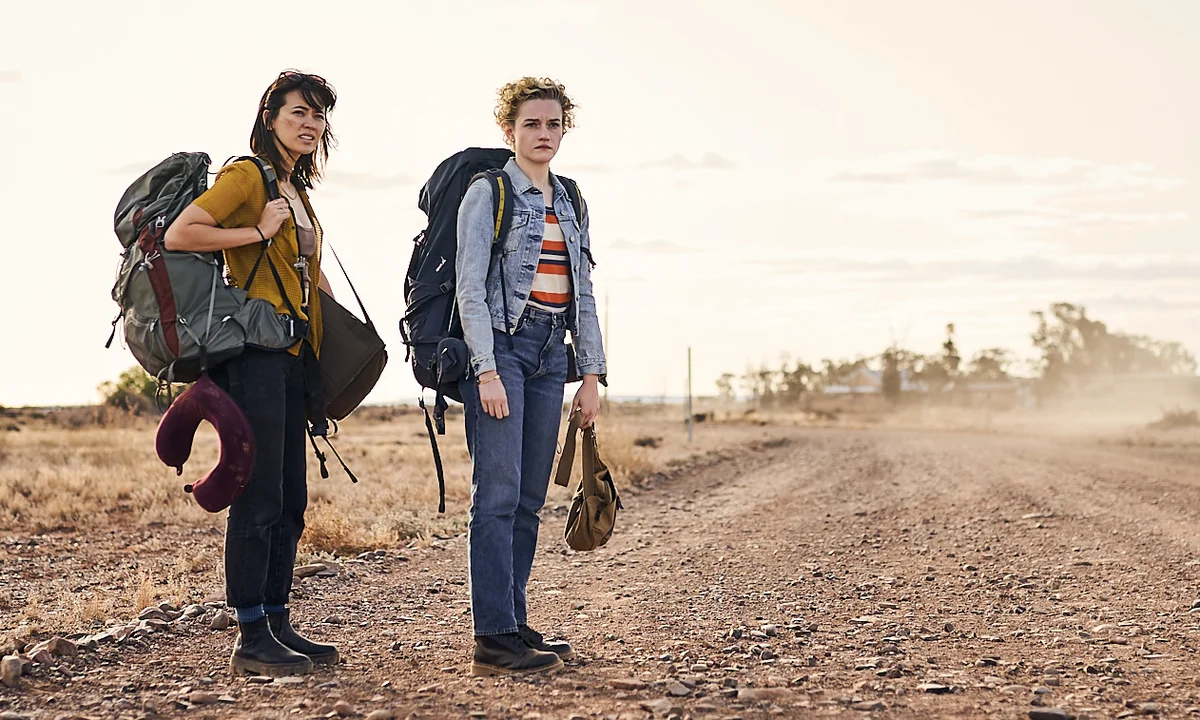
Two young backpackers take temporary jobs at a pub in a remote Australian mining town. What begins as a rough but potentially manageable working experience gradually becomes threatening as drunken jokes, unwanted attention and casual misogyny accumulate around them.
Kitty Green‘s The Royal Hotel understands that danger does not always announce itself clearly. The men surrounding the two women rarely behave like conventional movie villains. Instead, menace develops through small invasions of personal space, comments that can be dismissed as humour and situations in which the women are made to feel unreasonable for being afraid.
The film’s isolated location intensifies that vulnerability. There is no obvious escape route, social support or dependable authority. The BFI characterised it as a quiet thriller in which a backpacking adventure becomes increasingly toxic, which captures the film’s unsettling refusal to separate social discomfort from physical danger. (BFI)
This is atmospheric tension built almost entirely from behaviour. The audience recognises the danger before it can prove that the danger exists.
Eileen (2023)
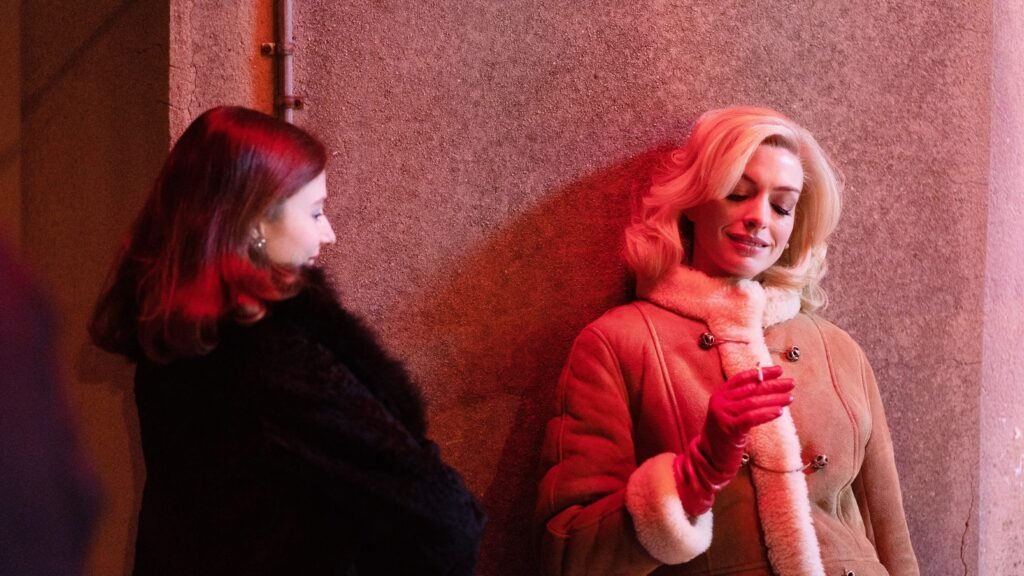
Set during a bitter Massachusetts winter in the 1960s, Eileen follows a lonely young woman working at a juvenile prison while living with her alcoholic father. Her life changes when Rebecca, a glamorous and self-assured psychologist, arrives at the institution and appears to offer an escape from Eileen’s suffocating existence.
The film initially resembles a dark character study before moving into more dangerous thriller territory. Its atmosphere is created through grim institutional corridors, dirty snow, cigarettes, suppressed desire and a constant sense of emotional confinement. Eileen’s imagination is more vivid than her reality, but it is not always clear whether that imagination is protecting her or leading her somewhere destructive.
Anne Hathaway’s Rebecca introduces colour, confidence and possibility into Eileen’s grey world. The contrast is immediately seductive, but it also makes Rebecca feel slightly unreal. As the BFI observed, her arrival cuts through the film’s oppressive atmosphere like a flash of red. (BFI)
Eileen is a reminder that atmospheric thrillers often begin with longing. The danger emerges because a character wants so desperately for another life to become possible.
You’ll Never Find Me (2023)
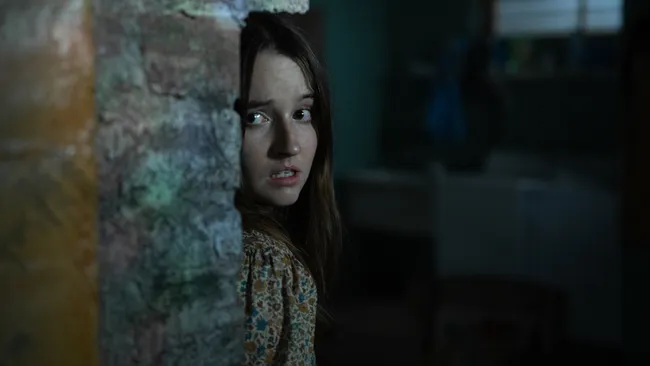
During a violent storm, a frightened young woman seeks shelter in the isolated mobile home of an older man. Neither character appears to be telling the complete truth, and the balance of power shifts repeatedly as the night continues.
Almost the entire film takes place inside one cramped location. Rain beats against the walls, the surrounding darkness feels impenetrable and every object in the room appears potentially significant. Rather than opening the story outward, directors Indianna Bell and Josiah Allen keep tightening the space around their characters.
The film’s greatest strength is its uncertainty. Is the man a predator? Is the woman manipulating him? Is the storm real, symbolic or both? The film appeared among the selections in Sight and Sound’s international poll of the best films of 2023, but it remains far less widely known than many comparable independent thrillers. (BFI)
For much of its running time, nothing is more frightening than two strangers sitting opposite one another and attempting to decide who should be afraid.
Anatomy of a Fall (2023)
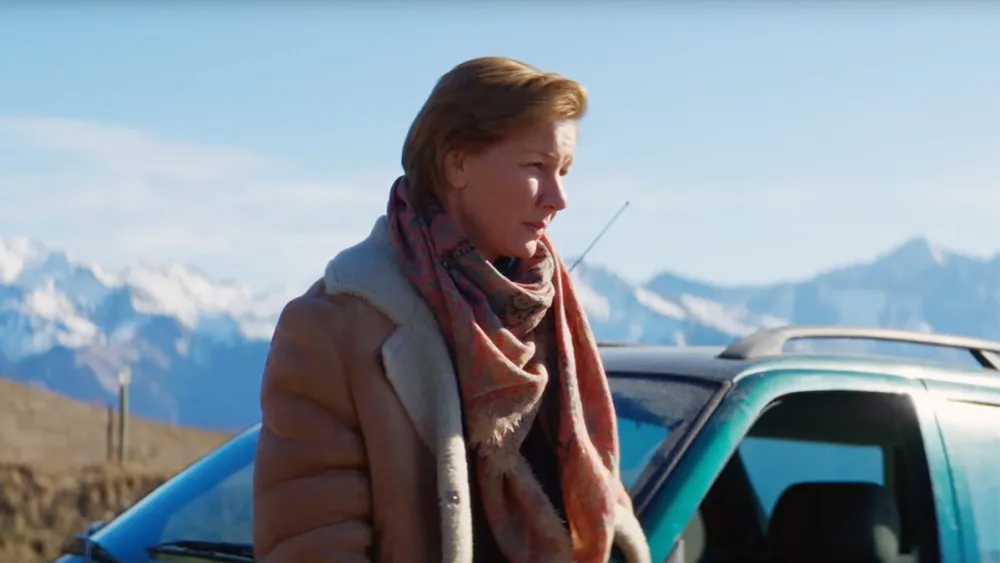
When a man falls to his death outside his isolated home in the French Alps, suspicion falls on his wife, Sandra. The resulting trial attempts to determine whether his death was an accident, suicide or murder, but the investigation gradually becomes a public dissection of the couple’s marriage.
Justine Triet‘s Palme d’Or-winning drama operates partly as a courtroom thriller, but its real mystery is whether another person can ever be fully understood. Arguments, recordings and private resentments are removed from their original context and rearranged into competing narratives. Every detail can support more than one interpretation.
The film avoids the usual rhythm of revelation followed by certainty. Instead, each new piece of evidence makes the relationship more complicated. Sight and Sound called it a sharply intelligent psychological drama and compared its emotional structure to a murder-trial version of Marriage Story. (BFI)
Its atmosphere comes from intellectual and emotional instability. The tension is not simply whether Sandra will be convicted, but whether truth can survive the process of being turned into a story.
Did You Know?
When Anatomy of a Fall won the Palme d’Or at the 2023 Cannes Film Festival, Justine Triet became only the third female director in the festival’s history to win cinema’s top prize.
Love Lies Bleeding (2024)
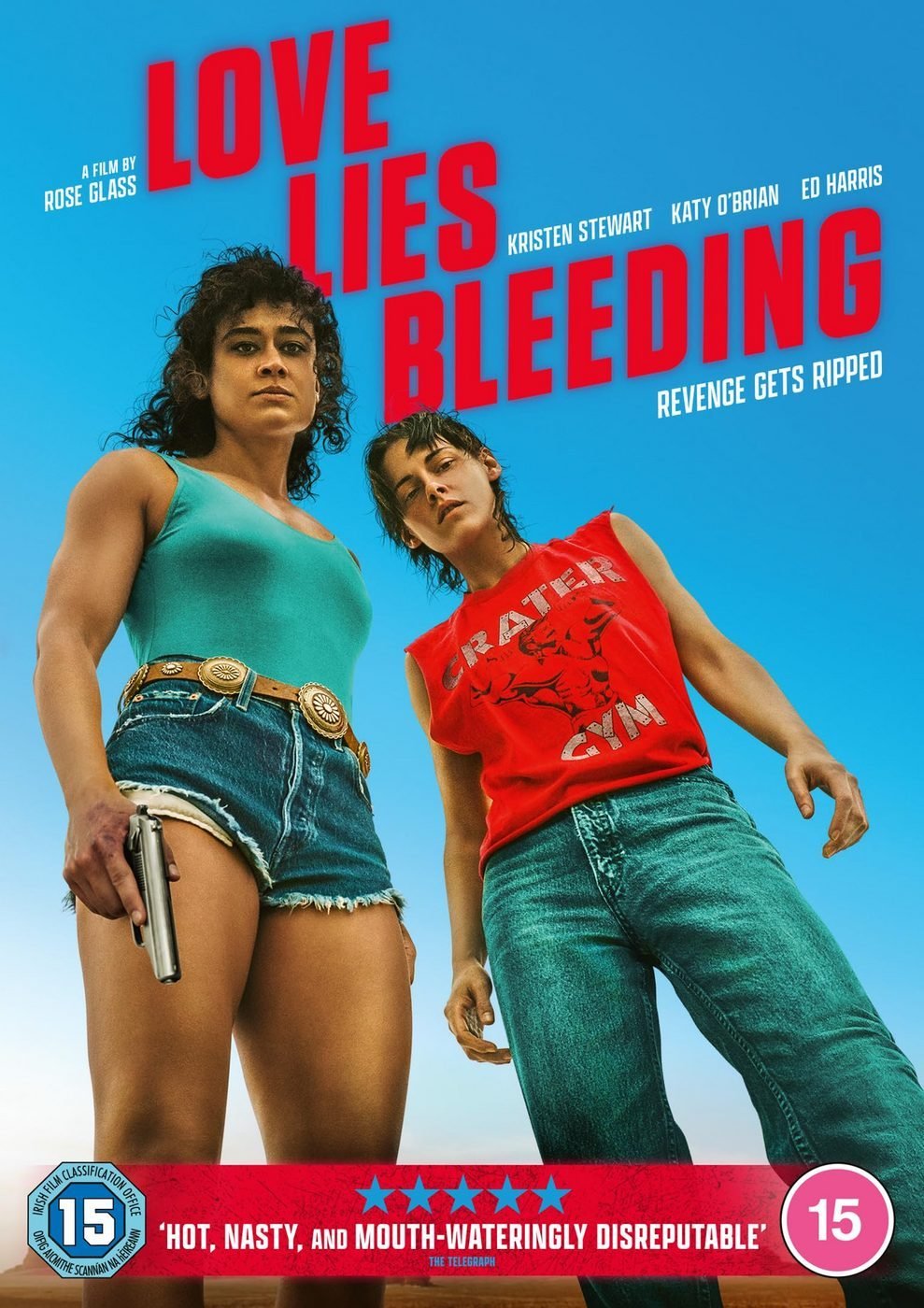
Rose Glass‘s Love Lies Bleeding combines romantic obsession, crime, body horror and desert noir. Kristen Stewart plays Lou, the manager of a run-down gym in the desert, whose relationship with ambitious bodybuilder Jackie pulls both women into the orbit of Lou’s violent criminal family.
Unlike many restrained atmospheric thrillers, this film is sweaty, muscular and explosive. Yet it shares the same commitment to psychological subjectivity. Desire transforms how the characters see themselves and eventually appears to transform physical reality.
The setting is essential. The empty roads, desert horizons, gun ranges, cheap motels and dimly lit gym create a world in which violence feels both ordinary and mythological. Sight and Sound described the film as a bodybuilding melodrama driven by passionate extremes, while its cinematography also received recognition at the 2024 British Independent Film Awards. (BFI)
It is one of the clearest recent examples of how atmosphere does not have to mean quietness. A film can be loud, romantic and physically violent while still feeling mysterious and dreamlike.
Blood Star (2024)
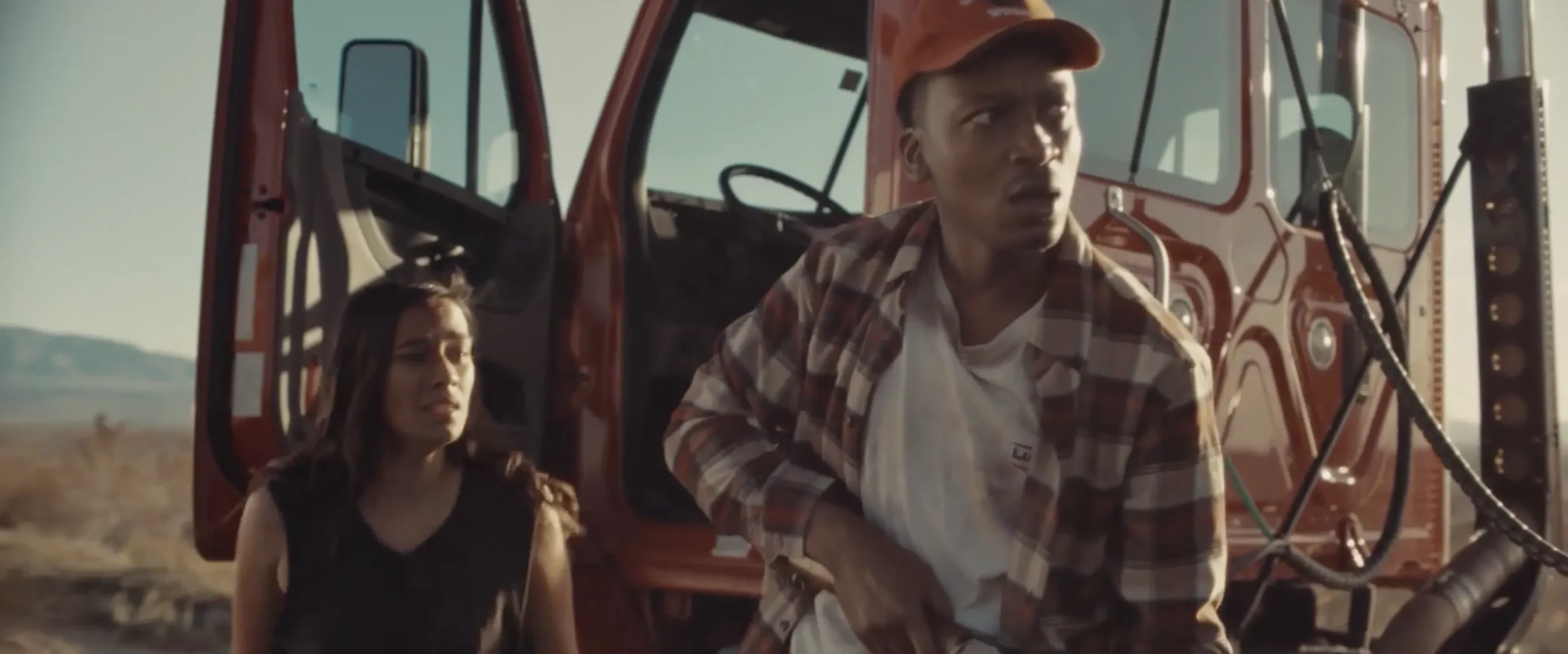
Set against the empty highways and vast desert landscapes of The Desert, Blood Star follows a young woman whose cross-country journey becomes a fight for survival after she is targeted by a small-town sheriff.
The film uses the road as both freedom and trap. Open space would normally suggest the possibility of escape, but the desert’s scale makes the protagonist appear exposed and isolated. Help may be miles away, phone coverage is uncertain and the apparent authority figure pursuing her understands the territory better than she does.
Rather than beginning with immediate violence, the threat grows through surveillance, intimidation and the sheriff’s ability to manipulate apparently ordinary encounters. The Guardian described the film as a cat-and-mouse thriller, while other reviews noted its gradual movement from crime thriller into more overt horror territory. (The Guardian)
Like Duel, The Hitcher and The Texas Chain Saw Massacre, Blood Star finds terror in the idea that the familiar rules of civilisation can disappear once a traveller is sufficiently far from home.
Strange Darling (2024)
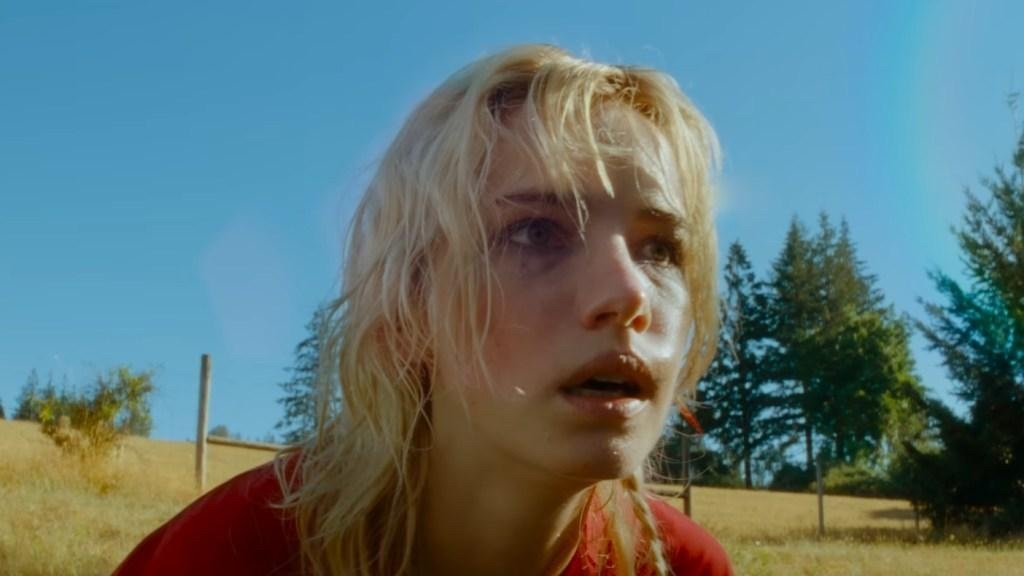
At first glance, Strange Darling appears to offer a familiar image: a terrified woman being pursued through rural America by an armed and dangerous man. The film then fractures its story into six chapters presented out of chronological order, forcing the audience to reconsider almost every assumption it makes.
The structure is not merely decorative. It demonstrates how quickly viewers construct moral narratives from familiar images. A frightened woman, a man with a gun, a motel room and a blood-stained car seem to communicate a complete story before the characters have said anything.
Director JT Mollner uses vivid 35mm cinematography, saturated colour and shifting chronology to turn a serial-killer thriller into a game of perception. Sight and Sound praised the film’s willingness to play wicked games with genre expectations. (BFI)
The film is stylish, violent and deliberately manipulative, but its real subject is the audience’s confidence in its ability to recognise innocence and guilt.
Oddity (2024)
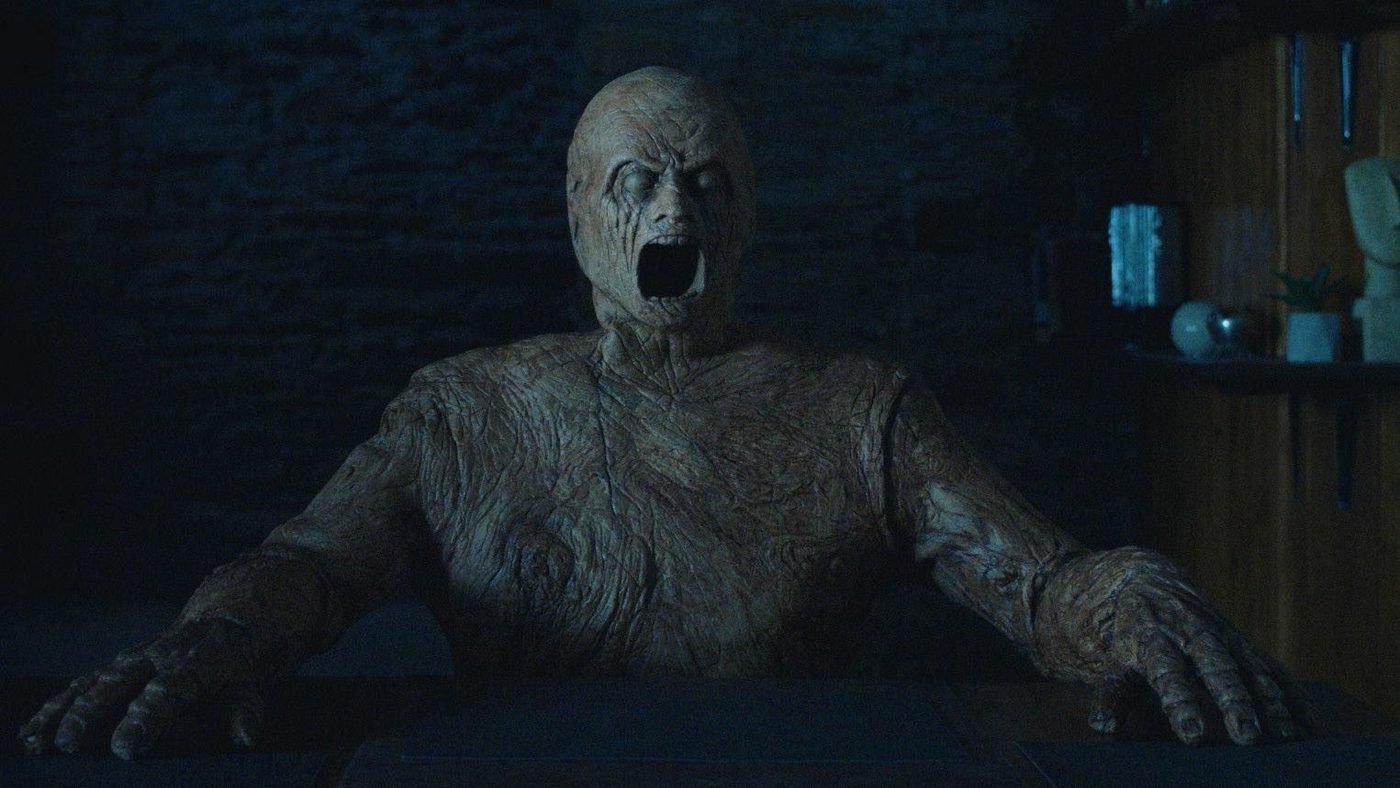
After a woman is murdered in an isolated country house, her blind twin sister arrives with a collection of supposedly supernatural objects and an unnerving wooden mannequin. What follows is a tightly controlled combination of murder mystery, ghost story and revenge thriller.
Damian McCarthy understands the dramatic power of a room. Doorways, staircases, dark corners and empty spaces are arranged so that the audience continually searches the frame for movement. The film uses relatively few locations, but each one is made to feel dangerous.
Its most memorable object, the wooden figure, is frightening partly because it does so little. The audience begins to project intention onto it, creating tension before the film needs to confirm whether it possesses any power. Sight and Sound described Oddity as a claustrophobic supernatural horror built around cursed objects and carefully engineered scares. (BFI)
It is an excellent example of atmosphere overcoming scale. The film does not require enormous sets or elaborate effects because its suspense depends on anticipation, composition and sound.
The audience begins to project intention onto it, creating tension before the film needs to confirm whether it possesses any power.
Sleep (2023/2024)
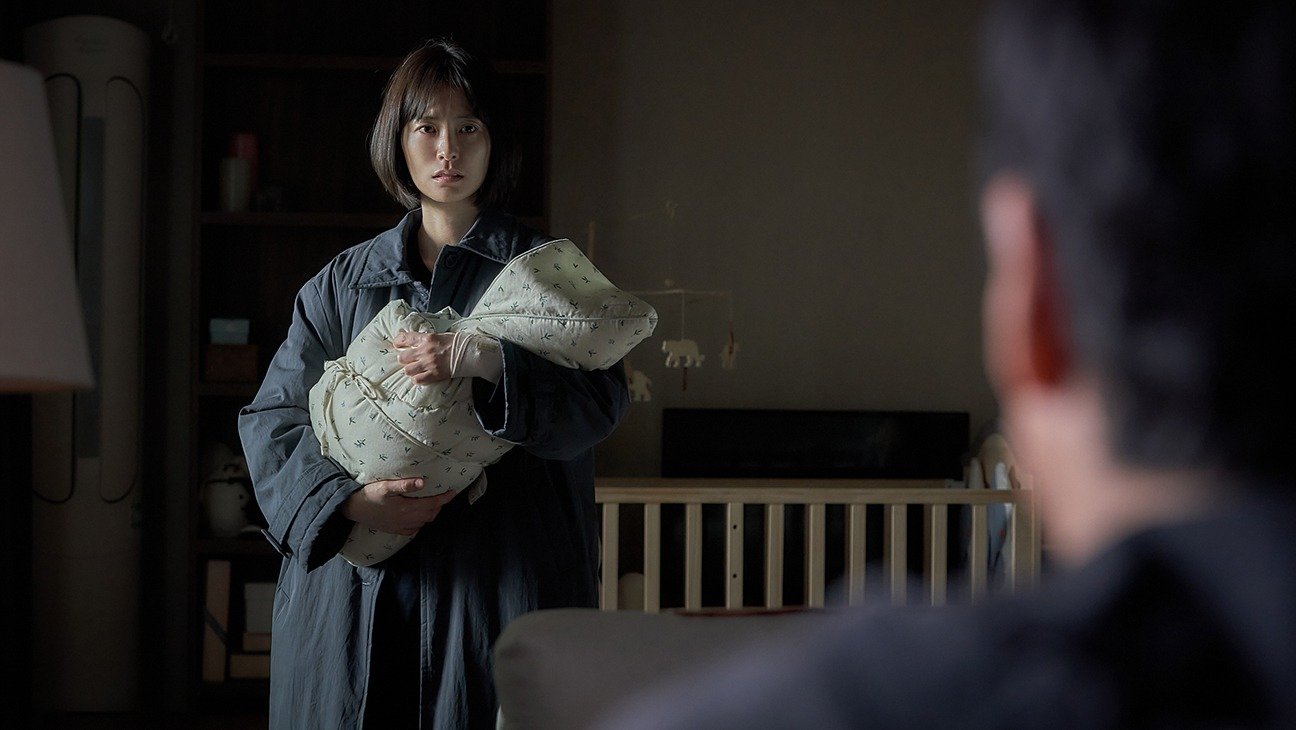
In Jason Yu‘s Korean psychological thriller Sleep, a pregnant woman becomes increasingly frightened by her husband’s disturbing behaviour while asleep. What begins with sleepwalking and cryptic speech develops into a threat that may be medical, psychological or supernatural.
The couple’s apartment is initially warm and reassuring. That familiarity is precisely what makes its transformation so effective. A bed, a refrigerator, a locked door and the sound of movement at night gradually become sources of fear.
The film repeatedly shifts the audience’s understanding of which partner is endangered and which has become dangerous. The BFI noted how the threat moves between husband and wife as the couple’s determination to remain united becomes increasingly extreme. (BFI)
Sleep finds horror inside intimacy. The person lying beside you may be someone you trust completely, yet sleep creates a state in which intention, responsibility and identity become uncertain.
Presence (2024/2025)
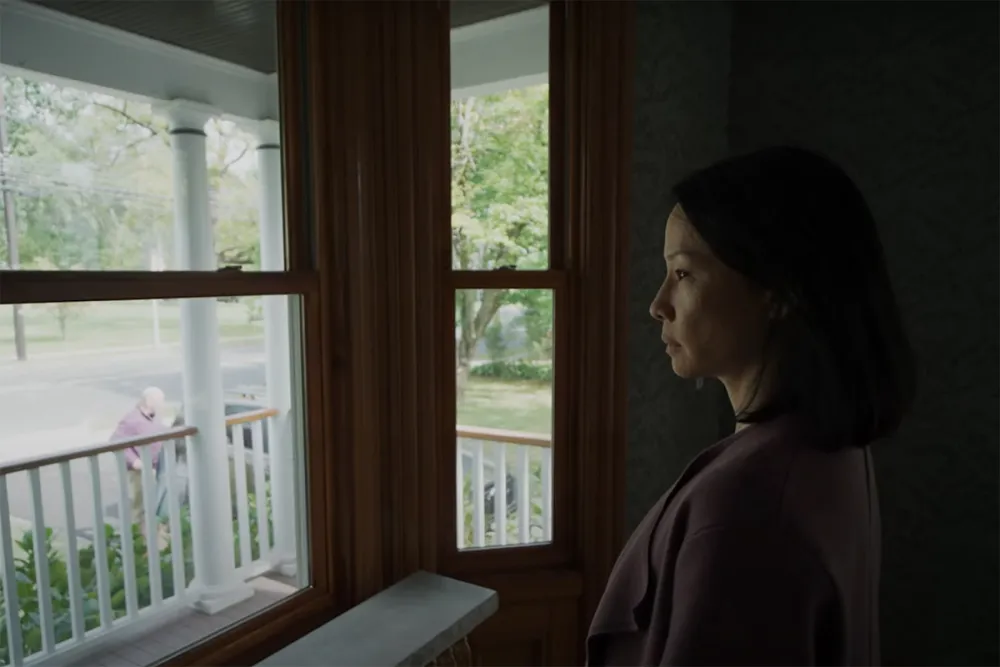
Steven Soderbergh‘s Presence presents a haunted-house story from the apparent perspective of the entity inside the house. The camera floats through rooms, watches a family arrive and gradually becomes aware of its own relationship to them.
The first-person approach could easily have felt like a technical exercise, but the film uses it to explore grief, alienation and the emotional fractures within a family. The ghostly viewpoint is both intimate and distant: it can enter private spaces but cannot easily intervene.
The BFI praised the film as one of Soderbergh’s strongest formal experiments, arguing that its family drama gives emotional weight to the supernatural premise. (BFI)
The film demonstrates a quality shared by many A24-style thrillers: a formal idea is never enough on its own. The visual strategy matters because it expresses something about the characters. Here, the hovering camera embodies the sensation of watching people you care about while being unable to reach them.
The Plague (2025)
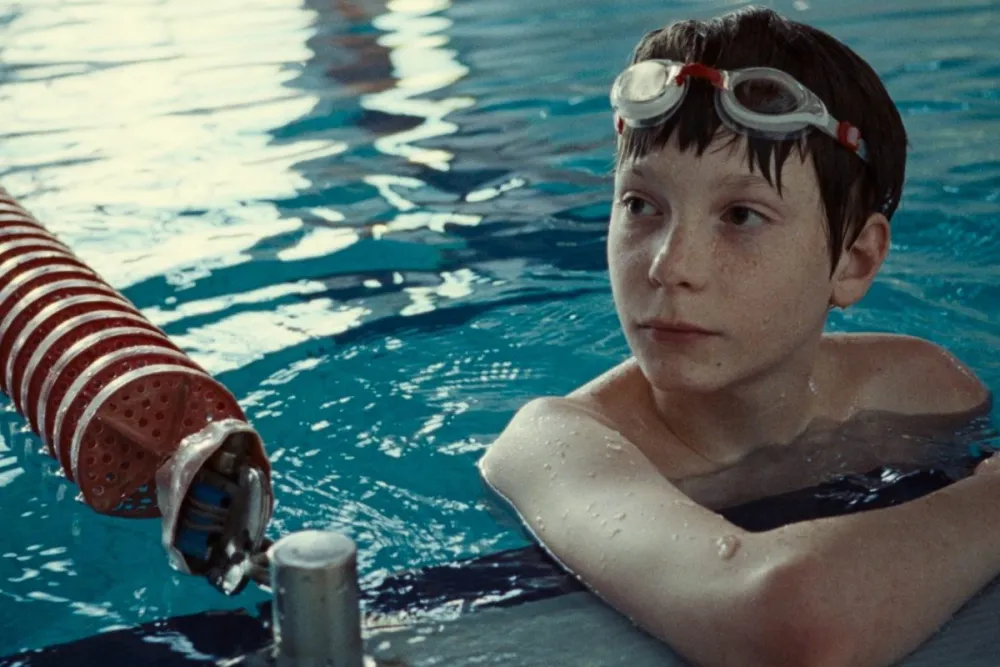
Set at a boys’ water-polo camp, Charlie Polinger‘s The Plague follows a socially anxious twelve-year-old attempting to understand the brutal hierarchy governing the other children. A supposed illness spreading through the group becomes inseparable from bullying, humiliation and the fear of exclusion.
The film treats childhood social behaviour with the seriousness of psychological horror. Rituals that may appear trivial to adults become overwhelming within the closed world of the camp. The threat is not a conventional monster but a group’s ability to decide that one child is contaminated, inferior or no longer human.
The film’s premise places physical vulnerability, masculinity and social performance under intense pressure. Its limited environment allows minor gestures, glances and changes in group behaviour to become terrifying. (Wikipedia)
Like the best atmospheric thrillers, The Plague transforms an ordinary institution into a complete moral universe with rules that are understood by everyone except the outsider.
What Do These Atmospheric Thrillers Have in Common?
These films vary enormously in subject and style. Some are murder mysteries, some are relationship dramas, some approach horror and others remain grounded in recognisable reality. What connects them is not a particular colour grade, aspect ratio or production company. It is a shared method of creating tension.
First, they place psychology before explanation. The audience is often given enough information to feel that something is wrong but not enough to identify exactly what it is. Characters may behave irrationally, withhold important facts or misunderstand their own motivations. The resulting uncertainty forces viewers to remain actively involved.
Second, their locations are never neutral. The desert in Blood Star, the pub in The Royal Hotel, the mobile home in You’ll Never Find Me, the apartment in Sleep and the courtroom in Anatomy of a Fall all shape the behaviour of the people trapped inside them. Atmosphere emerges from the relationship between character and environment.
Third, these films trust silence. Dialogue may be important, but so are pauses, distant sounds, empty frames and moments in which the audience is allowed to anticipate danger. A conventional thriller may use music or editing to announce that something is about to happen. An atmospheric thriller often makes the audience wonder whether it has already happened without being noticed.
Fourth, violence is usually psychological before it becomes physical. Control, isolation, obsession, shame and social intimidation create the foundation. When violence eventually arrives, it feels like the expression of something that has been developing throughout the film rather than an isolated piece of spectacle.
Finally, these stories resist simple moral divisions. Victims can behave destructively. Apparently threatening people may be vulnerable. Love can become possessive, protection can become imprisonment and curiosity can become complicity. The audience is rarely permitted the comfort of standing completely outside the characters’ moral world.
How to Spot One
Look past the marketing and ask: does the trailer sell you a concept and a mood, or a plot? Atmospheric thrillers tend to advertise a feeling and a striking image rather than a synopsis — if you can’t tell exactly what happens from the trailer, that’s usually a good sign, not a red flag.
Is “A24-Style” Still a Useful Description?
The phrase remains useful as a search term because audiences understand what it suggests: independent filmmaking, carefully constructed images, emotional discomfort, ambiguity and slow-building tension. However, it can also obscure the range of filmmakers and national cinemas producing this kind of work.
Several of the films on this list were not made by A24 at all. Their directors come from Canada, Australia, South Korea, France, Britain and the United States. Their budgets and production methods vary widely.
What they share is a belief that atmosphere is not decoration. It is storytelling.
What they share is a belief that atmosphere is not decoration. It is storytelling.
A truly atmospheric thriller does not simply photograph an attractive location and add ominous music. Every creative choice must contribute to the audience’s emotional position: the distance of the camera, the texture of the sound, the amount of information withheld and the precise moment at which a character realises that a situation has changed.
That is why these films linger. Their mysteries are not always solved when the plot ends. The fear remains attached to the places, images and sensations through which the story was experienced.
For fans of A24-style cinema, that lingering uncertainty is not a flaw. It is exactly what they came to find.
Frequently Asked Questions
It describes a method rather than a studio: visually distinctive, psychologically unsettling films that prioritise atmosphere over conventional plot mechanics. Several films widely described this way — including The Royal Hotel, You’ll Never Find Me and Sleep — weren’t made or distributed by A24 at all.
Yes. Blood Star uses the same core method — a psychologically charged location (the desert), a threat that grows through intimidation rather than immediate violence, and tension built from behaviour rather than spectacle — placing it alongside Red Rooms, The Royal Hotel and the other films on this list.
Oddity is one of the most accessible — it’s a tightly constructed ghost story that doesn’t require patience with ambiguity the way Red Rooms or Anatomy of a Fall do, while still delivering the genre’s atmosphere-first approach.
Not usually in a graphic sense. Violence in these films is typically psychological before it becomes physical — built on control, isolation and obsession — so when violence does arrive, it register as the culmination of tension rather than shock spectacle.
Sleep is less interested in the sleepwalking itself than in what it does to trust between a married couple — the film keeps shifting which partner the audience should be afraid for, rather than treating the sleepwalker as a simple monster.
Learn More About Blood Star
If you’re interested in how independent filmmakers create ambitious thrillers on limited budgets, you can explore more about Blood Star, including its cast, production and behind-the-scenes story.
If you’d like to watch the film, visit the Blood Star Watch Page to see where it’s currently available to stream or purchase.
Related guides
More on Blood Star
- Watch Blood Star free on Tubi & Prime Video (USA)
- Blood Star: Ending Explained
- Blood Star — Cast & Filmmakers
Watch Blood Star
Blood Star is a psychological desert road thriller about Bobbi Torres, a young woman travelling alone across the American Southwest who becomes the target of Sheriff Bilstein, a predatory lawman whose badge, patrol car and knowledge of the territory allow him to control the hunt.


See every legitimate way to watch Blood Star free →
Table of Contents
- The Best Atmospheric Thrillers for Fans of A24-Style Cinema
- Red Rooms (2023)
- The Royal Hotel (2023)
- Eileen (2023)
- You’ll Never Find Me (2023)
- Anatomy of a Fall (2023)
- Love Lies Bleeding (2024)
- Blood Star (2024)
- Strange Darling (2024)
- Oddity (2024)
- Sleep (2023/2024)
- Presence (2024/2025)
- The Plague (2025)
- What Do These Atmospheric Thrillers Have in Common?
- Is “A24-Style” Still a Useful Description?
- Learn More About Blood Star
- Related guides
- More on Blood Star
- Watch Blood Star