Quick Answer
Original, director-led horror and thriller films — Longlegs, The Substance, Weapons, Backrooms and Obsession — are proving that audiences aren’t tired of cinemas, just tired of predictability. These films sell mystery and authorship rather than franchise recognition, and they range from microbudget festival breakouts to studio-backed wide releases. Blood Star follows the same underlying logic on a far smaller scale: a clear, high-concept premise executed with total creative intention rather than spectacle.
Key Takeaways
- Original, director-led genre films are outperforming expectations at the box office — audiences aren’t rejecting cinemas, they’re becoming more selective about what deserves a theatrical visit.
- Longlegs, The Substance, Weapons, Backrooms and Obsession differ enormously in budget and distributor, but share the same proposition: a bold concept and a distinctive authorial voice rather than a franchise.
- A24 and Neon have made distinctiveness itself a commercial brand — their name now functions almost like a curatorial recommendation.
- Weapons shows the same arthouse sensibility can now operate at full studio scale and budget.
- Slow pacing and performance-driven intensity are proving just as commercially powerful as visual-effects-driven scale.
- Blood Star, on a far smaller budget, follows the same core principle: concentrate every resource on the elements that actually reach the screen.
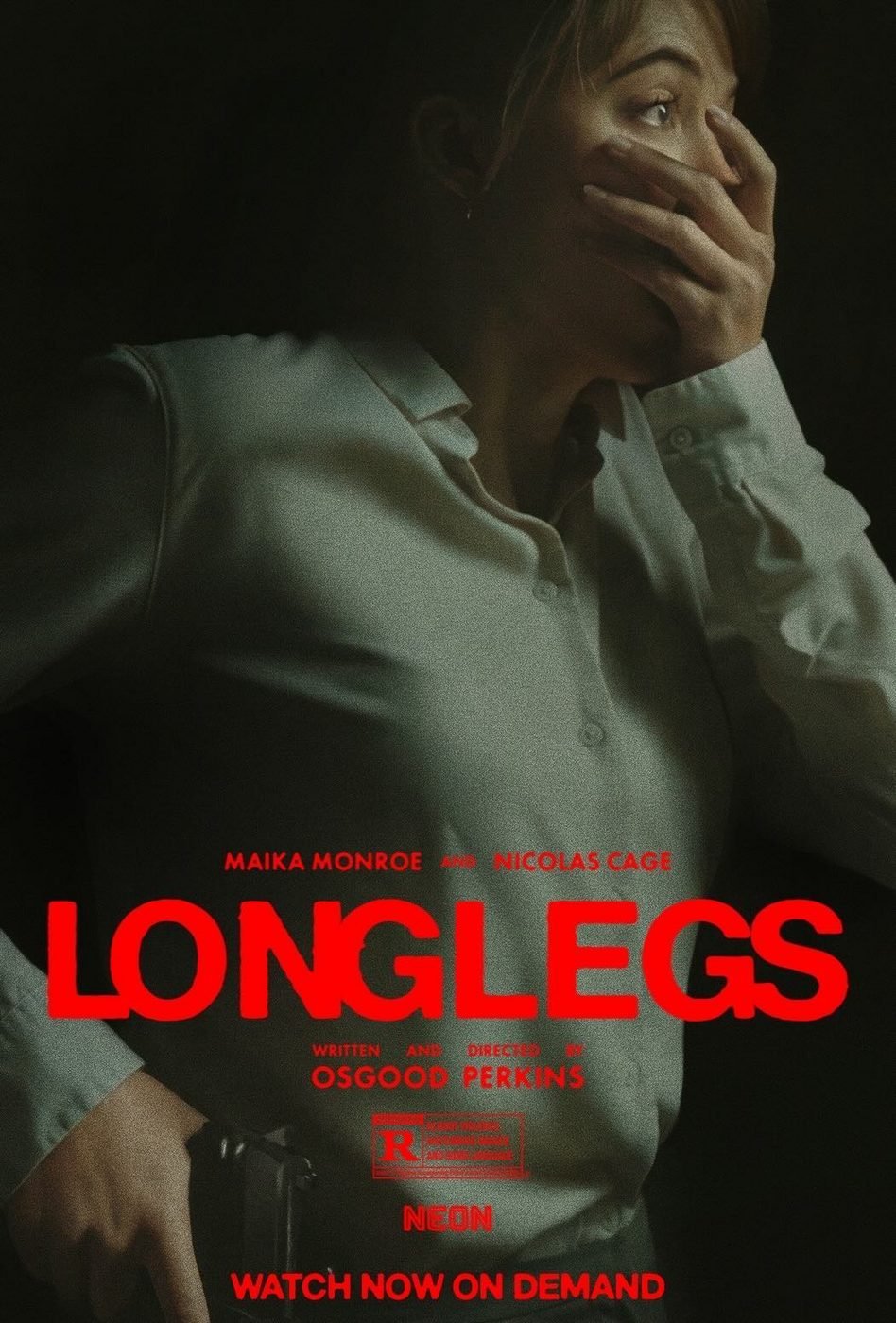
The Rise of Commercial Arthouse Cinema: Why Audiences Are Returning to Original Films
For several years, the film industry appeared to have accepted a troubling assumption: audiences were losing interest in cinemas.
Streaming had changed viewing habits, superhero franchises dominated release calendars and studios increasingly concentrated their resources on sequels, remakes and recognisable intellectual property. When an expensive franchise film underperformed, the conclusion was often that viewers had become reluctant to leave their homes.
Recent horror and thriller successes suggest something different.
Audiences have not rejected cinemas. They have become more selective about what deserves the expense, time and commitment of a theatrical visit. Increasingly, they are responding to films that offer something difficult to reproduce through passive home viewing: a bold concept, a distinctive filmmaker, an unsettling atmosphere and the feeling of discovering something genuinely new alongside an audience.
Films such as Longlegs, The Substance, Weapons, Backrooms and Obsession differ enormously in budget and distribution. Some were released by independent companies, while others were backed by major studios. What connects them is not a corporate category but a creative proposition.
They are original, director-led genre films marketed around an idea rather than a franchise.
They occupy the increasingly valuable space between the traditional arthouse film and the conventional studio blockbuster. They are visually authored, psychologically unusual and often formally ambitious, but they are also designed to entertain large audiences.
This is commercial arthouse cinema, and it is becoming one of the most important areas of contemporary filmmaking.
Audiences Are Not Tired of Cinema
The decline of individual franchises has sometimes been interpreted as evidence of a wider decline in theatrical moviegoing. That interpretation overlooks a more complicated change in audience behaviour.
For much of the previous decade, major studios trained audiences to expect scale above all else. The biggest theatrical releases were sold through visual effects, familiar characters and their relationship to an existing cinematic universe. Viewers were encouraged to attend because the film represented the next chapter in a continuing global event.
That model worked extraordinarily well until repetition became one of its central weaknesses.
The more films relied upon familiar characters, interconnected storylines and similar visual climaxes, the less each new release felt like an event in its own right. Viewers who had once attended automatically began asking whether the next instalment was truly necessary.
At the same time, television and streaming became increasingly cinematic. A film could no longer justify a theatrical ticket simply by looking expensive. Audiences could find polished photography, large-scale visual effects and recognisable actors without leaving home.
Theatrical cinema therefore needed to offer something beyond production value.
Original horror and thrillers began filling that gap. These films promised uncertainty. Audiences could not predict the entire experience from the title, trailer or knowledge of a previous instalment. The possibility of surprise became part of the attraction.
The success of recent original genre films does not prove that franchises have disappeared or that audiences no longer enjoy spectacle. It demonstrates that theatrical appetite remains strong when viewers believe a film offers a distinctive experience.
Longlegs and the Power of Creating an Event
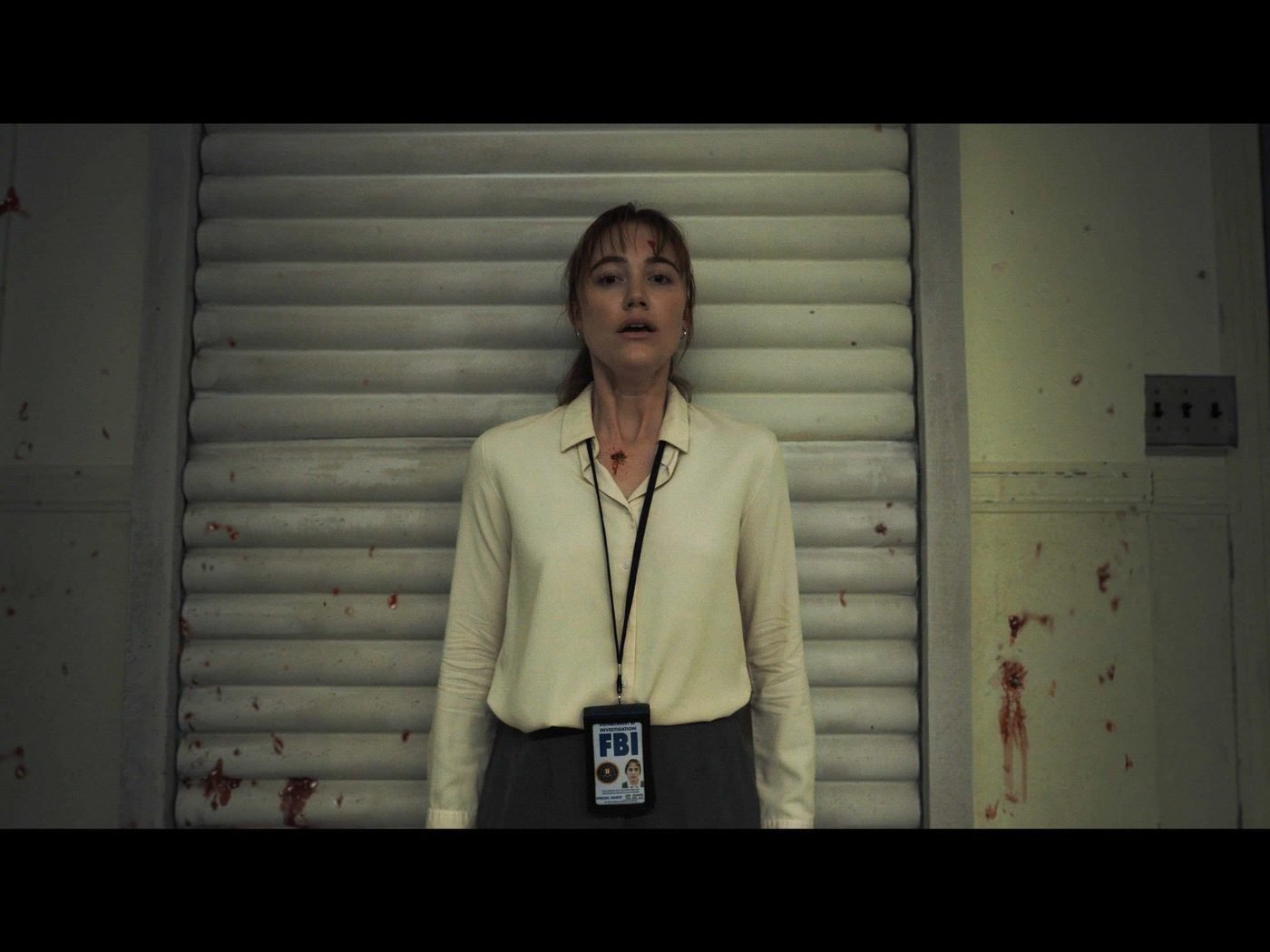
Osgood Perkins‘s Longlegs became one of the clearest demonstrations of how an independent distributor could turn an unusual horror film into a genuine theatrical event.
The film did not belong to an existing franchise. Its director was respected within horror circles but was not a mainstream household name. Although Nicolas Cage provided recognisable star power, the marketing initially concealed more than it revealed.
Neon built the campaign around fragments: coded messages, disturbing images, cryptic teasers and the suggestion of something too unsettling to show directly. The audience was invited to investigate the film before being given a complete explanation of it.
That strategy made mystery part of the product.
Longlegs opened in North America with approximately $22.6 million, the largest opening weekend in Neon’s history at that point. It eventually earned more than $74 million domestically, demonstrating that a slow, visually controlled serial-killer film could compete far beyond the traditional arthouse market. (Deadline)
Did You Know?
Part of the Longlegs campaign was a billboard in Los Angeles listing a phone number that, when called, played a recorded message from Nicolas Cage in character as the killer. The number reportedly received more than 930,000 calls.
The significance of Longlegs was not simply that it made money. Horror films have produced profitable surprises for decades. What mattered was the kind of film audiences turned into a hit.
It was atmospheric, ambiguous and authored. It trusted stillness, disturbing sound design and carefully composed images. It did not simplify itself into a conventional multiplex thriller in order to reach a wider audience.
Neon sold the film’s strangeness rather than apologising for it.
The Substance Turned Body Horror Into a Theatrical Spectacle
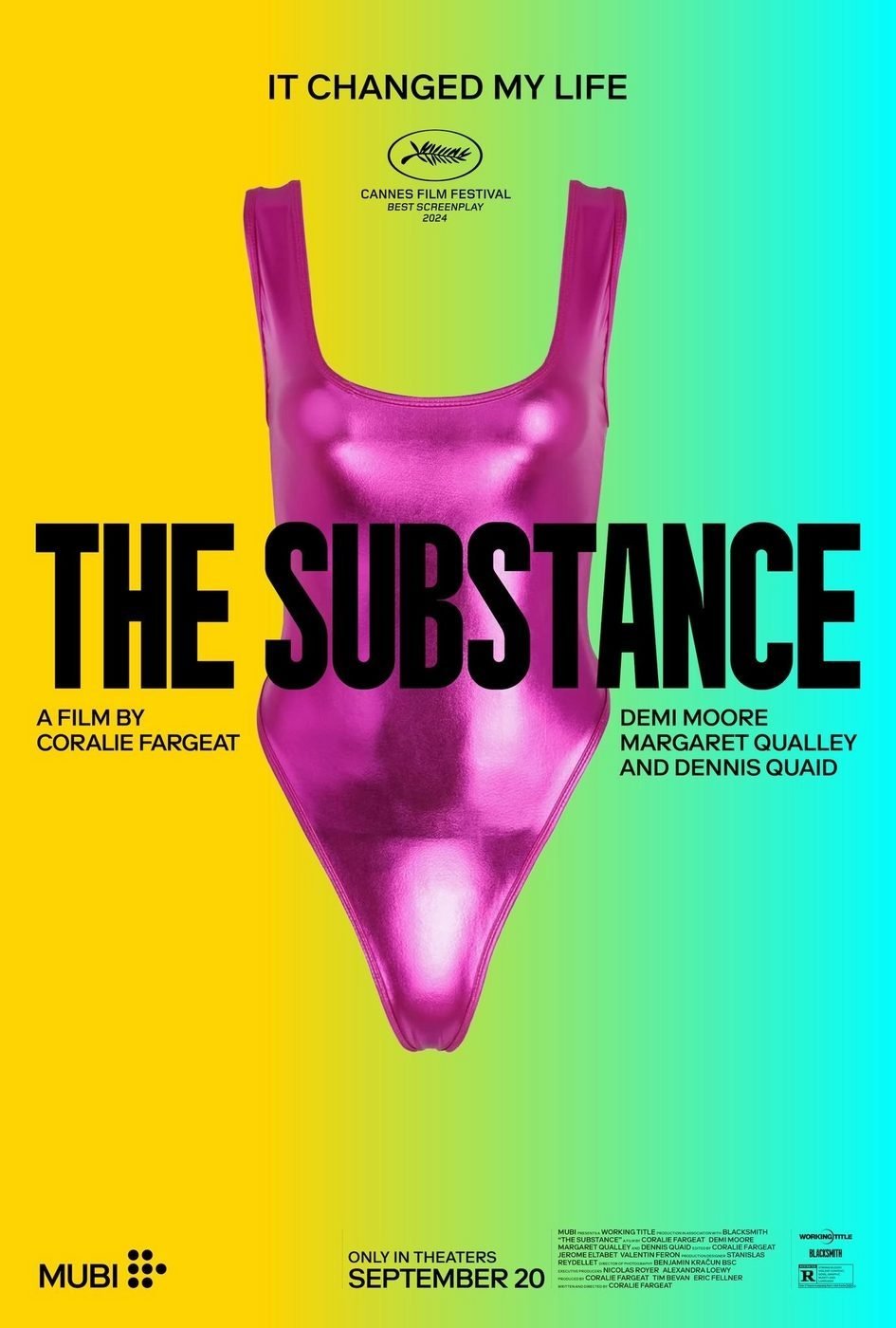
Coralie Fargeat‘s The Substance occupied an equally revealing position between arthouse cinema and commercial horror.
The film brought together body horror, satire, extreme practical effects and an unapologetically heightened visual language. Its themes—ageing, celebrity, misogyny, bodily control and the relentless demand for female perfection—were substantial enough to support serious critical discussion. At the same time, the film delivered the physical excess and escalating spectacle of a midnight movie.
That combination is central to commercial arthouse cinema.
The film does not ask viewers to choose between ideas and entertainment. Its ideas are delivered through entertainment. The grotesque transformations, bold production design and increasingly outrageous violence are not decorative additions to the argument. They are the argument.
Mubi‘s involvement was also significant. Traditionally associated with curated international and arthouse cinema, the company treated The Substance as a major theatrical proposition rather than a specialist title intended for a narrow audience.
The result showed that intellectually ambitious cinema could also be visceral, funny and communal. Viewers discussed not only what the film meant but how audiences physically reacted while watching it.
That matters because horror has always understood one of theatrical cinema’s greatest advantages: the audience changes the experience.
A shocking image watched alone on a laptop is not identical to the same image experienced among hundreds of people gasping, laughing and recoiling at once.
Weapons Proved Originality Can Operate at Studio Scale
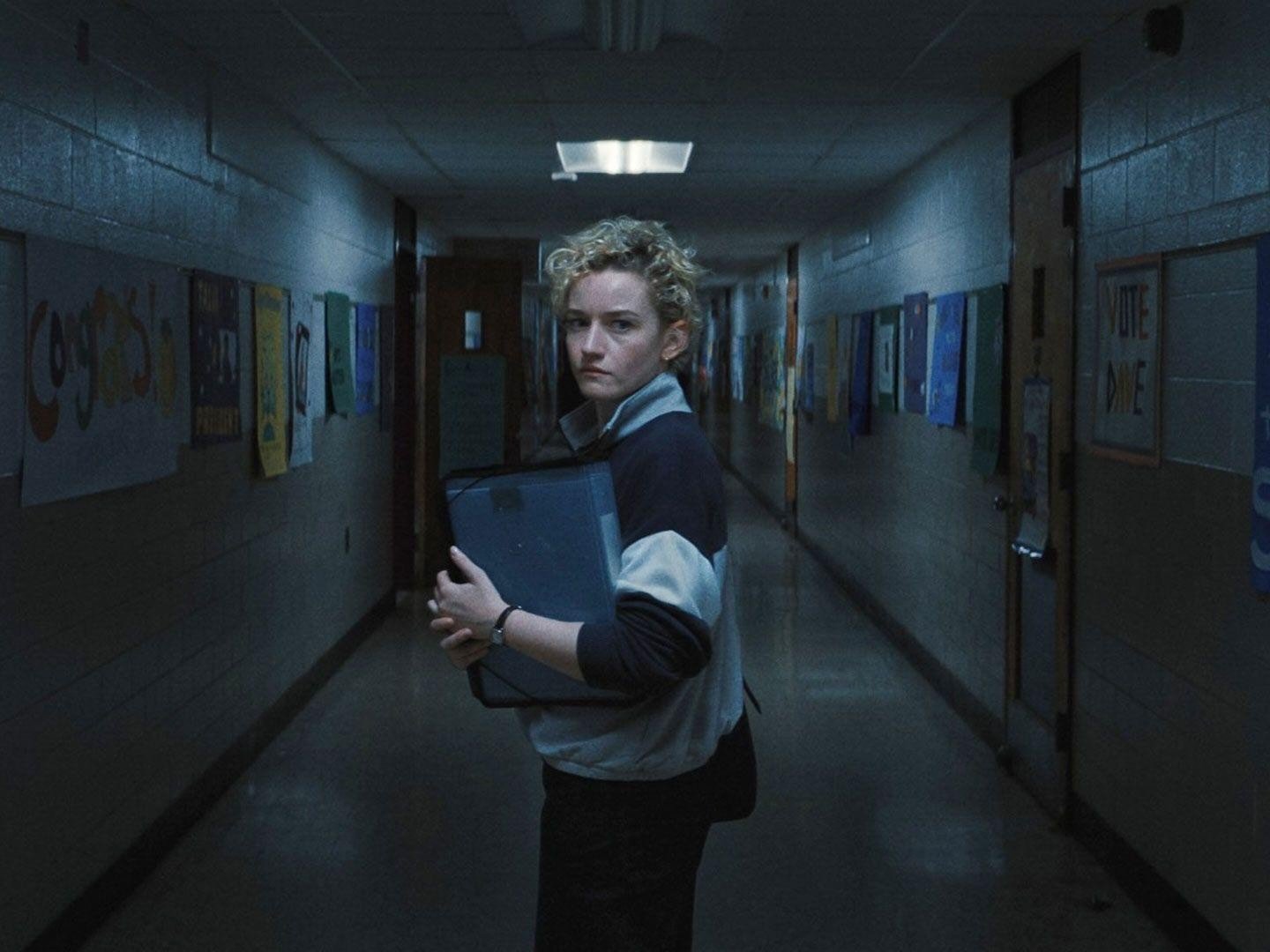
Zach Cregger‘s Weapons complicates the independent-cinema argument because it was released by Warner Bros., not by A24, Neon or another independent distributor.
Nevertheless, its success belongs to the same cultural shift.
Weapons was an original horror film rather than a sequel, remake or adaptation of a well-known franchise. Its primary selling points were its central mystery, Cregger’s reputation after Barbarian and the promise of a distinctive theatrical experience.
The film opened with more than $43 million in North America and ultimately earned approximately $270 million worldwide. It also demonstrated unusually strong staying power after its opening weekend. (Box Office Mojo)
Those figures make it difficult to argue that audiences will only support familiar intellectual property.
Weapons benefited from major-studio distribution, a substantial marketing campaign and a wide release, but the audience still needed to respond to an unfamiliar story. Warner Bros. could create awareness; it could not manufacture sustained enthusiasm without the film itself becoming part of the cultural conversation.
Its success suggests that the independent or arthouse sensibility is no longer confined to low-budget production.
A director can bring ambiguity, structural experimentation and a recognisable authorial voice into a large commercial release without abandoning the audience. The boundary between arthouse horror and mainstream horror has become increasingly porous.
The more useful distinction is no longer simply independent versus studio.
It is familiar versus distinctive.
Backrooms Shows How New Mythologies Are Being Created Online
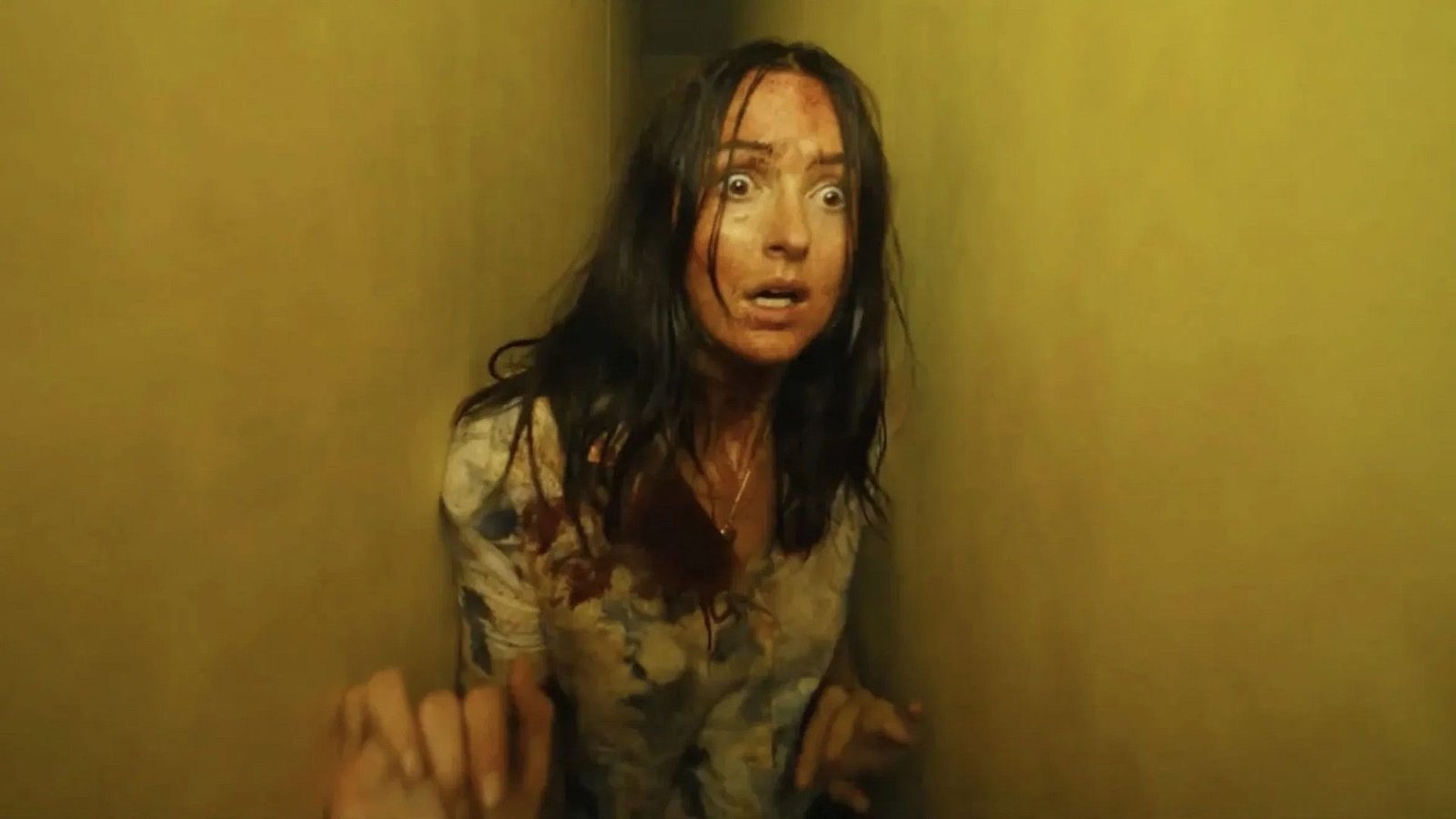
Kane Parsons‘s Backrooms represents another major change in how contemporary films reach audiences.
The project originated not in a comic-book archive, bestselling novel or established studio franchise, but in internet folklore and Parsons’s own viral YouTube work. The original videos transformed empty offices, fluorescent lighting and apparently ordinary architectural spaces into an enormous mythology of liminal horror.
A24 recognised that this audience was not passive. It had already participated in expanding, interpreting and debating the world of the Backrooms.
The feature film therefore arrived with familiarity, but not in the traditional franchise sense. Its mythology had developed horizontally through online culture rather than vertically through a corporate series of films.
Released theatrically by A24 in May 2026, Backrooms became a major commercial success before reaching digital platforms in July. Its success demonstrated how an aesthetic born from online experimentation could be expanded into large-scale theatrical cinema. (YouTube)
The creative journey is significant. Parsons began producing visual-effects work independently using accessible digital tools. The feature eventually involved established performers and extensive physical sets, but the original appeal remained rooted in the clarity of the concept.
Endless empty rooms. Familiar spaces without people. Architecture that appears ordinary until it becomes impossible.
That is high-concept storytelling in its purest form. The idea can be communicated in one image, yet it creates room for atmosphere, mythology and interpretation.
Obsession and the New Route From Microbudget Filmmaking to Global Release
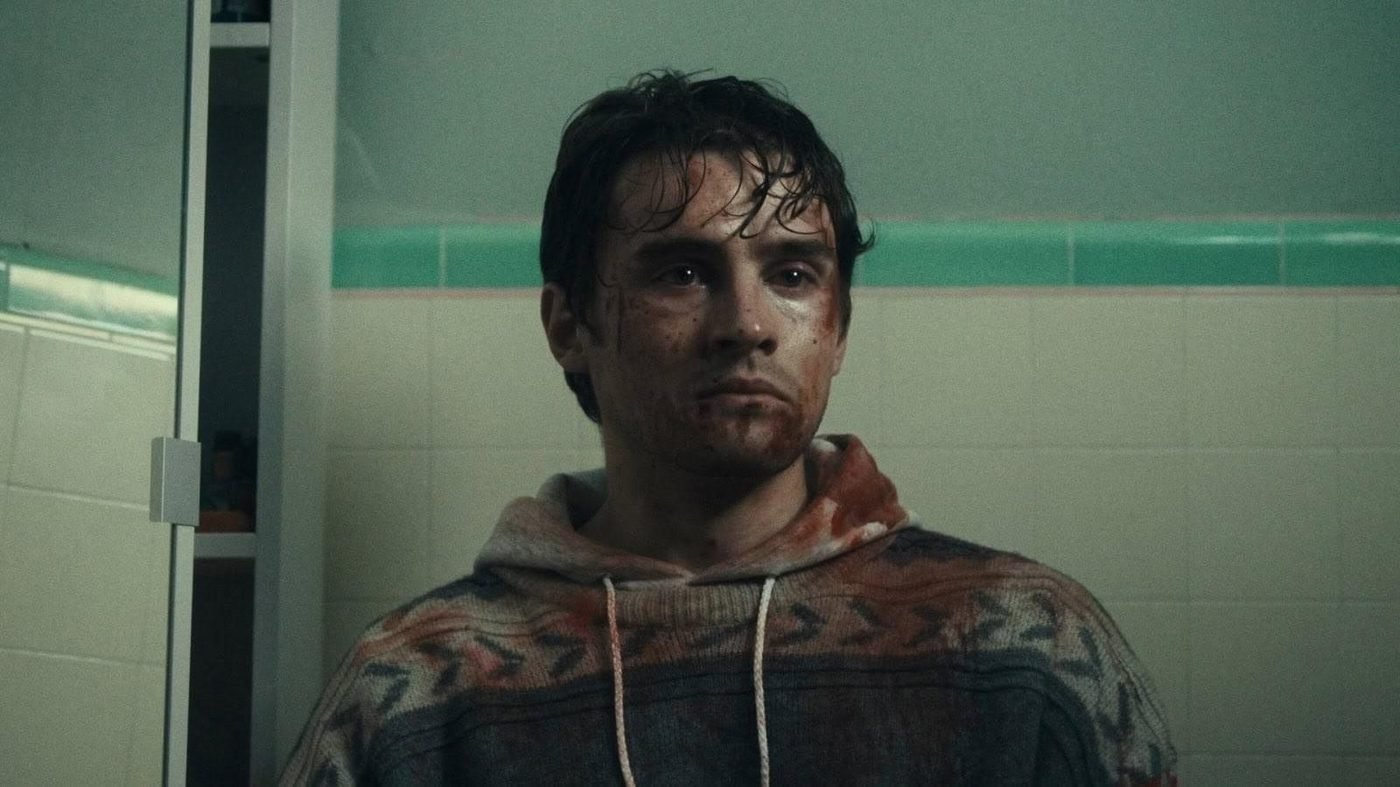
Curry Barker‘s Obsession provides perhaps the most dramatic example of the current appetite for original genre filmmaking.
The film began as a low-budget supernatural horror story with a simple but powerful premise: a lonely young man uses a mysterious object to wish that his childhood friend will love him more than anyone else, only for the wish to transform affection into something monstrous.
That premise is immediately understandable, but it also contains contemporary ideas about entitlement, desire, control and the difference between loving someone and wanting to possess them.
After premiering in the Midnight Madness section of the Toronto International Film Festival in September 2025, the film attracted a distribution deal reportedly worth more than $15 million. Focus Features acquired major rights, with Universal handling much of the international release. (Wikipedia)
Its 2026 theatrical performance subsequently turned the film into an exceptional commercial success relative to its production cost. Box Office Mojo records a worldwide gross of more than $429 million. (Box Office Mojo)
Obsession is therefore not merely another profitable horror film. It represents a production pathway that filmmakers and financiers will study closely.
An original concept was developed at microbudget scale, proved itself at a major festival, secured substantial distribution and reached a global theatrical audience.
The film did not require an existing character, decades-old brand or cinematic universe. The concept was the intellectual property.
Why Horror Is Leading the Change
Horror is particularly well suited to this new commercial arthouse model because the genre can produce scale without always requiring an enormous budget.
A strong horror film may derive its impact from a face, a sound, an empty corridor, a strange object or the precise moment when an apparently safe situation changes. Its central appeal can often be communicated through one image or sentence.
That makes horror highly marketable, but the genre also accommodates experimentation.
A filmmaker can create an observational slasher, a body-horror satire, a supernatural romance, a serial-killer procedural, a liminal-space nightmare or a psychological road thriller while still offering audiences the fundamental pleasures of tension, anticipation and fear.
Horror also benefits from a particularly active culture of discovery. Fans follow festivals, specialist websites, directors, actors and distributors. They exchange recommendations and actively seek films outside the most visible release calendar.
This allows companies such as Neon and A24 to build trust at the level of the distributor.
Viewers may enter an A24 or Neon release knowing very little about the story but expecting a degree of originality, visual ambition or risk. The company name functions almost as a curatorial recommendation.
That relationship is valuable because original films cannot depend on pre-existing character recognition. The distributor’s identity helps bridge the gap between an unfamiliar title and an audience willing to take a chance.
A24 and Neon Have Made Distinctiveness Commercial
A24 and Neon did not invent independent or arthouse cinema. Their achievement has been to make authorial distinction part of commercial film branding.
Their releases are not uniform. A24 can distribute intimate drama, surreal comedy, horror, science fiction or large-scale spectacle. Neon’s catalogue similarly ranges across international cinema, documentaries, thrillers and uncompromising genre work.
The connection is a perception that the films have been selected rather than manufactured to fill a predetermined slot.
That perception is powerful.
For decades, the term arthouse often suggested difficulty, limited accessibility or a film destined for a small specialist audience. A24 and Neon helped turn the idea of an unusual film into an attractive proposition for younger mainstream viewers.
They also understood presentation. Posters, trailers and publicity campaigns were not treated as interchangeable materials added after production. They became extensions of each film’s identity.
The audience was not told merely that a new horror film existed. It was given a visual world to enter.
This approach is now influencing major studios. Films such as Weapons suggest that studio-backed projects can adopt the same principles: empower a filmmaker, build a campaign around mystery and sell the specific experience rather than relying entirely on familiarity.
Commercial Arthouse Is Not a Genre
The phrase commercial arthouse describes a relationship between accessibility and authorship rather than one particular kind of film.
These films have a clear dramatic proposition. They provide suspense, horror, comedy, action or spectacle. They are not designed solely as intellectual exercises.
At the same time, they carry a strong creative identity. The director’s choices are visible in the framing, rhythm, performances, sound and structure. The film could not be exchanged easily for another product built from the same components.
Commercial arthouse films often share several qualities:
- They begin with a concept that can be communicated quickly, but they do not exhaust that concept through explanation.
- They contain striking images that become part of the marketing without revealing the complete narrative.
- They offer audiences familiar genre pleasure while introducing an unfamiliar tone, structure or point of view.
- They are performance-driven, allowing actors to create characters who remain psychologically complicated rather than functioning only as pieces within a plot.
Most importantly, they feel made rather than assembled.
That sense of creative intention is increasingly valuable in a culture saturated with content.
The Return of the Slow Burn
The rise of these films is also challenging the assumption that contemporary audiences have lost patience.
Social media is frequently blamed for reducing attention spans, yet viewers continue attending films that build tension gradually, withhold information and require active interpretation.
Longlegs depends upon unease and anticipation. The Substance takes time to establish the emotional and professional desperation beneath its bodily transformation. Backrooms derives its power from prolonged encounters with apparently empty space. Weapons asks the audience to assemble a mystery rather than presenting an immediate explanation.
The slow burn has not disappeared. It has become a form of distinction.
A carefully paced film creates the feeling that the audience is entering a controlled experience rather than consuming interchangeable material. Silence, stillness and uncertainty become more powerful precisely because so much contemporary media is designed to deliver instant stimulation.
The commercial lesson is not that every film should be slow. It is that pace must feel purposeful.
Audiences will accept patience when they trust that the filmmaker is leading them somewhere.
Performance Has Become a Form of Spectacle
Theatrical spectacle is often associated with physical scale: armies, visual effects, destruction and enormous environments.
Commercial arthouse cinema proposes another kind of scale.
A face can become spectacle. A transformation in performance can become an event. The attraction of Nicolas Cage in Longlegs, Demi Moore in The Substance or the young cast of Obsession lies partly in watching actors commit completely to material that demands emotional and physical extremity.
These performances generate conversation because they are not merely functional. They contain risk.
A performance-driven thriller offers something that franchise cinema can sometimes suppress: the possibility that the actor, rather than the brand, becomes the centre of the experience.
This is particularly important for independent cinema, where production resources may be limited. A film cannot always compete through physical scale, but it can create intensity through casting, rehearsal and the careful construction of character.
The old division between commercial and artistic cinema is becoming less useful.
Where Blood Star Fits Into This Movement

Blood Star was made on a far smaller scale than the largest films in this discussion, but it belongs to the same creative tradition.
The film begins with a high-concept thriller premise: a young woman driving across The Desert is targeted by a small-town sheriff. The person who should represent safety becomes the threat.
That premise can be explained immediately, but the film’s identity comes from how the story is told: the desert landscapes, the controlled escalation, the central performances and the influence of stripped-down pursuit films such as Duel, Jaws and The Hitcher.
The production was completed in ten shooting days with a small crew. Limited resources made it essential to concentrate on the elements that would actually reach the screen: performance, composition, sound, location and tension.
That is one of the great strengths of independent filmmaking. Constraint can force a film to become more precise.
A smaller production cannot assume that scale will hold the audience’s attention. Every creative decision must contribute to the central promise.
For Blood Star, that promise was simple: an empty road, an isolated traveller and a man whose authority allows him to behave like a predator.
The film premiered at the Neuchâtel International Fantastic Film Festival in July 2024, continued through an international genre-festival run and later secured releases in the United Kingdom and the United States.
Its journey was much more modest than those of Longlegs, The Substance or Obsession, but the audience being cultivated by those films benefits the entire independent genre ecosystem.
When viewers become excited by original thrillers, they begin searching beyond the most heavily marketed examples.
That is where smaller films are discovered.
Are Audiences Moving Away From Superhero Films?
It would be too simple to declare the superhero film dead. Major comic-book releases can still attract enormous audiences, and the genre will continue evolving.
The more meaningful shift is that superhero cinema is no longer the automatic centre of theatrical culture.
An established brand can create awareness, but it no longer guarantees urgency. Audiences increasingly ask whether a film offers something they have not already experienced.
Original horror has benefited because it makes uncertainty part of its appeal. The viewer enters without knowing which characters will survive, what rules govern the story or whether the film will end in reassurance or disturbance.
The strongest commercial arthouse films feel culturally immediate because they are not required to preserve a franchise for the next instalment. They can be stranger, more violent, more emotionally disruptive and more final.
That freedom creates stakes.
The Cinema Is Becoming a Place of Discovery Again
For much of the franchise era, the cinema became the place audiences went to see something they already knew.
They knew the characters, the world, the visual language and often the approximate structure of the story. The attraction was continuation.
The rise of original genre cinema is restoring discovery to the theatrical experience.
A viewer may enter Longlegs because of an unsettling trailer, The Substance because of extraordinary word of mouth, Backrooms because of an online mythology or Obsession because other viewers insist that its central idea must be experienced with a crowd.
In each case, uncertainty becomes part of the event.
This also explains the importance of festivals. Sundance, Cannes, Toronto, SXSW, Fantastic Fest and dedicated genre festivals provide the first evidence that an unfamiliar film is worth attention. Reviews, audience reactions and acquisitions then expand that conversation.
The route from festival to theatrical success is never guaranteed, but it allows original films to build momentum through discovery rather than recognition.
A New Commercial Model
The strongest lesson from these films is not that every independent production can become a global box-office phenomenon.
The lesson is that audiences remain open to original stories when those stories are presented with confidence.
A clear concept matters. Distinctive filmmaking matters. Performance matters. Marketing that preserves mystery matters. The distributor must understand what makes the film unusual and turn that difference into the reason to see it.
The old division between commercial and artistic cinema is becoming less useful.
The Substance can be thematically serious and physically outrageous. Longlegs can be formally controlled and broadly profitable. Weapons can operate at studio scale while retaining the identity of its filmmaker. Backrooms can transform experimental internet horror into a theatrical event. Obsession can move from a microbudget production to a worldwide audience.
These films are not succeeding despite their individuality.
They are succeeding because of it.
They are succeeding because of it.
Original Cinema Is Not Returning—It Never Left
Independent filmmakers have always created ambitious, high-concept and performance-driven work. What has changed is the degree to which distributors and audiences are recognising its theatrical potential.
The cinema does not need to survive by attempting to imitate streaming or by endlessly repeating the franchises that dominated the previous decade.
It needs films that make people curious.
It needs images that demand to be seen on a large screen, performances people want to discuss and stories whose outcomes cannot be predicted before the lights go down.
The success of A24, Neon and the growing number of original genre films embraced by larger distributors suggests that commercial cinema and authored cinema do not need to be opposing ideas.
The most exciting films of the present moment are combining both.
Audiences are not returning to cinemas simply because the films are independent, arthouse or horrific.
They are returning because, for the first time in a while, they do not already know exactly what they are going to see.
For Filmmakers and Marketers
Sell the mystery, not the plot. The films in this piece succeeded by giving audiences a striking image, a distinctive voice and a promise of the unfamiliar — not a synopsis. If your concept can be communicated in one image or sentence, protect that clarity all the way through marketing rather than explaining it away.
Frequently Asked Questions
It describes a relationship between accessibility and authorship rather than a genre: films with a clear dramatic proposition (suspense, horror, comedy) that also carry a strong, visible creative identity, so the film couldn’t be swapped for another product built from the same components.
They offer something franchise cinema increasingly can’t: genuine uncertainty. Audiences can’t predict the experience from the title or trailer, and distributors like A24 and Neon have turned that unpredictability into a trusted brand in its own right.
No — it was distributed by Warner Bros. on a wide release, which is what makes it significant. It shows the same director-led, mystery-driven approach used by independent distributors can also work at full studio scale and budget.
On a far smaller budget than Longlegs, The Substance or Obsession, Blood Star follows the same underlying principle: a high-concept premise (a woman targeted by a corrupt sheriff) executed with total creative intention across performance, location and tension rather than spectacle.
Neon built the campaign around fragments rather than explanation — coded messages, disturbing images and a billboard phone number voiced by Nicolas Cage in character, which alone received more than 930,000 calls. The mystery became part of the product itself.
No. Major comic-book releases can still draw huge audiences. The more accurate shift is that an established brand no longer guarantees urgency on its own — superhero cinema is no longer automatically the centre of theatrical culture the way it once was.
Learn More About Blood Star
If you’re interested in how independent filmmakers create ambitious thrillers on limited budgets, you can explore more about Blood Star, including its cast, production and behind-the-scenes story.
If you’d like to watch the film, visit the Blood Star Watch Page to see where it’s currently available to stream or purchase.
Watch Blood Star
Blood Star is a psychological desert road thriller about Bobbi Torres, a young woman travelling alone across the American Southwest who becomes the target of Sheriff Bilstein, a predatory lawman whose badge, patrol car and knowledge of the territory allow him to control the hunt.


See every legitimate way to watch Blood Star free →
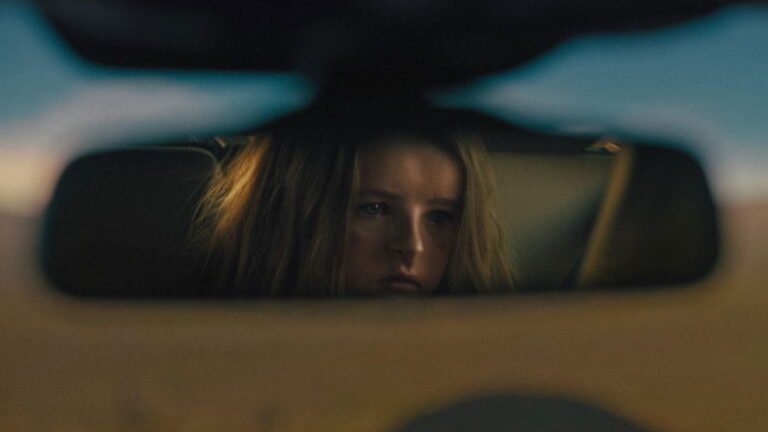
Table of Contents
- The Rise of Commercial Arthouse Cinema: Why Audiences Are Returning to Original Films
- Audiences Are Not Tired of Cinema
- Longlegs and the Power of Creating an Event
- The Substance Turned Body Horror Into a Theatrical Spectacle
- Weapons Proved Originality Can Operate at Studio Scale
- Backrooms Shows How New Mythologies Are Being Created Online
- Obsession and the New Route From Microbudget Filmmaking to Global Release
- Why Horror Is Leading the Change
- A24 and Neon Have Made Distinctiveness Commercial
- Commercial Arthouse Is Not a Genre
- The Return of the Slow Burn
- Performance Has Become a Form of Spectacle
- Where Blood Star Fits Into This Movement
- Are Audiences Moving Away From Superhero Films?
- The Cinema Is Becoming a Place of Discovery Again
- A New Commercial Model
- Original Cinema Is Not Returning—It Never Left
- Learn More About Blood Star
- Watch Blood Star